

1 month 2 weeks ago
The pint would call the quart a dualist, if you tried to pour the quart into him.
▼
Source
source
p. 60
2 months 3 weeks ago
Many of the actions by which men have become rich are far more harmful to the community than the obscure crimes of poor men, yet they go unpunished because they do not interfere with the existing order.
▼
Source
source
Ch. V: Government and Law

2 months 3 weeks ago
I think He made one law of that kind in order that there might be obedience. In all these other matters what you call obeying Him is but doing what seems good in your eyes also. Is love content with that? You do them, indeed, because they are His will, but not only because they are his will. Where can you taste the joy of obeying unless he bids you do something for which His bidding is the only reason?

1 month 2 weeks ago
Either one defines "personality" and "individuality" in terms of their possibilities within the established form of civilization, in which case their realization is for the vast majority tantamount to successful adjustment. Or one defines them in terms of their transcending content, including their socially denied potentialities beyond (and beneath) their actual existence; in this case, their realization would imply transgression, beyond the established form of civilization, to radically new modes of "personality" and "individuality" incompatible with the prevailing ones. Today, this would mean "curing" the patient to become a rebel or (which is saying the same thing) a martyr.
▼
Source
source
"Critique of Neo-Freudian Revisionism"
1 month 2 weeks ago
I know well that many of my readers do not think as I do. This also is most natural and confirms the theorem. For although my opinion turn out erroneous, there will always remain the fact that many of those dissentient readers have never given five minutes' thought to this complex matter. How are they going to think as I do? But by believing that they have a right to an opinion on the matter without previous effort to work one out for themselves, they prove patently that they belong to that absurd type of human being which I have called the "rebel mass." It is precisely what I mean by having one's soul obliterated, hermetically closed. Here it would be the special case of intellectual hermetism.
▼
Source
source
Chap. VIII: The Masses Intervene In Everything, And Why Their Intervention Is Solely By Violence

2 months 2 weeks ago
Life grants nothing to us mortals without hard work.
▼
Source
source
Book I, satire ix, line 59
1 month 2 weeks ago
In the presence of God himself man stands always like a solitary tree in the wilderness.
▼
Source
source
p. 95

1 month 1 week ago
The haste of day rules over the night as empty form.

2 months 4 weeks ago
Necessity may be defined in two ways, conformably to the two definitions of cause, of which it makes an essential part. It consists either in the constant conjunction of like objects, or in the inference of the understating from one object to another.
▼
Source
source
§ 8.27

1 month 2 weeks ago
Writing is like getting married. One should never commit oneself until one is amazed at one's luck.
▼
Source
source
The Black Prince (1973); 2003, p. 10.

1 month 3 weeks ago
Government must be a transparent garment which tightly clings to the people's body.
▼
Source
source
Act I.

1 month 4 weeks ago
A man may be in as just possession of Truth as of a City, and yet be forced to surrender.
▼
Source
source
Section 6
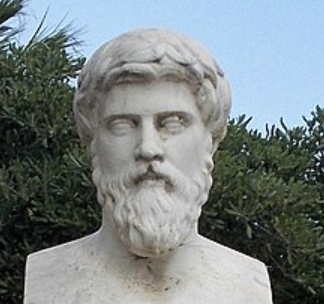
2 months 1 week ago
As Cæsar was at supper the discourse was of death,-which sort was the best. "That," said he, "which is unexpected."
▼
Source
source
Cæsar
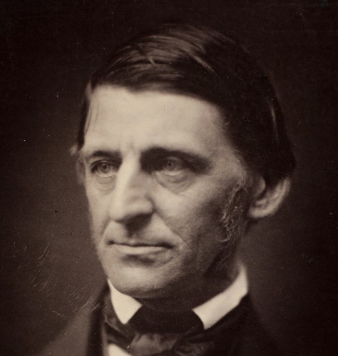
2 months 3 weeks ago
I find men victims of illusion in all parts of life. Children, youths, adults, and old men, all are led by one bawble or another. Yoganidra, the goddess of illusion, Proteus, or Momus, or Gylfi's Mocking, - for the Power has many names, - is stronger than the Titans, stronger than Apollo.
▼
Source
source
Illusions
1 month 1 week ago
The new tinge to modern minds is a vehement and passionate interest in the relation of general principles to irreducible and stubborn facts. All the world over and at all times there have been practical men, absorbed in 'irreducible and stubborn facts'; all the world over and at all times there have been men of philosophic temperament, who have been absorbed in the weaving of general principles. It is this union of passionate interest in the detailed facts with equal devotion to abstract generalisation which forms the novelty of our present society.
▼
Source
source
Ch. 1: "The Origins of Modern Science", pp. 3-4
1 month 4 weeks ago
Persecution is a bad and indirect way to plant Religion.
▼
Source
source
Section 25



3 months 3 weeks ago
I will not by suppression, or by performing tricks, try to produce the impression that the ordinary Christianity in the land and the Christianity of the New Testament are alike. "What Do I Want?"

1 month 2 weeks ago
O woman, great is thy faith: be it unto thee even as thou wilt.
▼
Source
source
15:28 (KJV)
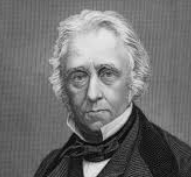
1 week 5 days ago
The object of oratory alone is not truth, but persuasion.
▼
Source
source
'On the Athenian Orators', Knight's Quarterly Magazine (August 1824), quoted in The Miscellaneous Writings of Lord Macaulay, Vol. I (1860), p. 135
2 months 3 weeks ago
Good is a good doctor, but Bad is sometimes a better.
▼
Source
source
Considerations by the Way
1 month 1 week ago
The discourse on the Text should itself be nothing other than text, research, textual activity, since the Text is that social space which leaves no language safe, outside, nor any subject of the enunciation in position as judge, master, analyst, confessor, decoder. The theory of the Text can coincide only with a practice of writing.
▼
Source
source
Conclusion
3 weeks ago
There is but a step between a proud man's glory and his disgrace.
▼
Source
source
Maxim 138
2 months 3 weeks ago
Through the emancipation of private property from the community, the State has become a separate entity, beside and outside civil society; but is it nothing more than the form of organization which the bourgeois necessarily adopt both for internal and external purposes, for the mutual guarantee of their property and interests.
▼
Source
source
Part One The Marx-Engels Reader, p. 187
2 weeks 3 days ago
Can we find nothing good to say about TV? Well, yes, it brings scattered solitaries into a sort of communion. TV allows your isolated American to think that he participates in the life of the entire country. It does not actually place him in a community, but his heart is warmed with the suggestion (on the whole false) that there is a community somewhere in the vicinity and that his atomized consciousness will be drawn back toward the whole.
▼
Source
source
The Distracted Public (1990), p. 159
2 months 2 weeks ago
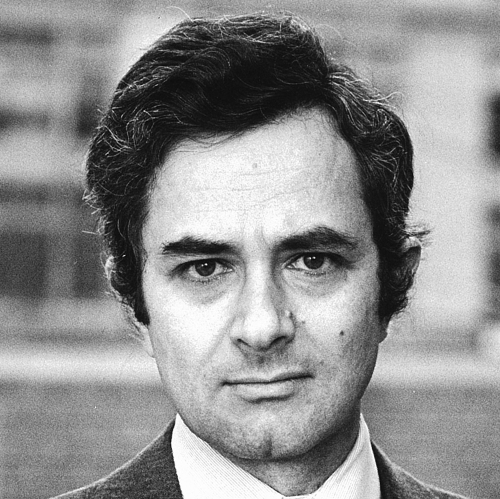
All of us, I believe, are fortunate to have been born.
▼
Source
source
"Death" (1970), p. 7.
1 month 2 days ago
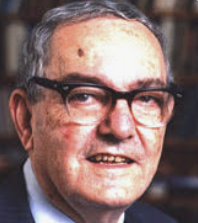
Organizations and institutions permit stable expectations to be formed by each member of the group as to the behavior of the other members under specified conditions.
▼
Source
source
p. 100.

1 month 3 weeks ago
It appears to me impossible that I should cease to exist, or that this active, restless spirit, equally alive to joy and sorrow, should only be organised dust - ready to fly abroad the moment the spring snaps, or the spark goes out which kept it together. Surely something resides in this heart that is not perishable, and life is more than a dream.
1 month 2 weeks ago
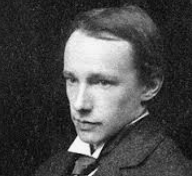
By far the most valuable things, which we know or can imagine, are certain states of consciousness, which may roughly be described as the pleasures of human intercourse and the enjoyment of beautiful objects. No one, probably, who has asked himself the question, has ever doubted that personal affection and the appreciation of what is beautiful in Art or Nature, are good in themselves; nor, if we consider strictly what things are worth having purely for their own sakes, does it appear probable that any one will think that anything else has nearly so much value as the things which are included under these two heads.
▼
Source
source
Principia Ethica (1903; revised edition, Cambridge University Press, 1993).
3 months 6 days ago
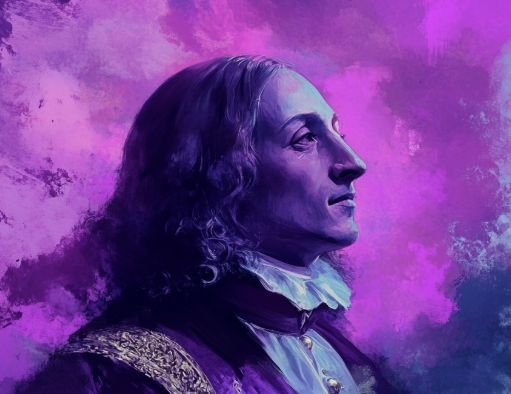
Nature, which alone is good, is wholly familiar and common.

3 months 2 days ago
Leave the ass burdened with laws behind in the valley. But your conscience, let it ascend with Isaac into the mountain.
▼
Source
source
Chapter 2, Verse 14

1 month 2 days ago
To sum up: we have seen that of the three notions of 'partial interpretation' discussed, each is either unsuitable for Carnap's purposes (starting with observation terms), or incompatible with a rather minimal scientific realism; and, in addition, the second notion depends upon gross and misleading changes in our use of language. Thus in none of these senses is 'a partially interpreted calculus in which only the observation terms are directly interpreted' an acceptable model for a scientific theory.
▼
Source
source
"What theories are not"
2 months 2 weeks ago
The animals themselves are incapable of demanding their own liberation, or of protesting against their condition with votes, demonstrations, or boycotts. Human beings have the power to continue to oppress other species forever, or until we make this planet unsuitable for living beings. Will our tyranny continue, proving that morality counts for nothing when it clashes with selfinterest, as the most cynical of poets and philosophers have always said? Or will we rise to the challenge and prove our capacity for genuine altruism by ending our ruthless exploitation of the species in our power, not because we are forced to do so by rebels or terrorists, but because we recognize that our position is morally indefensible? The way in which we answer this question depends on the way in which each one of us, individually, answers it.
▼
Source
source
Ch. 6: Speciesism Today

1 month 2 weeks ago
To win the guilty kiss of a saint, I'd welcome the plague as a blessing
2 months 3 weeks ago
The strangest mores of the most of-the-way societies will, in spite of everything, be relatively comprehensible to the person who has a flesh-and-blood knowledge of man's needs, anxieties, and hopes. If, on the other hand, this experience is lacking, he will not even be able to understand the customs of those about him.
▼
Source
source
p. 139
2 months 3 weeks ago
What a queer work the Bible is. ...Some texts are very funny. Deut. XXIV, 5: "When a man hath taken a new wife, he shall not go out to war, neither shall he be charged with any business: but he shall be free at home one year, and shall cheer up his wife which he hath taken." I should never have guessed "cheer up" was a Biblical expression. Here is another really inspiring text: "Cursed be he that lieth with his mother-in-law. And all the people shall say, Amen." St Paul on marriage: "I say therefore to the unmarried and widows, It is good for them if they abide even as I. But if they cannot contain, let them marry: for it is better to marry than to burn." This has remained the doctrine of the Church to this day. It is clear that the Divine purpose in the text "it is better to marry than to burn" is to make us all feel how very dreadful the torments of Hell must be.
▼
Source
source
Letter to Colette, August 10, 1918

3 months 3 weeks ago
Writing is an addiction more powerful than alcohol, than nicotine, than crack. I could not conceive of not writing.
2 months 3 weeks ago
The auspices for philosophy are bad if, when proceeding ostensibly on the investigation of truth, we start saying farewell to all uprightness, honesty and sincerity, and are intent only on passing ourselves off for what we are not. We then assume, like those three sophists [Fichte, Schelling and Hegel], first a false pathos, then an affected and lofty earnestness, then an air of infinite superiority, in order to impose where we despair of ever being able to convince.
▼
Source
source
E. Payne, trans. (1974) Vol. 1, p. 22
1 month 1 week ago
There remains the final reflection, how shallow, puny, and imperfect are efforts to sound the depths in the nature of things. In philosophical discussion, the merest hint of dogmatic certainty as to finality of statement is an exhibition of folly.
▼
Source
source
Preface, p. 16 (Corrected Edition)
3 months 3 weeks ago
Let us suppose that a man believes in eternal life on Christ's word. In that case he believes without any fuss about being profound and searching and philosophical and racking his brains.
3 days ago
To understand how indirect communication is possible we must grasp what it is about ordinary communication that is being changed.
▼
Source
source
Chapter 6, Indirect Communication, p. 110

3 months 3 weeks ago
Those who purge the soul believe that the soul can receive no benefit from any teachings offered to it until someone by cross-questioning reduces him who is cross-questioned to an attitude of modesty, by removing the opinions that obstruct the teachings, and thus purges him and makes him think that he knows only what he knows, and no more.

1 week ago
I've learned from the Bhagavad Gita and other teachings of our culture to detach myself from the results of what I do, because those are not in my hands. The context is not in your control, but your commitment is yours to make, and you can make the deepest commitment with a total detachment about where it will take you. You want it to lead to a better world, and you shape your actions and take full responsibility for them, but then you have detachment. And that combination of deep passion and deep detachment allows me always to take on the next challenge because I don't cripple myself, I don't tie myself in knots. I function like a free being. I think getting that freedom is a social duty because I think we owe it to each other not to burden each other with prescription and demands. I think what we owe each other is a celebration of life and to replace fear and hopelessness with fearlessness and joy.

3 months 2 weeks ago
In archery we have something like the way of the superior man. When the archer misses the center of the target, he turns round and seeks for the cause of his failure in himself.
1 month 1 week ago
To know something is to make this something that I know myself; but to avail myself of it, to dominate it, it has to remain distinct from myself.

1 month 1 week ago
The contention that a standing army and navy is the best security of peace is about as logical as the claim that the most peaceful citizen is he who goes about heavily armed. The experience of every-day life fully proves that the armed individual is invariably anxious to try his strength. The same is historically true of governments. Really peaceful countries do not waste life and energy in war preparations, with the result that peace is maintained.
3 months 2 weeks ago
Only after Winter comes do we know that the pine and the cypress are the last to fade.
3 weeks 2 days ago
I cannot recall those years without horror, loathing, and heart-rending pain. I killed people in war, challenged men to duels with the purpose of killing them, and lost at cards; I squandered the fruits of the peasants' toil and then had them executed; I was a fornicator and a cheat. Lying, stealing, promiscuity of every kind, drunkenness, violence, murder - there was not a crime I did not commit... Thus I lived for ten years.
▼
Source
source
Pt. I, ch. 2
CivilSimian.com created by AxiomaticPanic, CivilSimian, Kalokagathia