


7 months 2 weeks ago
No subgroup, race, nationalism, religious group, gender based groups or other identity essence based groups will ever be more important than, and should never ethically take precedence over the existence based universal group, the human group. Universal identity takes precedence over subgroup identity, and when we are forced to subgroup in reaction to injustice, that is the only ethical subgroup.

3 months 3 weeks ago
A Roman emperor sitting at the table surrounded by his bodyguard is a magnificent sight, but when the reason is fear, the magnificence pales. So also when the individual does not dare stand taciturnly by his word, does not stand freely and confidently on the pedestal of a conscious act, but is surrounded by a host of deliberations before and after that render him incapable of getting his eye on the action.

2 months 2 weeks ago
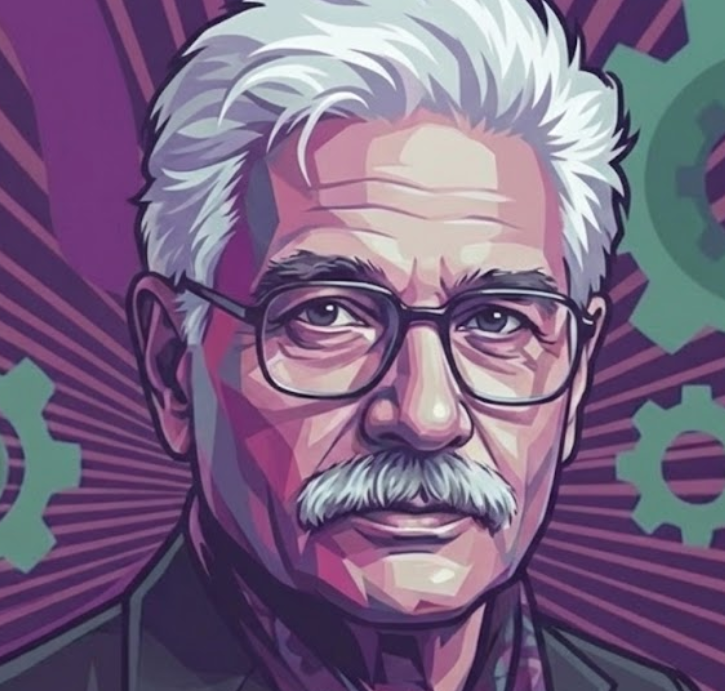
No text in the tradition seems as lucid concerning the way in which the political is becoming worldwide. concerning the irreducibility of the technical and the media in the current of the most thinking thought-and this goes beyond the railroad and the newspapers of the time whose powers were analyzed in such an incomparable way in the Manifesto. And few texts have shed so much light on law. international law. and nationalism.
▼
Source
source
Injunctions of Marx
2 months 3 weeks ago
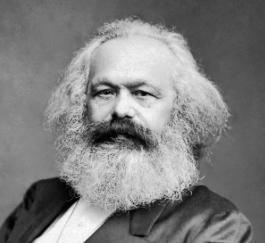
A spider conducts operations that resemble those of a weaver, and a bee puts to shame many an architect in the construction of her cells. But what distinguishes the worst of architects from the best of bees is this, that the architect raises his structure in imagination before he erects it in reality.
▼
Source
source
Vol. I, Ch. 7, pg. 198.

3 months 1 day ago
Covetousness is both the beginning and the end of the devil's alphabet- the first vice in corrupt nature that moves, and the last which dies.

3 months 3 weeks ago
There is a kind of selective memory that afflicts men when they view the past. They see the good and overlook the evil.

2 months 3 weeks ago
My form remains one, though the matter in it changes continually. I am, in that respect, like a curve in a waterfall.
▼
Source
source
Ch. 16: "Miracles of the New Creation"
2 months 3 weeks ago
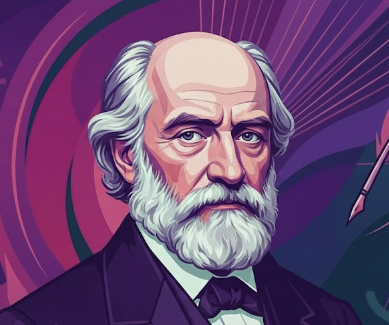
The discovery of truth is prevented more effectively, not by the false appearance things present and which mislead into error, not directly by weakness of the reasoning powers, but by preconceived opinion, by prejudice.
▼
Source
source
Vol. 2, Ch. 1, § 17
2 months 3 weeks ago
Hegel once observed that comedy is in act superior to tragedy and humourous reasoning superior to grandiloquent reasoning. Although Lincoln does not possess the grandiloquence of historical action, as an average man of the people he has its humour.

3 months 3 weeks ago
He who lives as children live who does not struggle for his bread and does not believe that his actions possess any ultimate significance remains childlike.

2 months 3 weeks ago
One thing I have frequently observed in children, that when they have got possession of any poor creature, they are apt to use it ill: they often torment, and treat it very roughly, young birds, butterflies, and such other poor animals which fall into their hands, and that with a seeming kind of pleasure. This I think should be watched in them, and if they incline to any such cruelty, they should be taught the contrary usage. For the custom of tormenting and killing of beasts, will, by degrees, harden their minds even towards men; and they will delight in the suffering and destruction of inferior creatures, will not be apt to be very compassionate or benign to those of their own kind. Our practice takes notice of this in the exclusion of butchers from juries of life and death.
▼
Source
source
Sec. 116
2 weeks 6 days ago
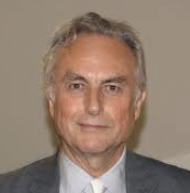
I'm not one of those who wants to stop Christian traditions. This is historically a Christian country. I'm a cultural Christian the same way as many of my friends call themselves cultural Jews or cultural Muslims. So, yes, I love singing carols along with everybody else. I'm not one of those who wants to purge our society of our Christian history.
▼
Source
source
BBC's Have Your Say
2 months 3 weeks ago
The real point at issue always is Turkey in Europe - the great peninsula to the south of the Save and Danube. This splendid territory [the Balkans] has the misfortune to be inhabited by a conglomerate of different races and nationalities, of which it is hard to say which is the least fit for progress and civilization. Slavonians, Greeks, Wallachians, Arnauts, twelve millions of men, are all held in submission by one million of Turks, and up to a recent period, it appeared doubtful whether, of all these different races, the Turks were not the most competent to hold the supremacy which, in such a mixed population, could not but accrue to one of these nationalities.
▼
Source
source
The Russian Menace to Europe, From Karl Marx and Frederick Engels, edited by Paul Blackstock and Bert Hoselitz, and published by George Allen and Unwin, London, 1953
3 months 3 weeks ago
Every human being is tried this way in the active service of expectancy. Now comes the fulfillment and relieves him, but soon he is again placed on reconnaissance for expectancy; then he is again relieved, but as long as there is any future for him, he has not yet finished his service. And while human life goes on this way in very diverse expectancy, expecting very different things according to different times and occasions and in different frames of mind, all life is again one nightwatch of expectancy.
3 months 3 weeks ago
People are scarcely aware that it is a slavery they are creating; they forget this in their zeal to make people free by overthrowing dominions. They are scarcely aware that it is slavery; how could it be possible to be a slave in relation to equals?

2 months 1 week ago
The covetous man is ever in want.
▼
Source
source
Book I, epistle ii, line 56

1 month 5 days ago
The time is come when women must do something more than the "domestic hearth," which means nursing the infants, keeping a pretty house, having a good dinner and an entertaining party.
2 months 3 weeks ago
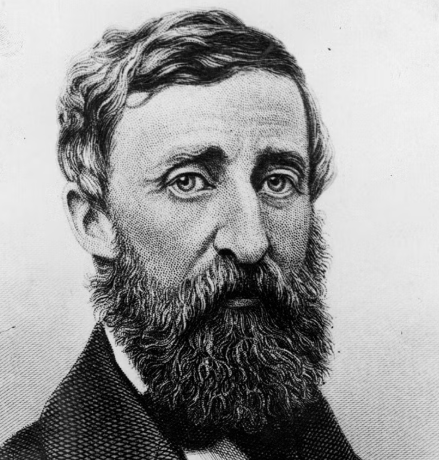
It is so hard to forget what it is worse than useless to remember! If I am to be a thoroughfare, I prefer that it be of the mountain-brooks, the Parnassian streams, and not the town-sewers. There is inspiration, that gossip which comes to the ear of the attentive mind from the courts of heaven. There is the profane and stale revelation of the bar-room and the police court. The same ear is fitted to receive both communications. Only the character of the hearer determines to which it shall be open, and to which closed. I believe that the mind can be permanently profaned by the habit of attending to trivial things, so that all our thoughts shall be tinged with triviality.
▼
Source
source
p. 492

1 month 3 weeks ago
Flattery corrupts both the receiver and the giver.

2 months 2 weeks ago
You get tragedy where the tree, instead of bending, breaks.
1 month 2 weeks ago
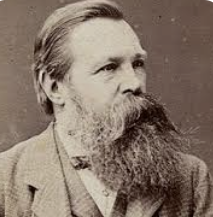
Big industry, competition and generally the individualistic organization of production have become a fetter which it must and will shatter.
1 week 5 days ago
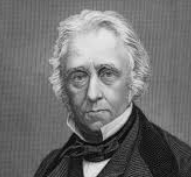
The conformation of his mind was such that whatever was little seemed to him great, and whatever was great seemed to him little. Serious business was a trifle to him, and trifles were his serious business.
▼
Source
source
'Horace Walpole', The Edinburgh Review (October 1833), quoted in T. B. Macaulay, Critical and Historical Essays Contributed to The Edinburgh Review, Vol. II (1843), p. 99

2 months 3 weeks ago
Thought depends largely on the stomach. In spite of this, those with the best stomachs are not always the best thinkers.
▼
Source
source
Letter to Jean le Rond d'Alembert, 20 August 1770

3 months 1 week ago
All things are nourished together without their injuring one another. The courses of the seasons, and of the sun and moon, are pursued without any collision among them. The smaller energies are like river currents; the greater energies are seen in mighty transformations. It is this which makes heaven and earth so great.
2 months 3 weeks ago
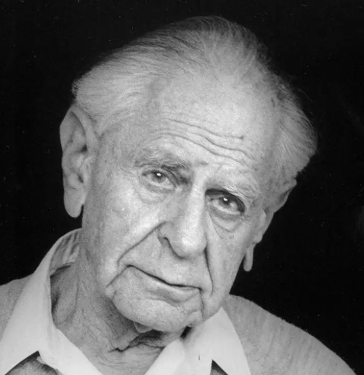
By 'arguing...' I mean... criticizing... inviting... criticism; and trying to learn from it.

2 months ago
The Divine light is always in man, presenting itself to the senses and to the comprehension, but man rejects it.
▼
Source
source
As quoted in Life and Teachings of Giordano Bruno : Philosopher, Martyr, Mystic 1548 - 1600 (1913) by Coulson Turnbull

3 months 3 days ago
Riches are a good handmaid, but the worst mistress.
▼
Source
source
De Augmentis Scientiarum, Book II, "Antitheta"
1 month 3 weeks ago
Slavery they can have anywhere. It is a weed that grows in every soil.
2 months 2 weeks ago
A teacher who can show good, or indeed astounding results while he is teaching, is still not on that account a good teacher, for it may be that, while his pupils are under his immediate influence, he raises them to a level which is not natural to them, without developing their own capacities for work at this level, so that they immediately decline again once the teacher leaves the schoolroom.
▼
Source
source
p. 43e
2 months 3 weeks ago
There is something which unites magic and applied science while separating both from the wisdom of earlier ages. For the wise men of old the cardinal problem had been how to conform the soul to reality, and the solution had been knowledge, self-discipline, and virtue. For magic and applied science alike the problem is how to subdue reality to the wishes of men.

2 months 3 weeks ago
If we take a survey of ages and of countries, we shall find the women, almost - without exception - at all times and in all places, adored and oppressed. Man, who has never neglected an opportunity of exerting his power, in paying homage to their beauty, has always availed himself of their weakness He has been at once their tyrant and their slave.
2 months 3 weeks ago
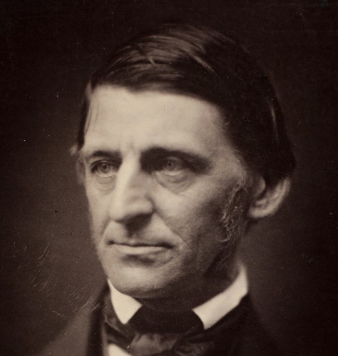
United States! the ages plead, - Present and Past in under-song, - Go put your creed into your deed, Nor speak with double tongue.
▼
Source
source
Ode, st. 5
2 months 3 weeks ago
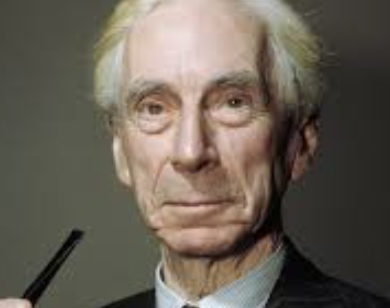
Real life is, to most men, a long second-best, a perpetual compromise between the ideal and the possible; but the world of pure reason knows no compromise, no practical limitations, no barrier to the creative activity embodying in splendid edifices the passionate aspiration after the perfect from which all great work springs. Remote from human passions, remote even from the pitiful facts of nature, the generations have gradually created an ordered cosmos, where pure thought can dwell as in its natural home, and where one, at least, of our nobler impulses can escape from the dreary exile of the actual world.
2 months 3 weeks ago
There is only one way to science-or to philosophy... to meet a problem, to see its beauty and fall in love with it; to get married to it, and to live with it happily, till death do ye part-unless you should meet another... more fascinating problem, or... obtain a solution. But even if you do... you may... discover, to your delight, the... a whole family of enchanting... perhaps difficult problem children for whose welfare you may work, with a purpose, to the end of your days.

2 months 3 weeks ago
Between the Shaman of the Tungus, the European prelate who rules church and state, the Voguls, and the Puritans, on the one hand, and the man who listens to his own command of duty, on the other, the difference is not that the former make themselves slaves, while the latter is free, but that the former have their lord outside themselves, while the latter carries his lord in himself, yet at the same time is his own slave.
2 months 3 weeks ago
Luxury is the opposite of the naturally necessary.
▼
Source
source
Notebook V, The Chapter on Capital, p. 448.
3 weeks ago
Sentimentality, like pornography, is fragmented emotion; a natural consequence of a high visual gradient in any culture.
3 months 3 weeks ago
Generals are, as a matter of course, allowed to be far more idiotic than ordinary human beings are permitted to be.

1 month 1 week ago
No matter how honest scientists think they are, they are still influenced by various unconscious assumptions that prevent them from attaining true objectivity. Expressed in a sentence, Fort's principle goes something like this: People with a psychological need to believe in marvels are no more prejudiced and gullible than people with a psychological need not to believe in marvels.
▼
Source
source
p. 125
3 weeks 5 days ago
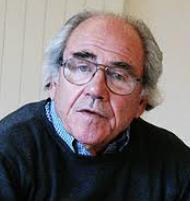
Picturing others and everything which brings you closer to them is futile from the instant that 'communication' can make their presence immediate.
▼
Source
source
(p. 42)

1 month 2 weeks ago
I don't need any support, advice, or compassion, because even if I am the most ruinous man, I still feel so powerful, so strong and fierce. For I am the only one that lives without hope.
2 months 3 weeks ago
I wrote the books I should have liked to read. That's always been my reason for writing. People won't write the books I want, so I have to do it for myself.
▼
Source
source
As quoted in C.S. Lewis (1963), by Roger Lancelyn Green, p. 9
1 month 3 weeks ago
A great revolution is on the point of being accomplished. It is a revolution not in human affairs, but in man himself.
▼
Source
source
p. 2
3 weeks ago
Electric technology is directly related to our central nervous systems, so it is ridiculous to talk of "what the public wants" played over its own nerves.
▼
Source
source
(p. 68)
3 weeks ago
It is always the psychic and social grounds, brought into play by each medium or technology, that readjust the balance of the hemispheres and of human sensibilities into equilibrium with those grounds.
▼
Source
source
p. 82
3 months 1 day ago
I have never seen a greater monster or miracle in the world than myself.
▼
Source
source
Book III, Ch. 11. Of Cripples
1 month 2 weeks ago
It is astounding that man, the instigator, inventor and vehicle of all these developments, the originator of all judgements and decisions and the planner of the future, must make himself such a quantité negligeable.
▼
Source
source
p 45

3 months 1 week ago
What then is time? If no one asks me, I know what it is. If I wish to explain it to him who asks, I do not know.
▼
Source
source
XI, 14

3 weeks 5 days ago
We often attribute "understanding" and other cognitive predicates by metaphor and analogy to cars, adding machines, and other artifacts, but nothing is proved by such attributions.
CivilSimian.com created by AxiomaticPanic, CivilSimian, Kalokagathia