


2 months 3 weeks ago
If anything extraordinary seems to have happened, we can always say that we have been the victims of an illusion. If we hold a philosophy which excludes the supernatural, this is what we always shall say.
▼
Source
source
Ch. 1: "The Scope of this Book"
3 weeks 2 days ago
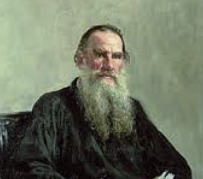
Several times I asked myself, "Can it be that I have overlooked something, that there is something which I have failed to understand? Is it not possible that this state of despair is common to everyone?" And I searched for an answer to my questions in every area of knowledge acquired by man. For a long time I carried on my painstaking search; I did not search casually, out of mere curiosity, but painfully, persistently, day and night, like a dying man seeking salvation. I found nothing.
▼
Source
source
Pt. I, ch. 5
1 month 1 week ago
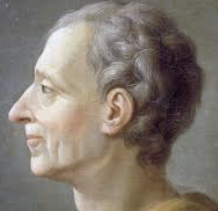
The Spirit of the Laws became the nobleman's Bible all over Europe.
▼
Source
source
Catherine Behrens, The Ancien Régime (1967), p. 78
2 months 3 weeks ago
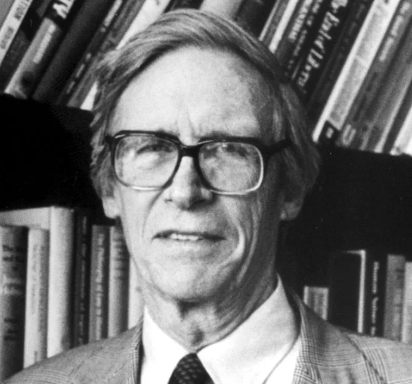
We must choose for others as we have reason to believe they would choose for themselves if they were at the age of reason and deciding rationally.
▼
Source
source
Chapter IV, Section 33, p. 209
2 months 3 weeks ago
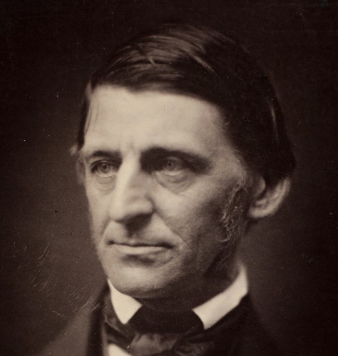
Man exists for his own sake and not to add a laborer to the state.
▼
Source
source
November 15, 1839
2 months 3 weeks ago
That what we seek we shall find; what we flee from flees from us.
▼
Source
source
Fate
1 month 1 week ago
The new tinge to modern minds is a vehement and passionate interest in the relation of general principles to irreducible and stubborn facts. All the world over and at all times there have been practical men, absorbed in 'irreducible and stubborn facts'; all the world over and at all times there have been men of philosophic temperament, who have been absorbed in the weaving of general principles. It is this union of passionate interest in the detailed facts with equal devotion to abstract generalisation which forms the novelty of our present society.
▼
Source
source
Ch. 1: "The Origins of Modern Science", pp. 3-4
6 days ago
Man is a born geometer. Even when he is expressing himself in curves, as he has done in the undulating roofs of Eastern Asia and in the flowing sculptures at Borobudur, his lines follow mathematical laws that are unknown to Nature; and he is frankly defying her when he works in rectangles. Angkor is perhaps the greatest of Man's essays in rectangular architecture that has yet been brought to light... The Buddhist stupa at Borobudur in Central Java is a lyric poem in stone, flowing round the crown of a hill to the musical accompaniment of a jagged mountain range on one side and a green expanse of rice fields on the other. Angkor is not orchestral; it is monumental. It is an epic poem which makes its effect, like the Odyssey and like Paradise Lost, by the grandeur of its structure as well as by the beauty of the details. Angkor is an epic in rectangular forms imposed upon the Cambodian jungle.
▼
Source
source
27. Angkor
2 months 3 weeks ago
Hear the verbal protestations of all men: Nothing so certain as their religious tenets. Examine their lives: You will scarcely think that they repose the smallest confidence in them. The greatest and truest zeal gives us no security against hypocrisy: The most open impiety is attended with a secret dread and compunction. No theological absurdities so glaring that they have not, sometimes, been embraced by men of the greatest and most cultivated understanding. No religious precepts so rigorous that they have not been adopted by the most voluptuous and most abandoned of men.
▼
Source
source
Part XV - General corollary
3 weeks 2 days ago
While imprisoned in the shed Pierre had learned not with his intellect but with his whole being, by life itself, that man is created for happiness, that happiness is within him, in the satisfaction of simple human needs, and that all unhappiness arises not from privation but from superfluity. And now during these last three weeks of the march he had learned still another new, consolatory truth- that nothing in this world is terrible. He had learned that as there is no condition in which man can be happy and entirely free, so there is no condition in which he need be unhappy and lack freedom. He learned that suffering and freedom have their limits and that those limits are very near together....
▼
Source
source
Bk. XIV, ch. 12

2 months 3 weeks ago
The Theophilanthropists do not call themselves the disciples of such or such a man. They avail themselves of the wise precepts that have been transmitted by writers of all countries and in all ages.
▼
Source
source
Introduction
3 months 3 weeks ago
Modesty is an unnatural attitude, and one which is only with difficulty taught to children.
3 months 1 week ago
There is another form of temptation, more complex in its peril. It originates in an appetite for knowledge. From this malady of curiosity are all those strange sights exhibited in the theatre. Hence do we proceed to search out the secret powers of nature (which is beside our end), which to know profits not, and wherein men desire nothing but to know.
▼
Source
source
X, 35
2 months 3 weeks ago
So long as the product is sold, everything is taking its regular course from the standpoint of the capitalist producer.
▼
Source
source
Vol. II, Ch. II, p. 78.

1 month 2 weeks ago
We must suffer to the end, to the moment when we stop believing in suffering.
3 months 1 day ago
By the law is the knowledge of sin [Rom 3:20], so the word of grace comes only to those who are distressed by a sense of sin and tempted to despair.
▼
Source
source
p. 168
3 months 3 weeks ago
It built itself up endlessly, like a chess game, and the telemetrists began to use a computer to program the computer that designed the program for the computer that programmed the robot-controlling computer.
1 month 1 week ago
I acknowledge that history is full of religious wars: but we must distinguish; it is not the multiplicity of religions which has produced wars; it is the intolerant spirit animating that which believed itself in the ascendant.
▼
Source
source
No. 86. (Usbek writing to Mirza)
1 month 3 weeks ago
Till mankind be satisfied with the naked statement of what they really perceive, till they confess virtue to be then most illustrious, when she more disdains the aid of ornament, they will never arrive at that manly justice of sentiment at which they seem destined one day to arrive. By his scheme of naked virtue will be every day a gainer; every succeeding observer willl more fully do her justice, while vice, deprived of that varnish with which she delighted to glow her actions of that gaudy exhibition which may be made alike by every pretender will speedily sink into unheeded contempt.
▼
Source
source
Book V, Chapter 12, "Of Titles"
1 month 2 days ago
We will likely also find that the nature of the problem to be solved will be a principal determinant of the mix. With our growing understanding of the organization of judgmental and intuitive processes, of the specific knowledge that of the specific knowledge that is required to perform particular judgmental tasks, and of the cues that evoke such knowledge in situations in which it is relevant, we have a powerful new tool for improving expert judgment. We can specify the knowledge and the recognition capabilities that experts in a domain need to acquire, and use these specifications for designing appropriate learning procedures.
▼
Source
source
p. 137.
1 month 2 weeks ago
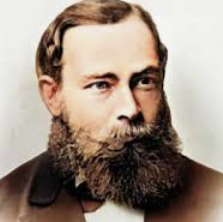
A judgment, for me is not the mere grasping of a thought, but the admission of its truth.
▼
Source
source
Gottlob Frege (1892). On Sense and Reference, note 7.
1 month 2 weeks ago
The deepest and most organic death is death in solitude, when even light becomes a principle of death. In such moments you will be severed from life, from love, smiles, friends and even from death. And you will ask yourself if there is anything besides the nothingness of the world and your own nothingness.
2 months 3 weeks ago
I have learned to seek my happiness by limiting my desires, rather than in attempting to satisfy them.
▼
Source
source
Attributed to John Stuart Mill in The Phrenological Journal and Science of Health, Vol. LXXXV (September 1887), p. 170
2 months 3 weeks ago
Though the Earth, and all inferior Creatures be common to all Men, yet every Man has a Property in his own Person. Thus no Body has any Right to but himself.
▼
Source
source
Second Treatise of Government, Ch. V, sec. 27
1 month 2 weeks ago
But yet they that have no Science, are in better, and nobler condition with their naturall Prudence; than men, that by their mis-reasoning, or by trusting them that reason wrong, fall upon false and absurd generall rules.
▼
Source
source
The First Part, Chapter 5, p. 21

1 month 6 days ago
Now he saw the problem with great clarity. If he lived here, life would be pleasant and safe. But it would also be predictable. A child could be born here, grow up here, die here, without ever experiencing the excitement of discovery. Why did Dona question him endlessly about his life in the burrow and his journey to the country of the ants? Because for her, it represented a world that was dangerous and full of fascinating possibilities. For the children of this underground city, life was a matter of repetition, of habit. And this, he suddenly realized, was the heart of the problem. Habit. Habit was a stifling, warm blanket that threatened you with suffocation and lulled the mind into a state of perpetual nagging dissatisfaction. Habit meant the inability to escape from yourself, to change and develop . . .
▼
Source
source
pp. 132-133
2 months 2 weeks ago
Beginning to reason is like stepping onto an escalator that leads upward and out of sight. Once we take the first step, the distance to be traveled is independent of our will and we cannot know in advance where we shall end.
▼
Source
source
Chapter 4, Reason, p. 88
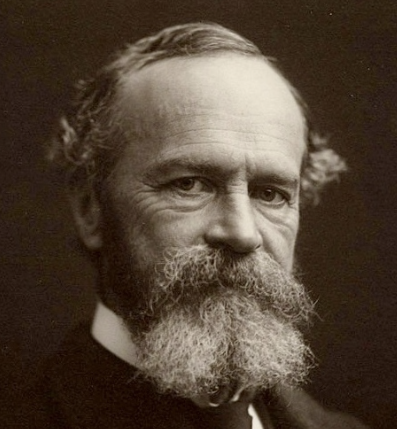
2 months 3 weeks ago
The stronghold of the determinist argument is the antipathy to the idea of chance...This notion of alternative possibility, this admission that any one of several things may come to pass is, after all, only a roundabout name for chance.
▼
Source
source
The Dilemma of Determinism (1884) p.153
1 month 6 days ago
Society creates the victims that it afterwards vainly attempts to get rid of.
3 months 1 week ago
Every habit and faculty is confirmed and strengthened by the corresponding actions, that of walking by walking, that of running by running.
▼
Source
source
Book II, ch. 18, 1
1 month 2 weeks ago
When we are told, in the same tone, that these people will be rewarded in "heaven" for their distress, and that "heaven" is the exact reverse of the earthly order ("the first shall be last"), we distinctly feel how the ressentiment-laden man transfers to God the vengeance he himself cannot wreak on the great. In this way, he can satisfy his revenge at least in imagination, with the aid of an other-worldly mechanism of rewards and punishments.
▼
Source
source
L. Coser, trans. (1961), p. 97
1 month 2 weeks ago
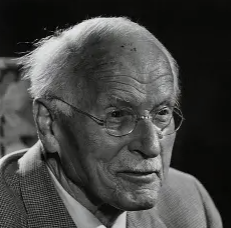
Great and enduring civilizations like those of the Hindus and the Chinese were built upon this foundation and developed from it a discipline of self-knowledge which they brought to a high pitch of refinement both in philosophy and practice.
▼
Source
source
Carl Jung, Modern Man in Search of a Soul. quoted in Hindu Culture, K. Guru Dutt, and quoted in Gewali, Salil (2013). Great Minds on India. New Delhi: Penguin Random House.
2 months 1 week ago
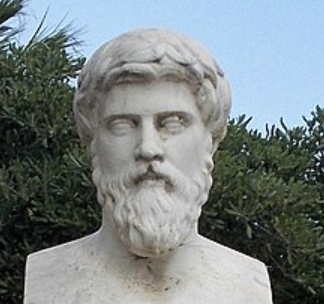
Phocion compared the speeches of Leosthenes to cypress-trees. "They are tall," said he, "and comely, but bear no fruit."
▼
Source
source
56 Phocion

2 months 3 weeks ago
I die adoring God, loving my friends, not hating my enemies, and detesting superstition.
▼
Source
source
Déclaration de Voltaire, note to his secretary, Jean-Louis Wagnière, 28 February 1778
1 month 5 days ago
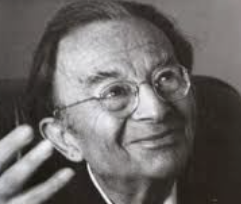
Man is born as a freak of nature, being within nature and yet transcending it. He has to find principles of action and decision-making which replace the principles of instincts. He has to have a frame of orientation which permits him to organize a consistent picture of the world as a condition for consistent actions. He has to fight not only against the dangers of dying, starving, and being hurt, but also against another danger which is specifically human: that of becoming insane. In other words, he has to protect himself not only against the danger of losing his life but also against the danger of losing his mind.
▼
Source
source
The Revolution of Hope: Toward a Humanized Technology (1968), p. 61
3 months 1 day ago
If you don't know how to die, don't worry; Nature will tell you what to do on the spot, fully and adequately. She will do this job perfectly for you; don't bother your head about it.
1 month 3 days ago
People often become scholars for the same reason they become soldiers: simply because they are unfit for any other station. Their right hand has to earn them a livelihood; one might say they lie down like bears in winter and seek sustenance from their paws.
▼
Source
source
B 41
2 months 1 week ago
Being nimble and light-footed, his father encouraged him to run in the Olympic race. "Yes," said he, "if there were any kings there to run with me."
▼
Source
source
41 Alexander
1 month 2 weeks ago
I foresee the day when we shall read nothing but telegrams and prayers.
1 month 2 weeks ago
The same, without such opinion, DESPAIRE.
▼
Source
source
The First Part, Chapter 6, p. 25
2 weeks 3 days ago
The advantage of pure, and the disadvantage of impure air are experienced each time we breathe, and all who understand the causes of disease know that an impure atmosphere is most unfavourable to the enjoyment of health, and an efficient cause to shorten human existence within the natural life of man. It is therefore most desirable that decisive measures should be devised and generally adopted to ensure to all a pure atmosphere, in which to live during their lives.
▼
Source
source
3rd Part
1 month 1 week ago
The bastard form of mass culture is humiliated repetition: content, ideological schema, the blurring of contradictions-these are repeated, but the superficial forms are varied: always new books, new programs, new films, news items, but always the same meaning.
▼
Source
source
Modern, in The Pleasure of the Text
2 weeks 6 days ago
The river of my title is a river of DNA, and it flows through time, not space. It is a river of information, not a river of bones and tissues.

2 months 3 weeks ago
Political ideals must be based upon ideals for the individual life. The aim of politics should be to make the lives of individuals as good as possible.

2 months 2 weeks ago
This legible lesson, this ritual recording, must be repeated as often as possible; the punishments must be a school rather than a festival; an ever-open book rather than a ceremony. The duration that makes the punishment effective for the guilty is also useful for the spectators. They must be able to consult at each moment the permanent lexicon of crime and punishment. A secret punishment is a punishment half wasted. Children should be allowed to come to the places where the penalty is being carried out; there they will attend their classes in civics. And grown men will periodically relearn the laws. Let us conceive of places of punishment as a Garden of the Laws that families would visit on Sundays.
▼
Source
source
Chapter Three, The Gentle Way in Punishment
3 months 1 day ago
Amongst so many borrowed things, I am glad if I can steal one, disguising and altering it for some new service.
▼
Source
source
Book III, Ch. 12. Of Physiognomy
2 months 3 weeks ago
It appears, accordingly, from the experience of all ages and nations, I believe, that the work done by freemen comes cheaper in the end than that performed by slaves.
▼
Source
source
Chapter VIII.
2 months 3 weeks ago
Ordinary language is totally unsuited for expressing what physics really asserts, since the words of everyday life are not sufficiently abstract. Only mathematics and mathematical logic can say as little as the physicist means to say.
▼
Source
source
The Scientific Outlook, 1931
1 month 2 weeks ago
Better to be an animal than a man, an insect than an animal, a plant than an insect, and so on. Salvation? Whatever diminishes the kingdom of consciousness and compromises its supremacy.
CivilSimian.com created by AxiomaticPanic, CivilSimian, Kalokagathia