


3 months 2 weeks ago
I [prefer] a short life with width to a narrow one with length.
1 month 2 weeks ago
Without a strategic retreat into the self, without vigilant thought, human life is impossible. Call to mind all that mankind owes to certain great withdrawals into the self! It is no chance that all the great founders of religions preceded their apostolates by famous retreats. Buddha withdraws to the forest; Mahomet withdraws to his tent, and even there he withdraws from his tent by wrapping his head in his cloak; above all, Jesus goes apart into the desert for forty days.
▼
Source
source
p. 35
1 month 1 week ago
The characteristic of the really great writer is the ability of his mind to to suddenly leap beyond his ordinary human values, into sudden perception of universal values.
▼
Source
source
p. 33
1 month 2 days ago
If the thought enunciates an object as a truth, it is only as a challenge to this object's own self-fulfillment.
3 months ago
It must not be supposed that the subjective elements are any less 'real' than the objective elements; they are only less important... because they do not point to anything beyond ourselves...
▼
Source
source
An Outline of Philosophy Ch.15 The Nature of our Knowledge of Physics, 1927
1 week 1 day ago
All art is autobiographical; the pearl is the oyster's autobiography.
▼
Source
source
On the autobiographical nature of his films, in The Atlantic
1 month 3 weeks ago
It is comparatively easy for the philosopher in his closet to invent imaginary schemes of policy, and to shew how mankind, if they were without passions and without prejudices, might best be united in the form of a political community. But, unfortunately, men in all ages are the creatures of passions, perpetually prompting them to defy the rein, and break loose from the dictates of sobriety and speculation.
▼
Source
source
History of the Commonwealth of England. From its Commencement, to the Restoration of Charles the Second. Volume the Fourth. Oliver, Lord Protector (1828), p. 579
1 month 1 week ago
Life is an offensive, directed against the repetitious mechanism of the Universe.
▼
Source
source
p. 102.

1 month 2 weeks ago
If we want a love which will protect the soul from wounds we must love something other than God.
▼
Source
source
p. 62

2 months 1 week ago
Man know thyself; then thou shalt know the Universe and God.
▼
Source
source
As quoted in Fragments of Reality: Daily Entries of Lived Life (2006) by Peter Cajander, p. 109

4 months ago
Men seem to pursue honour in order that they may believe themselves to be good. Accordingly, they seek to be honoured by the wise, and by those who know them well, and on the score of virtue; it is clear, therefore, that in their opinion at any rate, virtue is superior to honour. Perhaps, then, one ought to say that virtue rather than honour is the end of the political life; yet even virtue is plainly too imperfect: for it seems that a man might have all the virtues and yet be asleep, or fail to achieve anything all his life; moreover, such a person may suffer the greatest evils and misfortunes. And no one, in this case, would call a man, who passed his life in this manner, happy, except for argument's sake.
1 month 1 week ago
The ideas of Freud were popularized by people who only imperfectly understood them, who were incapable of the great effort required to grasp them in their relationship to larger truths, and who therefore assigned to them a prominence out of all proportion to their true importance.
▼
Source
source
Ch. 28, June 3, 1943.
2 months 4 weeks ago
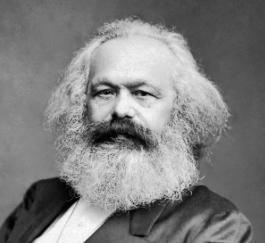
Through the emancipation of private property from the community, the State has become a separate entity, beside and outside civil society; but is it nothing more than the form of organization which the bourgeois necessarily adopt both for internal and external purposes, for the mutual guarantee of their property and interests.
▼
Source
source
Part One The Marx-Engels Reader, p. 187
1 month 2 weeks ago
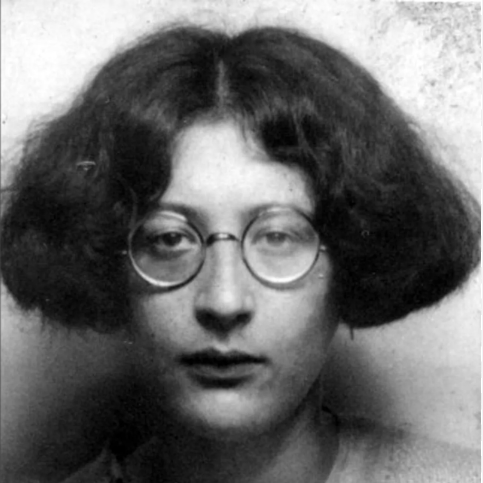
To desire friendship is a great fault. Friendship should be a gratuitous joy like those afforded by art or life. We must refuse it so that we may be worthy to receive it; it is of the order of grace.
▼
Source
source
p. 274
1 month 3 weeks ago
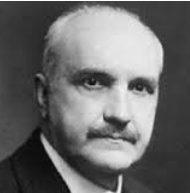
No system would have ever been framed if people had been simply interested in knowing what is true, whatever it may be. What produces systems is the interest in maintaining against all comers that some favourite or inherited idea of ours is sufficient and right.
3 months 2 days ago
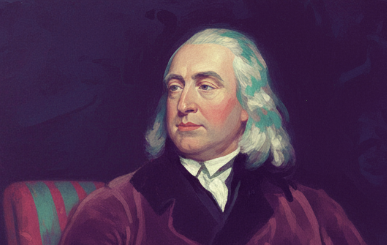
The community is a fictitious body, composed of the individual persons who are considered as constituting as it were its members. The interest of the community then is what? The sum of the interests of the several members who compose it.
▼
Source
source
Ch. 1: Of the Principle of Utility

2 months 3 weeks ago
Worte sind Taten. Words are deeds.
▼
Source
source
p. 50e
3 weeks 4 days ago
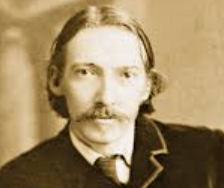
To hold the same views at forty as we held at twenty is to have been stupefied for a score of years, and take rank, not as a prophet, but as an unteachable brat, well birched and none the wiser. It is as if a ship captain should sail to India from the Port of London; and having brought a chart of the Thames on deck at his first setting out, should obstinately use no other for the whole voyage.
▼
Source
source
Crabbed Age and Youth.
3 months ago
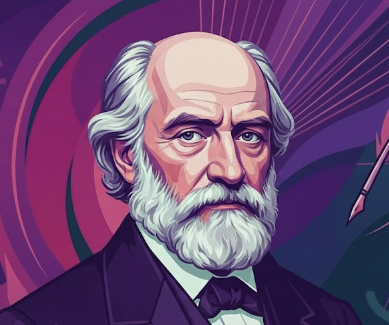
Patriotism, when it wants to make itself felt in the domain of learning, is a dirty fellow who should be thrown out of doors.
▼
Source
source
Vol. 2, Ch. 21, § 255
2 months ago
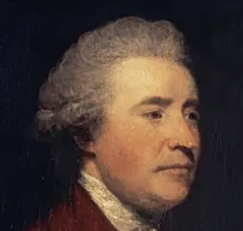
Strange incongruities must ever perplex those, who confound the unhappiness of civil dissensions with the crime of treason.
1 month 2 weeks ago
It is not in a person's nature to desire what he already has. Desire is a tendency, the start of a movement toward something, toward a point from which one is absent. If, at the very outset, this movement doubles back on itself toward its point of departure, a person turns round and round like a squirrel in a cage or a prisoner in a condemned cell. Constant turning soon produces revulsion. All workers, especially though not exclusively those who work under inhumane conditions, are easily the victims of revulsion, exhaustion and disgust and the strongest are often the worst affected.
▼
Source
source
p. 245

2 weeks 5 days ago
What concerns me most here are the ways in which contemporary voices considered to be leftist have abandoned the philosophical ideas that are central to any left-wing standpoint: a commitment to universalism over tribalism, a firm distinction between justice and power, and a belief in the possibility of progress.
▼
Source
source
Polity (2023), p. 5
3 weeks 5 days ago
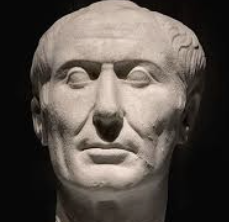
It is a bad plan that admits of no modification.
▼
Source
source
Maxim 469

1 month 3 weeks ago
All my life, I have lived with the feeling that I have been kept from my true place. If the expression "metaphysical exile" had no meaning, my existence alone would afford it one.

3 weeks 4 days ago
It has become almost a cliché to remark that nobody boasts of ignorance of literature, but it is socially acceptable to boast ignorance of science and proudly claim incompetence in mathematics.
1 month 3 weeks ago
The fear of your own solitude, of its vast surface and its infinity... Remorse is the voice of solitude. And what does this whispering voice say? Everything in us that is not human anymore.

2 months 4 weeks ago
The best effect of fine persons is felt after we have left their presence.
▼
Source
source
1839

3 months 1 week ago
A theologian is born by living, nay dying and being damned, not by thinking, reading, or speculating.
▼
Source
source
352
1 month 4 weeks ago
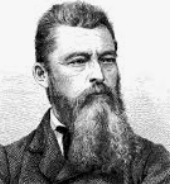
"Can any good come out of Nazareth?" This is always the question of the wiseacres and the knowing ones. But the good, the new, comes from exactly that quarter whence it is not looked for, and is always something different from what is expected. Everything new is received with contempt, for it begins in obscurity. It becomes a power unobserved.
▼
Source
source
As quoted in "Voices of the New Time" as translated by C. C. Shackford in The Radical Vol. 7 (1870), p. 329

3 months 3 days ago
His character does not appear more extraordinary and unusual by the mixture of so much absurdity with so much penetration, than by his tempering such violent ambition, and such enraged fanaticism with so much regard to justice and humanity.
▼
Source
source
Volume III, Chapter LXI; referring to Oliver Cromwell
1 month 1 week ago
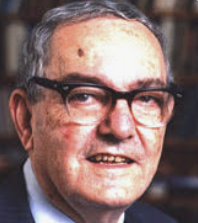
Over Christmas, Allen Newell and I created a thinking machine.
▼
Source
source
Simon (1956) quoted on CMU Libraries: Problem Solving Research
1 month 3 weeks ago
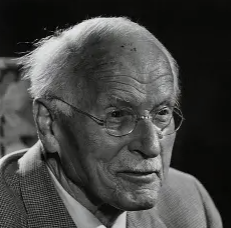
We are so captivated by and entangled in our subjective consciousness that we have forgotten the age-old fact that God speaks chiefly through dreams and visions.
▼
Source
source
The Symbolic Life (1953); also in Man and His Symbols
3 months ago
It is a waste of energy to be angry with a man who behaves badly, just as it is to be angry with a car that won't go. The difference is that you can compel your car to go to a garage, but you cannot compel Hitler to go to a psychiatrist.
▼
Source
source
A Fresh Look at Empiricism: 1927-42 (1996), p. 544
2 months 4 weeks ago
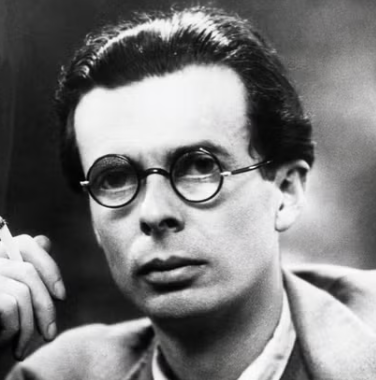
Death is the only thing we haven't succeeded in completely vulgarizing.
▼
Source
source
Eyeless in Gaza, 1936
3 months 3 days ago
The annual labour of every nation is the fund which originally supplies it with all the necessaries and conveniences of life which it annually consumes.
▼
Source
source
Introduction and Plan of the Work, p. 1.

2 months 3 weeks ago
This aristocratic thesis is... the demos, the people, are the most numerous... also comprised of the most ordinary, and... even the worst, citizens. Therefore... what is best for the demos cannot be what is best for the polis... the city.
3 months 3 days ago
For do our Theologians pretend to make a monopoly of the word, action, and may not the atheists likewise take possession of it, and affirm that plants, animals, men, &c. are nothing but particular actions of one simple universal substance, which exerts itself from a blind and absolute necessity?
▼
Source
source
Part 4, Section 5
3 months 3 weeks ago
Necessity makes a joke of civilization.

3 months 1 day ago
It is one of the superstitions of the human mind to have imagined that virginity could be a virtue.
▼
Source
source
Notebooks (c.1735-c.1750) Note: This quotation and the three that follow directly below are from the so-called Leningrad Notebook, also known as Le Sottisier; it is one of several posthumously published notebooks of Voltaire.
1 month 4 weeks ago
Because half-a-dozen grasshoppers under a fern make the field ring with their importunate chink, whilst thousands of great cattle, reposed beneath the shadow of the British oak, chew the cud and are silent, pray do not imagine that those who make the noise are the only inhabitants of the field; that of course they are many in number; or that, after all, they are other than the little shrivelled, meagre, hopping, though loud and troublesome insects of the hour.
▼
Source
source
Volume iii, p. 344
1 month 1 week ago
A clash of doctrines is not a disaster - it is an opportunity.
▼
Source
source
Ch. 12: "Religion and Science", p. 259
3 months 3 days ago
To expect, indeed, that the freedom of trade should ever be entirely restored in Great Britain, is as absurd as to expect that an Oceana or Utopia should never be established in it.
▼
Source
source
Chapter II, p. 505.
1 month 3 weeks ago
We wish, in a word, equality - equality in fact as a corollary, or rather, as primordial condition of liberty. From each according to his faculties, to each according to his needs; that is what we wish sincerely and energetically.
▼
Source
source
As quoted in The Old Order and the New (1890) by J. Morris Davidson
4 weeks 1 day ago
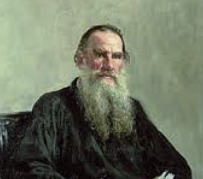
Each visitor performed the ceremony of greeting this old aunt whom not one of them knew, not one of them wanted to know, and not one of them cared about; Anna Pávlovna observed these greetings with mournful and solemn interest and silent approval. The aunt spoke to each of them in the same words, about their health and her own, and the health of Her Majesty, "who, thank God, was better today." And each visitor, though politeness prevented his showing impatience, left the old woman with a sense of relief at having performed a vexatious duty and did not return to her the whole evening.
▼
Source
source
Bk. I, Ch. II
3 months ago
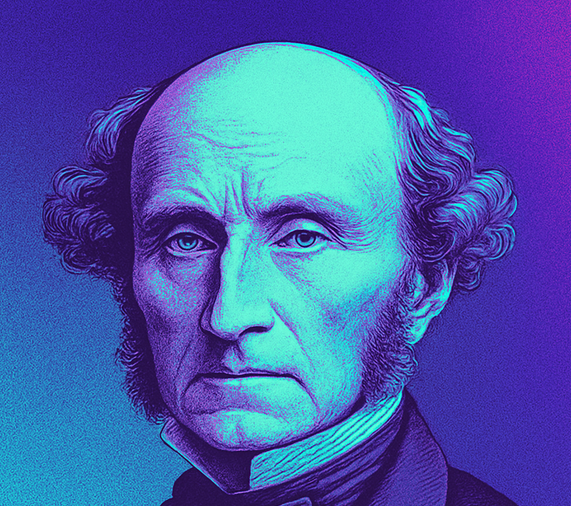
I never turned recreant to intellectual culture, or ceased to consider the power and practice of analysis as an essential condition both of individual and of social improvement. But I thought that it had consequences which required to be corrected, by joining other kinds of cultivation with it. The maintenance of a due balance among the faculties, now seemed to me of primary importance. The cultivation of the feelings became one of the cardinal points in my ethical and philosophical creed.
▼
Source
source
(pp. 143-144)
2 months ago
Politics and the pulpit are terms that have little agreement.
1 month 1 week ago
I began with a strong bias toward skepticism. Besides, to tell the truth, I still find occult phenomena a little preposterous and irrelevant. What do they really matter if you place them against the truly great human achievements - against the creative genius of a Michaelangelo, a Beethoven, an Einstein? In that context they seem almost trivial.
▼
Source
source
p. 120
3 months 3 weeks ago
The inexperienced in wisdom and virtue, ever occupied with feasting and such, are carried downward, and there, as is fitting, they wander their whole life long, neither ever looking upward to the truth above them nor rising toward it, nor tasting pure and lasting pleasures. Like cattle, always looking downward with their heads bent toward the ground and the banquet tables, they feed, fatten, and fornicate. In order to increase their possessions they kick and butt with horns and hoofs of steel and kill each other, insatiable as they are.
CivilSimian.com created by AxiomaticPanic, CivilSimian, Kalokagathia