

2 months 3 weeks ago
Before mass leaders seize the power to fit reality to their lies, their propaganda is marked by its extreme contempt for facts as such, for in their opinion fact depends entirely on the power of man who can fabricate it.
▼
Source
source
On "alternate facts"
3 months 1 day ago
How many valiant men we have seen to survive their own reputation!
▼
Source
source
Ch. 16
3 months 6 days ago
If you act externally with men in conformity with your rank, you should recognize, by a more secret but truer thought, that you have nothing naturally superior to them.
1 month 5 days ago
Envy, jealousy, ambition, any kind of greed are passions; love is an action, the practice of human power, which can be practiced only in freedom and never as a result of compulsion. Love is an activity, not a passive affect; it is a "standing in," not a "falling for." In the most general way, the active character of love can be described by stating that love is primarily giving, not receiving.

2 months 1 week ago
He who has begun has half done. Dare to be wise; begin!
▼
Source
source
Book I, epistle ii, lines 40-41

1 month 2 weeks ago
It is more blessed to give than to receive.
▼
Source
source
Acts 20:35b
2 months 3 weeks ago
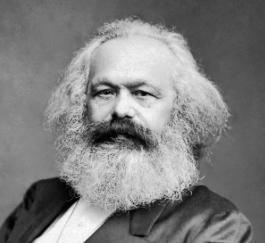
But, suppose, besides, that the making of the new machinery affords employment to a greater number of mechanics, can that be called compensation to the carpet makers, thrown on the streets?
▼
Source
source
Vol. I, Ch. 15, Section 6, pg. 479.

1 month 1 week ago
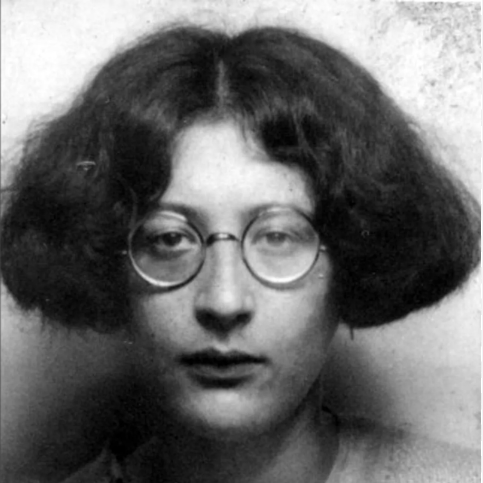
Above all our thought should be empty, waiting, not seeking anything, but ready to receive in its naked truth the object that is to penetrate it. All wrong translations, all absurdities in geometry problems, all clumsiness of style, and all faulty connection of ideas in compositions and essays, all such things are due to the fact that thought has seized upon some idea too hastily, and being thus prematurely blocked, is not open to the truth.

1 month 6 days ago
Sadism is plainly connected with the need for self-assertion. At the same time it cannot be separated from the idea of defeat. A sadist is a man, who, in some sense, has his back to the wall. Nothing is further from sadism, for example, than the cheerful, optimistic mentality of a Shaw or Wells.
▼
Source
source
p. 158
2 months 3 weeks ago
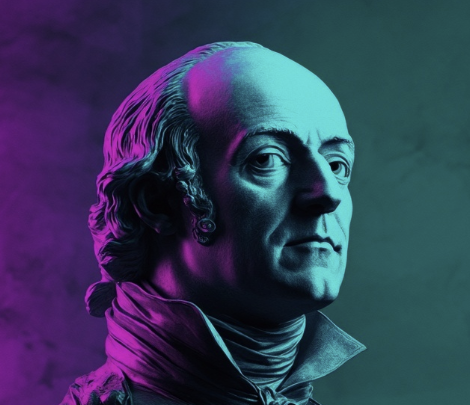
It seldom happens, however, that a great proprietor is a great improver.
▼
Source
source
Chapter IV, p. 420.
2 months 3 weeks ago
The past is the luxury of proprietors.
2 months 3 weeks ago
Encourage therefore his inquisitiveness all you can, by satisfying his demands, and informing his judgement, as far as it is capable. When his reasons are any way tolerable, let him find the credit and commendation of it, without being laugh'd at for his mistake be gently put into the right; and if he shew a forwardness to be reasoning about things that come in his way, take care, as much as you can, that no body check this inclination in him, or mislead it by captious or fallacious ways of talking with him. For when all is done, this is the highest and most important faculty of our minds, deserves the greatest care and attention in cultivating it: the right improvement, and exercise of our reason being the highest perfection that a man can attain to in his life.
▼
Source
source
Sec. 122

3 months 1 week ago
Life is one long struggle in the dark.
▼
Source
source
Book II, line 54 (tr. Rouse)

3 months 1 week ago
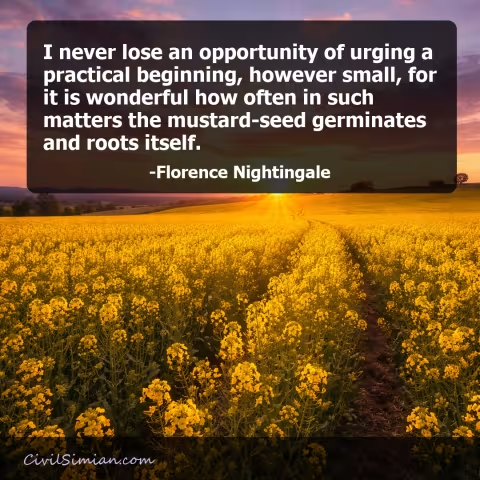
Charity is no substitute for justice withheld.
▼
Source
source
As quoted in Majority of One (1957) by Sydney J. Harris, p. 283
2 months 3 weeks ago
The whole conception of God is a conception derived from the ancient Oriental despotisms. It is a conception quite unworthy of free men. When you hear people in church debasing themselves and saying that they are miserable sinners, and all the rest of it, it seems contemptible and not worthy of self-respecting human beings. We ought to stand up and look the world frankly in the face. We ought to make the best we can of the world, and if it is not so good as we wish, after all it will still be better than what these others have made of it in all these ages. A good world needs knowledge, kindliness, and courage; it does not need a regretful hankering after the past, or a fettering of the free intelligence by the words uttered long ago by ignorant men.
▼
Source
source
"What We Must Do"
2 months 3 weeks ago
If the material world rests upon a similar ideal world, this ideal world must rest upon some other; and so on, without end. It were better, therefore, never to look beyond the present material world. By supposing it to contain the principle of its order within itself, we really assert it to be God; and the sooner we arrive at that Divine Being, so much the better. When you go one step beyond the mundane system, you only excite an inquisitive humour which it is impossible ever to satisfy.
▼
Source
source
Philo to Cleanthes, Part IV
2 weeks 5 days ago
You could give Aristotle a tutorial. And you could thrill him to the core of his being. Aristotle was an encyclopedic polymath, an all time intellect. Yet not only can you know more than him about the world, you also can have a deeper understanding of how everything works. Such is the privilege of living after Newton, Darwin, Einstein, Planck, Watson, Crick and their colleagues.
3 months 3 weeks ago
Science fiction writers foresee the inevitable, and although problems and catastrophes may be inevitable, solutions are not.
1 month 1 week ago
Useless laws weaken the necessary laws.
▼
Source
source
Book XXIX: Of the Manner of Composing Laws, Chapter 16: Things to be Observed in the Composing of Laws
1 month 1 week ago
Attention is the rarest and purest form of generosity.
▼
Source
source
From an April 13, 1942 letter to poet Joë Bousquet, published in their collected correspondence
2 months 3 weeks ago
Why did it occur to anyone to believe in only one God? And conversely why did it ever occur to anyone to believe in many gods? To both these questions we must return the same answer: Because that is how the human mind happens to work. For the human mind is both diverse and simple, simultaneously many and one. We have an immediate perception of our own diversity and of that of the outside world. And at the same time we have immediate perceptions of our own oneness.
▼
Source
source
"One and Many," p. 12
1 month 1 day ago
From any vocabulary of ideas we can build other ideas by formal combinations of signs. But not any set of ideas will be instructive. One must have the right ideas.
▼
Source
source
Chapter 15, Inductive Logic, p. 139.
2 months 3 weeks ago
Capital is dead labor, that vampire-like, only lives by sucking living labor, and lives the more, the more labor it sucks.
▼
Source
source
Vol. I, Ch. 10, Section 1, p. 257.
6 days ago
I don't believe a committee can write a book. ... It can, oh, govern a country, perhaps. But I don't believe it can write a book.
▼
Source
source
Interviewed by Christopher Wright (1955). Printed in James Nelson (ed.) Wisdom: Conversations with the Elder Wise Men of Our Day (New York: Norton, 1958) p. 208
2 months 3 weeks ago
The education of the common people requires, perhaps, in a civilized and commercial society, the attention of the public more than that of people of some rank and fortune.
▼
Source
source
Chapter I, Part III, p. 845.
2 months 1 week ago
The mathematician speculates the causes of a certain sensible effect, without considering its actual existence; for the contemplation of universals excludes the knowledge of particulars; and he whose intellectual eye is fixed on that which is general and comprehensive, will think but little of that which is sensible and singular.
▼
Source
source
A Dissertation on the Doctrine of Ideas, &c.
3 months 1 week ago
When a man at forty is the object of dislike, he will always continue what he is.
3 weeks ago
Life is short, but its ills make it seem long.
▼
Source
source
Maxim 124
3 weeks ago
War has become the environment of our time if only because it is an accelerated form of innovation and education.
▼
Source
source
(p. 381)
1 month 6 days ago
Full of gods means full of meaning, full of narration. The world becomes readable, like a picture.
2 weeks 5 days ago
This is still the strangest thing in all man's travelling, that he should carry about with him incongruous memories.
▼
Source
source
Pt. II, ch. III.

2 months 2 weeks ago
Philosophy may in no way interfere with the actual use of language; it can in the end only describe it.
▼
Source
source
§ 124
2 months 2 weeks ago
... our maturation has consisted in the gradual realization that, if we can rely on one another, we need not rely on anything else. In religious terms, this is the Feuerbachian thesis that God is just a projection of the best, and sometimes the worst, of humanity. In philosophical terms, it is the thesis that anything that talk of objectivity can do to make our practices intelligible can be done equally well by talk of intersubjectivity.
▼
Source
source
"John Searle on Realism and Relativism." Truth and Progress: Philosophical Papers, Volume 3 (1998).
2 weeks 5 days ago
By all means begin your folio; even if the doctor does not give you a year, even if he hesitates about a month, make one brave push and see what can be accomplished in a week.
▼
Source
source
316
1 month 3 days ago
The most heated defenders of a science, who cannot endure the slightest sneer at it, are commonly those who have not made very much progress in it and are secretly aware of this defect.
▼
Source
source
F 8
2 months 3 weeks ago
That books do not take the place of experience, and that learning is no substitute for genius, are two kindred phenomena; their common ground is that the abstract can never take the place of the perceptive.
▼
Source
source
E. Payne, trans., Vol. II, Ch. 7, p. 74

1 month 4 weeks ago
Aristotle whilst he labours to refute the ideas of Plato, falls upon one himself: for his summum bonum, is a Chimera, and there is no such thing as his Felicity.
▼
Source
source
Section 15

2 months 2 weeks ago
Everywhere we remain unfree and chained to technology, whether we passionately affirm or deny it. But we are delivered over to it in the worst possible way when we regard it as something neutral; for this conception of it, to which today we particularly like to do homage, makes us utterly blind to the essence of technology.
▼
Source
source
The Question Concerning Technology
1 month 2 weeks ago
All living souls welcome whatsoever they are ready to cope with; all else they ignore, or pronounce to be monstrous and wrong, or deny to be possible.
▼
Source
source
Ch. 3, P. 62
2 months 3 weeks ago
And because it may be too great a temptation to human frailty, apt to grasp at power, for the same persons, who have the power of making laws, to have also in their hands the power to execute them, whereby they may exempt themselves from obedience to the laws they make, and suit the law, both in its making, and execution, to their own private advantage...
▼
Source
source
Second Treatise of Civil Government, Ch. XII, sec. 143
2 weeks 2 days ago
As for types like my own, obscurely motivated by the conviction that our existence was worthless if we didn't make a turning point of it, we were assigned to the humanities, to poetry, philosophy, painting - the nursery games of humankind, which had to be left behind when the age of science began. The humanities would be called upon to choose a wallpaper for the crypt, as the end drew near.
▼
Source
source
Ch. 6

3 months 2 weeks ago
So many men are deprived of grace. How can one live without grace? One has to try it and do what Christianity never did: be concerned with the damned.
2 months 1 week ago
A physician, after he had felt the pulse of Pausanias, and considered his constitution, saying, "He ails nothing," "It is because, sir," he replied, "I use none of your physic."
▼
Source
source
Of Pausanias the Son of Phistoanax

3 months 2 days ago
As we divided natural philosophy in general into the inquiry of causes, and productions of effects: so that part which concerneth the inquiry of causes we do subdivide according to the received and sound division of causes. The one part, which is physic, inquireth and handleth the material and efficient causes; and the other, which is metaphysic, handleth the formal and final causes.
▼
Source
source
Book VII, 3
3 months 1 day ago
The Clergy is the greatest hindrance to faith.
▼
Source
source
58

2 months 2 weeks ago
Satisfaction linked with dishonor or with harm to others is a prison for the seeker.
▼
Source
source
Vahishto-Ishti Gatha; Yasna 53, 6.
2 months 3 weeks ago
The original scriptures of most religions are poetical and unsystematic. Theology, which generally takes the form of a reasoned commentary on the parables and aphorisms of the scriptures, tends to make its appearance at a later stage of religious history. The Bhagavad-Gita occupies an intermediate position between scripture and theology; for it combines the poetical qualities of the first with the clear-cut methodicalness of the second... one of the clearest and most comprehensive summaries of the Perennial Philosophy ever to have been made. Hence its enduring value, not only for Indians, but for all mankind.

1 month 2 weeks ago
The terrifying experience and obsession of death, when preserved in consciousness, becomes ruinous. If you talk about death, you save part of yourself. But at the same time, something of your real self dies, because objectified meanings lose the actuality they have in consciousness.
CivilSimian.com created by AxiomaticPanic, CivilSimian, Kalokagathia