

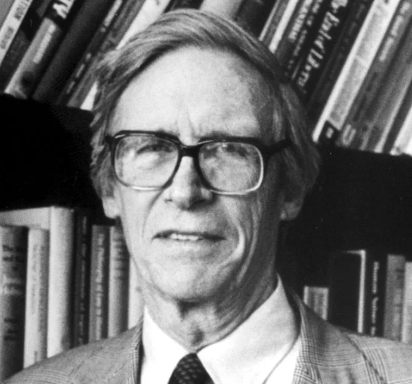
2 months 3 weeks ago
Essentially the fault lies in the fact that the democratic political process is at best regulated rivalry; it does not even in theory have the desirable properties that price theory ascribes to truly competitive markets.
▼
Source
source
Chapter IV, Section 36, p. 226

2 months ago
Of the eternal incorporeal substance nothing is changed, is formed or deformed, but there always remains only that thing which cannot be a subject of dissolution, since it is not possible that it be a subject of composition, and therefore, either of itself or by accident, it cannot be said to die.
▼
Source
source
As translated by Arthur Imerti

1 month 6 days ago
Society creates the victims that it afterwards vainly attempts to get rid of.
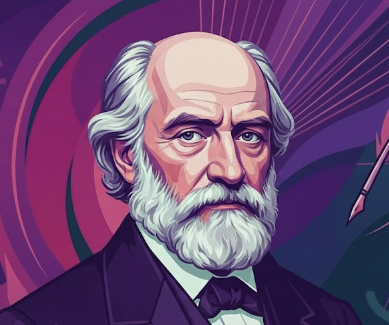
2 months 3 weeks ago
Truth that is naked is the most beautiful, and the simpler its expression the deeper is the impression it makes; this is partly because it gets unobstructed hold of the hearer's mind without his being distracted by secondary thoughts, and partly because he feels that here he is not being corrupted or deceived by the arts of rhetoric, but that the whole effect is got from the thing itself.

2 months 3 weeks ago
As for the Soothsayer, although I am certain no one feels the true beauties of that work better than I, I am far from finding these beauties in the same places as the infatuated public does. They are not the products of study and knowledge, but rather are inspired by taste and sensitivity.
▼
Source
source
First Dialogue; translated by Judith R. Bush, Christopher Kelly, Roger D. Masters
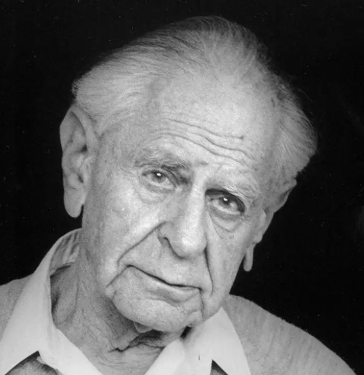
2 months 3 weeks ago
As a rule, begin my lectures on Scientific Method by telling my students that scientific method does not exist. ...having been ...the one and only professor of this non-existent subject within the British Commonwealth.
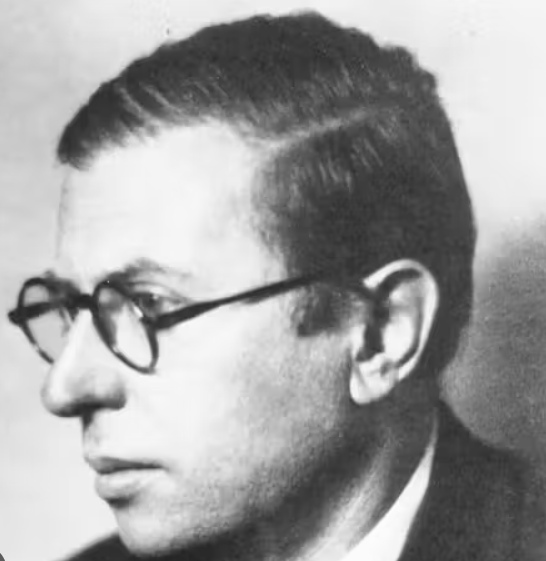
2 months 3 weeks ago
Yes, I am so free. And what a superb absence is my soul.
▼
Source
source
Orestes, Act 1

1 month 6 days ago
(Gardner) writes about various kinds of cranks with the conscious superiority of the scientist, and in most cases one can share his sense of the victory of reason. But after half a dozen chapters this non-stop superiority begins to irritate; you begin to wonder about the standards that make him so certain he is always right. He asserts that the scientist, unlike the crank, does his best to remain open-minded. So how can he be so sure that no sane person has ever seen a flying saucer, or used a dowsing rod to locate water? And that all the people he disagrees with are unbalanced fanatics? A colleague of the positivist philosopher A. J. Ayer once remarked wryly "I wish I was as certain of anything as he seems to be about everything." Martin Gardner produces the same feeling.
▼
Source
source
pp. 2-3
2 months 3 weeks ago
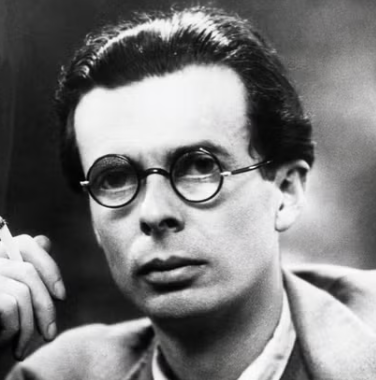
The man who comes back through the Door in the Wall will never be quite the same as the man who went out. He will be wiser but less sure, happier but less self-satisfied, humbler in acknowledging his ignorance yet better equipped to understand the relationship of words to things, of systematic reasoning to the unfathomable mystery which it tries, forever vainly, to comprehend.
6 days ago
Every oasis is an island that has water inside it but not round it.
▼
Source
source
Between Niger and Nile (London: Oxford UP, 1965) 20. Cyrenaïca's Green Mountain
2 months 3 weeks ago
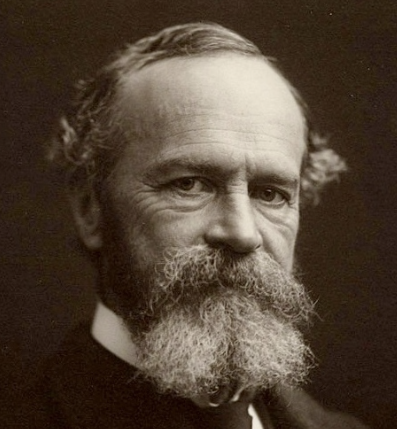
I am against bigness and greatness in all their forms, and with the invisible molecular moral forces that work from individual to individual, stealing in through the crannies of the world like so many soft rootlets, or like the capillary oozing of water, and yet rending the hardest monuments of man's pride, if you give them time. The bigger the unit you deal with, the hollower, the more brutal, the more mendacious is the life displayed. So I am against all big organizations as such, national ones first and foremost; against all big successes and big results; and in favor of the eternal forces of truth which always work in the individual and immediately unsuccessful way, under-dogs always, till history comes, after they are long dead, and puts them on top. - You need take no notice of these ebullitions of spleen, which are probably quite unintelligible to anyone but myself.
▼
Source
source
Letter to Mrs. Henry Whitman (7 June 1899), in The Letters of William James, ed. Henry James, vol. 2, p. 90, 1926
1 week 2 days ago
I really have no claim to rank myself among fatalistic, materialistic, or atheistic philosophers. Not among fatalists, for I take the conception of necessity to have a logical, and not a physical foundation; not among materialists, for I am utterly incapable of conceiving the existence of matter if there is no mind in which to picture that existence; not among atheists, for the problem of the ultimate cause of existence is one which seems to me to be hopelessly out of reach of my poor powers. Of all the senseless babble I have ever had occasion to read, the demonstrations of these philosophers who undertake to tell us all about the nature of God would be the worst, if they were not surpassed by the still greater absurdities of the philosophers who try to prove that there is no God.

3 months 2 days ago
Let the public good overcome all private and selfish regards of every kind and degree; though in truth, even private and selfish regards, and every man's own interest, will be best promoted by the preservation of peace.

3 months 1 week ago
How great is the path proper to the Sage! Like overflowing water, it sends forth and nourishes all things, and rises up to the height of heaven. All-complete is its greatness! It embraces the three hundred rules of ceremony, and the three thousand rules of demeanor. It waits for the proper man, and then it is trodden. Hence it is said, "Only by perfect virtue can the perfect path, in all its courses, be made a fact."

1 month 2 weeks ago
If I used to ask myself, over a coffin, "what good did it do the occupant to be born?" I now put the same question about anyone alive.
1 month 3 weeks ago
Nothing made a happy slave, but a degraded man. In proportion as the mind grew callous to its degradation, and all sense of manly pride was lost, the slave felt comfort. In fact, he was no longer a man. If he were to define a man, he would say with Shakspeare,"Man is a being, holding large discourse,Looking before and after."A slave was incapable of either looking before or after.
▼
Source
source
Speech in the House of Commons (12 May 1789), quoted in The Parliamentary History of England, From the Earliest Period to the Year 1803, Vol. XXVIII (1816), column 71
1 month 1 week ago
No epoch is homogeneous; whatever you may have assigned as the dominant note of a considerable period, it will always be possible to produce men, and great men, belonging to the same time, who exhibit themselves as antagonistic to the tone of their age.
▼
Source
source
Ch. 4: "The Eighteenth Century", p. 93
1 month 3 days ago
Of all the inventions of man I doubt whether any was more easily accomplished than that of a Heaven.
▼
Source
source
L 34

1 month 2 weeks ago
I am the way and the truth and the life. No one comes to the Father except through me.
▼
Source
source
14:06
1 month 1 week ago
The Text is plural. Which is not simply to say that it has several meanings, but that it accomplishes the very plural of meaning: an irreducible (and not merely an acceptable) plural. The Text is not a co-existence of meanings but a passage, an overcrossing; thus it answers not to an interpretation, even a liberal one, but to an explosion, a dissemination.
▼
Source
source
Proposition 4

1 month 2 weeks ago
Saint-Simon, like Hegel, begins with the assertion that the social order engendered by the French Revolution proved that mankind has reached the adult state. In contrast to Hegel, however, he described this stage primarily in terms of its economy; the industrial process was the sole integrating factor in the new social order.
▼
Source
source
P. 330
2 days ago
In the long run, there is nothing to stop intelligent agents from identifying the molecular signature of experience below hedonic zero and eliminating it altogether - even in insects. Nociception is vital; pain is optional. I tentatively predict that the world's last unpleasant experience in our forward light-cone will be a precisely datable event - perhaps some micro-pain in an obscure marine invertebrate a few centuries hence.
▼
Source
source
The Radical Plan to Phase out Earth's Predatory Species, io9, 30 Jul. 2014

2 months 3 weeks ago
Wisdom: The first error is that of the southern people, and it consists in holding that these eastern and western places are real places. ... give no quarter to that thought, whether it threatens you with fear, or tempts you with hopes. For this is Superstition and all who believe it will come in the end to the swamps to the south and the jungles to the far south.
▼
Source
source
Part of the same error is to think that the Landlord is a real man: Pilgrim's Regress 117
2 months 3 weeks ago
It is a political axiom that power follows property.
▼
Source
source
Chapter 12 (p. 113)
2 months 3 weeks ago
The infliction of cruelty with a good conscience is a delight to moralists. That is why they invented Hell.
▼
Source
source
Ch. 1: The Value of Scepticism

3 months 1 week ago
We should never take pleasure in causing pain to others, even to those who have wronged us, but rather strive to do good to all.
2 weeks 3 days ago
In advanced age, and in cases of disability from accident, natural infirmity or any other cause, the individual shall be supported by the colony, and receive every comfort which kindness can administer.
1 month 2 weeks ago
You are the salt of the earth; but if the salt loses its flavor, how shall it be seasoned? It is then good for nothing but to be thrown out and trampled underfoot by men. You are the light of the world. A city that is set on a hill cannot be hidden. Nor do they light a lamp and put it under a basket, but on a lampstand, and it gives light to all who are in the house. Let your light so shine before men, that they may see your good works and glorify your Father in heaven.
▼
Source
source
Matthew 5:13-16 (NIV) (See also: Mark 9:50; Luke 14:34, 35)
2 months 3 weeks ago
The world is sacred because it gives an inkling of a meaning that escapes us.
▼
Source
source
p. 280
2 months 3 weeks ago
By necessity, by proclivity, and by delight, we all quote.
▼
Source
source
Quotation and Originality
1 month 1 week ago
Reason perhaps teaches certain bourgeois virtues, but it does not make either heroes or saints.
1 month 1 week ago
Philosophy and religion are enemies, and because they are enemies they have need of one another. There is no religion without some philosophical basis, no philosophy without roots in religion. ... the attacks which are directed against religion from a presumed scientific or philosophical point of view are merely attacks from another but opposing religious point of view.
1 month 2 weeks ago
When we know what words are worth, the amazing thing is that we try to say anything at all, and that we manage to do so. This requires, it is true, a supernatural nerve.
2 months 1 week ago
This, therefore, is mathematics: she reminds you of the invisible form of the soul; she gives life to her own discoveries; she awakens the mind and purifies the intellect; she brings light to our intrinsic ideas; she abolishes oblivion and ignorance which are ours by birth.
▼
Source
source
As quoted by Morris Kline, Mathematical Thought from Ancient to Modern Times
2 months 3 weeks ago
Is it reasonable to assume a purposiveness in all the parts of nature and to deny it to the whole?
▼
Source
source
Seventh Thesis
1 month 2 weeks ago
Be of good courage, and if you are discouraged, still take courage over against the various forms of nature. He who has ears to hear, let him hear.
▼
Source
source
Chapter 4.
1 month 6 days ago
Man should possess an infinite appetite for life. It should be self-evident to him, all the time, that life is superb, glorious, endlessly rich, infinitely desirable. At present, because he is in a midway position between the brute and the truly human, he is always getting bored, depressed, weary of life. He has become so top-heavy with civilisation that he cannot contact the springs of pure vitality. Control of the prefrontal cortex will change all of this. He will cease to cast nostalgic glances towards the womb, for he will realise that death is no escape. Man is a creature of life and the daylight; his destiny lies in total objectivity.
▼
Source
source
pp. 317-318
1 month 2 weeks ago
The kingdom of heaven is like to a grain of mustard seed, which a man took, and sowed in his field: Which indeed is the least of all seeds: but when it is grown, it is the greatest among herbs, and becometh a tree, so that the birds of the air come and lodge in the branches thereof.
▼
Source
source
13:31-32 (KJV)
2 months 3 weeks ago
Hatred and anger are the greatest poison to the happiness of a good mind.
▼
Source
source
Section II, Chap. III.
1 month 2 weeks ago
Thou sayest that I am a king. To this end was I born, and for this cause came I into the world, that I should bear witness unto the truth. Every one that is of the truth heareth my voice.
▼
Source
source
18:37, (KJV)
2 weeks 3 days ago
The end of government is to make the governed and the governors happy. That government then is thebest, which in practice produces the greatest happiness to the greatest number; including those who govern, and those who obey.
▼
Source
source
Essay Fourth, The Principles of the Former Essays Applied to Government

3 months 3 weeks ago
He who lives as children live who does not struggle for his bread and does not believe that his actions possess any ultimate significance remains childlike.
1 month 1 week ago
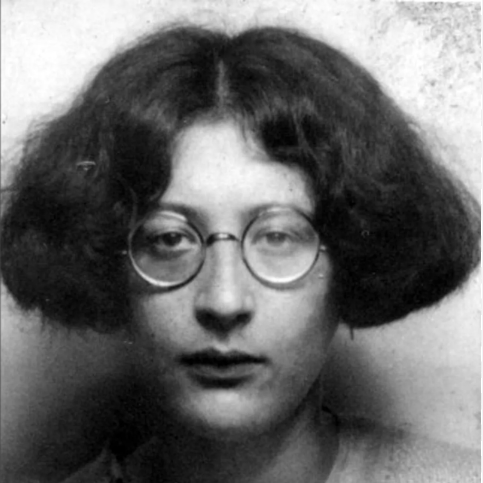
The essential characteristic of the first half of the twentieth century is the growing weakness, and almost the disappearance, of the idea of value.
▼
Source
source
"The responsibility of writers," p. 167

3 months 2 weeks ago
The ancients, even though they believed in destiny, believed primarily in nature, in which they participated wholeheartedly. To rebel against nature amounted to rebelling against oneself.
2 months 1 week ago
But after these, Pythagoras changed that philosophy, which is conversant about geometry itself, into the form of a liberal doctrine, considering its principles in a more exalted manner; and investigating its theorems immaterially and intellectually; who likewise invented a treatise of such things as cannot be explained in geometry, and discovered the constitution of the mundane figures.
▼
Source
source
Chap. IV.
3 weeks ago
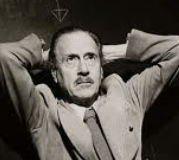
At the speed of light there is no sequence; everything happens at the same instant.
2 months 3 weeks ago
The ornament of a house is the friends who frequent it.
▼
Source
source
Domestic Life

1 month 2 weeks ago
Are ye also yet without understanding? Do not ye yet understand, that whatsoever entereth in at the mouth goeth into the belly, and is cast out into the draught? But those things which proceed out of the mouth come forth from the heart; and they defile the man. For out of the heart proceed evil thoughts, murders, adulteries, fornications, thefts, false witness, blasphemies: These are the things which defile a man: but to eat with unwashen hands defileth not a man.
▼
Source
source
15:16-20 (KJV)

3 months 3 weeks ago
There is a kind of selective memory that afflicts men when they view the past. They see the good and overlook the evil.
CivilSimian.com created by AxiomaticPanic, CivilSimian, Kalokagathia