

Being>identity. Existence>essence.


Those of our pleasures which come most rarely give the greatest delight.
Whatever you would make habitual, practice it; and if you would not make a thing habitual, do not practice it, but accustom yourself to something else.
A man who is free is like a mangy sheep in a herd. He will contaminate my entire kingdom and ruin my work.
Your pride has been too much for the pride of your admirers; they were numerous and high-spirited, but they have all run away, overpowered by your superior force of character; not one of them remains. And I want you to understand the reason why you have been too much for them. You think that you have no need of them or of any other man, for you have great possessions and lack nothing, beginning with the body, and ending with the soul. Socrates speaking to Alcibiades
The Doctrine of Knowledge, apart from all special and definite knowing, proceeds immediately upon Knowledge itself, in the essential unity in which it recognises Knowledge as existing; and it raises this question in the first place - How this Knowledge can come into being, and what it is in its inward and essential Nature? The following must be apparent: - There is but One who is absolutely by and through himself, - namely, God; and God is not the mere dead conception to which we have thus given utterance, but he is in himself pure Life. He can neither change nor determine himself in aught within himself, nor become any other Being; for his Being contains within it all his Being and all possible Being, and neither within him nor out of him can any new Being arise.
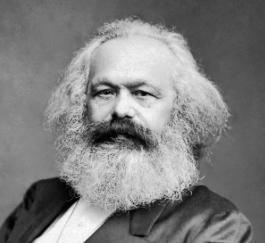
Money is therefore not only the object but also the fountainhead of greed.

All greatness is unconscious, or it is little and naught.
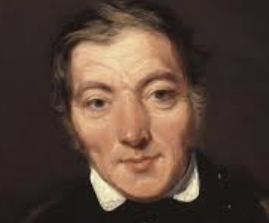
The errors of the times of superstition and bigotry still hold some sway, and compel those who wish to preserve a regard to their respectability in society to an over strained demeanor; and this demeanor sometimes degenerates into hypocrisy, and is often the cause of great inconsistency. It is destructive of every open, honest, generous, and manly feeling. It disgusts many, and drives them to the opposite extreme. It is sometimes the cause of insanity. It is founded in ignorance. While erroneous customs prevail in any country, it would evince an ignorance of human nature in any individual to offend against them, until he has convinced the community of their error.
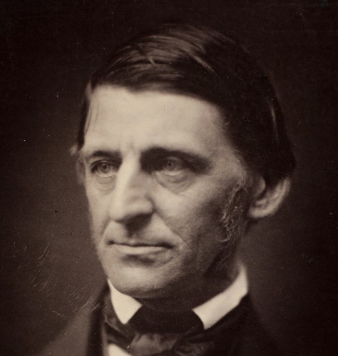
The end of the human race will be that it will eventually die of civilization.
On the dust of our heroic ancestors we too sit ballot-boxing, saying to one another, It is well, it is well! By inheritance of their noble struggles, we have been permitted to sit slothful so long. By noble toil, not by shallow laughter and vain talk, they made this English Existence from a savage forest into an arable inhabitable field for us; and we, idly dreaming it would grow spontaneous crops forever,-find it now in too questionable a state.
Even when labor is subjugated by capital it always necessarily maintains its own autonomy, and this ever more clearly true today with respect to the new immaterial, cooperative and collaborative forms of labor. This relationship is not isolated to the economic terrain but, as we will argue later, spills over into the biopolitical terrain of society as a hole, including military conflicts. In any case, we should recognize here that even in asymmetrical conflicts victory in terms of complete domination is not possible. All that can be achieved is a provisional and limited maintenance of control and order that must constantly be policed and preserved. Counterinsurgency is a full-time job.
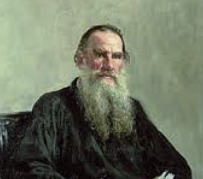
And see, a kind, refined lady will devour the carcasses of these animals with full assurance that she is doing right, at the same time asserting two contradictory propositions: First, that she is, as her doctor assures her, so delicate that she cannot be sustained by vegetable food alone, and that for her feeble organism flesh is indispensable; and, secondly, that she is so sensitive that she is unable, not only herself to inflict suffering on animals, but even to bear the sight of suffering. Whereas the poor lady is weak precisely because she has been taught to live upon food unnatural to man; and she cannot avoid causing suffering to animals - for she eats them.
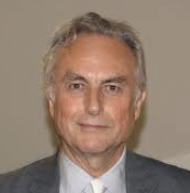
Natural selection is like artificial selection, but without the human chooser. Instead of a human deciding which offspring shall die in which shall reproduce, nature 'decides'. The quotation marks are vital because nature doesn't consciously decide. This might seem too obvious to emphasize, but you'd be surprised by the number of people who think natural selection implies some kind of personal choice. They couldn't be more wrong. It just is the case that some offspring are more likely to die while others have what it takes to survive and reproduce. Therefore, as the generations go by, the average, typical creature in the population becomes ever better at the arts of surviving and reproducing. Ever better, I should specify, when, when measured against some absolute standard.
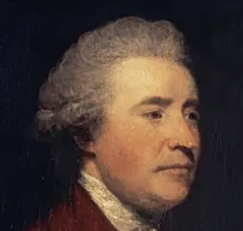
Arms are not yet taken up; but virtually, you are in a civil war. You are not people of differing opinions in a public council;-you are enemies, that must subdue or be subdued, on the one side or the other. If your hands are not on your swords, their knives will be at your throats. There is no medium,-there is no temperament,-there is no compromise with Jacobinism.
It would be deeply depressing if the only way children could get moral values was from religion. Either from scripture, and God knows we don't want them to get it from scripture, I mean, just look at scripture. Or, from being afraid of God, being intimidated by God. Anybody who is good for only those two reasons is not really being good at all. Why not teach children things like the Golden Rule, do as you would be done by, how would you like it if other children did that to you, so why do you do it to them... I think it's depressing that anybody should suggest that you actually need God in order to be moral. I would hope that our morals come from a better source than that, and therefore they are genuinely moral rather than based on outmoded scripture, or based on fear.
Literature is the effort of man to indemnify himself for the wrongs of his condition.
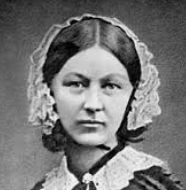
Women crave for being loved, not for loving. They scream out at you for sympathy all day long, they are incapable of giving any in return, for they cannot remember your affairs long enough to do so... They cannot state a fact accurately to another, nor can that other attend to it accurately enough for it to become information. Now is not all this the result of want of sympathy?... I am sick with indignation at what wives and mothers will do of the most egregious selfishness. And people call it all maternal or conjugal affection, and think it pretty to say so. No, no, let each person tell the truth from their own experience.
Science may fall back on its stupid excuse that science works for science, and that when it has been developed by the scientists it will become accessible to the people also; but art, if it be art, should be accessible to all, and particularly to those for whom it is produced. And the position of our art strikingly arraigns the producers of art for not wishing, not knowing how, and being unable, to serve the people.
So many of my thoughts and feelings are shared by the English that England has turned into a second native land of the mind for me.
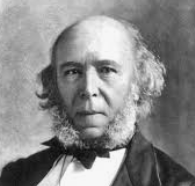
The poverty of the incapable, the distresses that come upon the imprudent, the starvation of the idle, and those shoulderings aside of the weak by the strong, which leave so many "in shallows and in miseries," are the decrees of a large, far-seeing benevolence.
The fear of your own solitude, of its vast surface and its infinity... Remorse is the voice of solitude. And what does this whispering voice say? Everything in us that is not human anymore.
And yet it is hard to believe that anything in nature could stand revealed as solid matter.The lightning of heaven goes through the walls of houses,like shouts and speech; iron glows white in fire; red-hot rocks are shattered by savage steam; hard gold is softened and melted down by heat; chilly brass, defeated by heat, turns liquid; heat seeps through silver, so does piercing cold;by custom raising the cup, we feel them bothas water is poured in, drop by drop, above.
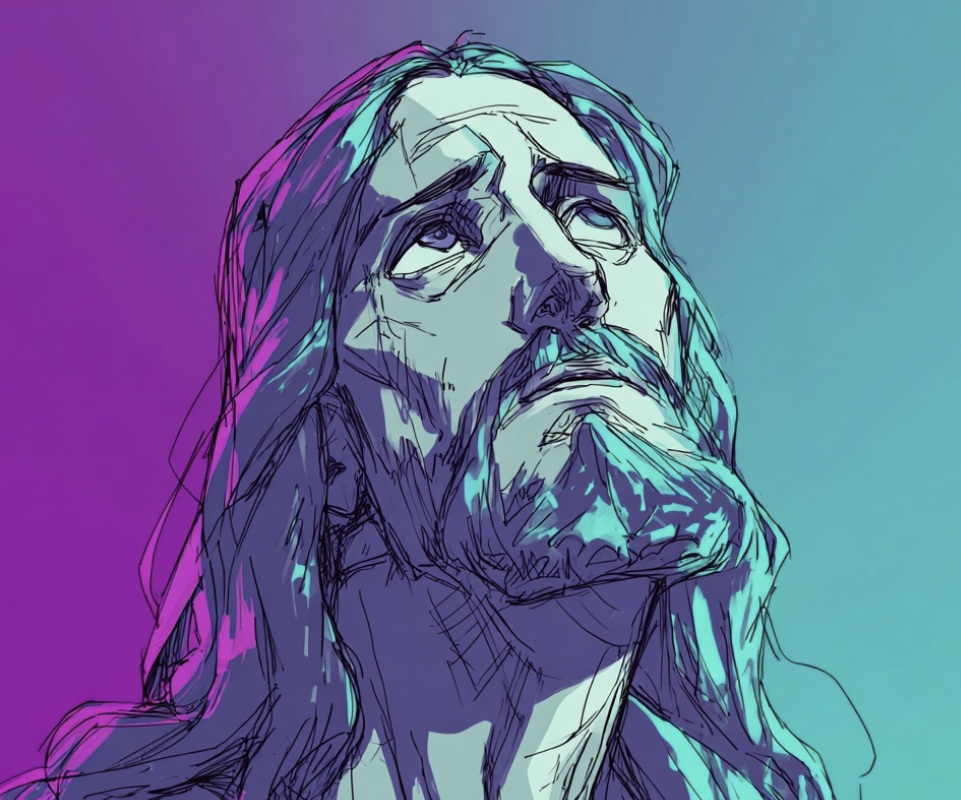
And be sure of this: I am with you always, even to the end of the age.
We have to construct the figure of a new David, the multitude as champion of asymmetrical combat, immaterial workers who became a new kind of combatants, cosmopolitan bricoleurs of resistance and cooperation.
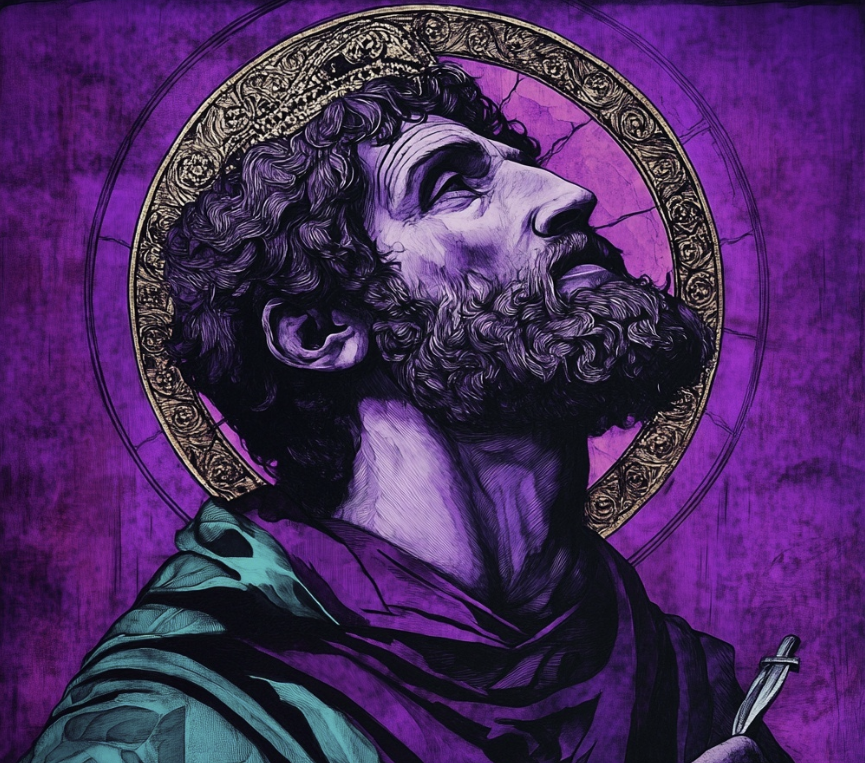
The inclination to seek the truth is safer than the presumption which regards unknown things as known.
Thought is as much a lie as love or faith.
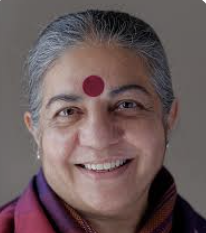
There is a strong affinity between the forces of empire and a politics of hate that justifies policies of domination and exclusion. So long as people's attention is focused on fear and hatred of foreigners or members of a particular religious group, such as Muslims, they are distracted from organizing to deal with the system of institutional domination and exploitation that is the real source of their insecurity.
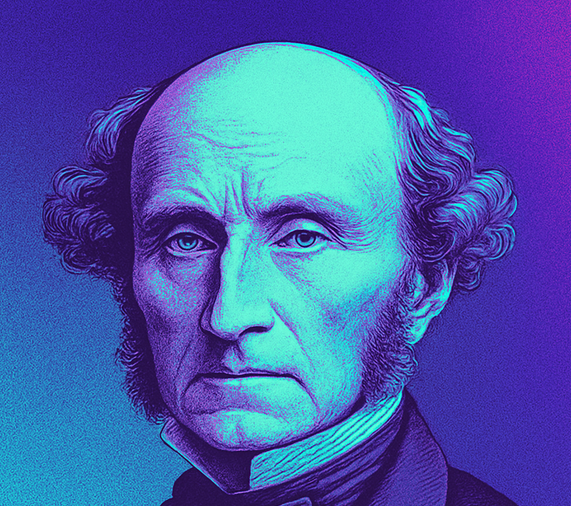
Everybody knows that the same sum of money is of much greater value to a poor man that to a rich one. Give £10 a year to the man who has but £10 a year, you double his income, and you nearly double his enjoyments. Add £10 more, you do not add to his enjoyments so much as you did by the first £10. The third £10 is less valuable than the second, and the fourth less valuable than the third. To the possessor of £1,000 a year the addition of £10 would be scarcely perceptible; to the possessor of £10,000 it would not be worth slooping for.The richer a man is the less he is benefited by any further addition to his income. The man of £4,000 a year has four times the income of the man who has but £1,000; but does anybody suppose that he has four times the happiness?
The true antithesis of nature is not art but arbitrary conceit, fantasy, and stereotyped convention.
I've learned from the Bhagavad Gita and other teachings of our culture to detach myself from the results of what I do, because those are not in my hands. The context is not in your control, but your commitment is yours to make, and you can make the deepest commitment with a total detachment about where it will take you. You want it to lead to a better world, and you shape your actions and take full responsibility for them, but then you have detachment. And that combination of deep passion and deep detachment allows me always to take on the next challenge because I don't cripple myself, I don't tie myself in knots. I function like a free being. I think getting that freedom is a social duty because I think we owe it to each other not to burden each other with prescription and demands. I think what we owe each other is a celebration of life and to replace fear and hopelessness with fearlessness and joy.
Whit Meynell was a sociologist; he had got into an intellectual muddle early on in life and never managed to get out.
Men are never so likely to settle a question rightly as when they discuss it freely.
A dog cannot relate his autobiography; however eloquently he may bark, he cannot tell you that his parents were honest but poor.
The best laws cannot make a constitution work in spite of morals; morals can turn the worst laws to advantage. That is a commonplace truth, but one to which my studies are always bringing me back. It is the central point in my conception. I see it at the end of all my reflections.
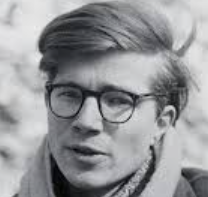
When I'm bored, my sense of values goes to sleep. But it's not dead, only asleep. A crisis can wake it up and make the world seem infinitely important and interesting. But what I need to learn is the trick of shaking them awake myself . . . And incidentally, another name for the sense of values is intelligence. A stupid person is a person whose values are narrow.
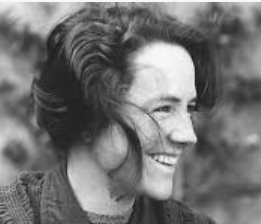
By and large, mothers and housewives are the only workers who do not have regular time off. They are the great vacationless class.
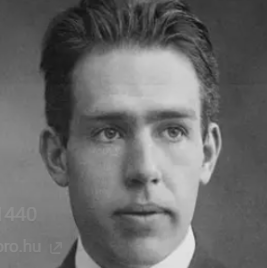
No, no, you are not thinking, you are just being logical.
The tool, as we have seen, is not exterminated by the machine.
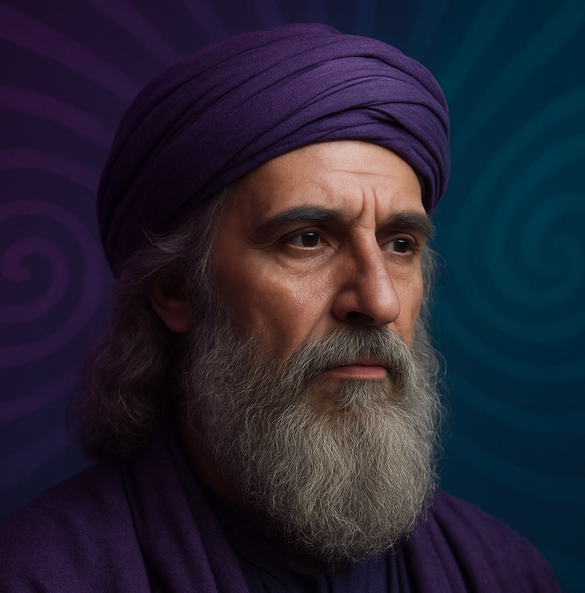
With a foolish man make no dispute.
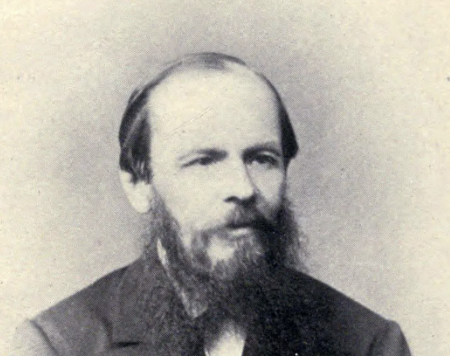
Is there in the whole world a being who would have the right to forgive and could forgive? I don't want harmony. From love for humanity I don't want it. I would rather be left with the unavenged suffering. I would rather remain with my unavenged suffering and unsatisfied indignation, even if I were wrong. Besides, too high a price is asked for harmony; it's beyond our means to pay so much to enter on it. And so I hasten to give back my entrance ticket, and if I am an honest man I am bound to give it back as soon as possible. And that I am doing. It's not God that I don't accept, Alyosha, only I most respectfully return him the ticket.
What then remains but that we still should cry Not to be born, or, being born, to die?
There are evils, as someone has pointed out, that have the ability to survive identification and go on for ever - money, for instance, or war.
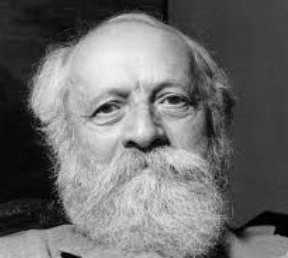
To win a truly great life for the people of Israel, a great peace is necessary, not a fictitious peace, the dwarfish peace that is no more than a feeble intermission, but a true peace with the neighboring peoples, which alone can render possible a common development of this portion of the earth as the vanguard of the awakening Near East.

A fool is known by his Speech; and a wise man by Silence.
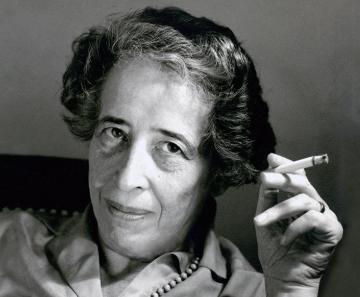
Man's urge for change and his need for stability have always balanced and checked each other, and our current vocabulary, which distinguishes between two factions, the progressives and the conservatives, indicates a state of affairs in which this balance has been thrown out of order. No civilization - the man-made artifact to house successive generations - would ever have been possible without a framework of stability, to provide the wherein for the flux of change. Foremost among the stabilizing factors, more enduring than customs, manners and traditions, are the legal systems that regulate our life in the world and our daily affairs with each other.
In writing what he does not speak, what he would never say and, in truth, would probably never even think, the author of the written speech is already entrenched in the posture of the sophist; the man of non-presence and non-truth. Writing is thus already on the scene. The incompatibility between written and the true is clearly announced at the moment Socrates starts to recount the way in which men are carried out themselves by pleasure, become absent from themselves, forget themselves and die in the thrill of song.
. ... the prince says that the world will be saved by beauty! And I maintain that the reason he has such playful ideas is that he is in love.
Wyman's overpopulated universe is in many ways unlovely. It offends the aesthetic sense of us who have a taste for desert landscapes.
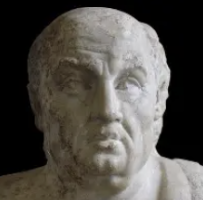
I will tell you: that perfect man, who has attained virtue, never cursed his luck, and never received the results of chance with dejection; he believed that he was citizen and soldier of the universe, accepting his tasks as if they were his orders. Whatever happened, he did not spurn it, as if it were evil and borne in upon him by hazard; he accepted it as if it were assigned to be his duty. "Whatever this may be,"he says, "it is my lot; it is rough and it is hard, but I must work diligently at the task."
CivilSimian.com created by AxiomaticPanic, CivilSimian, Kalokagathia