

2 months 3 weeks ago
All the higher, more penetrating ideals are revolutionary. They present themselves far less in the guise of effects of past experience than in that of probable causes of future experience.
▼
Source
source
"The Moral Philosopher and the Moral Life" in address to the Yale Philosophical Club, published in the International Journal of Ethics, April 1891
1 month 2 weeks ago
Fear for the Other, fear for the other man's death is my fear, but is in no way an individual's taking fright.
▼
Source
source
The Levinas reader by Levinas, Emmanuel p. 84
2 weeks 1 day ago
We are not born free, nor do we come into this world with a self-identity and autonomy of our own. We achieve those things, through the conflict and cooperation that weave us into the social fabric.
▼
Source
source
Where We Are: The State of Britain Now
3 months ago
A prince who is not wise himself will never take good advice.
▼
Source
source
The Prince (1513), Ch. 23; translated by W. K. Marriot

1 month 2 weeks ago
German idealism rescued philosophy from the attack of British empiricism, and the struggle between the two became not merely a clash of different philosophical school, but a struggle for philosophy as such.
▼
Source
source
P. 16
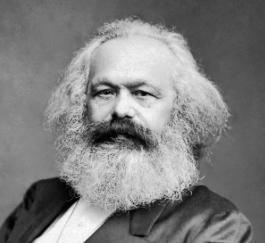
2 months 3 weeks ago
Accumulate, accumulate! That is Moses and the prophets!
▼
Source
source
Vol. I, Ch. 24, Section 3, pg. 652.
3 months 1 week ago
All human laws are nourished by one divine law.
1 month 2 weeks ago
The capabilities (intellectual and material) of contemporary society are immeasurably greater than ever before-which means that the scope of society's domination over the individual is immeasurably greater than ever before. Our society distinguishes itself by conquering the centrifugal social forces with Technology rather than Terror, on the dual basis of an overwhelming efficiency and an increasing standard of living.
▼
Source
source
p. xliii
3 months ago
I find that the best goodness I have has some tincture of vice.
▼
Source
source
Ch. 20
2 months 2 weeks ago
It's only by thinking even more crazily than philosophers do that you can solve their problems.
▼
Source
source
p. 75e
2 months 3 weeks ago
The world neither ever saw, nor ever will see, a perfectly fair lottery.
▼
Source
source
Chapter X, Part I.
2 months 1 week ago
Kripke tries to sober us up by denying that meaning determines reference. Rather, we name things by confronting them and baptising them, not by creating them out of a list of qualities. Names are not, pace Russell, shorthand for such lists. They are not abbreviations for descriptions, but (in Kripke's coinage) 'rigid designators' - that is, they would name the same things in any possible world, including worlds in which their bearers did not have the properties we, in this world, use to identify them.
▼
Source
source
Kripke versus Kant. Lrb.com, september 1980.
2 months 3 weeks ago
Human infirmity in moderating and checking the emotions I name bondage: for, when a man is a prey to his emotions, he is not his own master, but lies at the mercy of fortune: so much so, that he is often compelled, while seeing that which is better for him, to follow that which is worse.
▼
Source
source
Part IV, Preface; translation by R. H. M. Elwes

2 months 3 weeks ago
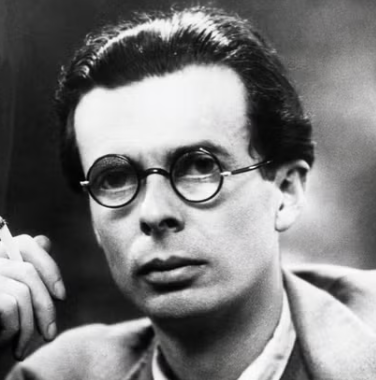
I suppose you imagined I was so insanely in love with you that I could commit any folly. When will you women understand that one isn't insanely in love? All one asks for is a quiet life, which you won't allow one to have. I don't know what the devil ever induced me to marry you. It was all a damned stupid, practical joke. And now you go about saying I'm a murderer. I won't stand it.
▼
Source
source
The Gioconda smile, in Mortal Coils, 1921

2 months 2 weeks ago
The critique of the highest values hitherto does not simply refute them or declare them invalid. It is rather a matter of displaying their origins as impositions which must affirm precisely what ought to be negated by the values established.
▼
Source
source
p. 26
2 months 3 weeks ago
Is dogmatic or scholastic theology less doubted in point of fact for claiming, as it does, to be in point of right undoubtable? And if not, what command over truth would this kind of theology really lose if, instead of absolute certainty, she only claimed reasonable probability for her conclusions? If we claim only reasonable probability, it will be as much as men who love the truth can ever at any given moment hope to have within their grasp. Pretty surely it will be more than we could have had, if we were unconscious of our liability to err.
▼
Source
source
Lectures XIV and XV, "The Value of Saintliness"
2 months 2 weeks ago
But ordinary language is all right.
▼
Source
source
p. 28
1 month 4 weeks ago
Time is the father of truth, its mother is our mind.
▼
Source
source
Quote as translated in The Encyclopedia of Religion Vol. 11 (1987), by Mircea Eliade, p. 459
1 month 2 weeks ago
Blessed is the lion which becomes man when consumed by man; and cursed is the man whom the lion consumes, and the lion becomes man. (7) This saying has been interpreted by some as referring to such anger as consumes a man…(rather than is consumed by him, through his reason and love), 'til that man is the lion of Anger. Other more mystical interpretations might also be found or devised that have merit.
2 months 3 weeks ago
The object of art - like every other product - creates a public which is sensitive to art and enjoys beauty.
▼
Source
source
Introduction, p. 12.
3 weeks 4 days ago
Whatever it may be, animals have always had, until our era, a divine or sacrificial nobility that all mythologies recount. Even murder by hunting is still a symbolic relation, as opposed to an experimental dissection. Even domestication is still a symbolic relation, as opposed to industrial breeding. One only has to look at the status of animals in peasant society. And the status of domestication, which presupposes land, a clan, a system of parentage of which the animals are a part, must not be confused with the status of the domestic pet-the only type of animals that are left to us outside reserves and breeding stations-dogs, cats, birds, hamsters, all packed together in the affection of their master. The trajectory animals have followed, from divine sacrifice to dog cemeteries with atmospheric music, from sacred defiance to ecological sentimentality, speaks loudly enough of the vulgarization of the status of man himself.
▼
Source
source
"The Animals: Territory and Metamorphoses," p. 134
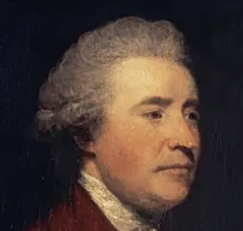
1 month 3 weeks ago
You can never plan the future by the past.
▼
Source
source
Letter to a Member of the National Assembly (1791), Volume IV, p. 55.

2 months 3 weeks ago
Quite a heavy weight, a name too quickly famous.
▼
Source
source
La Henriade, chant troisième, l.41, 1722
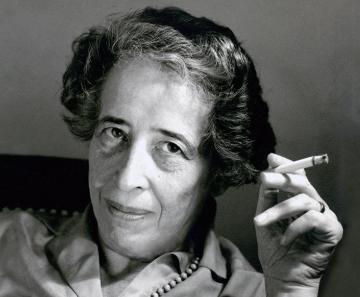
2 months 3 weeks ago
The Nazis were 'convinced that evil-doing in our time has a morbid force of attraction,' Bolshevik assurances inside and outside Russia that they do not recognize ordinary moral standards have become a mainstay of Communist propaganda, and experience has proven time and again that the propaganda value of evil deeds and general contempt for moral standards is independent of mere self-interest, supposedly the most powerful psychological factor in politics.
▼
Source
source
Part 3, Ch. 10
2 months 3 weeks ago
Covetousness, and the desire of having in our possession, and under our dominion, more than we have need of, being the root of all evil, should be early and carefully weeded out, and the contrary quality of a readiness to impart to others, implanted. This should be encourag'd by great commendation and credit, and constantly taking care that he loses nothing by his liberality.
▼
Source
source
Sec. 110
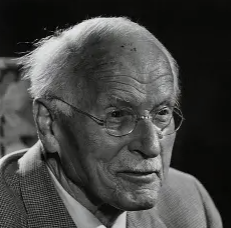
1 month 2 weeks ago
The whole nature of man presupposes woman, both physically and spiritually. His system is tuned into woman from the start, just as it is prepared for a quite definite world where there is water, light, air, salt, carbohydrates etc.
▼
Source
source
"Two Essays in Analytical Psychology" In CW 7: P. 188
1 month 2 weeks ago
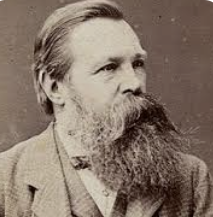
The more I think about it, the more obvious it becomes to me that the Poles are une nation foutue [a finished nation] who can only continue to serve a purpose until such time as Russia herself becomes caught up into the agrarian revolution. From that moment Poland will have absolutely no raison d'étre any more. The Poles' sole contribution to history has been to indulge in foolish pranks at once valiant and provocative. Nor can a single moment be cited when Poland, even if only by comparison with Russia, has successfully represented progress or done anything of historical significance.
▼
Source
source
Letter to Karl Marx
1 month 3 weeks ago
A diversity of opinion upon almost every principle of politics, had indeed drawn a strong line of separation between them and some others. However, they were desirous not to extend the misfortune by unnecessary bitterness; they wished to prevent a difference of opinion on the commonwealth from festering into rancorous and incurable hostility. Accordingly they endeavoured that all past controversies should be forgotten; and that enough for the day should be the evil thereof. There is however a limit at which forbearance ceases to be a virtue. Men may tolerate injuries, whilst they are only personal to themselves. But it is not the first of virtues to bear with moderation the indignities that are offered to our country.
▼
Source
source
Describing the Government's position at a previous time of deep division in British politics in fact over policy on America, Observations on a Late Publication on the Present State of the Nation (1769), page 2
2 weeks 6 days ago
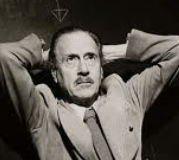
Art is anything you can get away with.
2 months 3 weeks ago
Death is the only thing we haven't succeeded in completely vulgarizing.
▼
Source
source
Eyeless in Gaza, 1936
2 months 3 weeks ago
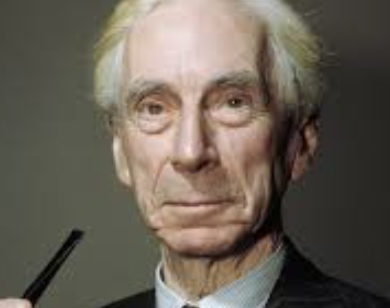
I do not think that the real reason why people accept religion has anything to do with argumentation. They accept religion on emotional grounds. One is often told that it is a very wrong thing to attack religion, because religion makes men virtuous. So I am told; I have not noticed it.
▼
Source
source
"The Emotional Factor"
1 month 5 days ago
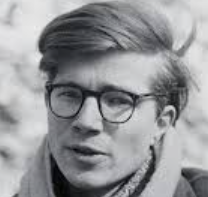
I must confess that my estimate of Lovecraft would not have pleased his most ardent admirers. The view I expressed in that book was that, while Lovecraft was distinctly a creative genius in his own way, his pessimism should not be taken too seriously; that it was the pessimism of a sick recluse, and had about it an element of rassentiment, a kind of desire to take revenge on the world that rejected him. In short, Lovecraft was a 19th century romantic, born in the wrong time. Most men of genius dislike their own age, but the really great ones impose their own vision on the age. The weak ones turn away into a world of gloomy fantasy.
▼
Source
source
p. 2
2 months 3 weeks ago
Fear not, then, thou child infirm, There's no god dare wrong a worm.
▼
Source
source
Compensation, st. 2
2 months 3 weeks ago
It makes a great difference in the force of a sentence whether a man be behind it or no.
▼
Source
source
p. 261
1 month ago
If the importance of science does not lie in its constituting the whole of human knowledge, even less does it lie, in my view, in its technological applications. Science at the best is a way of coming to know, and hopefully a way of acquiring some reverence for, the wonders of nature. The philosophical study of science, at the best, has always been a way of coming to understand both some of the nature and some of the limitations of human reason. These seem to me to be sufficient grounds for taking science and philosophy of science seriously; they do not justify science worship.
▼
Source
source
"Introduction: Science as approximation to truth"
3 months 2 weeks ago
Art, at least, teaches us that man cannot be explained by history alone and that he also finds a reason for his existence in the order of nature.
3 months 2 weeks ago
Then we understand that rebellion cannot exist without a strange form of love. Those who find no rest in God or in history are condemned to live for those who, like themselves, cannot live; in fact, for the humiliated.

2 months 4 days ago
Truth is so great a perfection, that if God would render himself visible to men, he would choose light for his body and truth for his soul.
▼
Source
source
As quoted in A Dictionary of Thoughts: Being a Cyclopedia of Laconic Quotations from the Best Authors of the World, both Ancient and Modern (1908) by Tyron Edwards, p. 592
2 months 3 weeks ago
People are said to believe in God, or to disbelieve in Adam and Eve. But in such cases what is believed or disbelieved is that there is an entity answering a certain description. This, which can be believed or disbelieved is quite different from the actual entity (if any) which does answer the description. Thus the matter of belief is, in all cases, different in kind from the matter of sensation or presentation, and error is in no way analogous to hallucination. A hallucination is a fact, not an error; what is erroneous is a judgment based upon it.
▼
Source
source
On the Nature of Acquaintance: Neutral Monism, 1914
2 months 2 weeks ago
Amy Kofman: Have you read all the books in here?Derrida: No, only four of them. But I read those very, very carefully.
▼
Source
source
Derrida (2003 documentary), referring to his personal library
3 months 2 weeks ago
Perhaps we cannot prevent this world from being a world in which children are tortured. But we can reduce the number of tortured children. And if you don't help us, who else in the world can help us do this?
2 months 2 weeks ago
You could attach prices to thoughts. Some cost a lot, some a little. And how does one pay for thoughts? The answer, I think, is: with courage.
▼
Source
source
p. 52e
1 month 2 weeks ago
Only lies and evil come from letting people off.
▼
Source
source
A Severed Head (1961); 1976, p. 61.
3 months ago
The entire lower world was created in the likeness of the higher world. All that exists in the higher world appears like an image in this lower world; yet all this is but One.
2 months 3 weeks ago
It is difficult, if not impossible, to define the limit of our reasonable desires in respect of possessions.
▼
Source
source
E. Payne, trans. (1974) Vol. 1, p. 346

1 day ago
[H]uman nature as encoded in our DNA isn't immutable. Mankind's barbaric track-record to date is an unreliable guide to the future. If Homo sapiens' nastier alleles and their more sinister combinations can be silenced or edited out of the genome, and new improved code-sequences inserted instead, then the pessimists will be confounded. A major discontinuity in the development of life lies ahead. Providentially, we've learned that the DNA-driven world isn't written in God-given proprietary code it would be hubris to tamper with, but in bug-ridden open source amenable to improvement.
▼
Source
source
Utopian Pharmacology: Mental Health in the Third Millennium MDMA and Beyond, BLTC Research, last updated 2020
3 months ago
Some will object that the Law is divine and holy. Let it be divine and holy. The Law has no right to tell me that I must be justified by it.
▼
Source
source
Chapter 2
2 months 1 week ago
In speaking of the fear of religion, I don't mean to refer to the entirely reasonable hostility toward certain established religions and religious institutions, in virtue of their objectionable moral doctrines, social policies, and political influence. Nor am I referring to the association of many religious beliefs with superstition and the acceptance of evident empirical falsehoods. I am talking about something much deeper-namely, the fear of religion itself. I speak from experience, being strongly subject to this fear myself: I want atheism to be true and am made uneasy by the fact that some of the most intelligent and well-informed people I know are religious believers. It isn't just that I don't believe in God and, naturally, hope that I'm right in my belief. It's that I hope there is no God! I don't want there to be a God; I don't want the universe to be like that.
▼
Source
source
The Last Word, Oxford University Press, 1997, pp. 130-131.
1 month 2 weeks ago
What each individual wills is obstructed by everyone else, and what emerges is something that no one willed.
▼
Source
source
Letter to Jean-Richard Bloch
CivilSimian.com created by AxiomaticPanic, CivilSimian, Kalokagathia