

9 months 3 weeks ago
Be attentive therefore, according to the instruction of the Gospel, to learn obedience from the lily and the bird. Be not affrighted, do no despair, when thou comparest thy life with these teachers. There is nothing to despair about, for indeed thou shalt learn from them; and the Gospel first comforts thee by telling thee that God is the God of patience, and then it adds: 'Thou shalt learn from the lilies and the birds, learn to be absolutely obedient like the lilies and the birds, learn not to serve two masters; for no man can serve two masters, he must either ... or.

8 months 3 weeks ago
This is the terrible fix we are in. If the universe is not governed by an absolute goodness, then all our efforts are in the long run hopeless. But if it is, then we are making ourselves enemies to that goodness every day, and are not in the least likely to do any better tomorrow, and so our case is hopeless again....God is the only comfort, He is also the supreme terror: the thing we most need and the thing we most want to hide from.
▼
Source
source
Book I, Chapter 5, "We Have Cause to Be Uneasy"
4 months 3 weeks ago
Don't tell yourself anything more than what the initial impressions report. It's been reported to you that someone is speaking badly about you. This is the report - the report wasn't that you've been harmed. I see that my son is sick - but not that his life is at risk. So always stay within your first impressions, and don't add to them in your head - this way nothing can happen to you.
▼
Source
source
VIII. 49:238
8 months 3 weeks ago
Greater intelligence, wealth and opportunity, for example, allow a person to achieve ends he could not rationally contemplate otherwise.
▼
Source
source
Chapter II, Section 15, pg. 93
8 months 3 weeks ago
Moreover, if the character is formed, and the mind made up, on the few cardinal points of human opinion, agreement of conviction and feeling on these, has been felt in all times to be an essential requisite of anything worthy the name of friendship, in a really earnest mind. All these circumstances united, made the number very small of those whose society, and still more whose intimacy, I now voluntarily sought.
▼
Source
source
(p. 229)
8 months 4 weeks ago
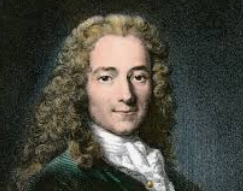
When it is a question of money, everybody is of the same religion.
▼
Source
source
Letter to Mme. d'Épinal, Ferney (26 December 1760) from Oeuvres Complètes de Voltaire: Correspondance (Garnier frères, Paris, 1881), vol. IX, letter # 4390 (p. 124)
4 months 3 weeks ago
FACULTY PSYCHOLOGY is getting to be respectable again after centuries of hanging around with phrenologists and other dubious types. By faculty psychology I mean, roughly , the view that many fundamentally different kinds of psychological mechanisms must be postulated in order to explain the facts of mental life . Faculty psychology takes seriously the apparent heterogeneity of the mental and is impressed by such prima facie differences as between, say, sensation and perception, volition and cognition, learning and remembering, or language and thought.
▼
Source
source
p. 1
6 months 5 days ago
A global transition to a cruelty-free vegan diet won't just help non-human animals. The transition will also help malnourished humans who could benefit from the grain currently fed to factory-farmed animals. For factory-farming is not just cruel; it's energy-inefficient. Let's take just one example. Over the past few decades, millions of Ethiopians have died of "food shortages" while Ethiopia grew grain to sell to the West to feed cattle. Western meat-eating habits prop up the price of grain so that poor people in the developing world can't afford to buy it. In consequence, they starve by the millions.In my work, I explore futuristic, hi-tech solutions to the problem of suffering. But anybody who seriously wants to reduce human and non-human suffering alike should adopt a cruelty-free vegan lifestyle today.
▼
Source
source
"A World Without Suffering?", Instituto Humanitas Unisinos, Jan. 2011
9 months 4 days ago
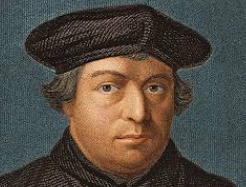
In particular, at this point also urge governing authorities and parents to rule well and to send their children to school. Point out how they are obliged to do so and what a damnable sin they commit if they do not, for thereby, as the worst enemies of God and humanity, they overthrow and lay waste both the kingdom of God and the kingdom of the world. Explain very clearly what kind of horrible damage they do when they do not help to train children as pastors, preachers, civil servants, etc., and tell them that God will punish them dreadfully for this. For in our day and age it is necessary to preach about these things. The extent to which parents and governing authorities are now sinning in these matters defies description. The devil, too, intends to do something horrible in all this.
▼
Source
source
Foreword to the small catechismus, as quoted in the Preface, The Book of Concord: The Confessions of the Evangelical Lutheran Church (2000) by Robert Kolb and Timothy J. Wengert, p. 19

4 months 3 weeks ago
Treasury notes of small as well as high denomination, bottomed on a tax which would redeem them in ten years, would place at our disposal the whole circulating medium of the United States... The public... ought never more to permit its being filched from them by private speculators and disorganizers of the circulation.
▼
Source
source
Letter to William H. Crawford, 1815. ME 14:242


8 months 3 weeks ago
Men became scientific because they expected law in Nature; and they expected law in Nature because they believed in a Legislator.
▼
Source
source
Ch. 3: "The Cardinal Difficulty of Naturalism"
4 months 3 weeks ago
Experience declares that man is the only animal which devours his own kind; for I can apply no milder term to the governments of Europe, and to the general prey of the rich on the poor.
▼
Source
source
Letter to Colonel Edward Carrington
7 months 1 week ago
The issue over there being classes seems more a question of convenient conceptual scheme; the issue over there being centaurs, or brick houses on Elm Street, seems more a question of fact. But I have been urging that this difference is only one of degree, and that it turns upon our vaguely pragmatic inclination to adjust one strand of the fabric of science rather than another in accommodating some particular recalcitrant experience. Conservatism figures in such choices, and so does the quest for simplicity.
▼
Source
source
"Two Dogmas of Empiricism"

7 months 2 weeks ago
Many, and I think the determining, constitutive facts remain outside the reach of the operational concept. And by virtue of this limitation-this methodological injunction against transitive concepts which might show the facts in their true light and call them by their true name-the descriptive analysis of the facts blocks the apprehension of facts and becomes an element of the ideology that sustains the facts. Proclaiming the existing social reality as its own norm, this sociology fortifies in the individuals the "faithless faith" in the reality whose victims they are.
▼
Source
source
p. 119
8 months 4 weeks ago
This proof can at most, therefore, demonstrate the existence of an architect of the world, whose efforts are limited by the capabilities of the material with which he works, but not of a creator of the world, to whom all things are subject.
▼
Source
source
A 627, B 655 (Physico-Theological Proof Impossible)
4 months 3 weeks ago
Nor is anything empty: For what is empty is nothing. What is nothing cannot be.Nor does it move; for it has nowhere to betake itself to, but is full. For if there were aught empty, it would betake itself to the empty. But, since there is naught empty, it has nowhere to betake itself to.
8 months 3 weeks ago
The fact that a belief has a good moral effect upon a man is no evidence whatsoever in favor of its truth.
▼
Source
source
BBC Radio Debate on the Existence of God, Russell vs. Copleston, 1948
9 months 5 days ago
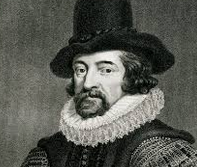
"You err, not knowing the Scriptures nor the power of God" This canon is the mother of all canons against heresy; the causes of error are two; the ignorance of the will of God, and the ignorance or not sufficient consideration of his power.
▼
Source
source
Of Heresies

7 months 1 week ago
The key to understanding Crowley is the same as the key to understanding the Marquis de Sade. Both wasted an immense amount of energy screaming defiance at the authority they resented so much, and lacked the insight to see that they were shaking their fists at an abstraction.
▼
Source
source
p. 29

8 months 1 day ago
The Americans never use the word peasant, because they have no idea of the class which that term denotes; the ignorance of more remote ages, the simplicity of rural life, and the rusticity of the villager have not been preserved among them; and they are alike unacquainted with the virtues, the vices, the coarse habits, and the simple graces of an early stage of civilization.
▼
Source
source
Chapter XVII.
7 months 6 days ago
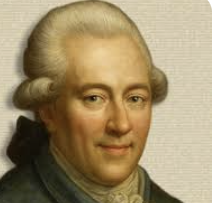
There are people who possess not so much genius as a certain talent for perceiving the desires of the century, or even of the decade, before it has done so itself.
▼
Source
source
D 70

7 months 3 weeks ago
Never unreal, Pain is a challenge to the universal fiction. What luck to be the only sensation granted a content, if not a meaning!
7 months 3 weeks ago
There are no arguments. Can anyone who has reached the limit bother with arguments, causes, effects, moral considerations, and so forth? Of course not. For such a person there are only unmotivated motives for living. On the heights of despair, the passion for the absurd is the only thing that can still throw a demonic light on chaos. When all the current reasons - moral, esthetic, religious, social, and so on - no longer guide one's life, how can one sustain life without succumbing to nothingness? Only by a connection with the absurd, by love of absolute uselessness, loving something which does not have substance but which simulates an illusion of life. I live because the mountains do not laugh and the worms do not sing.
7 months 2 weeks ago
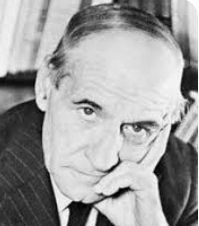
Man's being is made of such strange stuff as to be partly akin to nature and partly not, at once natural and extranatural, a kind of ontological centaur, half immersed in nature, half transcending it.
▼
Source
source
"Man has no nature"
9 months ago
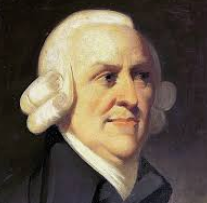
Every man is rich or poor according to the degree in which he can afford to enjoy the necessaries, conveniences, and amusements of human life. But after the division of labour has once thoroughly taken place, it is but a very small part of these with which a man's own labour can supply him. The far greater part of them he must derive from the labour of other people, and he must be rich or poor according to the quantity of that labour which he can command, or which he can afford to purchase. The value of any commodity, therefore, to the person who possesses it, and who means not to use or consume it himself, but to exchange it for other commodities, is equal to the quantity of labour which it enables him to purchase or command. Labour, therefore, is the real measure of the exchangeable value of all commodities.
▼
Source
source
Chapter V.

7 months 3 weeks ago
Chaos is rejecting all you have learned. Chaos is being yourself.

4 months 3 weeks ago
I remember that in a widely distributed French newspaper they asked the famous author of the Génie du Christianisme, if a nymph was not a bit more beautiful than a nun. In supposing them represented by the same talent or by equal talents (a condition without which the question would make no sense), there is no doubt that the nun would be more beautiful. The error best suited to extinguishing the true sentiment of beauty is that of confusing that which pleases with that which is beautiful, or in other words, that which pleases the senses with that which pleases the intelligence.

7 months 3 weeks ago
The poor, by thinking unceasingly of money, reach the point of losing the spiritual advantages of non-possession, thereby sinking as low as the rich.

5 months 2 weeks ago
We have not a direct intuition of the equality of two intervals of time.
7 months 1 week ago
It is the business of the future to be dangerous; and it is among the merits of science that it equips the future for its duties.
▼
Source
source
Ch. 13: "Requisites for Social Progress", p. 291
7 months 2 weeks ago
Form may then be defined as the operation of forces that carry the experience of an event, object, scene, and situation to its own integral fulfillment.
8 months 3 weeks ago
I believe that one of the things Christianity says is that sound doctrines are all useless. That you have to change your life. (Or the direction of your life.)
▼
Source
source
p. 53e

9 months 1 week ago
They men have corrupted this order by making profane things what they should make of holy things, because in fact, we believe scarcely any thing except which pleases us.
7 months 3 weeks ago
Born in a prison, with burdens on our shoulders and our thoughts, we could not reach the end of a single day if the possibilities of ending it all did not incite us to begin the next day all over again.
8 months 3 weeks ago
Man cannot will unless he has first understood that he must count on no one but himself; that he is alone, abandoned on earth in the midst of his infinite responsibilities, without help, with no other aim than the one he sets himself, with no other destiny than the one he forges for himself on this earth.
8 months 3 weeks ago
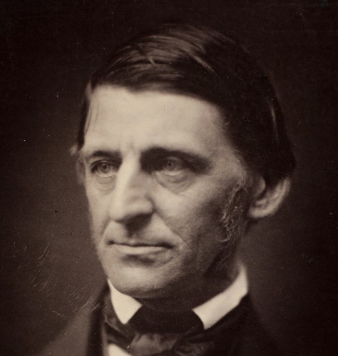
The heroic cannot be the common, nor can the common be heroic.
▼
Source
source
Quotation and Originality
8 months 3 weeks ago
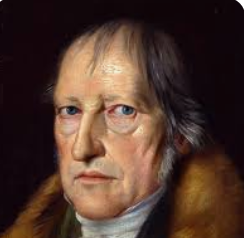
Very similar were the views expressed by Raymundus of Sabunde or Sabeyde, a Spaniard of the fifteenth century, and professor at Toulouse about the year 1437. In his theologia natural is, which he handled in a speculative spirit, he dealt with the Nature of things, and with the revelation of God in Nature and in the history of the God-man. He sought to prove to unbelievers the Being, the trinity, the incarnation, the life, and the revelation of God in Nature, and in the history of the God-man, basing his arguments on Reason. From the contemplation of Nature he rises to God; and in the same way he reaches morality from; observation of man's inner nature. This purer and simpler style must be set off against the other, if we are to do justice to the Scholastic theologians in their turn.
▼
Source
source
Georg Wilhelm Friedrich Hegel, Lectures on the Philosophy of History Vol 3 1837 translated by ES Haldane and Francis H. Simson) first translated 1896 P. 91-92
9 months 2 weeks ago
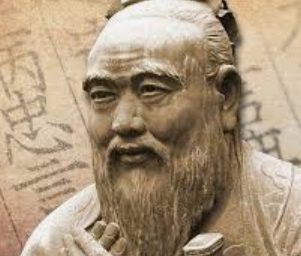
The superior man, extensively studying all learning, and keeping himself under the restraint of the rules of propriety, may thus likewise not overstep what is right.
6 months 5 days ago
In the long run, there is nothing to stop intelligent agents from identifying the molecular signature of experience below hedonic zero and eliminating it altogether - even in insects. Nociception is vital; pain is optional. I tentatively predict that the world's last unpleasant experience in our forward light-cone will be a precisely datable event - perhaps some micro-pain in an obscure marine invertebrate a few centuries hence.
▼
Source
source
The Radical Plan to Phase out Earth's Predatory Species, io9, 30 Jul. 2014
7 months 3 weeks ago
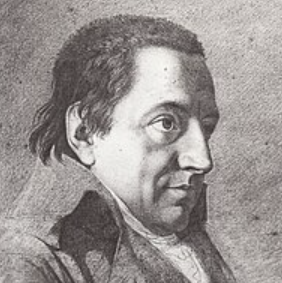
Show me what thou truly lovest, what thou seekest and strivest for with thy whole heart when thou hopest to attain to true en joyment of thyself-and thou hast thereby shown me thy Life. What thou lovest, in that thou livest. This very Love is thy Life, the root, the seat, the central point of thy being. All other emotions within thee have life only in so far as they are governed by this one central emotion.
▼
Source
source
P. 3
8 months 3 weeks ago
I wiped away the weeds and foam, And fetched my sea-born treasures home; But the poor, unsightly, noisome things Had left their beauty on the shore With the sun, and the sand, and the wild uproar.
▼
Source
source
Each and All, st. 3
4 months 3 weeks ago
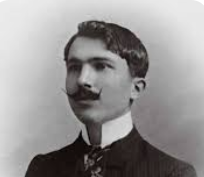
We do not only free God by battling and subduing the visible world about us; we also create God. "Open your eyes," God shouts; "I want to see! Prick up your ears, I want to hear! March in the front ranks: you are my head!"

CivilSimian.com created by AxiomaticPanic, CivilSimian, Kalokagathia