

5 days ago
[U]nlike positive utilitarianism or so-called preference utilitarianism - neither of which can ever be wholly fulfilled - [negative utilitarianism] seems achievable in full.
▼
Source
source
The Pinprick Argument, BLTC Research, 2005
5 days ago
I predict we will abolish suffering throughout the living world. Our descendants will be animated by gradients of genetically pre-programmed well-being that are orders of magnitude richer than today's peak experiences.
▼
Source
source
Quoted in Ethics Matters (2012) by Peter and Charlotte Vardy, p. 114 ISBN 978-0334043911

1 month 2 weeks ago
Thou shalt love the Lord thy God with all thy heart, and with all thy soul, and with all thy mind. This is the first and great commandment. And the second is like unto it, Thou shalt love thy neighbour as thyself. On these two commandments hang all the law and the prophets.
▼
Source
source
22:37-40 (KJV)

3 months 4 weeks ago
Who is the most moral man? First, he who obeys the law most frequently, who ... is continually inventive in creating opportunities for obeying the law. Then, he who obeys it even in the most difficult cases. The most moral man is he who sacrifices the most to custom. ... Self-overcoming is demanded, not on account of any useful consequences it may have for the individual, but so that hegemony of custom and tradition shall be made evident.

1 month 1 week ago
Power is not opposed to freedom. It is precisely freedom that distinguishes power from violence or coercion.

3 months 5 days ago
Another argument of hope may be drawn from this - that some of the inventions already known are such as before they were discovered it could hardly have entered any man's head to think of; they would have been simply set aside as impossible. For in conjecturing what may be men set before them the example of what has been, and divine of the new with an imagination preoccupied and colored by the old; which way of forming opinions is very fallacious, for streams that are drawn from the springheads of nature do not always run in the old channels.
▼
Source
source
Aphorism 109
1 month 3 weeks ago
There are people with whom everything they consider a means turns mysteriously into an end.
▼
Source
source
Philosophical Fragments, P. Firchow, trans. (1991) § 428

2 months 3 weeks ago
The History of the world is none other than the progress of the consciousness of Freedom; a progress whose development according to the necessity of its nature, it is our business to investigate.
▼
Source
source
Part III. Philosophic History; § 21, as translated by John Sibree; p. 19, (1900 edition) Variant translated by Robert S. Hartman, in Reason In History, A General Introduction to the Philosophy of History (1953) , 3/1/2007
1 month 3 weeks ago
Our whole past experience is continually in our consciousness, though most of it sunk to a great depth of dimness. I think of consciousness as a bottomless lake, whose waters seem transparent, yet into which we can clearly see but a little way.
▼
Source
source
Vol. VII, par. 547

1 month 1 week ago
The "dreams of youth" have become a proverb. That organisations, early rich, fall far short of their promise has been repeated to satiety. But is it extraordinary that it should be so? For do we ever utilise this heroism? Look how it lives upon itself and perishes for lack of food. We do not know what to do with it. We had rather that it should not be there. Often we laugh at it. Always we find it troublesome. Look at the poverty of our life! Can we expect anything else but poor creatures to come out of it?

2 months 2 weeks ago
Harvard now, I think, suffers from a kind of self-idolatry, that it needs to be critical of itself in order to grow. And again, if you can be in contact with the best of its past, then it's got a chance. But if it just remains well adjusted to the status quo, generating careerist and opportunist students rather than critically oriented students who have a heart and soul, concerned about suffering here and around the world - then Harvard has a chance. I'm not giving up on Harvard, but I am making my way to New York.
▼
Source
source
Speaking in Too Radical for Harvard? Cornel West on Failed Fight for Tenure, Biden's First 50 Days & More, Democracy Now!

3 months 3 weeks ago
When people are friends, they have no need of justice, but when they are just, they need friendship in addition.
1 month 1 week ago
When I speak of 'negative dialectics' not the least important reason for doing so is my desire to dissociate myself from this fetishization of the positive.
▼
Source
source
p. 18
3 months 3 days ago
A prudent man should always follow in the path trodden by great men and imitate those who are most excellent.
▼
Source
source
The Prince (1513), Ch. 6; translated by Luigi Ricci

3 months 3 weeks ago
Individual science fiction stories may seem as trivial as ever to the blinder critics and philosophers of today — but the core of science fiction, its essence, the concept around which it revolves, has become crucial to our salvation if we are to be saved at all.

2 months 2 weeks ago
Men have fashioned an image of Chance as an excuse for their own stupidity. For Chance rarely conflicts with intelligence, and most things in life can be set in order by an intelligent sharpsightedness.
▼
Source
source
Freeman (1948), p. 155
4 weeks ago
I was taught in the sixth grade that we had a standing army of just over a hundred thousand men and that the generals had nothing to say about what was done in Washington. I was taught to be proud of that and to pity Europe for having more than a million men under arms and spending all their money on airplanes and tanks. I simply never unlearned junior civics. I still believe in it. I got a very good grade.
▼
Source
source
As quoted by James Lundquist in Kurt Vonnegut
3 months 3 weeks ago
A tragedy, then, is the imitation of an action that is serious and also, as having magnitude, complete in itself; in language ... not in a narrative form; with incidents arousing pity and fear, wherewith to accomplish its catharsis of such emotions.
3 months ago
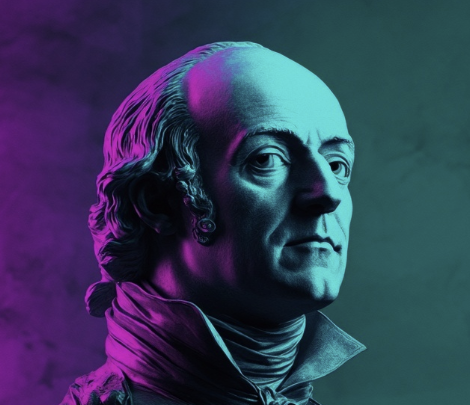
Every man is rich or poor according to the degree in which he can afford to enjoy the necessaries, conveniences, and amusements of human life. But after the division of labour has once thoroughly taken place, it is but a very small part of these with which a man's own labour can supply him. The far greater part of them he must derive from the labour of other people, and he must be rich or poor according to the quantity of that labour which he can command, or which he can afford to purchase. The value of any commodity, therefore, to the person who possesses it, and who means not to use or consume it himself, but to exchange it for other commodities, is equal to the quantity of labour which it enables him to purchase or command. Labour, therefore, is the real measure of the exchangeable value of all commodities.
▼
Source
source
Chapter V.

2 months 1 day ago
We carry with us the wonders, we seek without us: There is all Africa, and her prodigies in us; we are that bold and adventurous piece of nature, which he that studies, wisely learns in a compendium, what others labour at in a divided piece and endless volume.
▼
Source
source
Section 15
2 months 1 day ago
Times before you, when even the living men were Antiquities; when the living might exceed the dead, and to depart this world, could not be properly said, to go unto the greater number. Dedication

2 months 3 weeks ago
Transcendence constitutes selfhood.
▼
Source
source
Essence of Ground

7 months 1 day ago
The symptom is not only a cyphered message, it is at the same time a way for the subject to organize his enjoyment - that is why, even after the completed interpretation, the subject is not prepared to renounce his symptom.
1 month 2 weeks ago
Reason as an organ for perceiving the true nature of reality and determining the guiding principles of our lives has come to be regarded as obsolete.
▼
Source
source
p. 18.
5 days ago
As the neurobiological basis of feeling and emotion is unravelled, and the human genome decoded and rewritten, it will become purely an issue of post-human decision whether negative modes of consciousness are generated in any form or texture whatsoever. "The Hedonistic Imperative: Heaven on Earth", BLTC Research
2 months 3 weeks ago
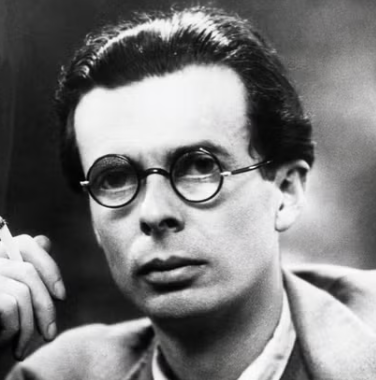
To his dog, every man is Napoleon; hence the constant popularity of dogs.
▼
Source
source
Reader's Digest, 1934
5 days ago
Nietzsche would say my friends lacked ears.
▼
Source
source
Chapter 8, Performative Reflexivity, p. 133
3 weeks 3 days ago
There are no connections in resonant space. There are only interfaces and metamorphoses.
▼
Source
source
(p. 75)
1 month 3 weeks ago
Nothing can be of more importance than to separate prejudice and mistake on the one hand from reason and demonstration on the other.
▼
Source
source
Book III, Ch.1
3 months 4 days ago
One may be humble out of pride.
▼
Source
source
Book II, Ch. 17. Of Presumption
2 months 3 weeks ago
When one admits that nothing is certain one must, I think, also admit that some things are much more nearly certain than others. It is much more nearly certain that we are assembled here tonight than it is that this or that political party is in the right. Certainly there are degrees of certainty, and one should be very careful to emphasize that fact, because otherwise one is landed in an utter skepticism, and complete skepticism would, of course, be totally barren and completely useless.
▼
Source
source
"Skepticism"
3 weeks 3 days ago
Radio provides a speed-up of information that also causes acceleration in other media. It certainly contracts the world to village size and creates insatiable village tastes for gossip, rumour, and personal malice.
▼
Source
source
(p. 24)

2 months 4 weeks ago
Let us maintain inviolably equality in the sacred right of suffrage: public security can never have a basis more solid.
▼
Source
source
Author's Inscription: French Edition
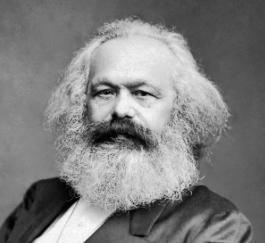
2 months 3 weeks ago
In capitalist society however where social reason always asserts itself only post festum great disturbances may and must constantly occur.
▼
Source
source
Vol. II, Ch. XVI, p. 319.

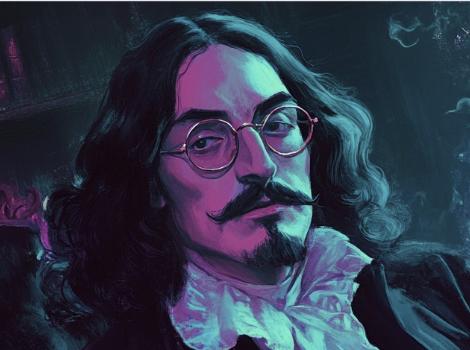
3 months 3 days ago
So blind is the curiosity by which mortals are possessed, that they often conduct their minds along unexplored routes, having no reason to hope for success, but merely being willing to risk the experiment of finding whether the truth they seek lies there.
▼
Source
source
Rules for the Direction of the Mind: IV
1 month 1 week ago
The fact of the religious vision, and its history of persistent expansion, is our one ground for optimism. Apart from it, human life is a flash of occasional enjoyments lighting up a mass of pain and misery, a bagatelle of transient experience.
▼
Source
source
Ch. 12: "Religion and Science", p. 268

2 months 3 days ago
For no one's authority ought to rank so high as to set a value on his words and terms even though nothing clear and determinate lies behind them.
▼
Source
source
Paragraph 1
1 month 5 days ago
Whereas economic man maximizes - selects the best alternative from among all those available to him, his cousin, administrative man, satisfices - looks for a course of action that is satisfactory or "good enough."
▼
Source
source
p. xxix.
1 month 3 weeks ago
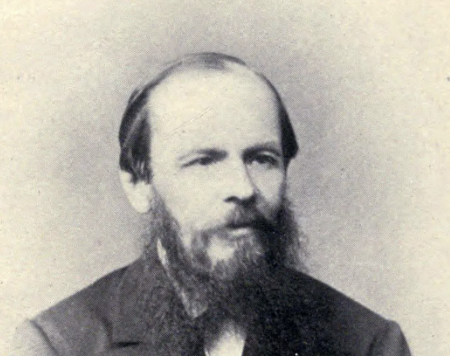
They showed me their trees, and I could not understand the intense love with which they looked at them; it was as though they were talking with creatures like themselves. And perhaps I shall not be mistaken if I say that they conversed with them. Yes, they had found their language, and I am convinced that the trees understood them. They looked at all Nature like that - at the animals who lived in peace with them and did not attack them, but loved them, conquered by their love. They pointed to the stars and told me something about them which I could not understand, but I am convinced that they were somehow in touch with the stars, not only in thought, but by some living channel.
1 month 1 week ago
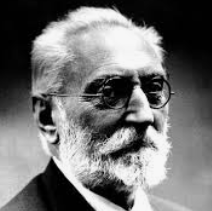
Your own philosophy condemns you and supports us.
▼
Source
source
Salbatore Mitxelena (1958): Unamuno eta Abendats, Baiona: Darracq
2 months 2 weeks ago
The rule of Big Money and its attendant culture of cupidity and mendacity has so poisoned our hearts, minds and souls that a dominant self-righteous neoliberal soulcraft of smartness, dollars and bombs thrives with little opposition.
▼
Source
source
America is spiritually bankrupt. We must fight back together. The Guardian,
4 weeks 1 day ago
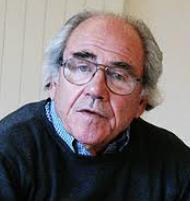
Boredom is like a pitiless zooming in on the epidermis of time. Every instant is dilated and magnified like the pores of the face.
▼
Source
source
Chapter 3

3 months 3 weeks ago
To work and create "for nothing," to sculpture in clay, to know one's creation has no future, to see one's work destroyed in a day while being aware that fundamentally this has no more importance than building for centuries, this is the difficult wisdom that absurd thought sanctions. Performing these two tasks simultaneously, negating on the one hand and magnifying on the other, it the way open to the absurd creator. He must give the void its colors.
2 months 3 weeks ago
Unlike the masses, intellectuals have a taste for rationality and an interest in facts.
▼
Source
source
Chapter 5 (p. 43)

3 months 3 weeks ago
Therefore create me! You, the most esteemed, cultured public, are in possession of nervus rerum gerendarum [the moving force to accomplish something]. Just a word from you, a promise to purchase what I write, or, if it is possible, so that everything can be in order immediately, a little advance payment, and I am an author; I shall remain one as long as this favor lasts.
2 months 4 weeks ago
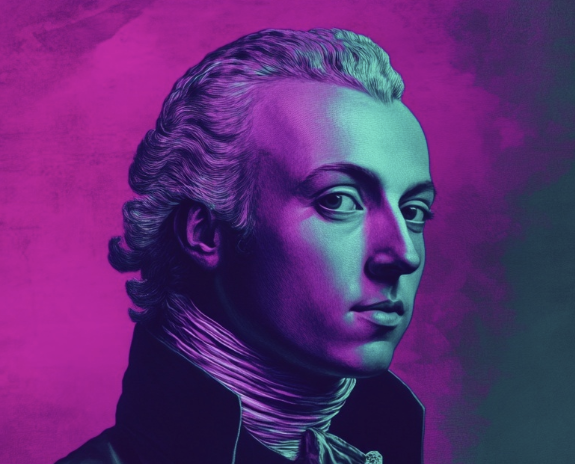
Psychologists have hitherto failed to realize that imagination is a necessary ingredient of perception itself.
▼
Source
source
A 120

1 month 3 weeks ago
Haven't people learned yet that the time of superficial intellectual games is over, that agony is infinitely more important than syllogism, that a cry of despair is more revealing than the most subtle thought, and that tears always have deeper roots than smiles?
3 weeks 3 days ago
War has become the environment of our time if only because it is an accelerated form of innovation and education.
▼
Source
source
(p. 381)
CivilSimian.com created by AxiomaticPanic, CivilSimian, Kalokagathia