

1 month 1 week ago
If I knew of something that could serve my nation but would ruin another, I would not propose it to my prince, for I am first a man and only then a Frenchman, because I am necessarily a man, and only accidentally am I French.
▼
Source
source
I.

2 months 3 weeks ago
The safest road to Hell is the gradual one - the gentle slope, soft underfoot, without sudden turnings, without milestones, without signposts.
▼
Source
source
Letter XII

2 months 2 weeks ago
Do the essences of proposition and of the truth determine themselves from out of the essence of the thing, or does the essence of the thing determine itself from out of the essence of the proposition? The question is posed as an either/or. However does this either/or itself suffice? Are the essence of the thing and the essence of the proposition only built as mirror images because both of them together determine themselves from out of the same but deeper lying root? However, what and where can be this common ground for the essence of the thing and of the proposition and of their origin? The unconditioned (Unbedingt)? We stated at the beginning that what conditions the essense of the thing in its thingness can no longer itself be thing and conditioned, it must be an unconditioned (Un-bedingtes).
▼
Source
source
p. 47
1 month 3 days ago
Of all the inventions of man I doubt whether any was more easily accomplished than that of a Heaven.
▼
Source
source
L 34
2 months 3 weeks ago
For the moment, the jazz is playing; there is no melody, just notes, a myriad of tiny tremors. The notes know no rest, an inflexible order gives birth to them then destroys them, without ever leaving them the chance to recuperate and exist for themselves.... I would like to hold them back, but I know that, if I succeeded in stopping one, there would only remain in my hand a corrupt and languishing sound. I must accept their death; I must even want that death: I know of few more bitter or intense impressions.
3 weeks 1 day ago
The future masters of technology will have to be lighthearted and intelligent. The machine easily masters the grim and the dumb.
▼
Source
source
(p. 55)
1 month 2 weeks ago
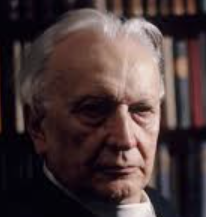
Nietzsche, driven by the absolute demand of his existential truthfulness, could not abide the bourgeois world, even when its representative had human nobility.
1 month 1 week ago
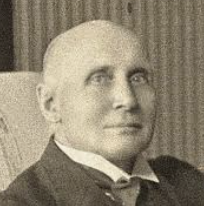
By relieving the brain of all unnecessary work, a good notation sets it free to concentrate on more advanced problems, and in effect increases the mental power of the race..
▼
Source
source
ch. 5
3 weeks 5 days ago
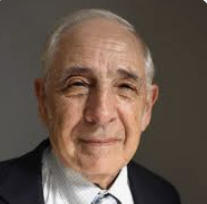
One can imagine a computer simulation of the action of peptides in the hypothalamus that is accurate down to the last synapse. But equally one can imagine a computer simulation of the oxidation of hydrocarbons in a car engine or the action of digestive processes in a stomach when it is digesting pizza. And the simulation is no more the real thing in the case of the brain than it is in the case of the car or the stomach. Barring miracles, you could not run your car by doing a computer simulation of the oxidation of gasoline, and you could not digest pizza by running the program that simulates such digestion. It seems obvious that a simulation of cognition will similarly not produce the effects of the neurobiology of cognition.
▼
Source
source
"Is the Brain's Mind a Computer Program?", Scientific American (January 1990).
1 month 1 week ago
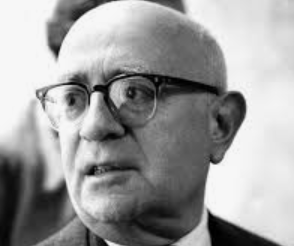
Elements of empirical language are manipulated in their rigidity, as if they were elements of a true and revealed language. The empirical usability of the sacred ceremonial words makes both the speaker and listener believe in their corporeal presence.
▼
Source
source
p. 7
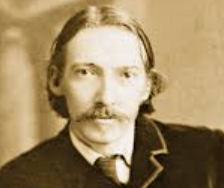
2 weeks 6 days ago
A woman loves to be obeyed at first, although afterwards she finds her pleasure in obeying.
▼
Source
source
The Suicide Club, Story of the Physician and the Saratoga Trunk.

3 months 3 days ago
Since my logic aims to teach and instruct the understanding, not that it may with the slender tendrils of the mind snatch at and lay hold of abstract notions (as the common logic does), but that it may in very truth dissect nature, and discover the virtues and actions of bodies, with their laws as determined in matter; so that this science flows not merely from the nature of the mind, but also from the nature of things.
▼
Source
source
Aphorism 52
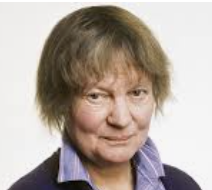
1 month 2 weeks ago
Stuart was not dismayed by his sexual feelings about the boy.
▼
Source
source
The Good Apprentice (1985), p. 247.
3 months 3 weeks ago
There is only one way to avoid criticism: do nothing, say nothing and be nothing.
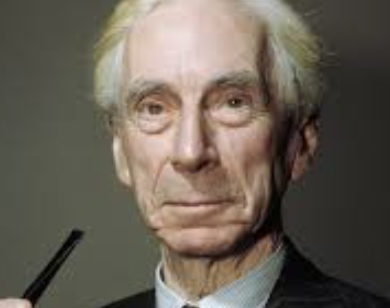
2 months 3 weeks ago
It is entirely clear that there is only one way in which great wars can be permanently prevented, and that is the establishment of an international government with a monopoly of serious armed force.
▼
Source
source
"The Atomic Bomb and the Prevention of War" in the Bulletin of the Atomic Scientists, 10/1/1945

3 months 3 weeks ago
When someone hides something behind a bush and looks for it again in the same place and finds it there as well, there is not much to praise in such seeking and finding. Yet this is how matters stand regarding seeking and finding "truth" within the realm of reason. If I make up the definition of a mammal, and then, after inspecting a camel, declare "look, a mammal' I have indeed brought a truth to light in this way, but it is a truth of limited value. That is to say, it is a thoroughly anthropomorphic truth which contains not a single point which would be "true in itself" or really and universally valid apart from man. At bottom, what the investigator of such truths is seeking is only the metamorphosis of the world into man.
1 month 2 weeks ago
Whether he be an original or a plagiarist, man is the novelist of himself.
▼
Source
source
"Man has no nature"

1 month 1 week ago
I believe government, organized authority, or the State is necessary only to maintain or protect property and monopoly. It has proven efficient in that function only. As a promoter of individual liberty, human well-being and social harmony, which alone constitute real order, government stands condemned by all the great men of the world...I believe - indeed, I know - that whatever is fine and beautiful in the human expresses and asserts itself in spite of government, and not because of it.

2 months 3 weeks ago
In history, we are concerned with what has been and what is; in philosophy, however, we are concerned not with what belongs exclusively to the past or to the future, but with that which is, both now and eternally - in short, with reason.
▼
Source
source
As translated by H. B. Nisbet, 1975


1 month 2 weeks ago
What I know at sixty, I knew as well at twenty. Forty years of a long, a superfluous, labor of verification.
1 month 1 week ago
Zen Buddhism is inspired by a basic trust in the Here, a basic trust in the world.
2 months 3 weeks ago
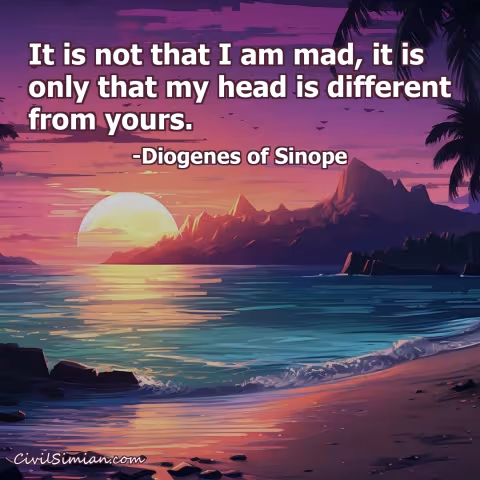
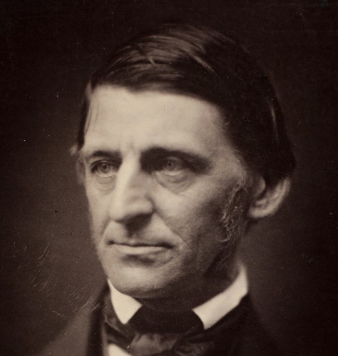
There are many things of which a wise man might wish to be ignorant.
▼
Source
source
Demonology
2 months 3 weeks ago
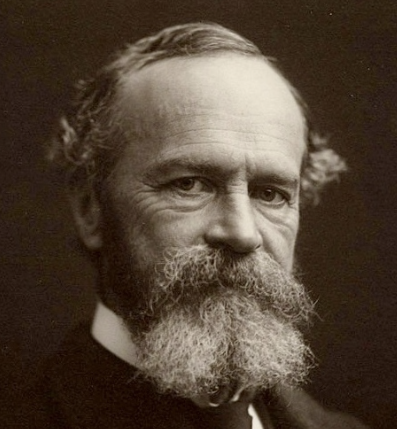
I will now confess my own utopia. I devoutly believe in the reign of peace and in the gradual advent of some sort of socialistic equilibrium. The fatalistic view of the war function is to me nonsense, for I know that war-making is due to definite motives and subject to prudential checks and reasonable criticisms, just like any other form of enterprise. And when whole nations are the armies, and the science of destruction vies in intellectual refinement with the science of production, I see that war becomes absurd and impossible from its own monstrosity. Extravagant ambitions will have to be replaced by reasonable claims, and nations must make common cause against them.
2 weeks 6 days ago
The fact that life evolved out of nearly nothing, some 10 billion years after the universe evolved out of literally nothing, is a fact so staggering that I would be mad to attempt words to do it justice.
▼
Source
source
From tail to tale on the path of pilgrims in life, The Scotsman
2 months 3 weeks ago
Act as if what you do makes a difference. It does.
▼
Source
source
Correspondence with Helen Keller, 1908, in The Correspondence of William James: April 1908-August 1910, Vol. 12
1 month 3 weeks ago
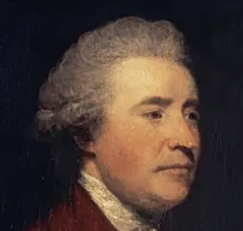
It is the function of a judge not to make but to declare the law, according to the golden mete-wand of the law and not by the crooked cord of discretion.
▼
Source
source
Preface to Brissot's Address

1 month 2 weeks ago
Repent: for the kingdom of heaven is at hand.
▼
Source
source
4:17 (KJV)

2 months 5 days ago
Happiness is a good flow of life.
▼
Source
source
As quoted by Stobaeus, ii. 77.
1 month 1 week ago
I remember well a junior seminar I gave with Paul Tillich shortly before the outbreak of the Third Reich. A participant spoke out against the idea of the meaning of existence. She said life did not seem very meaningful to her and she didn't know whether it had a meaning. The very voluble Nazi contingent became very excited by this and scraped the floor noisily with their feet. Now, I do not wish to maintain that this Nazi foot-shuffling proves or refutes anything in particular, but I do find it highly significant. I would say it is a touchstone for the relation of thinking to freedom. It raises the question whether thought can bear the idea that a given reality is meaningless and that mind is unable to orientate itself; or whether the intellect has become so enfeebled that it finds itself paralysed by the idea that all is not well with the world.
▼
Source
source
pp. 19-20

2 months 2 weeks ago
Confession frees, but power reduces one to silence; truth does not belong to the order of power, but shares an original affinity with freedom: traditional themes in philosophy, which a political history of truth would have to overturn by showing that truth is not by nature free--nor error servile--but that its production is thoroughly imbued with relations of power. The confession is an example of this.
▼
Source
source
Vol. I, p. 60

2 months 5 days ago
Hear gladly!

1 month 1 week ago
Moreover, nothing is so rare as to see misfortune fairly portrayed; the tendency is either to treat the unfortunate person as though catastrophe were his natural vocation, or to ignore the effects of misfortune on the soul, to assume, that is, that the soul can suffer and remain unmarked by it, can fail, in fact, to be recast in misfortune's image.
▼
Source
source
p. 193
1 month 2 weeks ago
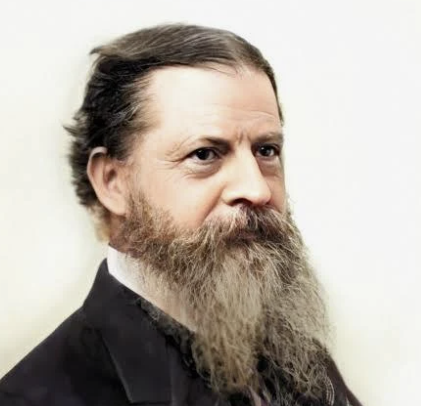
Now, let there be an indefinite succession of these inferential acts of comparative perception; and it is plain that the last moment will contain objectively the whole series. Let there be, not merely an indefinite succession, but a continuous flow of inference through a finite time; and the result will be a mediate objective consciousness of the whole time in the last moment. In this last moment, the whole series will be recognized, or known as known before.

1 month 1 week ago
To be in touch with senses and emotions beyond conquest is to enter the realm of the mysterious.
▼
Source
source
Chapter 2, Altars of Sacrifice
2 months 3 weeks ago
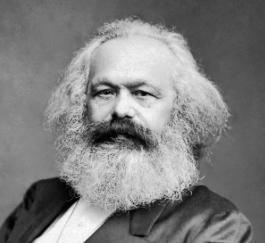
The directing motive, the end and aim of capitalist production, is to extract the greatest possible amount of surplus value, and consequently to exploit labor-power to the greatest possible extent.
▼
Source
source
Vol. I, Ch. 13, pg. 363.
3 months 3 days ago
Man, being the servant and interpreter of Nature, can do and understand so much and so much only as he has observed in fact or in thought of the course of nature. Beyond this he neither knows anything nor can do anything.
▼
Source
source
Aphorism 1
2 months 3 weeks ago
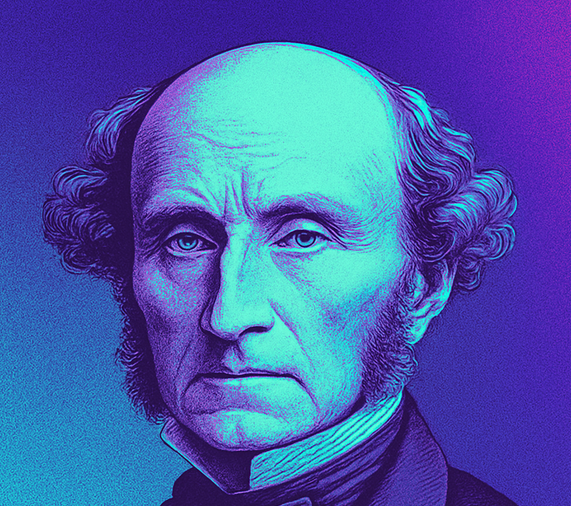
I soon perceived that she possessed in combination, the qualities which in all other persons whom I had known I had been only too happy to find singly. In her, complete emancipation from every kind of superstition (including that which attributes a pretended perfection to the order of nature and the universe), and an earnest protest against many things which are still part of the established constitution of society, resulted not from the hard intellect, but from strength of noble and elevated feeling, and co-existed with a highly reverential nature.
▼
Source
source
(p. 186)
1 month 3 weeks ago
Peace to the shacks! War on the palaces!
1 month 2 weeks ago
And that servant, which knew his lord's will, and prepared not himself, neither did according to his will, shall be beaten with many stripes.
▼
Source
source
Luke 12:47 (KJV)

2 months 3 weeks ago
Moral Teleology supplies the deficiency in physical Teleology, and first establishes a Theology; because the latter, if it did not borrow from the former without being observed, but were to proceed consistently, could only found a Demonology, which is incapable of any definite concept.
▼
Source
source
Immanuel Kant, Kant's Critique of Judgment (1892) Tr. J.H. Bernard
1 month 3 weeks ago
People crushed by law, have no hopes but from power. If laws are their enemies, they will be enemies to laws; and those who have much to hope and nothing to lose, will always be dangerous.
▼
Source
source
Letter to Charles James Fox

3 months 3 weeks ago
If you're going to write a story, avoid contemporary references. They date a story and they have no staying power.

2 months 2 weeks ago
One should emulate works and deeds of virtue, not arguments about it.
1 month 3 weeks ago
It cannot at this time be too often repeated; line upon line; precept upon precept; until it comes into the currency of a proverb, To innovate is not to reform.
▼
Source
source
p. 20
1 month 3 weeks ago
Government in reality, as has abundantly appeared, is a question of force, and not of consent. It is desirable that a government should be made as agreeable as possible to the ideas and inclinations of its subjects and that they should be consulted, as extensively as may be, respecting its construction and regulations. But, at last, the best constituted government that can be formed particularly for a large community, will contain many provisions that, far from having obtained the consent of all its members, encounter even in their outset a strenuous, thought ineffectual opposition.
▼
Source
source
Book III, "Of Obedience"
1 month 6 days ago
The same polarity of the male and female principle exists in nature; not only, as is obvious in animals and plants, but in the polarity of the two fundamental functions, that of receiving and penetrating. It is the polarity of earth and rain, of the river and the ocean, of night and day, of darkness and light, of matter and spirit.
▼
Source
source
Ch. 2
2 months 3 weeks ago
They [Christians] believe that the living, dynamic activity of love has been going on in God forever and has created everything else. And that, by the way, is perhaps the most important difference between Christianity and all other religions: that in Christianity God is not an impersonal thing nor a static thing-not even just one person-but a dynamic pulsating activity, a life, a kind of drama, almost, if you will not think me irreverent, a kind of dance ... (The) pattern of this three-personal life is ... the great fountain of energy and beauty spurting up at the very center of reality.
▼
Source
source
Book IV, Chapter 4, "Good Infection"

2 months 4 weeks ago
Morality is a subject that interests us above all others: We fancy the peace of society to be at stake in every decision concerning it; and 'tis evident, that this concern must make our speculations appear more real and solid, than where the subject is, in a great measure, indifferent to us. What affects us, we conclude can never be a chimera; and as our passion is engag'd on the one side or the other, we naturally think that the question lies within human comprehension; which, in other cases of this nature, we are apt to entertain some doubt of. Without this advantage I never should have ventur'd upon a third volume of such abstruse philosophy, in an age, wherein the greatest part of men seem agreed to convert reading into an amusement, and to reject every thing that requires any considerable degree of attention to be comprehended.
▼
Source
source
Part 1, Section 1
CivilSimian.com created by AxiomaticPanic, CivilSimian, Kalokagathia