

"Perfection" is implied every time you fall short on a goal, but, it's imaginary and unattainable. Even if you met your goal, "perfection" haunts you...even though it is NOT....



The methods of logical procedure are very different in ancient and modem logic, but behind all difference is the construction of a universally valid order of thought, neutral with respect to material content. Long before technological man and technological nature emerged as the objects of rational control and calculation, the mind was made susceptible to abstract generalization. Terms which could be organized into a coherent logical system, free from contradiction or with manageable contradiction, were separated from those which could not. Distinction was made between the universal, calculable, "objective" and the particular, incalculable, subjective dimension of thought.
If I first see a tree in the winter, I might assume that it is not a fruit-tree. But when I return in the summer to find it covered with plums, I must exclaim, 'Excuse me! You were a fruit-tree after all.' Imagine, then, that a billion years ago some beings from another part of the galaxy made a tour through the solar system in their flying saucer and found no life. They would dismiss it as 'Just a bunch of old rocks!' But if they returned today, they would have to apologize: 'Well - you were peopling rocks after all!' You may, of course, argue that there is no analogy between the two situations. The fruit-tree was at one time a seed inside a plum, but the earth - much less the solar system or the galaxy - was never a seed inside a person. But, oddly enough, you would be wrong.

The capacity to reason is a special sort of capacity because it can lead us to places that we did not expect to go.
Adam came from great power and great wealth, but he was not worthy of you. For had he been worthy, he would not have tasted death.
I find that the best virtue I have has in it some tincture of vice.
All hopes and despairs vanish in the voracious, funneling whirlwind of God. God laughs, wails, kills, sets us on fire, and then leaves us in the middle of the way, charred embers. And I rejoice to feel between my temples, in the flicker of an eyelid, the beginning and the end of the world. I condense into a lightning moment the seeding, sprouting, blossoming, fructifying, and the disappearance of every tree, animal, man, star, and god. All Earth is a seed planted in the coils of my mind. Whatever struggles for numberless years to unfold and fructify in the dark womb of matter bursts in my head like a small and silent lightning flash. Ah! let us gaze intently on this lightning flash, let us hold it for a moment, let us arrange it into human speech. Let us transfix this momentary eternity which encloses everything, past and future, but without losing in the immobility of language any of its gigantic erotic whirling.

The state is primarily an organization for killing foreigners.
...there are more things to admire in men than to despise.
Look now, this is the starting point of philosophy: the recognition that different people have conflicting opinions, the rejection of mere opinion so that it comes to be viewed with mistrust, an investigation of opinion to determine whether it is rightly held, and the discovery of a standard of judgement, comparable to the balance that we have devised for the determining of weights, or the carpenter's rule for determining whether things are straight or crooked.
Since my logic aims to teach and instruct the understanding, not that it may with the slender tendrils of the mind snatch at and lay hold of abstract notions (as the common logic does), but that it may in very truth dissect nature, and discover the virtues and actions of bodies, with their laws as determined in matter; so that this science flows not merely from the nature of the mind, but also from the nature of things.
The second office of the government is honorable and easy, the first is but a splendid misery.
I like well your idea of issuing treasury notes bearing interest, because I am persuaded they would soon be withdrawn from circulation and locked up in vaults & private hoards. It would put it in the power of every man to lend his 100. or 1000 d. tho' not able to go forward on the great scale, and be the most advantageous way of obtaining a loan. The other idea of creating a National bank, I do not concur in, because it seems now decided that Congress has not that power, (altho' I sincerely wish they had it exclusively) and because I think there is already a vast redundancy, rather than a scarcity of paper medium.

Today, criminal justice functions and justifies itself only by this perpetual reference to something other than itself, by this unceasing reinscription in non-juridical systems.
There is a word very commonly used these days: "anti-communism." It's a very stupid word, badly put together. It makes it appear as though communism were something original, something basic, something fundamental. Therefore, it is taken as the point of departure, and anti-communism is defined in relation to communism. Here is why I say that this word was poorly selected, that it was put together by people who do not understand etymology: the primary, the eternal concept is humanity. And communism is anti-humanity. Whoever says "anti-communism" is saying, in effect, anti-anti-humanity. A poor construction. So we should say: that which is against communism is for humanity. Not to accept, to reject this inhuman Communist ideology is simply to be a human being. It isn't being a member of a party.
It is, therefore, quite natural that the churches have always fought against science and have persecuted its supporters. But, on the other hand, I assert that the cosmic religious experience is the strongest and noblest driving force behind scientific research. No one who does not appreciate the terrific exertions, and, above all, the devotion without which pioneer creations in scientific thought cannot come into being, can judge the strength of the feeling out of which alone such work, turned away as it is from immediate practical life, can grow. What a deep faith in the rationality of the structure of the world and what a longing to understand even a small glimpse of the reason revealed in the world there must have been in Kepler and Newton to enable them to unravel the mechanism of the heavens in long years of lonely work! Any one who only knows scientific research in its practical applications may easily come to a wrong interpretation of the state of mind of the men who, surrounded by skeptical contemporaries, have shown the way to kindred spirits scattered over all countries in all centuries. Only those who have dedicated their lives to similar ends can have a living conception of the inspiration which gave these men the power to remain loyal to their purpose in spite of countless failures. It is the cosmic religious sense which grants this power. A contemporary has rightly said that the only deeply religious people of our largely materialistic age are the earnest men of research.
A Christian has no need of any law in order to be saved, since through faith we are free from every law. Thus all the acts of a Christian are done spontaneously, out of a sense of pure liberty. As Christians we do not seek our own advantage or salvation because we are already fully satisfied and saved by God's grace through faith. Now our only motive is to do that which is pleasing to God.

Progressives on the left have shown themselves willing to abandon liberal values in pursuit of social justice objectives. There has been a sustained intellectual attack on liberal principles over the past three decades coming out of academic pursuits like gender studies, critical race theory, postcolonial studies, and queer theory, that deny the universalistic premises underlying modern liberalism. The challenge is not simply one of intolerance of other views or "cancel culture" in the academy or the arts. Rather, the challenge is to basic principles that all human beings were born equal in a fundamental sense, or that a liberal society should strive to be color-blind.
Old age realizes the dreams of youth: look at Dean Swift; in his youth he built an asylum for the insane, in his old age he was himself an inmate.
We may define "faith" as a firm belief in something for which there is no evidence. Where there is evidence, no one speaks of "faith". We do not speak of faith that two and two are four or that the earth is round. We only speak of faith when we wish to substitute emotion for evidence. The substitution of emotion for evidence is apt to lead to strife, since different groups substitute different emotions.
If you fast, you will give rise to sin for yourselves; and if you pray, you will be condemned; and if you give alms, you will do harm to your spirits. When you go into any land and walk about in the districts, if they receive you, eat what they will set before you, and heal the sick among them. For what goes into your mouth will not defile you, but that which issues from your mouth—it is that which will defile you.
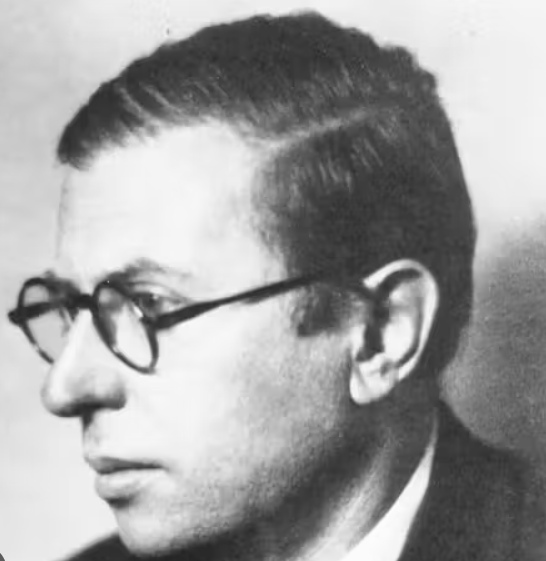
If literature isn't everything, it's not worth a single hour of someone's trouble.
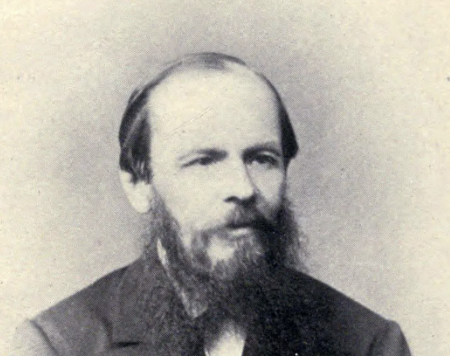
A gentleman, even if he loses everything he owns, must show no emotion. Money must be so far beneath a gentleman that it is hardly worth troubling about.
The rulers of Great Britain have, for more than a century past, amused the people with the imagination that they possessed a great empire on the west side of the Atlantic. This empire, however, has hitherto existed in imagination only.
Much reading has brought upon us a learned barbarism.
Every perfect traveller always creates the country where he travels.
When I am attacked by gloomy thoughts, nothing helps me so much as running to my books. They quickly absorb me and banish the clouds from my mind.

Newton's law is nothing but the statistics of gravitation, it has no power whatever. Let us get rid of the idea of power from law altogether. Call law tabulation of facts, expression of facts, or what you will; anything rather than suppose that it either explains or compels.
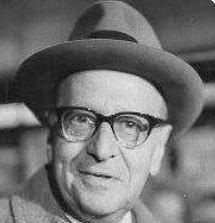
The significance of God, cause, number, substance or soul consists, as James asserts, in nothing but the tendency of the given concept to make us act or think. If the world should reach a point at which it ceases to care not only about such metaphysical entities but also about murders perpetrated behind closed frontiers or simply in the dark, one would have to conclude that the concepts of such murders have no meaning, that they represent no 'distinct ideas' or truths, since they do not make any 'sensible difference to anybody.
The question Whether one generation of men has a right to bind another, seems never to have been started either on this or our side of the water. Yet it is a question of such consequences as not only to merit decision, but place also, among the fundamental principles of every government. The course of reflection in which we are immersed here on the elementary principles of society has presented this question to my mind; & that no such obligation can be so transmitted I think very capable of proof. I set out on this ground, which I suppose to be self-evident, 'that the earth belongs in usufruct to the living': that the dead have neither powers nor rights over it. The portion occupied by any individual ceases to be his when himself ceases to be, & reverts to the society.

Social Democratic centralism cannot be based on the mechanical subordination and blind obedience of the party membership to the leading party center. The Social Democratic movement cannot allow the erection of an air-tight partition between the class-conscious nucleus of the proletariat already in the party and its immediate popular environment, the nonparty sections of the proletariat.
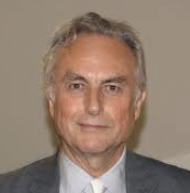
But if you can breed cattle for milk yield, horses for running speed, and dogs for herding skill, why on Earth should it be impossible to breed humans for mathematical, musical or athletic ability? Objections such as "these are not one-dimensional abilities" apply equally to cows, horses and dogs and never stopped anybody in practice. I wonder whether, some 60 years after Hitler's death, we might at least venture to ask what the moral difference is between breeding for musical ability and forcing a child to take music lessons. Or why it is acceptable to train fast runners and high jumpers but not to breed them. I can think of some answers, and they are good ones, which would probably end up persuading me. But hasn't the time come when we should stop being frightened even to put the question?
Your reason is now mature enough to examine this object religion. In the first place divest yourself of all bias in favour of novelty & singularity of opinion. Indulge them in any other subject rather than that of religion. It is too important, & the consequences of error may be too serious. On the other hand shake off all the fears & servile prejudices under which weak minds are servilely crouched. Fix reason firmly in her seat, and call to her tribunal every fact, every opinion. Question with boldness even the existence of a god; because, if there be one, he must more approve the homage of reason, than that of blindfolded fear.
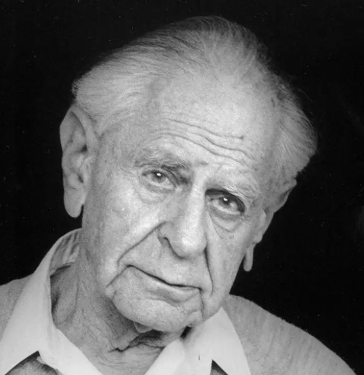
By 'arguing...' I mean... criticizing... inviting... criticism; and trying to learn from it.
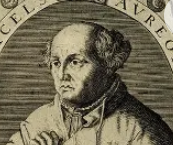
We should become angels and not devils, that's why we have been created and born into the world. Therefore be and stick to what God has chosen you for.
Where any answer is possible, all answers are meaningless.
Men looke not at the greatnesse of the evill past, but the greatnesse of the good to follow.
What is left when honor is lost?
As the analysis of a substantial composite terminates only in a part which is not a whole, that is, in a simple part, so synthesis terminates only in a whole which is not a part, that is, the world.

I like thought which preserves a whiff of flesh and blood, and I prefer a thousand times an idea rising from sexual tension or nervous depression to empty abstraction.
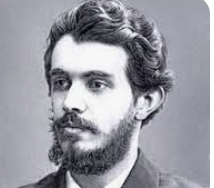
I see myself immersed in the depths of human existence and standing in the face of the ineffable mystery of the world and of all that is. And in that situation, I am made poignantly and burningly aware that the world cannot be self-sufficient, that there is hidden in some still greater depth a mysterious, transcendent meaning. This meaning is called God. Men have not been able to find a loftier name, although they have abused it to the extent of making it almost unutterable. God can be denied only on the surface; but he cannot be denied where human experience reaches down beneath the surface of flat, vapid, commonplace existence.
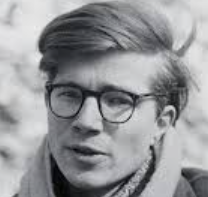
The chief impression left by a study of Crowley's life and works is that he wasted an immense amount of time and energy trying to shock everyone he came into contact with, and his dislike of orthodoxy turned him into an unconsciously comic figure, like Don Quixote.
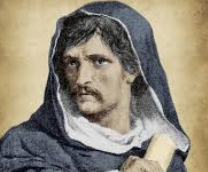
It is proof of a base and low mind for one to wish to think with the masses or majority, merely because the majority is the majority. Truth does not change because it is, or is not, believed by a majority of the people.

Look round and round the man you recommend, for yours will be the shame should he offend.
You remember Thurlow's answer to some one complaining of the injustice of a company. "Why, you never expected justice from a company, did you? they have neither a soul to lose, nor a body to kick."
CivilSimian.com created by AxiomaticPanic, CivilSimian, Kalokagathia