

2 months 1 week ago
September 11, 2001, was just another day for most of the world's desperately poor people, so presumably close to 30,000 children under five died from these causes on that day-about ten times the number of victims of the terrorist attacks. The publication of these figures did not lead to an avalanche of money for UNICEF or other aid agencies helping to reduce infant mortality. In the year 2000 Americans made private donations for foreign aid of all kinds totaling about $4 per person in extreme poverty, or roughly $20 per family. New Yorkers who were living in lower Manhattan on September 11, 2001, whether wealthy or not, were able to receive an average of $5,300 per family. The distance between these amounts encapsulates the way in which, for many people, the circle of concern for others stops at the boundaries of their own country-if it extends even that far.
▼
Source
source
Chapter 5: One Community (p. 176)
1 month 3 weeks ago
The revolution must end and the republic must begin. In our constitution, right must take the place of duty, welfare that of virtue, and self-defense that of punishment. Everyone must be able to prevail and to live according to one's own nature.
▼
Source
source
Act I.
1 month 1 week ago
It is not in a person's nature to desire what he already has. Desire is a tendency, the start of a movement toward something, toward a point from which one is absent. If, at the very outset, this movement doubles back on itself toward its point of departure, a person turns round and round like a squirrel in a cage or a prisoner in a condemned cell. Constant turning soon produces revulsion. All workers, especially though not exclusively those who work under inhumane conditions, are easily the victims of revulsion, exhaustion and disgust and the strongest are often the worst affected.
▼
Source
source
p. 245

3 months 1 week ago
He that in his studies wholly applies himself to labour and exercise, and neglects meditation, loses his time, and he that only applies himself to meditation, and neglects labour and exercise, only wanders and loses himself.
1 month 1 day ago
Human beings, viewed as behaving systems, are quite simple. The apparent complexity of our behavior over time is largely a reflection of the complexity of the environment in which we find ourselves.
▼
Source
source
p. 53.



2 months 3 weeks ago
It is impossible to imagine a more dramatic and horrifying combination of scientific triumph with political and moral failure than has been shown to the world in the destruction of Hiroshima. From the scientific point of view, the atomic bomb embodies the results of a combination of genius and patience as remarkable as any in the history of mankind.

3 months 2 weeks ago
A punishment that penalizes without forestalling is indeed called revenge.
2 months 3 weeks ago
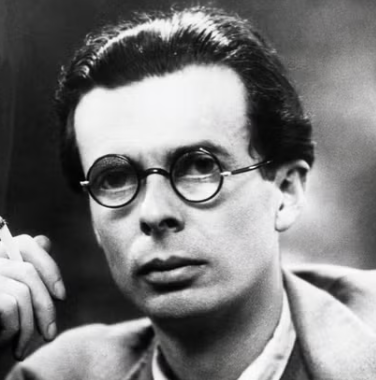
Who is going to educate the human race in the principles and practice of conservation?
▼
Source
source
Chapter 12 (p. 112)
2 weeks 5 days ago
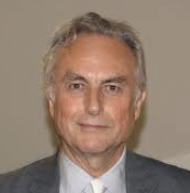
Moral philosophers say things like, 'What is actually wrong with cannibalism?' There are two ways of responding to that: one is to shrink back in horror and say, 'Cannibalism! Cannibalism! We can't talk about cannibalism!' The other is to say, 'Well, actually, what is wrong with cannibalism?' Then you work it out and you tease it out and you decide yes, actually, cannibalism is wrong, but for the following reasons. So I'd like to think that my moral values at least partly come from reasoning. Trying to suppress the gut reaction as much as possible.
▼
Source
source
Interview with Sophie Elmhirst (2015),

2 months 3 weeks ago
No congress, nor mob, nor guillotine, nor fire, nor all together, can avail, to cut out, burn, or destroy the offense of superiority in persons. The superiority in him is inferiority in me.
▼
Source
source
p. 65

2 months 3 weeks ago
In vain, therefore, should we pretend to determine any single event, or infer any cause or effect, without the assistance of observation and experience.
▼
Source
source
§ 4.11

1 month 5 days ago
The everyday world demands our attention, and prevents us from sinking into ourselves. As a romantic, I have always resented this: I like to sink into myself. The problems and anxieties of living make it difficult. Well, now I had an anxiety that referred to something inside of me, and it reminded me that my inner world was just as real and important as the world around me.
▼
Source
source
p. 39

2 months 3 weeks ago
Let me have none of your Popish stuff! Get away with you, good morning.
▼
Source
source
Last words (June 1809), as quoted in The Fortnightly, vol. 25; vol. 31, p. 398
2 weeks 4 days ago
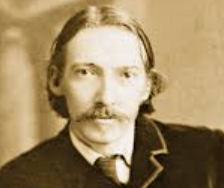
I regard you with an indifference closely bordering on aversion.
▼
Source
source
The Rajah's Diamond, Story of the House with the Green Blinds.
2 months 3 weeks ago
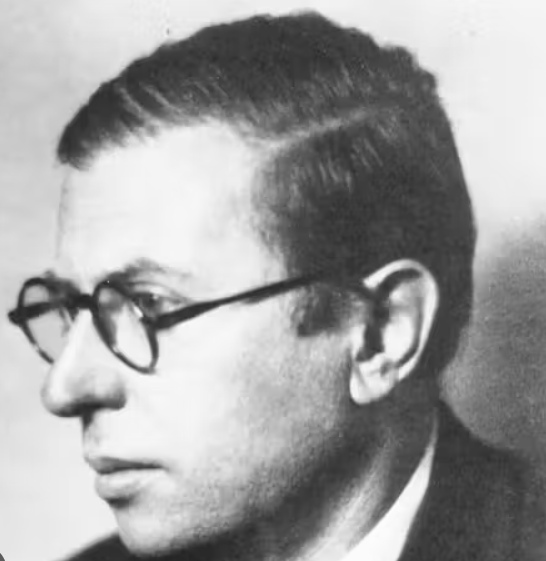
Freedom is what you do with what's been done to you.

3 months ago
We have now completed both the spiritual and the temporal government, that is, the divine and the paternal authority and obedience. But here now we go forth from our house among our neighbors to learn how we should live with one another, every one himself toward his neighbor. Therefore God and government are not included in this commandment nor is the power to kill, which they have taken away. For God has delegated His authority to punish evil-doers to the government instead of parents, who aforetime (as we read in Moses) were required to bring their own children to judgment and sentence them to death. Therefore, what is here forbidden is forbidden to the individual in his relation to any one else, and not to the government.
▼
Source
source
[The Large Catechism] by Martin Luther, Translated by F. Bente and W.H.T. Dau Published in: Triglot Concordia: The Symbolical Books of the Ev. Lutheran Church (St. Louis: Concordia Publishing House, 1921) pp. 565-773,
3 months ago
...God commanded in the law [Deut. 22:22-24] that adulterers be stoned . . . The temporal sword and government should therefore still put adulterers to death . . . Where the government is negligent and lax, however, and fails to inflict the death penalty, the adulterer may betake himself to a far country and there remarry if he is unable to remain continent. But it would be better to put him to death, lest a bad example be set . . .
1 month 2 weeks ago
All ages before ours believed in gods in some form or other. Only an unparalleled impoverishment in symbolism could enable us to rediscover the gods as psychic factors, which is to say, as archetypes of the unconscious. No doubt this discovery is hardly credible as yet.
▼
Source
source
p. 72
1 month 1 week ago
We live in a nightmare of falsehoods, and there are few who are sufficiently awake and aware to see things as they are. Our first duty is to clear away illusions and recover a sense of reality. If war should come, it will do so on account of our delusions, for which our hag-ridden conscience attempts to find moral excuses. To recover a sense of reality is to recover the truth about ourselves and the world in which we live, and thereby to gain the power of keeping this world from flying asunder.
▼
Source
source
p. 80
3 months 1 week ago
If a man has reported to you, that a certain person speaks ill of you, do not make any defense (answer) to what has been told you: but reply, The man did not know the rest of my faults, for he would not have mentioned these only.
▼
Source
source
(33) [tr. George Long (1888)].
2 months 3 weeks ago
All's well that ends well; which is the epitaph I should put on my tombstone if I were the last man left alive.
▼
Source
source
Letter to Lucy Donnely, April 22, 1906
2 months 3 weeks ago
We are never without a pilot. When we know not how to steer, and dare not hoist a sail, we can drift. The current knows the way, though we do not. The ship of heaven guides itself, and will not accept a wooden rudder.
▼
Source
source
"The Sovereignty of Ethics", in The North America Review, no. 262 (May-June 1878) p. 407
1 month 2 days ago
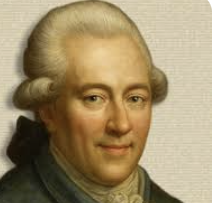
It is almost everywhere the case that soon after it is begotten the greater part of human wisdom is laid to rest in repositories.
▼
Source
source
K 37

1 month 3 weeks ago
In a revolution, as in a novel, the most difficult part to invent is the end.
▼
Source
source
Recollections of Alexis de Tocqueville, p. 71.

2 months 3 weeks ago
Kant ... discovered "the scandal of reason," that is the fact that our mind is not capable of certain and verifiable knowledge regarding matters and questions that it nevertheless cannot help thinking about.
▼
Source
source
p. 14
1 month 1 week ago
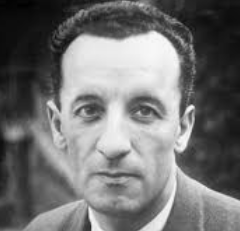
The world is nothing but 'world-as-meaning.'
▼
Source
source
p. xi

3 months 2 weeks ago
Parmenides: If anyone, with his mind fixed on all these objections and others like them, denies the existence of ideas of things, and does not assume an idea under which each individual thing is classed, he will be quite at a loss, since he denies that the idea of each thing is always the same, and in this way he will utterly destroy the power of carrying on discussion... Then what will become of philosophy? To what can you turn, if these things are unknown?

1 month 2 weeks ago
The methods of logical procedure are very different in ancient and modem logic, but behind all difference is the construction of a universally valid order of thought, neutral with respect to material content. Long before technological man and technological nature emerged as the objects of rational control and calculation, the mind was made susceptible to abstract generalization. Terms which could be organized into a coherent logical system, free from contradiction or with manageable contradiction, were separated from those which could not. Distinction was made between the universal, calculable, "objective" and the particular, incalculable, subjective dimension of thought.
▼
Source
source
pp. 137-138
2 months 3 weeks ago
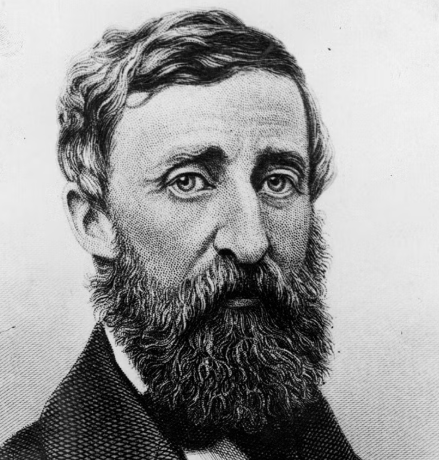
As for my own business, even that kind of surveying which I could do with most satisfaction my employers do not want. They would prefer that I should do my work coarsely and not too well, ay, not well enough. When I observe that there are different ways of surveying, my employer commonly asks which will give him the most land, not which is most correct.
▼
Source
source
p. 486

2 months 1 week ago
'Tis well to restrain the wicked, and in any case not to join him in his wrong-doing.
2 months 3 weeks ago
Science seems to be at war with itself.... Naive realism leads to physics, and physics, if true, shows naive realism to be false. Therefore naive realism, if true, is false; therefore it is false.
▼
Source
source
An Inquiry into Meaning and Truth (1940), Introduction, p. 15
2 months 3 weeks ago
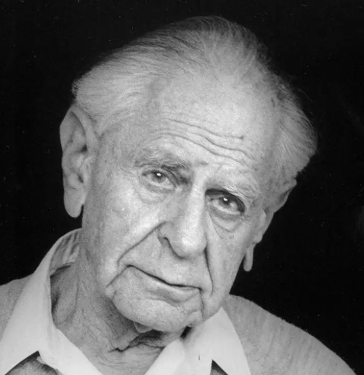
Subject matters in general do not exist. There are no subject matters; no branches of learning-or, rather, of inquiry: there are only problems, and the urge to solve them.
2 months 3 weeks ago
Nature offers nothing that can be called this man's rather than another's ; but, under nature, everything belongs to all - that is, they have authority to claim it for themselves. But, under dominion, where it is by common law determined what belongs to this man, and what to that, he is called just who has a constant will to render to every man his own, but he, unjust who strives, on the contrary, to make his own that which belongs to another.
▼
Source
source
Ch. 2, Of Natural Right

2 months 1 week ago
It is your concern when your neighbor's wall is on fire.
▼
Source
source
Book I, epistle xviii, line 84
2 months 3 weeks ago
I was seeing what Adam had seen on the morning of his creation - the miracle, moment by moment, of naked existence.
▼
Source
source
Pages 160-61
2 weeks 5 days ago
They are in you and me; they created us, body and mind; and their preservation is the ultimate rationale for our existence. They have come a long way, those replicators. Now they go by the name of genes, and we are their survival machines.
▼
Source
source
Ch. 2. The replicators
1 month 5 days ago
When we are lulled into somnolence by lack of challenge every molehill tends to become a mountain, every minor inconvenience an intolerable imposition. For a self-chosen reality tends to become a prison. The factors that protect and insulate civilized man can easily end by suffocating him unless he possesses a high degree of self-discipline, the 'highly developed vital sense' that Shaw speaks of. And since clever and sensitive people are inclined to lack self-discipline, a high degree of culture usually involves a high degree of pessimism. This is what has happened to Western civilisation over the past two centuries. It explains why so many distinguished artists, writers and musicians have taken such a negative view of the human situation.
▼
Source
source
Introduction, p. xiii
2 months 3 weeks ago
There is needed, no doubt, a body of servants (ministerium) of the invisible church, but not officials (officiales), in other words, teachers but not dignitaries, because in the rational religion of every individual there does not yet exist a church as a universal union (omnitudo collectiva).
▼
Source
source
Book IV, Part 1, Section 1, "The Christian religion as a natural religion"
2 months 2 weeks ago
There is hardly a philosophy which has not invoked something like the will or desire to know, the love of truth, etcetera. But, in truth, very few philosophers-apart, perhaps, from Spinoza and Schopenhauer-have accorded it more than a marginal status; as if there was no need for philosophy to say first of all what the name that it bears actually refers to. As if placing at the head of its discourse the desire to know, which it repeats in its name, was enough to justify its own existence and show-at a stroke-that it is necessary and natural: All men desire to know. Who, then, is not a philosopher, and how could philosophy not be the most necessary thing in the world?
▼
Source
source
pp. 4-5
1 month 2 weeks ago
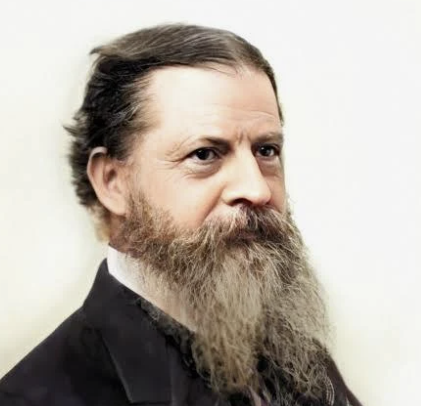
To suppose universal laws of nature capable of being apprehended by the mind and yet having no reason for their special forms, but standing inexplicable and irrational, is hardly a justifiable position. Uniformities are precisely the sort of facts that need to be accounted for. That a pitched coin should sometimes turn up heads and sometimes tails calls for no particular explanation; but if it shows heads every time, we wish to know how this result has been brought about. Law is par excellence the thing that wants a reason.
2 months 3 weeks ago
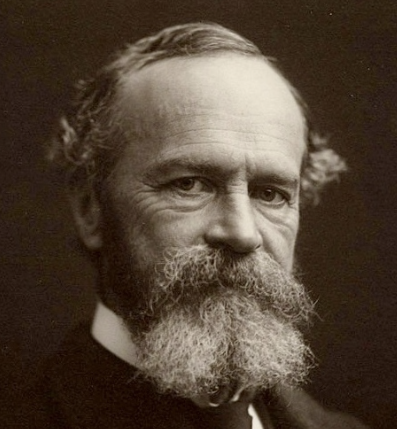
The hell to be endured hereafter, of which theology tells, is no worse than the hell we make for ourselves in this world by habitually fashioning our characters in the wrong way.
▼
Source
source
Ch. 4
2 months 3 weeks ago
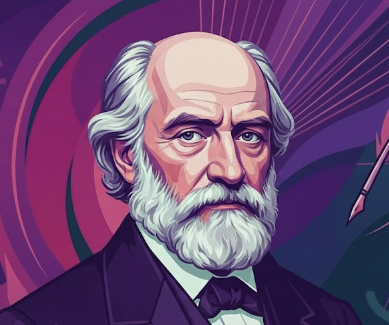
The composer reveals the innermost nature of the world, and expresses the profoundest wisdom in a language that his reasoning faculty does not understand, just as a magnetic somnambulist gives information about things of which she has no conception when she is awake. Therefore in the composer, more than in any other artist, the man is entirely separate and distinct from the artist.
▼
Source
source
Vol. I, Ch. III, The World As Representation

2 months 3 weeks ago
The miracles in fact are a retelling in small letters of the very same story which is written across the whole world in letters too large for some of us to see. Of that larger script part is already visible, part is still unsolved. In other words, some of the miracles do locally what God has already done universally: others do locally what He has not yet done, but will do. In that sense, and from our human point of view, some are reminders and others prophecies.
▼
Source
source
"Miracles" (1942), p. 29
2 months 3 weeks ago
Life consists with wildness. The most alive is the wildest. Not yet subdued to man, its presence refreshes him.
2 months 3 weeks ago
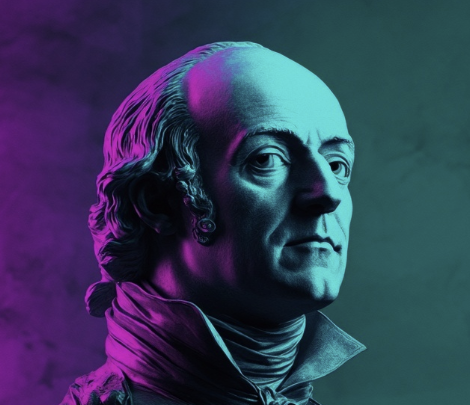
That of beaver skins, of beaver wool, and of gum Senega, has been subjected to higher duties; Great Britain, by the conquest of Canada and Senegal, having got almost the monopoly of those commodities.
▼
Source
source
Chapter II, Part II, Article IV, p. 954-955.

3 weeks 5 days ago
Bullialdus wrote that all force respecting the Sun as its center & depending on matter must be reciprocally in a duplicate ratio of the distance from the center.
▼
Source
source
Letter to Edmund Halley (June 20, 1686) quoted in I. Bernard Cohen and George E. Smith, ed.s, The Cambridge Companion to Newton (2002) p. 204
2 months 3 weeks ago
And striving to be man, the worm Mounts through all the spires of form.
▼
Source
source
May-Day
CivilSimian.com created by AxiomaticPanic, CivilSimian, Kalokagathia