


3 months 3 weeks ago
The greatest and noblest conceptions have no image wrought plainly for human vision, which he who wishes to satisfy the mind of the inquirer can apply to some one of his senses and by mere exhibition satisfy the mind. We must therefore endeavor by practice to acquire the power of giving and understanding a rational definition of each one of them; for immaterial things, which are the noblest and greatest, can be exhibited by reason only, and it is for their sake that all we are saying is said. But it is always easier to practice in small matters than in greater ones.
3 months 3 weeks ago
Zeno: The many do not know that except by this devious passage through all things the mind cannot attain to the truth. Zeno: Most people are not aware that this roundabout progress through all things is the only way in which the mind can attain truth and wisdom.

1 month 2 weeks ago
The Spirit of the Lord is on me, because he has anointed me to proclaim good news to the poor. He has sent me to proclaim freedom for the prisoners and recovery of sight for the blind, to set the oppressed free, to proclaim the year of the Lord's favor.
▼
Source
source
Luke 4:18-19 NIV
2 months 4 weeks ago
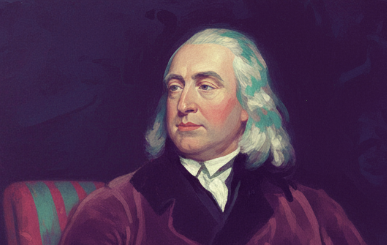
Nature has placed mankind under the governance of two sovereign masters, pain and pleasure. It is for them alone to point out what we ought to do, as well as to determine what we shall do. On the one hand the standard of right and wrong, on the other the chain of causes and effects, are fastened to their throne. They govern us in all we do, in all we say, in all we think: every effort we can make to throw off our subjection, will serve but to demonstrate and confirm it. In words a man may pretend to abjure their empire: but in reality he will remain subject to it all the while. The principle of utility recognizes this subjection, and assumes it for the foundation of that system, the object of which is to rear the fabric of felicity by the hands of reason and of law. Systems which attempt to question it, deal in sounds instead of sense, in caprice instead of reason, in darkness instead of light.
▼
Source
source
Ch. 1: Of the Principle of Utility

1 month 3 weeks ago
Applaud us when we run, console us when we fall, cheer us when we recover.
▼
Source
source
Speech at Bristol Previous to the Election (6 September 1780), quoted in The Works of the Right Honourable Edmund Burke, Vol. II (1855), p. 129

2 months 2 weeks ago
A text is not a text unless it hides from the first comer, from the first glance, the law of its composition and the rules of its game. A text remains, moreover, forever imperceptible. Its law and its rules are not, however, harbored in the inaccessibility of a secret; it is simply that they can never be booked, in the present, into anything that could rigorously be called a perception.
▼
Source
source
Plato's Pharmacy, intro

1 month 1 week ago
The rather more dubious side of Nietzsche's 'evolutionism' is his glorification of the warrior -- particularly when, as an exemplification of the warrior-hero, he chooses an archetypal 'spoilt brat' like Cesare Borgia. Nietzsche's own physical weakness and consequent inability to escape the atmosphere of the study leads him to take a rather unrealistic view of the man of action.
▼
Source
source
p. 87

2 months 2 weeks ago
Hearken with your ears to these best counsels,Reflect upon them with illumined judgment.Let each one choose his creed with that freedom of choice each must have at great events.
▼
Source
source
Ahunuvaiti Gatha; Yasna 30, 2.

3 months 3 weeks ago
Socrates did not stop with a philosophical consideration of mankind; he addressed himself to each one individually, wrested everything from him, and sent him away empty-handed.



1 month 3 weeks ago
Executions, far from being useful examples to the survivors, have, I am persuaded, a quite contrary effect, by hardening the heart they ought to terrify. Besides, the fear of an ignominious death, I believe, never deterred anyone from the commission of a crime, because in committing it the mind is roused to activity about present circumstances.
▼
Source
source
Letter 19
3 weeks 2 days ago
I am not a "culture critic" because I am not in any way interested in classifying cultural forms. I am a metaphysician, interested in the life of the forms and their surprising modalities. That is why I have no interest in the academic world.
▼
Source
source
Letters of Marshall McLuhan (1987), p. 413
1 month 2 weeks ago
In so far as words are not used obviously to calculate technically relevant probabilities or for other practical purposes, ... they are in danger of being suspect as sales talk of some kind.
▼
Source
source
p. 22.

2 months 3 weeks ago
Is not marriage an open question, when it is alleged, from the beginning of the world, that such as are in the institution wish to get out, and such as are out wish to get in?
▼
Source
source
Montaigne; or, The Skeptic

2 months 3 weeks ago
The doctrine of the Second Coming has failed, so far as we are concerned, if it does not make us realize that at every moment of every year in our lives Donne's question "What if this present were the world's last night?" is equally relevant.
1 month 1 week ago
The exploration of oneself is usually also an exploration of the world at large, of other writers, a process of comparison with oneself with others, discoveries of kinships, gradual illumination of one's own potentialities.
▼
Source
source
p. 231
2 months 3 weeks ago
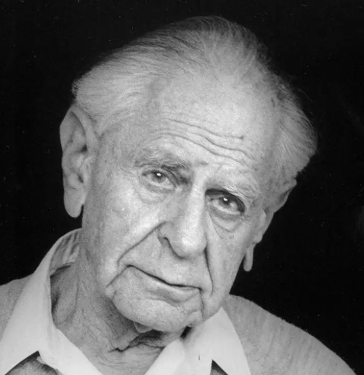
If we are uncritical we shall always find what we want: we shall look for, and find, confirmations, and we shall look away from, and not see, whatever might be dangerous to our pet theories. In this way it is only too easy to obtain what appears to be overwhelming evidence in favor of a theory which, if approached critically, would have been refuted.
▼
Source
source
The Poverty of Historicism (1957) Ch. 29 The Unity of Method
1 month 5 days ago
Schizophrenia is like love: there is no specifically schizophrenic phenomenon or entity; schizophrenia is the universe of productive and reproductive desiring machines, universal primary production as "the essential reality of man and nature".
▼
Source
source
The Desiring Machine
1 month 3 weeks ago
Education will enable young people quickly to familiarize themselves with the whole system of production and to pass from one branch of production to another in response to the needs of society or their own inclinations. It will, therefore, free them from the one-sided character which the present-day division of labor impresses upon every individual. Communist society will, in this way, make it possible for its members to put their comprehensively developed faculties to full use. But, when this happens, classes will necessarily disappear. It follows that society organized on a communist basis is incompatible with the existence of classes on the one hand, and that the very building of such a society provides the means of abolishing class differences on the other.
1 week 4 days ago
Not far from the invention of fire... we must rank the invention of doubt.
▼
Source
source
Collected Essays vol 6, viii; quoted in T. H. Huxley: Scientist, Humanist, and Educator (1950) by Cyril Bibby, p. 257

1 month 1 week ago
In conclusion, I wish to say that my attitude to the whole tragic question is not dictated by my Jewish antecedents. It is motivated by my abhorrence of injustice, and man's inhumanity to man. It is because of this that I have fought all my life for anarchism which alone will do away with the horrors of the capitalist régime and place all races and peoples, including the Jews, on a free and equal basis. Until then I consider it highly inconsistent for socialists and anarchists to discriminate in any shape or form against the Jews.

2 months ago
Useful undertakings which require sustained attention and vigorous precision in order to succeed often end up by being abandoned, for, in America, as elsewhere, the people move forward by sudden impulses and short-lived efforts.
▼
Source
source
Chapter V
3 months 3 weeks ago
A person can perhaps succeed in hiding his sins from the world, he can perhaps be foolishly happy that he succeeds, or yet, a little more honest, admit that it is a deplorable weakness and cowardliness that he does not have the courage to become open-but a person cannot hide his sins from himself.
3 weeks 2 days ago
Electric circuitry profoundly involves men with one another. Information pours upon us, instantaneously and continuously.

3 months 3 days ago
She is rightly called not only the mother of the man, but also the Mother of God ... It is certain that Mary is the Mother of the real and true God.
▼
Source
source
Weimar edition of Martin Luther's Works, English translation edited by J. Pelikan [Concordia: St. Louis], Vol. 11, Vol. 24, 107

1 month 2 weeks ago
Bourgeois society is ruled by equivalence. It makes the dissimilar comparable by reducing it to abstract quantities. To the Enlightenment, that which does not reduce to numbers, and ultimately to the one, becomes illusion.
▼
Source
source
John Cumming trans., p. 7.

3 weeks 6 days ago
The telling of jokes is an art of its own, and it always rises from some emotional threat. The best jokes are dangerous, and dangerous because they are in some way truthful.
▼
Source
source
Interviewed by J. Rentilly, "The Best Jokes Are Dangerous", McSweeny's
1 month 3 weeks ago
The bourgeoisie is charitable out of self-interest; it gives nothing outright, but regards its gifts as a business matter, makes a bargain with the poor, saying: "If I spend this much upon benevolent institutions, I thereby purchase the right not to be troubled any further, and you are bound thereby to stay in your dusky holes and not to irritate my tender nerves by exposing your misery. You shall despair as before, but you shall despair unseen."
1 month 3 weeks ago
All religions are cruel, all founded on blood; for all rest principally on the idea of sacrifice - that is, on the perpetual immolation of humanity to the insatiable vengeance of divinity.
1 month 3 weeks ago
The wise will determine from the gravity of the case; the irritable from sensibility to oppression; the high-minded from disdain and indignation at abusive power in unworthy hands.
1 month 3 weeks ago
Never wholly separate in your Mind the merits of any Political Question from the Men who are concerned in it.
▼
Source
source
Letter to Charles-Jean-François Depont (November 1789), quoted in Alfred Cobban and Robert A. Smith (eds.), The Correspondence of Edmund Burke, Volume VI: July 1789-December 1791 (1967), p. 47
2 months 3 weeks ago
Under no pretext should arms and ammunition be surrendered; any attempt to disarm the workers must be frustrated, by force if necessary.
▼
Source
source
Address of the Central Committee to the Communist League in London, March 1850

1 week 1 day ago
I have learned by some experience, by many examples, and by the writings of countless others before me, also occupied in the search, that certain environments, certain modes of life, certain rules of conduct are more conducive to inner and outer harmony than others. There are, in fact, certain roads that one may follow. Simplification of life is one of them.

1 month 1 week ago
To wish to escape from solitude is cowardice. Friendship is not to be sought, not to be dreamed, not to be desired; it is to be exercised (it is a virtue).
▼
Source
source
p. 274

2 weeks 5 days ago
Where are these rational practices to be taught and acquired? Not within the four walls of a bare building, in which formality predominates... But in the nursery, play-ground, fields, gardens, workshops, manufactures, museums and class-rooms. ...The facts collected from all these sources will be concentrated, explained, discussed, made obvious to all, and shown in their direct application to practice in all the business of life.
▼
Source
source
3rd Part

3 months 3 days ago
How many we know who have fled the sweetness of a tranquil life in their homes, among their friends, to seek the horror of uninhabitable deserts; who have flung themselves into humiliation, degradation, and the contempt of the world, and have enjoyed these and even sought them out.
▼
Source
source
Ch. 14 (tr. Donald M. Frame)
2 weeks 5 days ago
It is therefore, the interest of all, that every one, from birth, should be well educated, physically and mentally, that society may be improved in its character, - that everyone should be beneficially employed, physically and mentally, that the greatest amount of wealth may be created, and knowledge attained, - that everyone should be placed in the midst of those external circumstances that will produce the greatest number of pleasurable sensations, through the longest life, that man may be made truly intelligent, moral and happy, and be thus prepared to enter upon the coming Millennium.
▼
Source
source
A Development of the Principles & Plans on which to establish self-supporting Home Colonies
3 weeks 2 days ago
Civilization gives the barbarian or tribal man an eye for an ear and is now at odds with the electronic world.
▼
Source
source
(p. 30)

2 months 1 day ago
I believe the world grows near its end, yet is neither old nor decayed, nor will ever perish upon the ruins of its own principles.
▼
Source
source
Section 45
2 weeks 5 days ago
There is but one mode by which man can possess in perpetuity all the happiness which his nature is capable of enjoying, - that is by the union and co-operation of all for the benefit of each. Union and co-operation in war obviously increase the power of the individual a thousand fold. Is there the shadow of a reason why they should not produce equal effects in peace; why the principle of co-operation should not give to men the same superior powers, and advantages, (and much greater) in the creation, preservation, distribution and enjoyment of wealth?
3 weeks 2 days ago
Only puny secrets need protection. Big secrets are protected by public incredulity. You can actually dissipate a situation by giving it maximal coverage. As to alarming people, that's done by rumours, not by coverage.
▼
Source
source
(p. 92)
1 month 1 week ago
My own long struggle to find my bearings, the disillusionments and disappointments I had experienced, had made me less dogmatic in my demands on people than I had been. They had helped me to understand the hard and lonely life of the rebel who had fought for an unpopular cause. Whatever bitterness I had felt against my old teacher had given way to deep sympathy long before his death. (about Johann Most)
2 months 3 weeks ago
A third illusion haunts us, that a long duration, as a year, a decade, a century, is valuable. But an old French sentence says, "God works in moments," - "En peu d'heure Dieu labeure." We ask for long life, but 't is deep life, or grand moments, that signify. Let the measure of time be spiritual, not mechanical. Life is unnecessarily long. Moments of insight, of fine personal relation, a smile, a glance, - what ample borrowers of eternity they are! Life culminates and concentrates; and Homer said, "The Gods ever give to mortals their appointed share of reason only on one day."
▼
Source
source
Works and Days
3 months 3 days ago
There are some defeats more triumphant than victories.
▼
Source
source
Ch. 30. Of Cannibals, tr. Cotton, rev. W. Hazlitt, 1842

3 months 3 weeks ago
If, then, in the sphere of action there is some one end which we desire for its own sake, and for the sake of which we desire every thing else; and if we do not choose every thing for the sake of something else, for this would go on without limit, and our desire would be idle and futile, it is clear that this must be the supreme good, and the best thing of all.
1 month 5 days ago
Nowadays three witty turns of phrase and a lie make a writer.
▼
Source
source
D 25
3 weeks 2 days ago
We are interested in others, when they are interested in us.
▼
Source
source
Maxim 16
1 month 1 week ago
But if Germany, thanks to Hitler and his successors, were to enslave the European nations and destroy most of the treasures of their past, future historians would certainly pronounce that she had civilized Europe.
▼
Source
source
p. 124

2 months 2 weeks ago
Some of Singer's critics call him a Nazi and compare his proposals to Hitler's schemes for eliminating the unwanted, the unfit and the disabled. But...Singer is no Hitler. He doesn't want state-sponsored killings. Rather, he wants the decision to kill to be made by you and me. Instead of government-conducted genocide, Singer favors free-market homicide.
▼
Source
source
Dinesh D'Souza, "Atheism and Child Murder," in Townhall (12 May 2008).
CivilSimian.com created by AxiomaticPanic, CivilSimian, Kalokagathia