

3 weeks ago
While Poe and the Symbolists were exploring the irrational in literature, Freud had begun to explore the resonant figure/ground double-plot of the conscious and unconscious.
▼
Source
source
p. 52

1 month 2 weeks ago
Society is eliminating the prerogatives and privileges of feudal. aristocratic culture together with its content. The fact that the transcending truths of the fine arts, the aesthetics of life and thought, were accessible only to the few wealthy and educated was the fault of a repressive society. But this fault is not corrected by paperbacks, general education, long-playing records, and the abolition of formal dress in the theater and concert hall. The cultural privileges expressed the injustice of freedom, the contradiction between ideology and reality, the separation of intellectual from material productivity; but they also provided a protected realm in which the tabooed truths could survive in abstract integrity-remote from the society which suppressed them.
▼
Source
source
pp. 64-65
3 months 1 week ago
When the apostle James was talking about faith and works against those who thought their faith was enough, and didn't want to have good works, he said, You believe God is one; you do well; the demons also believe, and tremble.
▼
Source
source
(Jas 2:19) 183:13:2


2 months 3 weeks ago
Among these Jews there suddenly turns up a man who goes about talking as if He was God. He claims to forgive sins. He says He has always existed. He says He is coming to judge the world at the end of time. Now let us get this clear. Among Pantheists, like the Indians, anyone might say that he was a part of God, or one with God: there would be nothing very odd about it. But this man, since He was a Jew, could not mean that kind of God. God, in their language, meant the Being outside of the world, who had made it and was infinitely different from anything else. And when you have grasped that, you will see that what this man said was, quite simply, the most shocking thing that has ever been uttered by human lips.
▼
Source
source
Book II, Chapter 3, "The Shocking Alternative"
1 month 5 days ago
Human history began with an act of disobedience, and it is not unlikely that it will be terminated by an act of obedience.
▼
Source
source
Disobedience as a Psychological and Moral Problem in On Disobedience and Other Essays

1 month 2 weeks ago
Losing love is so rich a philosophical ordeal that it makes a hairdresser into a rival of Socrates.
1 month 3 weeks ago
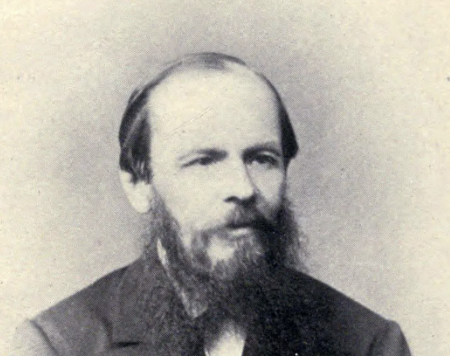
The best definition of man is: a being that goes on two legs and is ungrateful.
▼
Source
source
Part 1, Chapter 8 (tr. David Magarshack, 1950) The best definition of man is: a biped, ungrateful.

2 months 2 weeks ago
With a foolish man make no dispute.

Just now
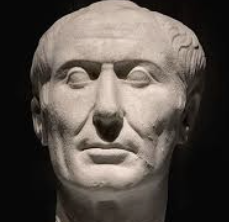
Human beings act, certainly. But none of them knows why they act as they do. There is a scattering of facts, which can be known and reported. Beyond these facts are the stories that are told. Human beings may behave like puppets, but no one is pulling the strings.
▼
Source
source
In The Puppet Theatre: Puppetry, Conspiracy and Ouija Boards (p. 136)
3 weeks ago
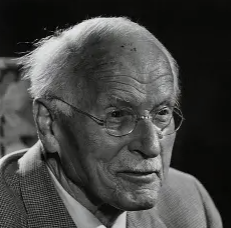
Life is short, but its ills make it seem long.
▼
Source
source
Maxim 124
1 month 2 weeks ago
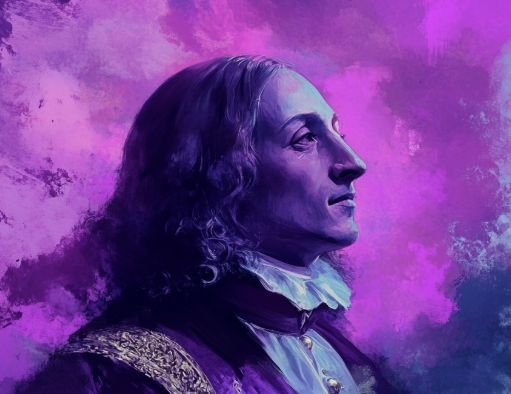
The dynamic principle of fantasy is play, a characteristic also of the child, and as such it appears inconsistent with the principle of serious work. But without this playing with fantasy no creative work has ever yet come to birth. The debt we owe to the play of imagination is incalculable. It is therefore short-sighted to treat fantasy, on account of its risky or unacceptable nature, as a thing of little worth.
▼
Source
source
Ch. 1, p. 82
3 months 6 days ago
Of the truths within our reach... the mind and the heart are as doors by which they are received into the soul, but... few enter by the mind, whilst they are brought in crowds by the rash caprices of the will, without the council of reason.

1 month 6 days ago
The ideal of human kinship that would brook no injustice or social wrong agave the only meaning and purpose to my life. This ideal I found in anarchism. Not, to be sure, in the distorted image of anarchism presented in the Press and by pseudo-social economists or hounded and persecuted by the powers that be. I found anarchism the moving spirit of beauty-of social harmony-of a free and untrammeled growth of the individual. This became my inspiration and my highest goal.
3 weeks ago
The global village is a place of very arduous interfaces and very abrasive situations.
2 months 3 weeks ago
If, while hurrying ostensibly to the temple of truth, we hand the reins over to our personal interests which look aside at very different guiding stars, for instance at the tastes and foibles of our contemporaries, at the established religion, but in particular at the hints and suggestions of those at the head of affairs, then how shall we ever reach the high, precipitous, bare rock whereon stands the temple of truth?
▼
Source
source
E. Payne, trans. (1974) Vol. 1, pp. 22-23
2 months 2 weeks ago
The pleasures that give most joy are the ones that most rarely come.
3 months 6 days ago
It is not your strength and your natural power that subjects all these people to you. Do not pretend then to rule them by force or to treat them with harshness. Satisfy their reasonable desires; alleviate their necessities; let your pleasure consist in being beneficent; advance them as much as you can, and you will act like the true king of desire.
1 month 2 weeks ago
The fake love of ressentiment man offers no real help, since for his perverted sense of values, evils like "sickness" and "poverty" have become goods.
▼
Source
source
L. Coser, trans. (1961), p. 92
1 month 3 weeks ago
To enrich God, man must become poor; that God may be all, man must be nothing.
1 month 2 days ago
Since these questions lie in the future, imagination must supply the lack of experienced feeling in attaching value to them. But values can be only imperfectly anticipated.

3 months 2 weeks ago
A punishment that penalizes without forestalling is indeed called revenge.
3 weeks 4 days ago
Literature is idiosyncratic arrangements in horizontal lines in only twenty-six symbols, ten arabic numbers, and about eight punctuation marks.
▼
Source
source
Public conversation with Lee Stringer, in Like Shaking Hands With God
1 month 3 weeks ago
Prejudice is of ready application in the emergency; it previously engages the mind in a steady course of wisdom and virtue and does not leave the man hesitating in the moment of decision sceptical, puzzled, and unresolved. Prejudice renders a man's virtue his habit, and not a series of unconnected acts. Through just prejudice, his duty becomes a part of his nature.

2 months 2 weeks ago
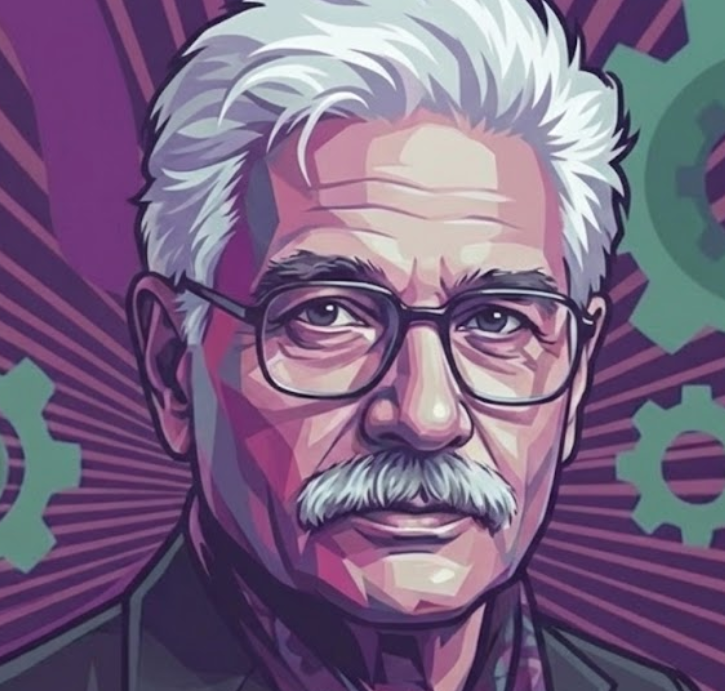
When I say that this phase is necessary, the word phase is perhaps not the most rigorous one. It is not a question of a chronological phase, a given moment, or a page that one day simply will be turned, in order to go on to other things. The necessity of this phase is structural; it is the necessity of an interminable analysis: the hierarchy of dual oppositions always reestablishes itself. Unlike those authors whose death does not await their demise, the time for overturning is never a dead letter.
▼
Source
source
p. 41-42
3 months 2 weeks ago
O light! This is the cry of all the characters of ancient drama brought face to face with their fate. This last resort was ours, too, and I knew it now. In the middle of winter I at last discovered that there was in me an invincible summer. Return to Tipasa (1954) Variant translation: In the depths of winter, I finally learned that within me there lay an invincible summer.
1 month 3 weeks ago
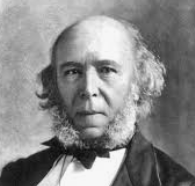
If there be an order in which the human race has mastered its various kinds of knowledge, there will arise in every child an aptitude to acquire these kinds of knowledge in the same order. So that even were the order intrinsically indifferent, it would facilitate education to lead the individual mind through the steps traversed by the general mind. But the order is not intrinsically indifferent; and hence the fundamental reason why education should be a repetition of civilization in little.
2 months 3 weeks ago
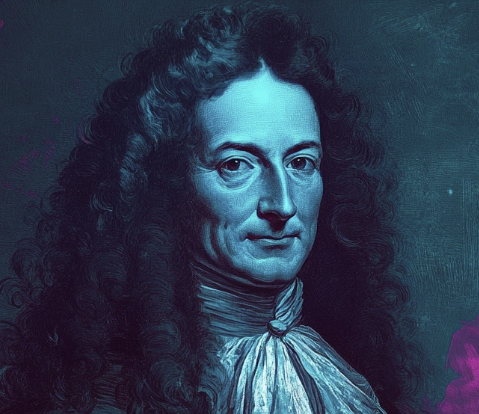
We never have a full demonstration, although there is always an underlying reason for the truth, even if it is only perfectly understood by God, who alone penetrated the infinite series in one stroke of the mind.
▼
Source
source
The Shorter Leibniz Texts (2006) edited by Lloyd H. Strickland, p. 111
2 months 3 weeks ago
Then he tried to recall the lessons of Mr. Wisdom. "it is I myself, eternal Spirit, who drives this Me, the slave, along that ledge. I ought not to care whether he falls and breaks his neck or not. It is not he that is real, it is I - I - I.
▼
Source
source
Pilgrim's Regress 137
2 months 3 weeks ago
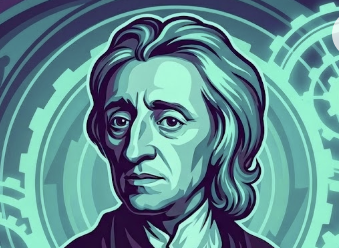
The boundaries of the species, whereby men sort them, are made by men.
▼
Source
source
Book III, Ch. 6, sec. 37
1 month 2 weeks ago
Each of us is born with a share of purity, predestined to be corrupted by our commerce with mankind, by that sin against solitude.
2 months 3 weeks ago
We are born helpless. As soon as we are fully conscious we discover loneliness. We need others physically, emotionally, intellectually; we need them if we are to know anything, even ourselves. Introduction
1 week 2 days ago
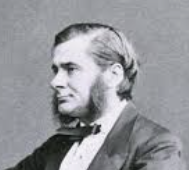
I can assure you that there is the greatest practical benefit in making a few failures early in life. You learn that which is of inestimable importance - that there are a great many people in the world who are just as clever as you are. You learn to put your trust, by and by, in an economy and frugality of the exercise of your powers, both moral and intellectual; and you very soon find out, if you have not found it out before, that patience and tenacity of purpose are worth more than twice their weight of cleverness.
▼
Source
source
On Medical Education
3 months 6 days ago
She is the sum of nature's universe.To her perfection all of beauty tends.
▼
Source
source
Chapter XIV, lines 49-50 (tr. Barbara Reynolds)
3 months 1 day ago
If you press me to say why I loved him, I can say no more than it was because he was he, and I was I. Variants: If a man urge me to tell wherefore I loved him, I feel it cannot be expressed but by answering: Because it was he, because it was myself. If a man should importune me to give a reason why I loved him, I find it could no otherwise be expressed, than by making answer: because it was he, because it was I.
▼
Source
source
Ch. 28
2 months 3 weeks ago
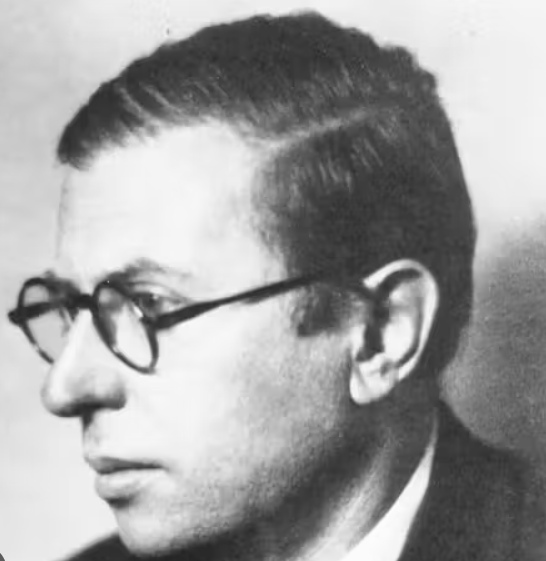
...the impossible must be supposed in order to explain the superdetermination of the event
▼
Source
source
p. 301
3 months 1 week ago
If any one will piously and soberly consider the sermon which our Lord Jesus spoke on the mount, as we read it in the Gospel according to Matthew, I think that he will find in it, so far as regards the highest morals, a perfect standard of the Christian life: and this we do not rashly venture to promise, but gather it from the very words of the Lord Himself. For the sermon itself is brought to a close in such a way, that it is clear there are in it all the precepts which go to mould the life. He has sufficiently indicated, as I think, that these sayings which He uttered on the mount so perfectly guide the life of those who may be willing to live according to them, that they may justly be compared to one building upon a rock.
▼
Source
source
On the Sermon on the Mount, as translated by William Findlay (1888), Book I, Ch. 1
1 month 2 weeks ago
Since it is difficult to approve the reasons people invoke, each time we leave one of our 'fellow men', the question which comes to mind is invariably the same: how does he keep from killing himself?
1 week 2 days ago
As if to demonstrate, by a striking example, the impossibility of erecting any cerebral barrier between man and the apes, Nature has provided us, in the latter animals, with an almost complete series of gradations from brains little higher than that of a Rodent, to brains little lower than that of Man.
▼
Source
source
Ch.2, p. 115
2 months 2 weeks ago
He who is subjected to a field of visibility, and who knows it, assumes responsibility for the constraints of power; he makes them play spontaneously upon himself; he inscribes in himself the power relation in which he simultaneously plays both roles; he becomes the principle of his own subjection.
▼
Source
source
Part Three, Panopticism
2 months 3 weeks ago
It is an odd circumstance that neither the old nor the new, by itself, is interesting; the absolutely old is insipid; the absolutely new makes no appeal at all. The old in the new is what claims the attention,-the old with a slightly new turn.
▼
Source
source
Chapter XI: Attention
7 months 2 weeks ago
Survive in such a way that you avoid limiting others who are also trying to survive. We all live in limited systems. This is the core of ethics.

2 months 5 days ago
There is no word or action but has its echo in Eternity. Thought is an Idea in transit, which when once released, never can be lured back, nor the spoken word recalled. Nor ever can the overt act be erased All that thou thinkest, sayest, or doest bears perpetual record of itself, enduring for Eternity.
▼
Source
source
As quoted in Pythagoron: The Religious, Moral, and Ethical Teachings of Pythagoras (1947) by Hobart Huson, p. 99
1 month 2 weeks ago
But, braggart demons, we postpone our end: how could we renounce the display of our freedom, the show of our pride?
1 month 3 weeks ago
I hate Communism because it is the negation of liberty and because humanity is for me unthinkable without liberty. I am not a Communist, because Communism concentrates and swallows up in itself for the benefit of the State all the forces of society, because it inevitably leads to the concentration of property in the hands of the State, whereas I want the abolition of the State, the final eradication of the principle of authority and the patronage proper to the State, which under the pretext of moralizing and civilizing men has hitherto only enslaved, persecuted, exploited and corrupted them. I want to see society and collective or social property organized from below upwards, by way of free association, not from above downwards, by means of any kind of authority whatsoever.
▼
Source
source
As quoted in Michael Bakunin (1937) by E.H. Carr, p. 356
3 weeks ago
Art is anything you can get away with.
1 month 1 week ago
In the inescapable flux, there is something that abides; in the overwhelming permanence, there is an element that escapes into flux. Permanence can be snatched only out of flux; and the passing moment can find its adequate intensity only by its submission to permanence.
2 months 3 weeks ago
That is precisely what we should have expected, since Genet wants to live simultaneously creation, destruction, the impossibility of destroying and the impossibility of creating, since he wants both to show his rejection of the divine creation and to manifest, in the absolute, human impotence as man's reproval of God and as the testimony of his grandeur.
▼
Source
source
p. 424
CivilSimian.com created by AxiomaticPanic, CivilSimian, Kalokagathia