

3 months 1 day ago
In judging policies we should consider the results that have been achieved through them rather than the means by which they have been executed.
▼
Source
source
From an undated letter to Piero Soderini (translated here by Dr. Arthur Livingston), in The Living Thoughts of Machiavelli, by Count Carlo Sforza, published by Cassell, London (1942), p. 85
2 months 3 weeks ago
Obey the voice at eve obeyed at prime.
▼
Source
source
Terminus

3 months 3 weeks ago
What, exactly, have the errors of exegesis and philosophy done in order to confuse Christianity, and how have they confused Christianity? Quite briefly and categorically, they have simply forced back the sphere of paradox-religion into the sphere of aesthetics, and in consequence have succeeded in brings Christian terminology to such a pass that terms which, so long as they remain within their sphere, are qualitative categories, can be put to almost any use as clever expressions.

3 months 1 week ago
We are all sprung from a heavenly seed.
▼
Source
source
Book II, line 991 (tr. Munro)

2 months 3 weeks ago
It is because the method of physics does not satisfy the comprehension that we have to go on further.

2 months 3 weeks ago
To understand the actual world as it is, not as we should wish it to be, is the beginning of wisdom.

2 months 2 weeks ago
Freud's fanciful pseudo-explanations (precisely because they are brilliant) perform a disservice. (Now any ass has these pictures available to use in "explaining" symptoms of an illness).
▼
Source
source
p. 55e
3 weeks ago
The new science of communication is percept, not concept.
▼
Source
source
(p. 259)
2 months 3 weeks ago
The "social contract," in the only sense in which it is not completely mythical, is a contract among conquerors, which loses its raison d'être if they are deprived of the benefits of conquest.
▼
Source
source
Ch. 12: Powers and forms of governments
2 months 3 weeks ago
I don't like the spirit of socialism - I think freedom is the basis of everything.
▼
Source
source
Letter to Constance Malleson (Colette), September 29, 1916
2 months 3 weeks ago
I believe that the advance of science depends upon the free competition of thought, and thus upon freedom, and that it must come to an end if freedom is destroyed (though it may well continue for some time in some fields, especially in technology).
▼
Source
source
Ch. 10 "Corroboration, or How a Theory Stands up to Tests", section 85: The Path of Science, p. 279, note 2.
2 months 3 weeks ago
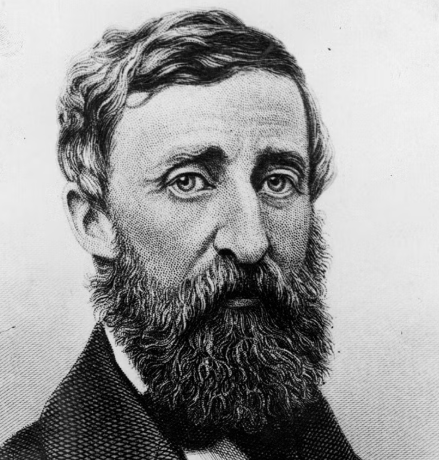
Poetry - No definition of poetry is adequate unless it be poetry itself. The most accurate analysis by the rarest wisdom is yet insufficient, and the poet will instantly prove it false by setting aside its requisitions. It is indeed all that we do not know. The poet does not need to see how meadows are something else than earth, grass, and water, but how they are thus much. He does not need discover that potato blows are as beautiful as violets, as the farmer thinks, but only how good potato blows are. The poem is drawn out from under the feet of the poet, his whole weight has rested on this ground. It has a logic more severe than the logician's. You might as well think to go in pursuit of the rainbow, and embrace it on the next hill, as to embrace the whole of poetry even in thought.
▼
Source
source
January 26, 1840
2 months 3 weeks ago
The question of "unreality," which confronts us at this point, is a very important one. Misled by grammar, the great majority of those logicians who have dealt with this question have dealt with it on mistaken lines. They have regarded grammatical form as a surer guide in analysis than, in fact, it is. And they have not known what differences in grammatical form are important.
▼
Source
source
Ch. 16: Descriptions
2 weeks 2 days ago
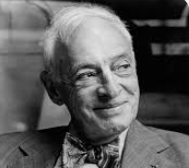
The university, in a society ruled by public opinion, was to have been an island of intellectual freedom where all views were investigated without restriction. ... But by consenting to play an active or "positive," a participatory role in society, the university has become inundated and saturated with the backflow of society's "problems." Preoccupied with questions of Health, Sex, Race, War, academics make their reputations and their fortunes. ... Any proposed reforms of liberal education which might bring the university into conflict with the whole of the U.S.A. are unthinkable. Increasingly, the people "inside" are identical in their appetites and motives with the people "outside" the university.
▼
Source
source
p. 18
2 months 1 week ago
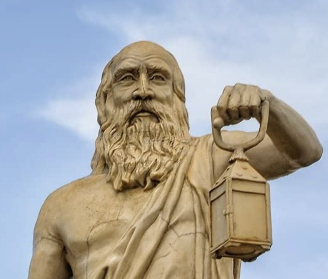
Self-taught poverty is a help toward philosophy, for the things which philosophy attempts to teach by reasoning, poverty forces us to practice.
▼
Source
source
Stobaeus, iv. 32a. 11
2 months 3 weeks ago
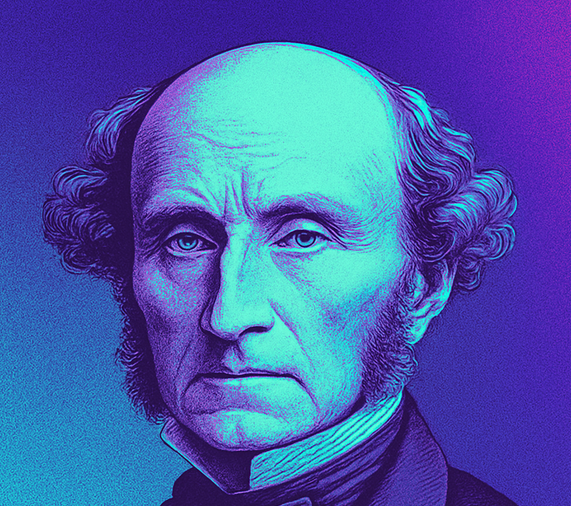
For my own part, not believing in universal selfishness, I have no difficulty in admitting that Communism would even now be practicable among the elite of mankind, and may become so among the rest.
3 months 3 weeks ago
.... In a word, acts of any kind produce habits or characters of the same kind. Hence we ought to make sure that our acts are of a certain kind; for the resulting character varies as they vary. It makes no small difference, therefore, whether a man be trained in his youth up in this way or that, but a great difference, or rather all the difference.
1 month 3 weeks ago
Mankind will never be, in an eminent degree, virtuous and happy till each man shall possess that portion of distinction and no more, to which he is entitled by his personal merits. The dissolution of aristocracy is equally the interest of the oppressor and the oppressed. The one will be delivered from the listlessness of tyranny, and the other from the brutalizing operation of servitude.
▼
Source
source
Book V, Chapter 11, "Moral Effects of Aristocracy"

1 month 2 weeks ago
Good health is the best weapon against religion. Healthy bodies and healthy minds have never been shaken by religious fears.
3 weeks 2 days ago
The Churches as Churches have always been and cannot fail to be institutions not only alien to, but directly hostile towards, Christ's teaching.
▼
Source
source
Chapter III, Christianity Misunderstood by Believers

2 months 1 week ago
Force without wisdom falls of its own weight.

2 months 3 weeks ago
Our Traders in Men (an unnatural commodity!) must know the wickedness of that Slave-Trade, if they attend to reasoning, or the dictates of their own hearts; and such as shun and stiffle all these, wilfully sacrifice Conscience, and the character of integrity to that golden Idol.
2 weeks 2 days ago
The principles of Western liberalism seem no longer to lend themselves to effective action. Deprived of the expressive power, we are awed by it, have a hunger for it, and are afraid of it. Thus we praise the gray dignity of our soft-spoken leaders, but in our hearts we are suckers for passionate outbursts, even when those passionate outbursts are hypocritical and falsely motivated.
▼
Source
source
"Literary Notes on Khrushchev" (1961), p. 36
3 weeks 5 days ago
Never would the humanities or psychoanalysis have existed if it had been miraculously possible to reduce man to his "rational" behaviors.
▼
Source
source
"The Animals: Territory and Metamorphoses," p. 132


2 months 3 weeks ago
The thing done avails, and not what is said about it. An original sentence, a step forward, is worth more than all the censures.
▼
Source
source
First Visit to England
2 months 3 weeks ago
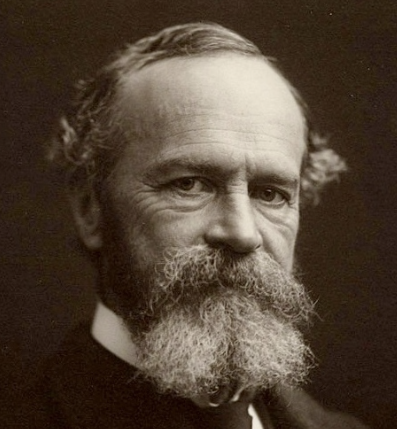
Pretend what we may, the whole man within us is at work when we form our philosophical opinions. Intellect, will, taste, and passion co-operate just as they do in practical affairs; and lucky it is if the passion be not something as petty as a love of personal conquest over the philosopher across the way.

Just now
The British state has defaulted on its core functions while attempting to remake society.
▼
Source
source
New Statesman, 9 October 2024

1 month 2 weeks ago
The notion contradicts reality when the latter has become self-contradictory. Hegel says that a prevailing social form can be successfully attacked by thought only if this form has come into open contradiction with its own 'truth,' in other words, if it can no longer fulfill the demands of its own contents.

2 days ago
My own sense of how to behave in a simulation has more traditional roots in the theory of perception. I've long believed that each of us lives in an egocentric simulation of the world run by the mind/brain. Since the zombies of each (waking) simulation have sentient real world counterparts, one should treat them as though they were real. Nonetheless as an angst-ridden teenager, my dawning acceptance of an inferential realist theory of perception made me feel as if I'd been condemned to solitary confinement for life. The sense of loneliness was indescribable. Naïve realism is better for one's mental health.
▼
Source
source
Origins and Theory of the World Transhumanist Association, Institute for Ethics and Emerging Technologies, 26 Dec. 2007

2 months 3 weeks ago
I believe Buddhism to be a simplification of Hinduism and Islam to be a simplification of Xianity.
▼
Source
source
Letter to Sheldon Vanauken (14 December 1950), quoted in Sleuthing C. S. Lewis (2001) by Kathryn Ann Lindskoog, p. 393

1 month 6 days ago
I could see clearly that this problem could only be solved on the individual and personal level; political revolt is irrelevant. Both Camus and Sartre had been neatly hog-tied by their earlier radicalism. Camus came to see that rebellion is a political roundabout that revolves back to the same old tyranny; too ashamed to admit that he had outgrown his leftism, he found himself in an intellectual cul-de-sac. Sartre accused Camus of being a reactionary; but he paid for his own refusal to reexamine his political convictions by congealing into a grotesque attitude of permanent indignation, shaking his fist at some abstract Authority. Where politics is concerned, he seemed determined to be guided by his emotions.
▼
Source
source
p. 101
3 weeks ago
While Poe and the Symbolists were exploring the irrational in literature, Freud had begun to explore the resonant figure/ground double-plot of the conscious and unconscious.
▼
Source
source
p. 52
2 months 3 weeks ago
I doubt not but one great reason why many children abandon themselves wholly to silly sports, and trifle away all their time insipidly, is, because they have found their curiosity baulk'd, and their inquiries neglected. But had they been treated with more kindness and respect, and their questions answered, as they should, to their satisfaction; I doubt not but that they would have taken more pleasure in learning, and improving their knowledge, wherein there would still be newness and variety, which is what they are delighted with, than in returning over and over to the same play and play-things.
▼
Source
source
Sec. 118

2 months 5 days ago
The wind is blowing, adore the wind.
▼
Source
source
Symbol 8
1 month 1 day ago
In conclusion, then, no satisfactory interpretation of quantum mechanics exists today. The questions posed by the confrontation between the Copenhagen interpretation and the hidden variable theorists go to the very foundations of microphysics, but the answers given by hidden variable theorists and Copenhagenists are alike unsatisfactory. Human curiosity will not rest until those questions are answered, but whether they will be answered by conceptual innovations within the framework of the present theory or only within the framework of an as yet unforeseen theory is unknown. The first step toward answering them has been attempted here. It is the modest but essential step of becoming clear on the nature and magnitude of the difficulties.
▼
Source
source
A philosopher looks at quantum mechanics
Just now
For Leopardi evil is integral to the way the world works; but when he talks of evil he does not mean any kind of malign agency of the sort that Gnostics imagined. Evil is the suffering that is built into the scheme of things. 'What hope is there when evil is ordinary?' he asks. 'I mean, in an order where evil is necessary?' These rhetorical questions show why Leopardi had no interest in projects of revolution and reform. No type of human action - least of all the harlequinade of politics - could fundamentally alter a world in which evil was ordinary.
▼
Source
source
The Faith of Puppets: Leopardi and the Souls of Machines (p.35-6)
3 months 1 week ago
The fellow who eggs you on to avenge yourself will rob you of what you were going to say, as we forgive our debtors. When you have forfeited that, all your sins will be held against you; absolutely nothing is forgiven.
▼
Source
source
2.382673611

2 months 5 days ago
Nothing is more ancient than God, for He was never created; nothing more beautiful than the world, it is the work of that same God; nothing is more active than thought, for it flies over the whole universe; nothing is stronger than necessity, for all must submit to it.
▼
Source
source
As quoted in Love and Live Or Kill and Die: Realities of the Destruction of Human Life (2009) by James H. Wilson, p. 72
2 months 3 weeks ago
This great increase of the quantity of work which, in consequence of the division of labour, the same number of people are capable of performing, is owing to three different circumstances; first, to the increase of dexterity in every particular workman; secondly, to the saving of the time which is commonly lost in passing from one species of work to another; and lastly, to the invention of a great number of machines which facilitate and abridge labour, and enable one man to do the work of many.
▼
Source
source
Chapter I
3 months 1 day ago
Every man bears the whole stamp of the human condition.
▼
Source
source
Ch. 2
2 months 3 weeks ago
The history of all hitherto existing society is the history of class struggles.
▼
Source
source
Section 1, paragraph 1, lines 1-2.
2 months 3 weeks ago
I am to talk about Apologetics. Apologetics means of course Defence. The first question is - what do you propose to defend? Christianity, of course...
▼
Source
source
"Christian Apologetics" (1945), p. 89
1 month 2 weeks ago
This new philosophy, however, was far from giving the temporal an inherent position and function in the constitution of things. Change was acting on the side of man but only because of fixed laws which governed the changes that take place. There was hope in change just because the laws that govern it do not change.
3 months 1 day ago
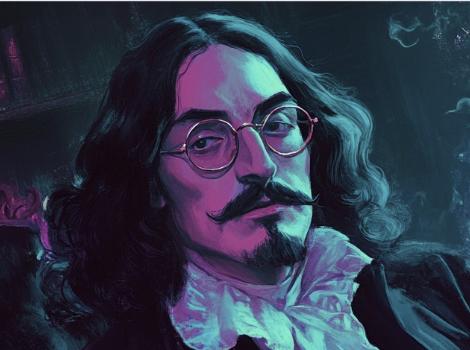
The entire method consists in the order and arrangement of the things to which the mind's eye must turn so that we can discover some truth.
▼
Source
source
Rules for the Direction of the Mind: X.379 As quoted in Clarke, Desmond M. (2006). Descartes : a Biography. Cambridge Press. p. 67. ISBN 978-0-521-82301-2.
3 months 1 day ago
Confidence in another man's virtue is no light evidence of a man's own, and God willingly favors such a confidence.
▼
Source
source
Book I, Ch. 14
2 months 3 weeks ago
We do not directly go about the execution of the purpose that thrills us, but shut our doors behind us, and ramble with prepared minds, as if the half were already done. Our resolution is taking root or hold on the earth then, as seeds first send a shoot downward, which is fed by their own albumen, ere they send one upwards to the light.
▼
Source
source
Pearls of Thought (1881) p. 61

1 month 6 days ago
Stories on digital platforms like Facebook or Instagram are not genuine stories. They have no narrative duration. Rather, they are just sequences of momentary impressions that do not tell us anything.
1 month 3 weeks ago
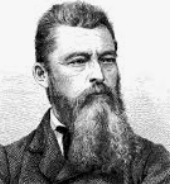
I would rather be a devil in alliance with truth, than an angel in alliance with falsehood.
1 month 2 weeks ago
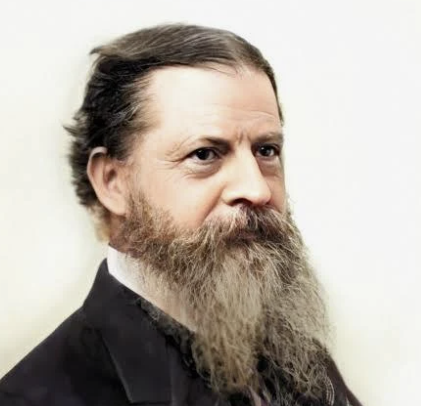
The old dualistic notion of mind and matter, so prominent in Cartesianism, as two radically different kinds of substance, will hardly find defenders to-day. Rejecting this, we are driven to some form of hylopathy, otherwise called monism.
CivilSimian.com created by AxiomaticPanic, CivilSimian, Kalokagathia