Foucault definitely bothers me sometimes....I'm sure there's a larger context, but it doesn't look good...


The most successful tempters and thus the most dangerous are the deluded deluders.
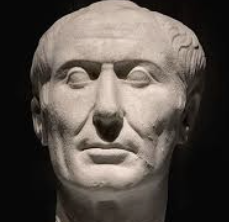
A noble spirit finds a cure for injustice in forgetting it.

Time begins to emit a scent when it gains duration; when it is given a narrative or deep tension; when it gains depth and breadth, even space.
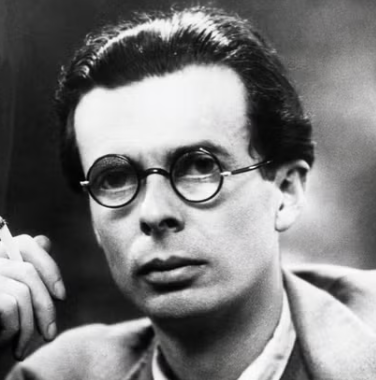
The effectiveness of political and religious propaganda depends upon the methods employed, not upon the doctrines taught. These doctrines may be true or false, wholesome or pernicious-it makes little or no difference.
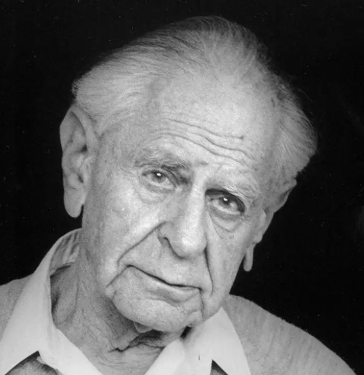
Ignorance is not a simple lack of knowledge but an active aversion to knowledge, the refusal to know, issuing from cowardice, pride or laziness of mind.
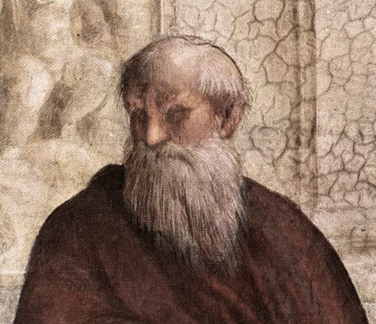
All teems with symbol; the wise man is the man who in any one thing can read another.
Of course I base my characters partly on the people I know-one can't escape it-but fictional characters are oversimplified; they're much less complex than the people one knows.
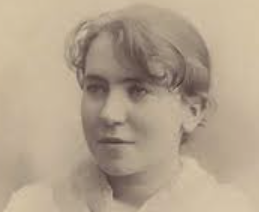
The reward in heaven is the perpetual bait, a bait that has caught man in an iron net, a strait-jacket which does not let him expand or grow. All pioneers of truth have been, and still are, reviled; they have been, and still are, persecuted. But did they ask humanity to pay the price? Did they seek to bribe mankind to accept their ideas? They knew too well that he who accepts a truth because of the bribe, will soon barter it away to a higher bidder...Proud and self-reliant characters prefer hatred to such sickening artificial love. Not because of any reward does a free spirit take his stand for a great truth, nor has such a one ever been deterred because of fear of punishment.
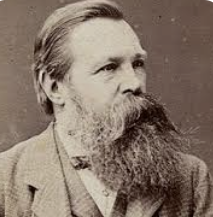
How did this division of the nations come about, what was its basis? The division is in accordance with all the previous history of the nationalities in question. It is the beginning of the decision on the life or death of all these nations, large and small. All the earlier history of Austria up to the present day is proof of this and 1848 confirmed it. Among all the large and small nations of Austria, only three standard-bearers of progress took an active part in history, and still retain their vitality - the Germans, the Poles and the Magyars. Hence they are now revolutionary. All the other large and small nationalities and peoples are destined to perish before long in the revolutionary world storm. (Weltsturm). For that reason they are now counter-revolutionary.
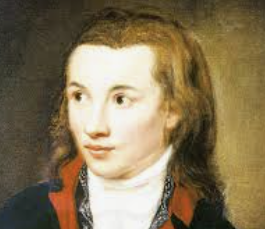
Most observers of the French Revolution, especially the clever and noble ones, have explained it as a life-threatening and contagious illness. They have remained standing with the symptoms and have interpreted these in manifold and contrary ways. Some have regarded it as a merely local ill. The most ingenious opponents have pressed for castration. They well noticed that this alleged illness is nothing other than the crisis of beginning puberty.
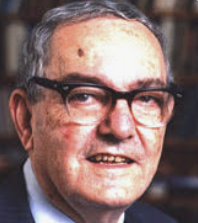
Organizations and institutions permit stable expectations to be formed by each member of the group as to the behavior of the other members under specified conditions.
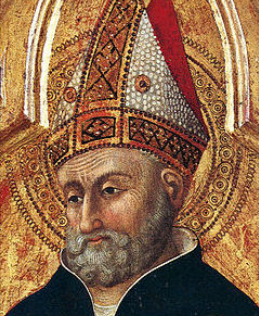
I became evil for no reason. I had no motive for my wickedness except wickedness itself. It was foul, and I loved it. I loved the self-destruction, I loved my fall, not the object for which I had fallen but my fall itself. My depraved soul leaped down from your firmament to ruin. I was seeking not to gain anything by shameful means, but shame for its own sake.
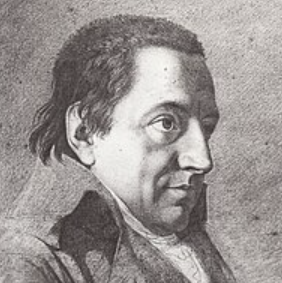
Time is taking giant strides with us more than with any other age since the history of the world began. At some point within the three years that have gone by since my interpretation of the present age that epoch has come to an end. At some point self-seeking has destroyed itself, because by its own complete development it has lost its self and the independence of that self; and since it would not voluntarily set itself any other aim but self, an external power has forced upon it another and a foreign purpose.
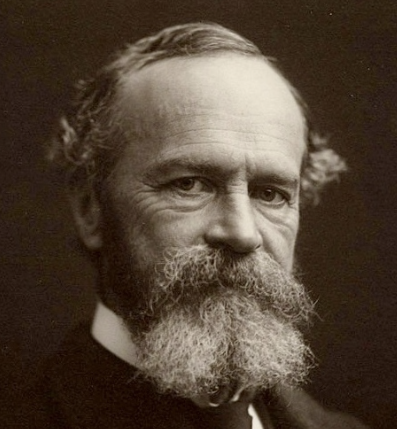
The pivot round which the religious life... revolves, is the interest of the individual in his private personal destiny. Religion, in short, is a monumental chapter in the history of human egotism. The gods believed in-whether by crude savages or by men disciplined intellectually-agree with each other in recognizing personal calls. Religious thought is carried on in terms of personality, this being, in the world of religion, the one fundamental fact. To-day, quite as much as at any previous age, the religious individual tells you that the divine meets him on the basis of his personal concerns.
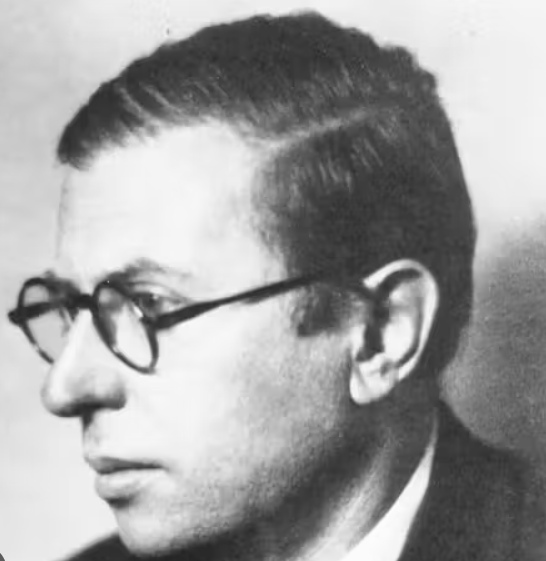
For an occurrence to become an adventure, it is necessary and sufficient for one to recount it.

The world is his, who has money to go over it.
In many ways an artistic nature unfits a man for practical existence.

I've had letters from Chinese scientists at the peak of the SARS epidemic who said the problem is a hybridization between the viruses planted into GMO feed, which is then fed to animals, then the virus jumped from the animals to humans. We're going to see more and more of these kinds of risks. I think the whole issue of the H1N1 virus was the fact that it had genes for three influenza types--human, chicken, pig. All of these crossings are becoming possible because of the crossing of genes across species barriers.

Jesus Christ raised women above the condition of mere slaves, mere ministers to the passions of the man, raised them by His sympathy, to be Ministers of God. He gave them moral activity. But the Age, the World, Humanity, must give them the means to exercise this moral activity, must give them intellectual cultivation, spheres of action.
Once ... I was offered a lift by some carters ... It was the Thursday before Easter. I was seated in the first cart, with a strong, red, coarse carman, who evidently drank. On entering a village we saw a well-fed, naked, pink pig being dragged out of the first yard to be slaughtered. It squealed in a dreadful voice, resembling the shriek of a man. Just as we were passing they began to kill it. A man gashed its throat with a knife. The pig squealed still more loudly and piercingly, broke away from the men, and ran off covered with blood. Being near-sighted I did not see all the details. I saw only the human-looking pink body of the pig and heard its desperate squeal; but the carter saw all the details and watched closely. They caught the pig, knocked it down, and finished cutting: its throat. When its squeals ceased the carter sighed heavily. 'Do men really not have to answer for such things?' he said.
Armies have endured all manner of want, have lived on roots, and have resisted hunger by means of food too revolting to mention. All this they have suffered to gain a kingdom, and-what is more marvellous-to gain a kingdom that will be another's. Will any man hesitate to endure poverty, in order that he may free his mind from madness?
Genuine religion is not about speculating about God or the soul or about what happened in the past or will happen in the future; it cares only about one thing-finding out exactly what should or should not be done in this lifetime.
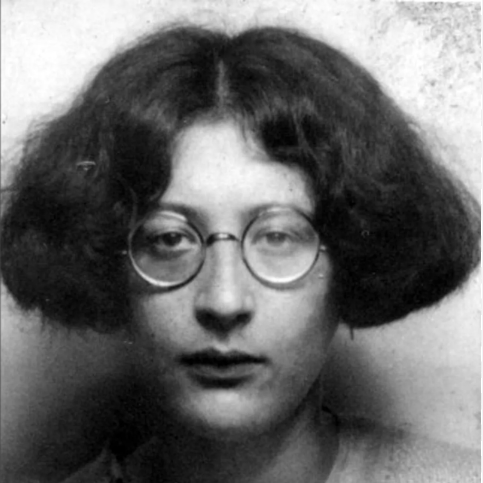
We must leave on one side the beliefs which fill up voids and sweeten what is bitter. The belief in immortality. The belief in the utility of sin: etiam peccata. The belief in the providential ordering of events - in short the "consolations" which are ordinarily sought in religion.
I have no need to take up each thing that wants to throw its cause on us and show that it is occupied only with itself, not with us, only with its good, not with ours. Look at the rest for yourselves. Do truth, freedom, humanity, justice, desire anything else than that you grow enthusiastic and serve them?
When new technologies impose themselves on societies long habituated to older technologies, anxieties of all kinds result.
This fact, that the opposite of sin is by no means virtue, has been overlooked. The latter is partly a pagan view, which is content with a merely human standard, and which for that very reason does not know what sin is, that all sin is before God. No, the opposite of sin is faith.
The multitude is the real productive force of our social world, whereas Empire is a mere apparatus of capture that lives only off the vitality of the multitude - as Marx would say, a vampire regime of accumulated dead labor that survives only by sucking off the blood of the living.
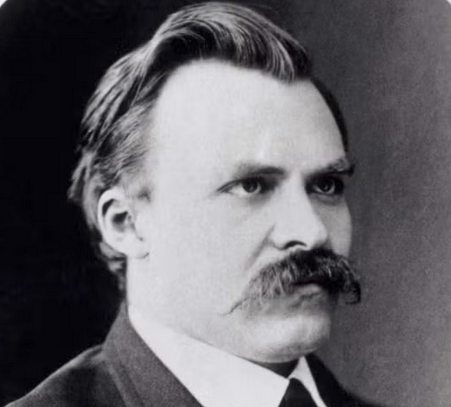
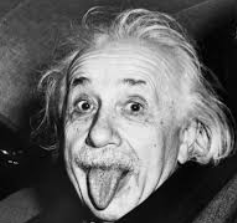
But what can be the attraction of getting to know such a tiny section of nature thoroughly, while one leaves everything subtler and more complex shyly and timidly alone? Does the product of such a modest effort deserve to be called by the proud name of a theory of the universe? In my belief the name is justified; for the general laws on which the structure of theoretical physics is based claim to be valid for any natural phenomenon whatsoever. With them, it ought to be possible to arrive at the description, that is to say, the theory, of every natural process, including life, by means of pure deduction, if that process of deduction were not far beyond the capacity of the human intellect. The physicist's renunciation of completeness for his cosmos is therefore not a matter of fundamental principle.
The plain fact is that men's minds are built, as has been often said, in water-tight compartments. Religious after a fashion, they yet have many other things in them beside their religion, and unholy entanglements and associations inevitably obtain. The basenesses so commonly charged to religion's account are thus, almost all of them, not chargeable at all to religion proper, but rather to religion's wicked practical partner, the spirit of corporate dominion. And the bigotries are most of them in their turn chargeable to religion's wicked intellectual partner, the spirit of dogmatic dominion, the passion for laying down the law in the form of an absolutely closed-in theoretic system. The ecclesiastical spirit in general is the sum of these two spirits of dominion.
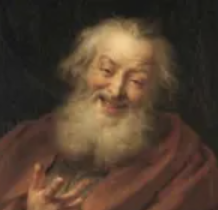
I would rather discover one cause than gain the kingdom of Persia.
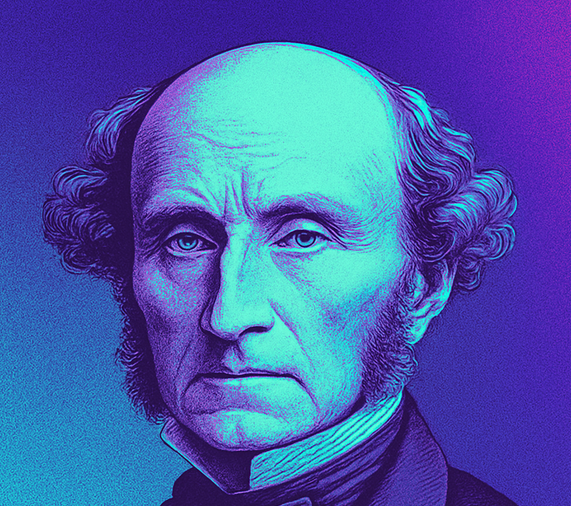
For I now saw, or thought I saw, what I had always before received with incredulity-that the habit of analysis has a tendency to wear away the feelings: as indeed it has, when no other mental habit is cultivated, and the analysing spirit remains without its natural complements and correctives.
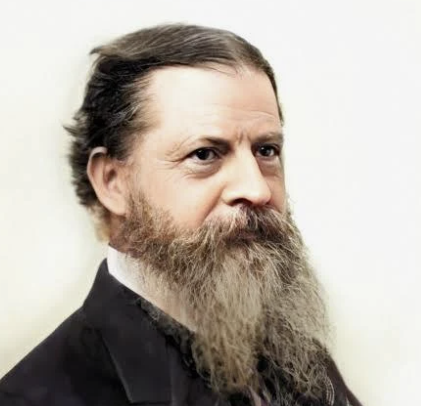
The entire universe is perfused with signs, if it is not composed exclusively of signs.
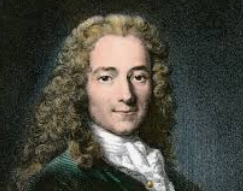
The best government is a benevolent tyranny tempered by an occasional assassination.
In a field of ripening corn I came to a place which had been trampled down by some ruthless foot; and as I glanced amongst the countless stalks, every one of them alike, standing there so erect and bearing the full weight of the ear, I saw a multitude of different flowers, red and blue and violet. How pretty they looked as they grew there so naturally with their little foliage! But, thought I, they are quite useless; they bear no fruit; they are mere weeds, suffered to remain only because there is no getting rid of them. And yet, but for these flowers, there would be nothing to charm the eye in that wilderness of stalks. They are emblematic of poetry and art, which, in civic life-so severe, but still useful and not without its fruit-play the same part as flowers in the corn.
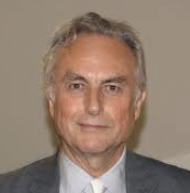
The wheel may be one of those cases where the engineering solution can be seen in plain view, yet be unattainable in evolution because it lies on the other side of a deep valley, cutting unbridgeably across the massif of Mount Improbable.
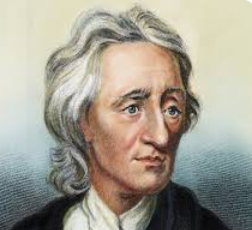
Religion, which should most distinguish us from the beasts, and ought most particularly elevate us, as rational creatures, above brutes, is that wherein men often appear most irrational, and more senseless than beasts.

The Hero as Divinity, the Hero as Prophet, are productions of old ages; not to be repeated in the new. They presuppose a certain rudeness of conception, which the progress of mere scientific knowledge puts an end to. There needs to be, as it were, a world vacant, or almost vacant of scientific forms, if men in their loving wonder are to fancy their fellow-man either a god or one speaking with the voice of a god. Divinity and Prophet are past.
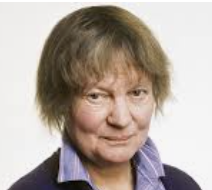
Only lies and evil come from letting people off.
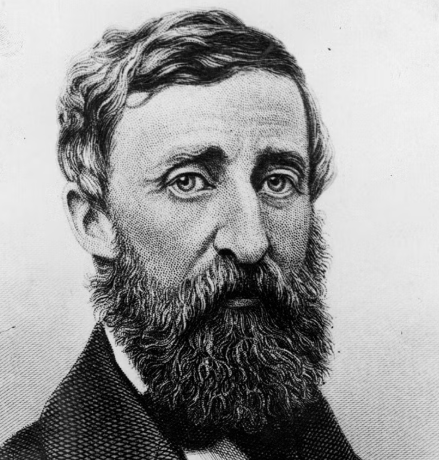
When a sixth of the population of a nation which has undertaken to be the refuge of liberty are slaves, and a whole country is unjustly overrun and conquered by a foreign army, and subjected to military law, I think that it is not too soon for honest men to rebel and revolutionize. What makes this duty the more urgent is the fact that the country so overrun is not our own, but ours is the invading army.
America, you have it better than our continent, the old one.
Is the child to be considered as an individuality, or as an object to be moulded according to the whims and fancies of those about it? This seems to me to be the most important question to be answered by parents and educators. And whether the child is to grow from within, whether all that craves expression will be permitted to come forth toward the light of day; or whether it is to be kneaded like dough through external forces, depends upon the proper answer to this vital question.
"New friends, however, will not be the same." No, nor will you yourself remain the same; you change with every day and every hour.

On the whole, the scientist is better off if he collects his facts by accident, little by little, so he can study them before he tries to fit them into a jigsaw puzzle, This is how the late Tom Lethbridge came to arrive at his theories about other dimensions of reality. It is also how Guy Lyon Playfair came to develop his own theories about the nature of the poltergeist.
CivilSimian.com created by AxiomaticPanic, CivilSimian, Kalokagathia