


7 months 1 week ago
There should be 2 systems. One for needs and one for wants. We shouldn't have to compete for needs, and we shouldn't expect the things we want. An ideal system would definitely be a seriously regulated capitalism with an uncompromised safety net that we focus on with automation and AI. But, those with just want those without to die. In the end, they will lose.

10 months 1 week ago
Anger is a momentary madness so control your passion or it will control you.
▼
Source
source
Book I, epistle ii, line 62
6 months 2 weeks ago
Not to feel exasperated, or defeated, or despondent because your days aren't packed with wise and moral actions. But to get back up when you fail, to celebrate behaving like a human--however imperfectly--and fully embrace the pursuit that you've embarked on. (Hays translation) Flinch not, neither give up nor despair, if the achieving of every act in accordance with right principle is not always continuous with thee.
▼
Source
source
V, 9
7 months 2 weeks ago
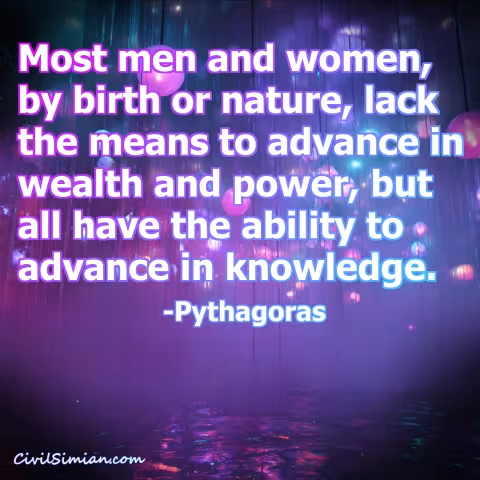
Thought is only a flash between two long nights, but this flash is everything.
▼
Source
source
Quoted in H. L. Mencken, A New Dictionary of Quotations

9 months 2 weeks ago
The state of health is a state of nonsensation, even of nonreality. As soon as we cease to suffer, we cease to exist.

10 months 3 weeks ago
I had better never see a book than to be warped by its attraction clean out of my own orbit, and made a satellite instead of a system. The one thing in the world, of value, is the active soul.
▼
Source
source
par. 15
11 months 2 weeks ago
Then we understand that rebellion cannot exist without a strange form of love. Those who find no rest in God or in history are condemned to live for those who, like themselves, cannot live; in fact, for the humiliated.
10 months 3 weeks ago
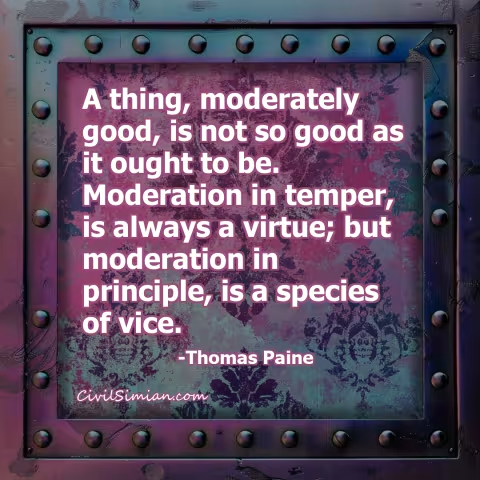
Fine manners need the support of fine manners in others.
▼
Source
source
Behavior

10 months 3 weeks ago
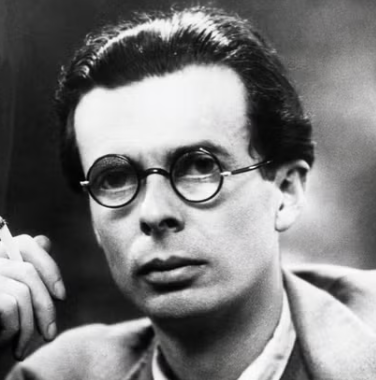
I mean, a genuinely productive society. I mean you could produce plenty of goods without much freedom, but I think the whole sort of creative life of man is ultimately impossible without a considerable measure of individual freedom, of initiative, creation, all these things which we value, and I think value properly, are impossible without a large measure of freedom.
10 months 3 weeks ago
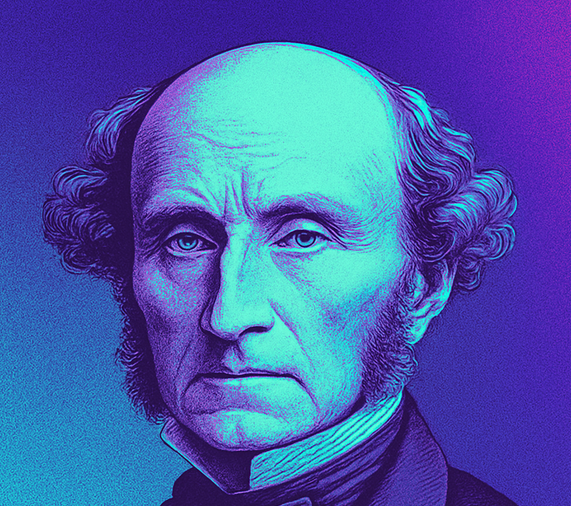
All honour to those who can abnegate for themselves the personal enjoyment of life, when by such renunciation they contribute worthily to increase the amount of happiness in the world; but he who does it, or professes to do it, for any other purpose, is no more deserving of admiration than the ascetic mounted on his pillar. He may be an inspiriting proof of what men can do, but assuredly not an example of what they should.
▼
Source
source
Ch. 2
10 months 3 weeks ago
I now saw, that a science is either deductive or experimental, according as, in the province it deals with, the effects of causes when conjoined, are or are not the sums of the effects which the same causes produce when separate. It followed that politics must be a deductive science. It thus appeared, that both Macaulay and my father were wrong; the one in assimilating the method of philosophising in politics to the purely experimental method of chemistry; while the other, though right in adopting a deductive method, had made a wrong selection of one, having taken as the type of deduction, not the appropriate process, that of the deductive branches of natural philosophy, but the inappropriate one of pure geometry, which, not being a science of causation at all, does not require or admit of any summing-up of effects.
▼
Source
source
(pp. 160-161)

10 months 2 weeks ago
We are responsible not only for what we do but also for what we could have prevented.
▼
Source
source
Introduction (p. xv)
11 months 1 week ago
The superior man loves his soul; the inferior man loves his property.
8 months 2 weeks ago
But if you can breed cattle for milk yield, horses for running speed, and dogs for herding skill, why on Earth should it be impossible to breed humans for mathematical, musical or athletic ability? Objections such as "these are not one-dimensional abilities" apply equally to cows, horses and dogs and never stopped anybody in practice. I wonder whether, some 60 years after Hitler's death, we might at least venture to ask what the moral difference is between breeding for musical ability and forcing a child to take music lessons. Or why it is acceptable to train fast runners and high jumpers but not to breed them. I can think of some answers, and they are good ones, which would probably end up persuading me. But hasn't the time come when we should stop being frightened even to put the question?
▼
Source
source
From the Afterword, The Herald, Glasgow, Scotland, 20 November 2006
10 months 3 weeks ago
In the vaunted works of Art The master stroke is Nature's part.
▼
Source
source
Art
11 months 2 days ago
Hurl your calumnies boldly; something is sure to stick.
▼
Source
source
De Augmentis Scientiarum
11 months 1 day ago
Out of special hatred for our faith, the devil has sent some whores here to destroy our poor young men . . . such a syphilitic whore can poison ten, twenty, thirty or more of the children of good people, and thus is to be considered a murderer, or worse, as a poisoner.
9 months 6 days ago
For this is our central human problem: that we are almost constantly the victims of our emotions, always being swept up and down on a kind of inner-switchback. We possess a certain control over them; we can 'direct our thoughts' -- or feelings -- in such a way as to intensify them. This is certainly our most remarkable human characteristic: imagination. Animals require actual physical stimuli to trigger their experience. A man can retreat into a book -- or a daydream -- and live through certain experiences quite independent of the physical world. He can even, for example, imagine a sexual encounter, and not only experience all the appropriate physical responses, but even the sexual climax. Such a curious ability is far beyond the power of any animal.
▼
Source
source
p. 23
7 months 3 weeks ago
You can't satisfy everybody; especially if there are those who will be dissatisfied unless not everybody is satisfied.
▼
Source
source
Ch. 10 : A Framework for Utopia; The Framework as Utopian Common Ground, p. 320
11 months 1 day ago
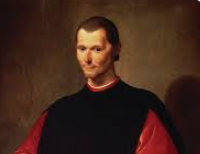
The people resemble a wild beast, which, naturally fierce and accustomed to live in the woods, has been brought up, as it were, in a prison and in servitude, and having by accident got its liberty, not being accustomed to search for its food, and not knowing where to conceal itself, easily becomes the prey of the first who seeks to incarcerate it again.
▼
Source
source
Book 1, Ch. 16
10 months 3 weeks ago
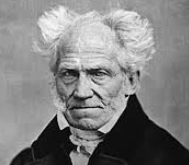
And O! how the mind is here washed clean of all its early ingrafted Jewish superstition ! It is the most profitable and elevating reading which is possible in the world. It has been the solace of my life, and will be the solace of my death.
▼
Source
source
About the Upanishads. Arthur Schopenhauer, quoted in Europe Looks At India by Mukherhi, D.P.
7 months 1 week ago
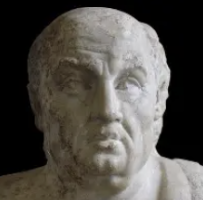
But both courses are to be avoided; you should not copy the bad simply because they are many, nor should you hate the many because they are unlike you.
7 months 3 weeks ago
There is no social entity with a good that undergoes some sacrifice for its own good. There are only individual people, different individual people, with their own individual lives. Using one of these people for the benefit of others, uses him and benefits the others. Nothing more.
▼
Source
source
Ch. 3 : Moral Constraints and the State; Why Side Constraints?, p. 32
6 months 3 weeks ago
I hold the brimming wineglass and relive the toils of my grandfathers and great-grandfathers. The sweat of my labor runs down like a fountain from my tall, intoxicated brow. I am a sack filled with meat and bones, blood, sweat, and tears, desires and visions.
9 months 4 weeks ago
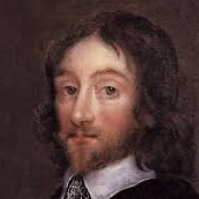
The world that I regard is my selfe, it is the Microcosme of mine owne frame, that I cast mine eye on; for the other, I use it but like my Globe, and turne it round sometimes for my recreation. Men that look upon my outside, perusing onely my condition, and fortunes, do erre in my altitude; for I am above Atlas his shoulders.
▼
Source
source
Section 12
11 months 3 weeks ago
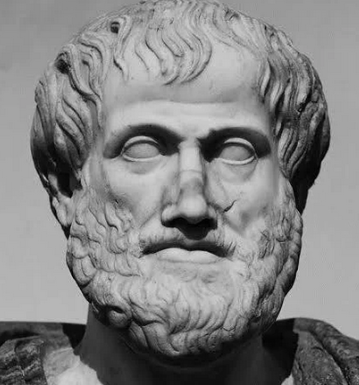
Now the mass of mankind are plainly... choosing a life like that of brute animals...
8 months 3 weeks ago
Environments work us over and remake us. It is man who is the content of and the message of the media, which are extensions of himself. Electronic man must know the effects of the world he has made above all things.
▼
Source
source
(p. 90)
10 months 3 weeks ago
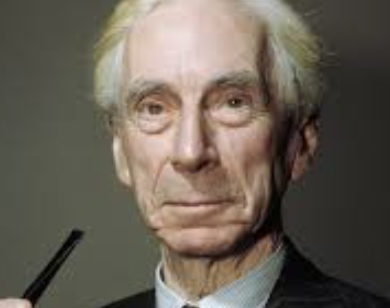
I do like clarity and exact thinking and I believe that very important to mankind because when you allow yourself to think inexactly your prejudices, your bias, your self interest comes in in ways you don't notice and you do bad things without knowing that you are doing them: self deception is very easy. So that I do think clear thinking immensely important.
▼
Source
source
Television interview ("On clarity and exact thinking" - available on youtube)
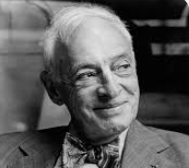
8 months 2 weeks ago
In politics continental Europe was infantile - horrifying. What America lacked, for all its political stability, was the capacity to enjoy intellectual pleasures as though they were sensual pleasures. This is what Europe offered, or was said to offer.
▼
Source
source
"My Paris" (1983), p. 235
7 months 1 week ago
Unjust dominion cannot be eternal.
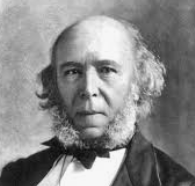
9 months 3 weeks ago
He who carries self-regard far enough to keep himself in good health and high spirits, in the first place thereby becomes an immediate source of happiness to those around, and in the second place maintains the ability to increase their happiness by altruistic actions. But one whose bodily vigour and mental health are undermined by self-sacrifice carried too far, in the first place becomes to those around a cause of depression, and in the second place renders himself incapable, or less capable, of actively furthering their welfare. In estimating conduct we must remember that there are those who by their joyousness beget joy in others, and that there are those who by their melancholy cast a gloom on every circle they enter.
▼
Source
source
Ethics (New York:1915), § 72, pp. 193-194
9 months 2 weeks ago
Man starts over again everyday, in spite of all he knows, against all he knows.
11 months 2 days ago
The cause and root of nearly all evils in the sciences is this - that while we falsely admire and extol the powers of the human mind we neglect to seek for its true helps.
▼
Source
source
Aphorism 9
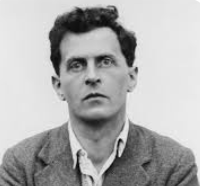
10 months 2 weeks ago
A proposition is completely logically analyzed if its grammar is made completely clear: no matter what idiom it may be written or expressed in...
▼
Source
source
Philosophical Remarks (1930), Part I (1)
7 months 2 days ago
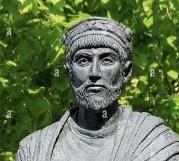
Let us not admit discourses by Epicureans or Pyrrhonists - though indeed the gods have already in their wisdom destroyed their works, so that most of their books are no longer available. Nevertheless, there is no reason why I should not, by way of example, mention these works too, to show what sort of discourses priests must especially avoid; and if such discourses, then much more must they avoid such thoughts.
▼
Source
source
Fragmentum Epistulae, 288a-305d
9 months 1 week ago
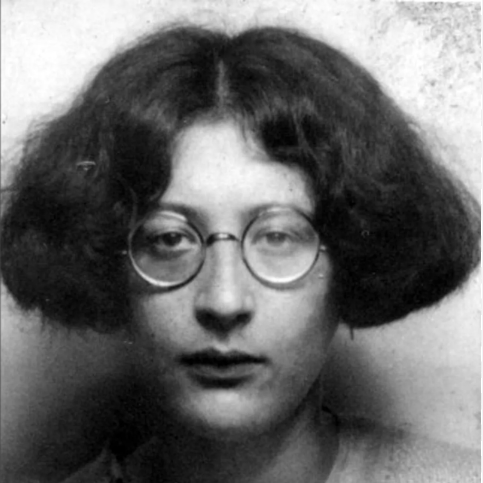
Moreover, nothing is so rare as to see misfortune fairly portrayed; the tendency is either to treat the unfortunate person as though catastrophe were his natural vocation, or to ignore the effects of misfortune on the soul, to assume, that is, that the soul can suffer and remain unmarked by it, can fail, in fact, to be recast in misfortune's image.
▼
Source
source
p. 193
9 months 5 days ago
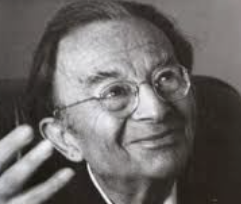
To speak of love is not "preaching," for the simple reason that it means to speak of the ultimate and real need of every human being. That this need has been obscured does not mean it does not exist. To analyze the nature of love is to discover its general absence today and to criticize the social conditions which are responsible for this absence. To have faith in the possibility of love as a social and not only exceptional-individual phenomenon, is a rational faith based on the insight into the very nature of man.
10 months 3 weeks ago
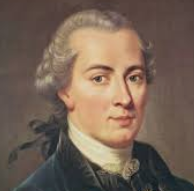
The history of mankind can be seen, in the large, as the realization of Nature's secret plan to bring forth a perfectly constituted state as the only condition in which the capacities of mankind can be fully developed, and also bring forth that external relation among states which is perfectly adequate to this end.
▼
Source
source
Eighth Thesis
6 months 3 weeks ago
Novelty is a new kind of loneliness.
▼
Source
source
Healing
8 months 3 weeks ago
The images of mankind have become the most basic thing about them. And they're all software, and disembodied.
▼
Source
source
(p. 346)
10 months 2 weeks ago
The human body is the best picture of the human soul.
▼
Source
source
Pt II, p. 178
7 months 4 days ago
The more we struggle for life (as pleasure), the more we are actually killing what we love.
▼
Source
source
p. 32
7 months 4 days ago
Wouldn't it be as farfetched to call birth the cause of death as to call the cat's head the cause of the tail? Lifting the neck of a bottle implies lifting the bottom as well, for the "two parts" come up at the same time. If I pick up an accordion by one end, the other will follow a little later, but the principle is the same. Total situations are, therefore, patterns in time as much as patterns in space.
▼
Source
source
p. 72
CivilSimian.com created by AxiomaticPanic, CivilSimian, Kalokagathia