
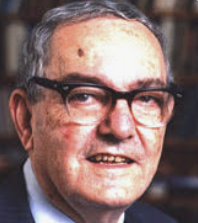
Herbert A. Simon — Bounded Rationality, Satisficing, and the Sciences of the Artificial (1916–2001)
Herbert Alexander Simon was an American scholar — born in Milwaukee, Wisconsin on 15 June 1916, the son of an electrical engineer who had emigrated from Germany, who showed early aptitude for mathematics and the social sciences, graduated from the University of Chicago in 1936, earned his PhD in political science there in 1943, and proceeded to build one of the most remarkable interdisciplinary careers in the history of twentieth-century thought. He joined Carnegie Mellon University (then Carnegie Institute of Technology) in 1949 and remained there for the rest of his career, holding appointments simultaneously in psychology, computer science, and the social sciences — a breadth reflecting the genuine integration of his intellectual concerns rather than mere departmental convenience. He died in Pittsburgh on 9 February 2001 at the age of eighty-four.
He received the ACM Turing Award in 1975 — the highest honor in computer science — jointly with Allen Newell, for their contributions to artificial intelligence. He received the Nobel Memorial Prize in Economic Sciences in 1978 for his "pioneering research into the decision-making process within economic organizations." He is one of only a handful of people ever to have received both the Turing Award and the Nobel Prize — a combination that maps the unusual scope of a career that left foundational marks on economics, cognitive science, computer science, artificial intelligence, organizational theory, and the philosophy of mind.
His central concern, pursued with methodological consistency across six decades: that the classical model of rational decision-making — the perfectly informed, perfectly computing, utility-maximizing agent of economic theory — was empirically false and theoretically misleading, and that replacing it with a realistic model of human cognition would transform our understanding of economics, organization, politics, and the nature of mind itself.
Administrative Behavior — Decision at the Center
Simon's first major work — "Administrative Behavior" (1947), developed from his doctoral dissertation — placed decision-making at the center of organizational analysis at a time when the study of administration was dominated by structural and procedural concerns. His argument: organizations were not primarily systems of authority or procedure but systems of decisions. To understand how an organization worked — how it achieved or failed to achieve its goals — you had to understand how decisions were made within it: what information was available to decision-makers, how alternatives were identified and evaluated, how authority was structured to channel decision-making authority to those with the relevant knowledge. The Royal Swedish Academy of Sciences called it "epoch-making" when awarding Simon the Nobel Prize three decades later.
The book's decisive conceptual move was its challenge to the classical economic model of rational decision-making. Economics assumed that rational agents had complete information, clearly defined preference orderings, and unlimited computational capacity — and that they maximized their utility across all possible alternatives. Simon's observation, drawn from direct study of administrative organizations: this was not how people actually made decisions, it was not how they could make decisions given real cognitive limitations, and the gap between the model and the reality was not a minor correction but a fundamental reconceptualization.
"Administrative Behavior places decision-making at the center of analysis and was considered 'epoch-making' by the Nobel committee. It challenged the classical assumption of perfect rationality by showing that real decision-makers operate within the limits of available information, cognitive capacity, and time."
Bounded Rationality — The Realistic Model of Human Decision
The concept of "bounded rationality" — introduced formally in a 1955 paper and developed across subsequent decades — was Simon's most influential intellectual contribution and the one recognized by the Nobel committee. Human rationality, he argued, was bounded by three fundamental constraints: limited information (decision-makers rarely had complete information about all possible alternatives and their consequences); cognitive limitations (the human mind had finite computational capacity and could not simultaneously evaluate all possibilities); and time pressure (most real decisions had to be made under constraints that prevented exhaustive analysis).
These constraints did not make human decision-making irrational — they made it a different kind of rationality from the idealized model. Bounded rationality was not rationality minus some capacity but rationality adapted to the actual conditions under which decisions were made: using heuristics that worked well across typical cases, adopting satisfactory rather than optimal solutions, structuring problems to make them tractable rather than solving them in full generality. This was not failure — it was competence appropriate to the real environment. "Decision-makers can satisfice either by finding optimum solutions for a simplified world, or by finding satisfactory solutions for a more realistic world."
"Decision-makers can satisfice either by finding optimum solutions for a simplified world, or by finding satisfactory solutions for a more realistic world."
— Simon, Nobel Prize lecture, 1978
Satisficing — Good Enough as a Rational Strategy
Simon coined the word "satisficing" — a portmanteau of "satisfying" and "sufficing" — to describe the decision strategy that bounded rationality made rational. Rather than searching exhaustively through all possible alternatives to find the optimal solution (maximizing), real decision-makers set an aspiration level — a threshold of acceptable outcomes — and adopted the first alternative that met or exceeded it. When that alternative was found, search stopped. The aspiration level itself was not fixed: if good solutions were plentiful, it rose; if good solutions were scarce, it fell. This adaptive aspiration mechanism produced behavior that was sensitive to the environment without requiring unlimited information or computational capacity.
Satisficing was not second-best rationality — it was, in realistic environments, often superior to optimization. The time and cognitive resources required to find the truly optimal solution were themselves costs; for most decisions, those costs exceeded the benefit of the marginal improvement over a satisfactory solution. The agent who satisficed was not failing to optimize — she was optimizing at the meta-level, allocating her limited cognitive resources efficiently across the full range of decisions she faced.
"Instead of maximizing utility, people 'satisfice' — they do as well as they think is possible, choosing the first option that meets their minimum criteria rather than exhaustively searching for the best possible solution."
— Econlib, summarizing Simon's core contribution
Artificial Intelligence — Logic Theorist and General Problem Solver
Simon's collaboration with Allen Newell at Carnegie Mellon produced two of the foundational programs of artificial intelligence research: the Logic Theorist (1956) and the General Problem Solver (1957). The Logic Theorist was the first program to prove mathematical theorems — it reproduced thirty-eight of the first fifty-two theorems in Whitehead and Russell's "Principia Mathematica," finding a proof of one theorem more elegant than the original. When Simon presented it to the New York Academy of Sciences, he announced that "we have invented a thinking machine." The claim was premature — but the program was genuinely remarkable.
The General Problem Solver (GPS) was more philosophically ambitious: an attempt to model the general structure of human problem-solving through the mechanism of means-ends analysis — the recursive comparison of current state to goal state, identification of the most important difference, and selection of an operator to reduce that difference. GPS was not merely an AI program but a cognitive model — a claim about how human beings actually solved problems. Simon and Newell's "information processing" theory of cognition, which treated the human mind as a symbol-manipulating system, provided the conceptual framework for cognitive science as a discipline distinct from both behaviorist psychology and neuroscience.
"Simon and Newell's collaboration led to the development of the information processing theory of cognition — which posits that the human mind can be understood as a system that processes symbols according to rules, providing the conceptual foundation for cognitive science."
The Sciences of the Artificial — Design as Knowledge
"The Sciences of the Artificial" (1969) was Simon's most philosophically ambitious work — a meditation on the nature of artificial things and the sciences that study them, which proposed that design was a legitimate form of knowledge with its own epistemology distinct from the natural sciences. Natural science studied what existed; the sciences of the artificial studied what could be created to achieve given goals. Engineering, medicine, architecture, business, education — all were design sciences whose object was the creation of systems adequate to purpose rather than the description of systems as they were.
This was not merely a comment about professional disciplines but a philosophical claim about the structure of human knowledge. The dominant epistemological tradition had treated natural science as the model — knowledge was description and explanation of the given world. Simon argued that design science was equally fundamental: a large part of what human beings needed to know was how to construct systems — institutions, technologies, policies, programs — that achieved their purposes in the real world. The knowledge that made this possible was different in structure and validation from natural-scientific knowledge, and it deserved its own epistemological account.
"Everyone designs who devises courses of action aimed at changing existing situations into preferred ones. The intellectual activity that produces material artifacts is no different fundamentally from the one that prescribes remedies for a sick patient or the one that devises a new sales plan for a company or a social welfare policy for a state."
— Simon, The Sciences of the Artificial
Influence — Behavioral Economics and Cognitive Science
Simon's influence has been unusually durable and unusually diffuse. Behavioral economics — the field associated with Daniel Kahneman and Amos Tversky that documented systematic deviations from rational choice — built directly on Simon's foundation. Kahneman acknowledged that Simon's bounded rationality was the conceptual predecessor of their program. Cognitive science as a discipline — the interdisciplinary study of mind that brings together psychology, neuroscience, linguistics, philosophy, and computer science — was substantially shaped by the information-processing model Simon and Newell developed. Organizational theory, public administration, decision science, and the design of AI systems all bear his mark. He remains the single thinker who most consequentially bridged the gap between the formal theory of rational choice and the empirical reality of how human beings and organizations actually decide.
On CivSim he belongs alongside Condorcet, Rawls, and Walzer — the tradition that applied rigorous analysis to the conditions under which human beings made decisions and governed themselves. His challenge to Universal Humanism is the design challenge: a philosophy committed to human flourishing must specify not only what the good is but how institutions can be designed to reliably produce it under realistic conditions of bounded rationality. Ideal principles are necessary but insufficient — the gap between the principle and the institutional design that implements it is exactly the gap that Simon spent sixty years analyzing. A philosophy that ignores the cognitive and organizational conditions of its own implementation will find that its principles, however correct, produce different outcomes than its theorists intended.
"A wealth of information creates a poverty of attention and a need to allocate that attention efficiently among the overabundance of information sources that might consume it."
— Herbert Simon — formulating the attention economy decades before the internet made it the central fact of public life
CivilSimian.com created by AxiomaticPanic, CivilSimian, Kalokagathia