

5 months 4 weeks ago
We cannot abdicate our conscience to an organization, nor to a government. 'Am I my brother's keeper?' Most certainly I am! I cannot escape my responsibility by saying the State will do all that is necessary. It is a tragedy that nowadays so many think and feel otherwise.
▼
Source
source
p. 309
8 months 4 days ago
One of those leaders of what they call the social revolution has said that religion is the opiate of the people. Opium...opium...opium, yes. Let us give them opium so that they can sleep and dream.
9 months 2 weeks ago
All men are liable to error; and most men are, in many points, by passion or interest, under temptation to it.
▼
Source
source
Book IV, Ch. 20, sec. 17
9 months 2 weeks ago
I... believe in the rationalist tradition of a commonwealth of learning, and in the urgent need to preserve this tradition.
6 months 3 days ago
Whatever people do in the market economy, is the execution of their own plans. In this sense every human action means planning. What those calling themselves planners advocate is not the substitution of planned action for letting things go. It is the substitution of the planner's own plan for the plans of his fellow-men. The planner is a potential dictator who wants to deprive all other people of the power to plan and act according to their own plans. He aims at one thing only: the exclusive absolute pre-eminence of his own plan.
9 months 2 weeks ago
The louder he talked of his honor, the faster we counted our spoons.
▼
Source
source
Worship
8 months 2 weeks ago
The writers against religion, whilst they oppose every system, are wisely careful never to set up any of their own.
▼
Source
source
Preface

6 months 1 week ago
All work is as seed sown; it grows and spreads, and sows itself anew.
6 months 1 week ago
What was observed by us in the third place is the nature or matter of the Milky Way itself, which, with the aid of the spyglass, may be observed so well that all the disputes that for so many generations have vexed philosophers are destroyed by visible certainty, and we are liberated from wordy arguments.
▼
Source
source
Original text as reproduced in Edward Tufte, Beautiful Evidence (Cheshire, Connecticut: Graphics Press LLC, 2006), 101
8 months 2 weeks ago
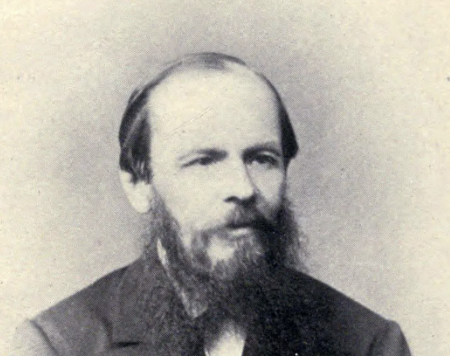
It's the great mystery of human life that old grief passes gradually into quiet tender joy.
7 months 2 weeks ago
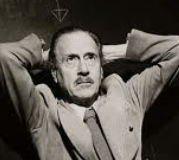
Ads represent the main channel of intellectual and artistic effort in the modern world.
▼
Source
source
Commonweal, Vol. 58 (1953), p. 557

5 months 2 weeks ago
Our Constitution, by its separation of powers and its system of checks and balances, acts as a restraint upon efficiency by denying exclusive power to any branch of government. The logic of governmental efficiency, unchecked, runs straight on, not only to dictatorship, but also to torture, assassination, and other abominations.


6 months 1 week ago
The multitude is the real productive force of our social world, whereas Empire is a mere apparatus of capture that lives only off the vitality of the multitude - as Marx would say, a vampire regime of accumulated dead labor that survives only by sucking off the blood of the living.
▼
Source
source
62
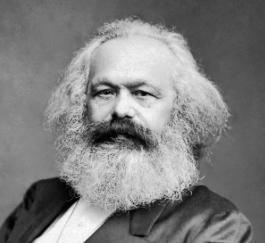
9 months 2 weeks ago
"And your education! Is not that also social, and determined by the social conditions under which you educate, by the intervention, direct or indirect, of society, by means of schools, etc.? The Communists have not invented the intervention of society in education; they do but seek to alter the character of that intervention, and to rescue education from the influence of the ruling class."
▼
Source
source
As quoted in The Communist Manifesto (21 February 1848), p19-20.


8 months 1 week ago
What anxiety when one is not sure of one's doubts or wonders: are these actually doubts?

8 months 3 days ago
The full expression of personality depends upon its being inflated by social prestige; it is a social privilege.
▼
Source
source
p. 64
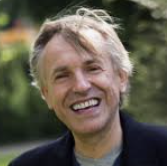
6 months 3 weeks ago
Human intuitions are systematically biased. Evolutionary psychology explains how our moral intuitions and the rationalisations they spawn have been shaped by millennia of natural selection to maximise the inclusive fitness of our genes, not to track the welfare of other sentient beings impartially conceived. Many human cultures have found nothing intuitively wrong with aggressive warfare, slavery, wife-beating, infanticide or female genital mutilation. Ultimately, folk morality is a doomed enterprise as hopeless as folk physics. A mature posthuman ethics, I'd argue, must be committed to the well-being of all sentient life; and mature posthuman technology offers the means to deliver that commitment.
▼
Source
source
"Post-Darwinian Ethics?", H+ Magazine, May 2009
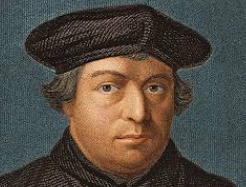
9 months 3 weeks ago
Our preaching does not stop with the law. That would lead to wounding without binding up, striking down and not healing, killing and not making alive, driving down to hell and not bringing back up, humbling and not exalting. Therefore, we must also preach grace and the promise of forgiveness - this is the means by which faith is awakened and properly taught. Without this word of grace, the law, contrition, penitence, and everything else are done and taught in vain.
▼
Source
source
pp. 78-79
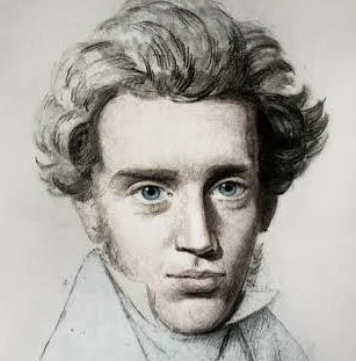
10 months 2 weeks ago
And thus Christianity is played in, Christendom. Artists in dramatic costumes make their appearance in artistic buildings-there really is no danger at all, anything but that: the teacher is a royal functionary, steadily promoted, making a career-and how he dramatically plays Christianity, in short, he plays comedy. He lectures about renunciation, but he himself is being steadily promoted; he teaches all that about despising worldly titles and rank, but he himself is making a career.
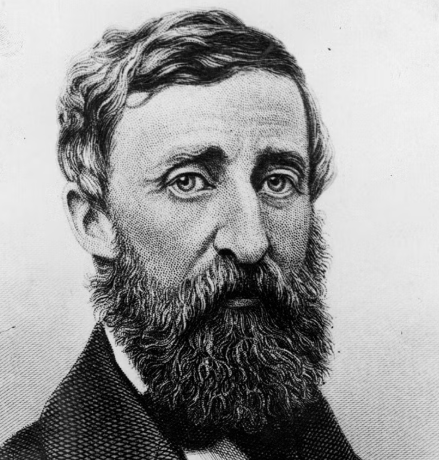
9 months 2 weeks ago
The church is a sort of hospital for men's souls, and as full of quackery as the hospital for their bodies. Those who are taken into it live like pensioners in their Retreat or Sailors' Snug Harbor, where you may see a row of religious cripples sitting outside in sunny weather.
▼
Source
source
Pearls of Thought (1881) p. 43
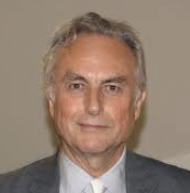
7 months 1 week ago
Human vanity cherishes the absurd notion that our species is the final goal of evolution.
▼
Source
source
Chapter 3 "Accumulating Small Change" (p. 50)
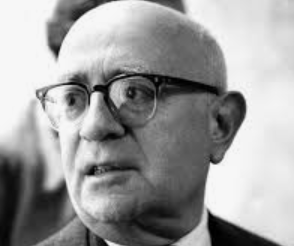
8 months 3 days ago
What appears as the positive is essentially the negative, i.e. the thing that is to be criticized.
▼
Source
source
p. 18
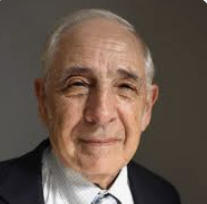
7 months 2 weeks ago
You need to know enough philosophy so that the methods of logical analysis are available to you to be used as a tool. One of the most depressing things about educated people today is that so few of them, even among professional intellectuals, are able to follow the steps of a simple logical argument.
10 months 2 weeks ago
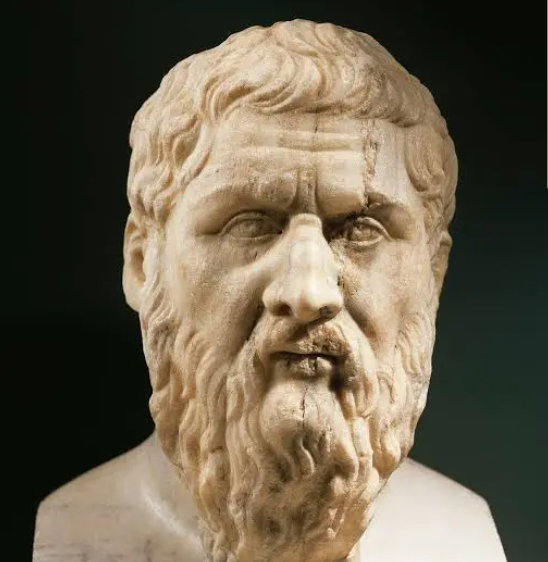
There is no one who ever acts honestly in the administration of states, nor any helper who will save any one who maintains the cause of the just.
9 months 2 weeks ago
... the fight against suffering must be considered a duty, while the right to care for the happiness of others must be considered a privilege confined to the close circle of their friends. ... Pain, suffering, injustice, and their prevention, these are the eternal problems of public morals, the 'agenda' of public policy ...
▼
Source
source
Vol. 2, Ch. 24 "Oracular Philosophy and the Revolt against Reason"
10 months 2 weeks ago
Not merely in the realm of commerce but in the world of ideas as well our age is organizing a regular clearance sale. Everything is to be had at such a bargain that it is questionable whether in the end there is anybody who will want to bid. Every speculative price-fixer who conscientiously directs attention to the significant march of modern philosophy, every Privatdocent, tutor, and student, every crofter and cottar goes further. Perhaps it would be untimely and ill-timed to ask them where they are going.
8 months 2 weeks ago
The first Man is the first Spirit-seer; all appears to him as Spirit. What are children, but first men? The fresh gaze of the Child is richer in significance than the forecasting of the most indubitable Seer.
9 months 2 weeks ago
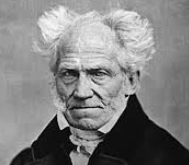
The auspices for philosophy are bad if, when proceeding ostensibly on the investigation of truth, we start saying farewell to all uprightness, honesty and sincerity, and are intent only on passing ourselves off for what we are not. We then assume, like those three sophists [Fichte, Schelling and Hegel], first a false pathos, then an affected and lofty earnestness, then an air of infinite superiority, in order to impose where we despair of ever being able to convince.
▼
Source
source
E. Payne, trans. (1974) Vol. 1, p. 22
10 months 1 week ago
When a country is well governed, poverty and a mean condition are things to be ashamed of. When a country is ill governed, riches and honor are things to be ashamed of.
9 months 2 weeks ago
Wealth begins in a tight roof that keeps the rain and wind out; in a good pump that yields you plenty of sweet water; in two suits of clothes, so to change your dress when you are wet; in dry sticks to burn; in a good double-wick lamp; and three meals; in a horse, or a locomotive, to cross the land; in a boat to cross the sea; in tools to work with; in books to read; and so, in giving, on all sides, by tolls and auxiliaries, the greatest possible extension to our powers, as if it added feet, and hands, and eyes, and blood, length to the day, and knowledge, and good-will.Wealth begins with these articles of necessity.
▼
Source
source
Wealth

6 months 1 week ago
Therefore tolerance of diversity, of people that don't believe the same thing that you do, has always been at the core of this pragmatic project to enable diverse populations to live with one another.
▼
Source
source
9:00
9 months 2 weeks ago
It is precisely in knowing its limits that philosophy consists.
▼
Source
source
A 727, B 755

7 months 1 week ago
The picture of modern philosophy as centered in epistemology and driven by the desire to ground our representations is so tenacious that some philosophers are prepared to bite the bullet and declare the effort simply wasted. Rorty, for example, finds it easier to reject modern philosophy altogether than to reject the standard accounts of its history. His narrative is more polemical than most, but it's a polemical version of the story told in most philosophy departments in the second half of the twentieth century. The story is one of tortuously decreasing interest. Philosophy, like some people, was prepared to accept boredom in exchange for certainty as it grew to middle age.
10 months 2 weeks ago
Korell is that frequent phenomenon in history: the republic whose ruler has every attribute of the absolute monarch but the name. It therefore enjoyed the usual despotism unrestrained even by those two moderating influences in the legitimate monarchies: regal, honor and court etiquette.
7 months 3 weeks ago
So-called professional mathematicians have, in their reliance on the relative incapacity of the rest of mankind, acquired for themselves a reputation for profundity very similar to the reputation for sanctity possessed by theologians.
▼
Source
source
K 52
10 months 6 days ago
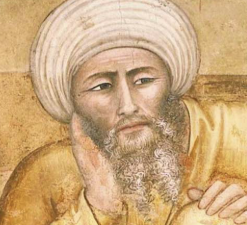
On the whole, a man who denies the existence of the effects arranged according to the causes in the question of arts, or whose wisdom cannot understand it, then he has no knowledge of the art of its Maker.
9 months 2 weeks ago
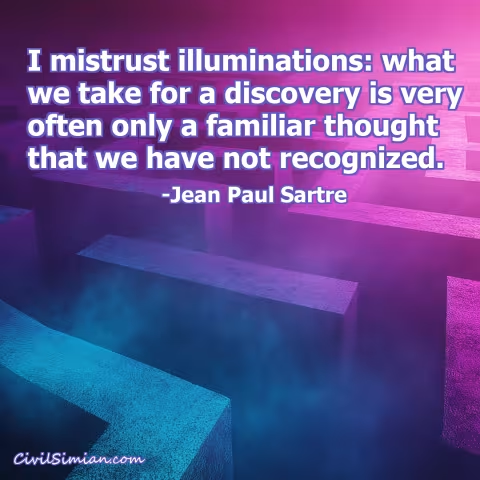
I mistrust illuminations: what we take for a discovery is very often only a familiar thought that we have not recognized.
▼
Source
source
p. 439
9 months 2 weeks ago
A commodity appears, at first sight, a very trivial thing, and easily understood.Its analysis shows that it is, in reality, a very queer thing, abounding in metaphysical subtleties and theological niceties.
▼
Source
source
Vol. I, Ch. 1, Section 4, pg. 81.
10 months 2 weeks ago
History is a story without an end.
8 months 3 days ago
In a world that has been thoroughly permeated by the structures of the social order, a world that so overpowers every individual that scarcely any option remains but to accept it on its own terms, such naiveté reproduces itself incessantly and disastrously. What people have forced upon them by a boundless apparatus, which they themselves constitute and which they are locked into, virtually eliminates all natural elements and becomes "nature" to them.
▼
Source
source
p. 12
6 months 1 week ago
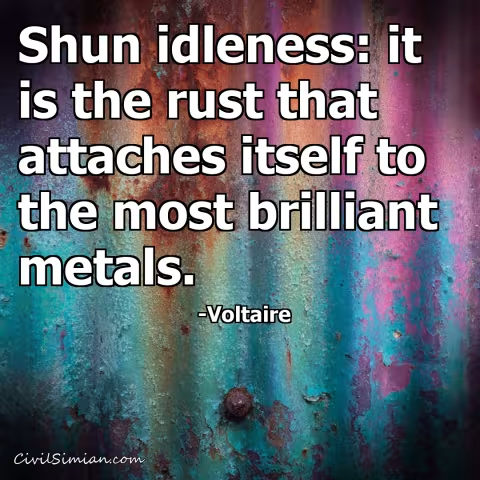
It is true that even across the Himalayan barrier India has sent to the west, such gifts as grammar and logic, philosophy and fables, hypnotism and chess, and above all numerals and the decimal system.
6 months 3 days ago
What is not supposed to be my concern! First and foremost, the Good Cause, then God's cause, the cause of mankind, of truth, of freedom, of humanity, of justice; further, the cause of my people, my prince, my fatherland; finally, even the cause of Mind, and a thousand other causes. Only my cause is never to be my concern. "Shame on the egoist who thinks only of himself!"
▼
Source
source
Cambridge 1995, p. 5

9 months 1 week ago
There is object proof that homosexuality is more interesting than heterosexuality. It's that one knows a considerable number of heterosexuals who would wish to become homosexuals, whereas one knows very few homosexuals who would really like to become heterosexuals.
▼
Source
source
As quoted in Who's Who in Contemporary Gay & Lesbian History: From World War II to the Present Day (2001) by Robert Aldrich and Gary Wotherspoon ISBN 041522974X
8 months 2 weeks ago
There ought to be system of manners in every nation which a well-formed mind would be disposed to relish. To make us love our country, our country ought to be lovely.
CivilSimian.com created by AxiomaticPanic, CivilSimian, Kalokagathia