This thinking just seems so quaint now...it's just pure art at this point...



Men did not make the earth... It is the value of the improvements only, and not the earth itself, that is individual property... Every proprietor owes to the community a ground rent for the land which he holds.
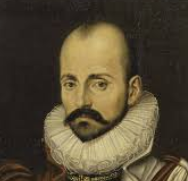
The souls of emperors and cobblers are cast in the same mould.... The same reason that makes us wrangle with a neighbour causes a war betwixt princes.

We need a good alternative to Trumpism. There is a majority in favor of that, but... the other party is really not providing that alternative in a very clear way.

One whose intentions and thoughts are cultivated will disregard wealth and nobility. One whose greatest concern is for the Way and righteousness will take lightly kings and dukes. It is simply that when one examines oneself on the inside, external goods carry little weight. A saying goes, "The gentleman makes things his servants. The petty man is servant to things.
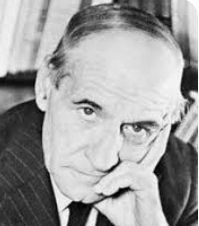
That science is incapable of solving in its own way those fundamental questions is no sufficient reason for slighting them.
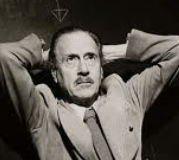
Does the interiorization of media such as letters alter the ratio among our senses and change mental processes?
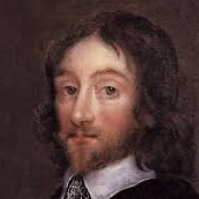
We vainly accuse the fury of guns, and the new inventions of death; it is in the power of every hand to destroy us, and we are beholden unto every one we meet he doth not kill us.

Never unreal, Pain is a challenge to the universal fiction. What luck to be the only sensation granted a content, if not a meaning!
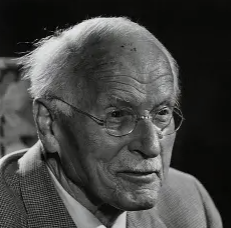
If one does not understand a person, one tends to regard him as a fool.
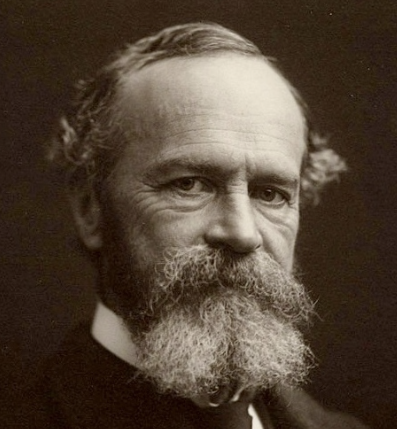
There is but one unconditional commandment, which is that we should seek incessantly, with fear and trembling, so to vote and to act as to bring about the very largest total universe of good which we can see. Abstract rules indeed can help; but they help the less in proportion as our intuitions are more piercing, and our vocation is the stronger for the moral life. For every real dilemma is in literal strictness a unique situation; and the exact combination of ideals realized and ideals disappointed which each decision creates is always a universe without a precedent, and for which no adequate previous rule exists.
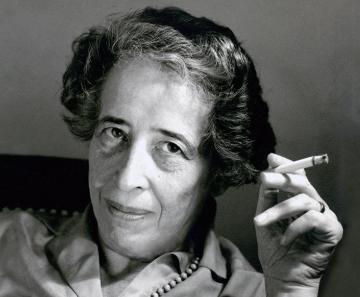
The cultural treasures of the past, believed to be dead, are being made to speak, in the course of which it turns out that they propose things altogether different than what had been thought.
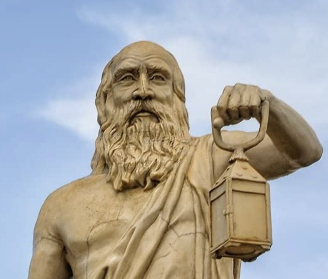
Boasting, like gilded armour, is very different inside from outside.
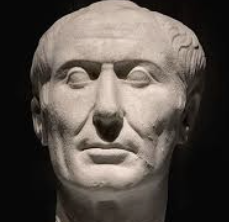
No one knows what he can do till he tries.
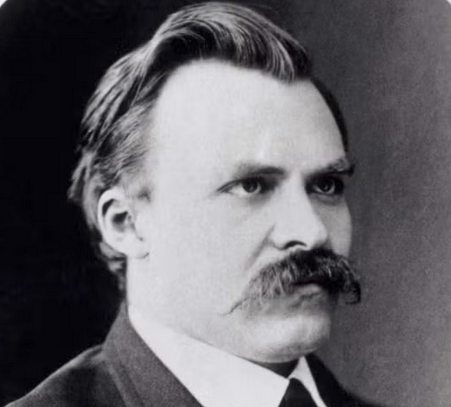
Perhaps no person can be a poet, or even enjoy poetry, without a certain unsoundness of mind.
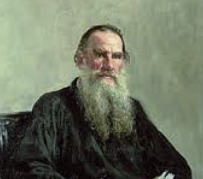
If Mormonism is able to endure, unmodified, until it reaches the third and fourth generation, it is destined to become the greatest power the world has ever known.
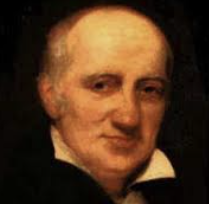
Duty is that mode of action which constitutes the best application of the capacity of the individual to the general advantage. Right is the claim of the individual to his share of the benefit arising from his neighbors' discharge of their several duties.
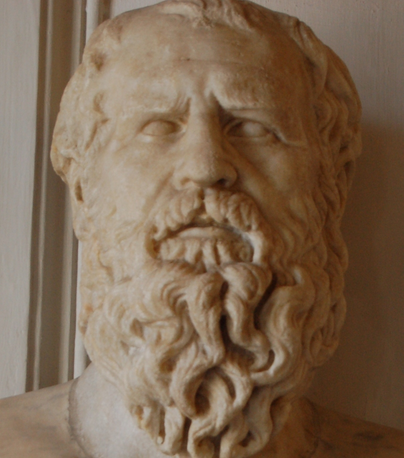
All human laws are nourished by one divine law.
In America I was liberated from a certain naïve belief in culture and attained the capacity to see culture from the outside. To clarify the point: in spite of all social criticism and all consciousness of the primacy of economic factors, the fundamental importance of the mind-"Geist"-was quasi a dogma self-evident to me from the very beginning. The fact that this was not a foregone conclusion, I learned in America, where no reverential silence in the presence of everything intellectual prevailed.
When we are young, we take a certain pleasure in our infirmities. They seem so new, so rich! With age, they no longer surprise us, we know them too well. Now, without anything unexpected in them, they do not deserve to be endured.
Persecution of powerless or power-losing groups may not be a very pleasant spectacle, but it does not spring from human meanness alone. What makes men obey or tolerate real power and, on the other hand, hate people who have wealth without power, is the rational instinct that power has a certain function and is of some general use. Even exploitation and oppression still make society work and establish some kind of order. Only wealth without power or aloofness without a policy are felt to be parasitical, useless, revolting, because such conditions cut all the threads which tie men together. Wealth which does not exploit lacks even the relationship which exists between exploiter and exploited; aloofness without policy does not imply even the minimum concern of the oppressor for the oppressed.

Visions are a feeble resource, you will say, against great adversity! Oh Sir, these visions may possibly have more reality than all those apparent goods about which men make so much ado, for they never bring a true feeling of happiness to the soul, and those who possess them are equally forced to project themselves into the future for want of finding enjoyments that satisfy them, in the present.
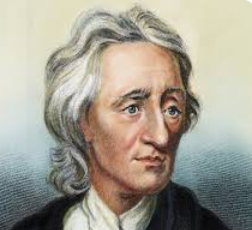
If pains be to be taken to give him a manly air and assurance betimes, it is chiefly as a fence to his virtue when he goes into the world under his own conduct.
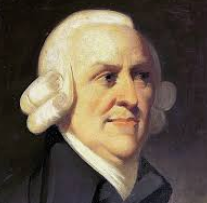
The greatest improvement in the productive powers of labour, and the greatest part of skill, dexterity, and judgment with which it is any where directed, or applied, seem to have been the effects of the division of labour.
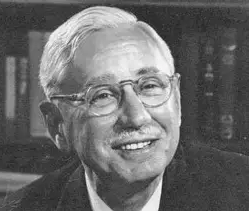
This, evidently was not a minor civilization, produced by inferior people. It ranks with the highest civilizations of history, and some, like Keyserling, would place it at the head and summit of all. The British conquest of India was the invasion and destruction of a high civilization by a trading company utterly without scruple or principle, careless of art, greedy of gain, overrunning with fire and sword a country temporarily disordered and helpless, bribing and murdering, annexing and stealing, and beginning that career of illegal and "legal" plunder which has now gone on ruthlessly for one hundred and seventy-three years, and goes on at this moment while in our secure comfort we write and read. Those who have seen the unspeakable poverty and physiological weakness of the Hindus today will hardly believe that it was the wealth of eighteenth century India which attracted the commercial pirates of England and France.
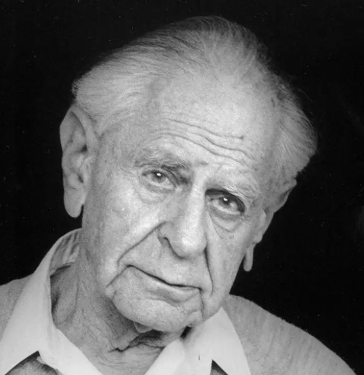
A rationalist, as I use the word, is a man who attempts to reach decisions by argument and perhaps, in certain cases, by compromise, rather than by violence. He is a man who would rather be unsuccessful in convincing another man by argument than successful in crushing him by force, by intimidation and threats, or even by persuasive propaganda.
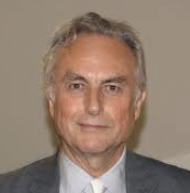
The world becomes full of organisms that have what it takes to become ancestors. That, in a sentence, is Darwinism.

Certain forms of sex which do not lead to children are at present punished by the criminal law: this is purely superstitious, since the matter is one which affects no one except the parties directly concerned... The peculiar importance attached, at present, to adultery is quite irrational... Moral rules ought not to be such as to make instinctive happiness impossible.
Only lay down true principles, and adhere to them inflexibly. Do not be frightened into their surrender by the alarms of the timid, or the croakings of wealth against the ascendency of the people.
All truth, in the long run, is only common sense clarified.
I have always thought the actions of men the best interpreters of their thoughts.
Society attacks early, when the individual is helpless.
Jews are angry and brutish people, vile and vulgar men, slaves worthy of the yoke [Talmudism] which you bear... Go, take back your books and remove yourselves from me. [ The Talmud ] taught the Jews to steal the goods of Christians, to regard them as savage beasts, to push them over the precipice... to kill them with impunity and to utter every morning the most horrible imprecations against them.
The policy of American government is to leave its citizens free, neither restraining them nor aiding them in their pursuits.
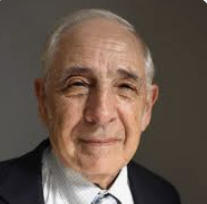
I have only one real message in this lecture, and that is: consciousness is a biological phenomenon, like photosynthesis, digestion, mitosis-you know all the biological phenomena-and once you accept that, most, if not all about the hard problems of consciousness simply evaporate.
Philosophy offers an antidote to melancholy. And many still believe in the depth of philosophy!
If a man has not, by the time he is 30, yielded to the fascination of every form of extremism, I don't know if he is to be admired or scorned - a saint or a corpse.
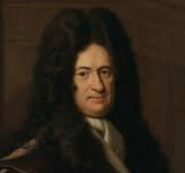
Every substance is as a world apart, independent of everything else except God.
She [virtue] requires a rough and stormy passage; she will have either outward difficulties to wrestle with, ... or internal difficulties.

Anarchism, more than any other social theory, values human life above things.
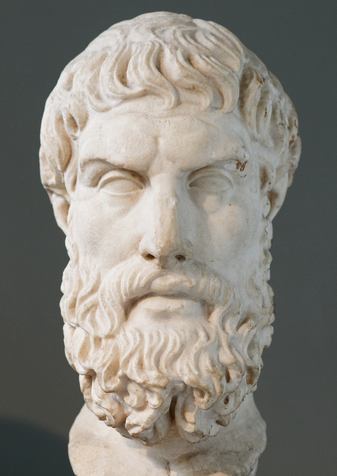
Those animals which are incapable of making binding agreements with one another not to inflict nor suffer harm are without either justice or injustice; and likewise for those peoples who either could not or would not form binding agreements not to inflict nor suffer harm.
If the Communists conquered the world, it would be very unpleasant for a while, but not forever. But if the human race is wiped out, that is the end.
CivilSimian.com created by AxiomaticPanic, CivilSimian, Kalokagathia