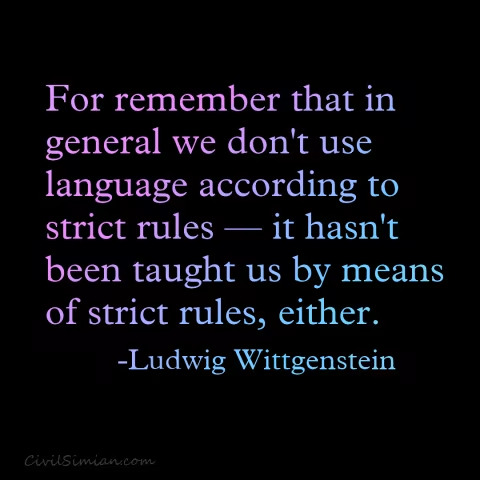
Just a couple simple rules and a bunch of paradoxes could be eliminated without resorting to paraconsistent logic.


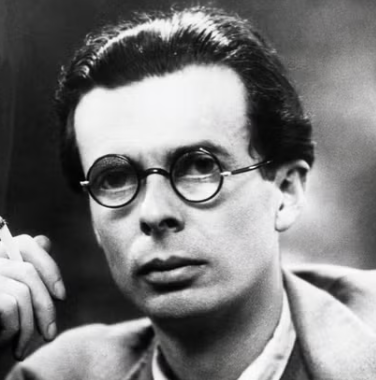
The trouble with fiction... is that it makes too much sense. Reality never makes sense.
Everything over which I have might that cannot be torn from me remains my property; well, then let might decide about property, and I will expect everything from my might! Alien might, might that I leave to another, makes me an owned slave: then let my own might make me an owner. Let me then withdraw the might that I have conceded to others out of ignorance regarding the strength of my own might! Let me say to myself, what my might reaches to is my property; and let me claim as property everything that I feel myself strong enough to attain, and let me extend my actual property as far as I entitle, that is, empower, myself to take.

Far be it from me to say or insinuate a word of disparagement against such characters as Hampden, Elliot, Pym; whom I believe to have been right worthy and useful men. I have read diligently what books and documents about them I could come at;-with the honestest wish to admire, to love and worship them like Heroes; but I am sorry to say, if the real truth must be told, with very indifferent success! At bottom, I found that it would not do. They are very noble men, these; step along in their stately way, with their measured euphemisms, philosophies, parliamentary eloquences, Ship-moneys, Monarchies of Man; a most constitutional, unblamable, dignified set of men. But the heart remains cold before them.
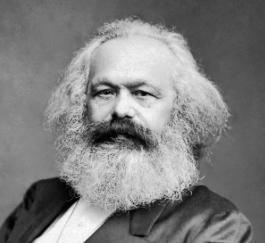
One capitalist always kills many.
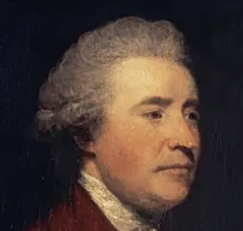
I am well aware, that men love to hear of their power, but have an extreme disrelish to be told of their duty.
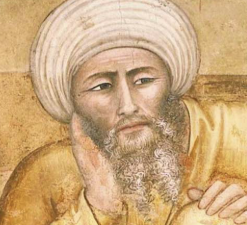
Praise be to God with all due praise, and a prayer for Muhammad His chosen servant and apostle. The purpose of this treatise is to examine, from the standpoint of the study of the Law, whether the study of philosophy and logic is allowed by the Law, or prohibited, or commanded either by way of recommendation or as obligatory.
Contrary to earlier prejudices, there is nothing inherently progressive about evolution.
Just acquiring this amount of "education" will not, by itself, make you an educated person, even less will it give you what Oakeshott calls "judgment." But if the manner of instruction is adequate, the student should be able to acquire this much knowledge in a way that combines intellectual openness, critical scrutiny, and logical clarity. If so, learning will not stop when the student leaves the university.
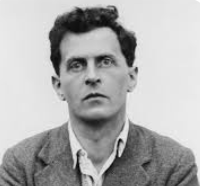
People nowadays think that scientists exist to instruct them, poets, musicians, etc. to give them pleasure. The idea that these have something to teach them - that does not occur to them.
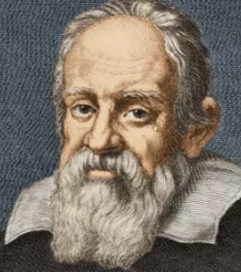
This [experimentation] is the custom-and properly so-in those sciences where mathematical demonstrations are applied to natural phenomena, as is seen in the case of perspective, astronomy, mechanics, music, and others where the principles, once established by well-chosen experiments, become the foundations of the entire superstructure.
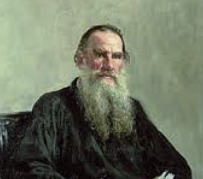
What! all of us, Christians, not only profess to love one another, but do actually live one common life; we whose social existence beats with one common pulse-we aid one another, learn from one another, draw ever closer to one another to our mutual happiness, and find in this closeness the whole meaning of life!-and to-morrow some crazy ruler will say some stupidity, and another will answer in the same spirit, and then I must go expose myself to being murdered, and murder men-who have done me no harm-and more than that, whom I love. And this is not a remote contingency, but the very thing we are all preparing for, which is not only probable, but an inevitable certainty.
If we owe to it [civil society] any duty, it is not subject to our will. Duties are not voluntary. Duty and will are even contradictory terms. Now though civil society might be at first a voluntary act (which in many cases it undoubtedly was) its continuance is under a permanent standing covenant, coexisting with the society; and it attaches upon every individual of that society, without any formal act of his own. This is warranted by the general practice, arising out of the general sense of mankind.

Repentance deserveth Pardon.
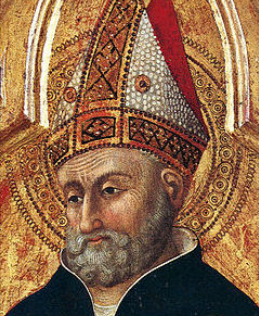
The philosophers who wished us to have the gods for our friends rank the friendship of the holy angels in the fourth circle of society, advancing now from the three circles of society on earth to the universe, and embracing heaven itself. And in this friendship we have indeed no fear that the angels will grieve us by their death or deterioration. But as we cannot mingle with them as familiarly as with men (which itself is one of the grievances of this life), and as Satan, as we read, sometimes transforms himself into an angel of light, to tempt those whom it is necessary to discipline, or just to deceive, there is great need of God's mercy to preserve us from making friends of demons in disguise, while we fancy we have good angels for our friends; for the astuteness and deceitfulness of these wicked spirits is equalled by their hurtfulness.
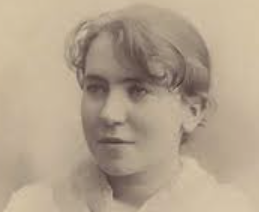
What is patriotism? Is it love of one's birthplace, the place of childhood's recollections and hopes, dreams and aspirations? Is it the place where, in childlike naïveté, we would watch the passing clouds, and wonder why we, too, could not float so swiftly? The place where we would count the milliard glittering stars, terror-stricken lest each one "an eye should be," piercing the very depths of our little souls?
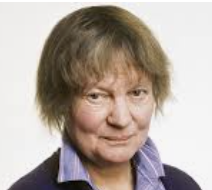
Love is the extremely difficult realisation that something other than oneself is real. Love, and so art and morals, is the discovery of reality.
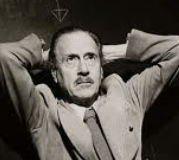
The unformulated message of an assembly of news items from every quarter of the globe is that the world today is one city. All war is civil war. All suffering is our own.
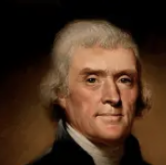
Some have made the love of God the foundation of morality. This, too, is but a branch of our moral duties, which are generally divided into duties to God and duties to man. If we did a good act merely from the love of God and a belief that it is pleasing to Him, whence arises the morality of the Atheist? It is idle to say, as some do, that no such being exists. We have the same evidence of the fact as of most of those we act on, to-wit: their own affirmations, and their reasonings in support of them. I have observed, indeed, generally, that while in protestant countries the defections from the Platonic Christianity of the priests is to Deism, in catholic countries they are to Atheism. Diderot, D'Alembert, D'Holbach, Condorcet, are known to have been among the most virtuous of men. Their virtue, then, must have had some other foundation than the love of God.
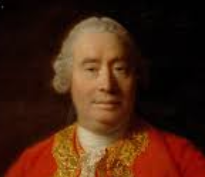
And why should man, added he, pretend to an exemption from the lot of all other animals? The whole earth, believe me, PHILO, is cursed and polluted. A perpetual war is kindled amongst all living creatures. Necessity, hunger, want, stimulate the strong and courageous: Fear, anxiety, terror, agitate the weak and infirm. The first entrance into life gives anguish to the new-born infant and to its wretched parent: Weakness, impotence, distress, attend each stage of that life: and it is at last finished in agony and horror.
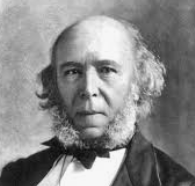
The education of the child must accord both in mode and arrangement with the education of mankind, considered historically. In other words, the genesis of knowledge in the individual, must follow the same course as the genesis of knowledge in the race. In strictness, this principle may be considered as already expressed by implication; since both being processes of evolution, must conform to those same general laws of evolution... and must therefore agree with each other. Nevertheless this particular parallelism is of value for the specific guidance it affords. To M. Comte we believe society owes the enunciation of it; and we may accept this item of his philosophy without at all committing ourselves to the rest.
Some teachers of mankind - as Plato... the first Christians, the orthodox Muslims, and the Buddhists - have gone so far as to repudiate art. ...[They consider it] so highly dangerous in its power to infect people against their wills, that mankind will lose far less by banishing all art than by tolerating each and every art. ...such people were wrong in repudiating all art, for they denied that which cannot be denied - one of the indispensable means of communication, without which mankind could not exist. ...Now there is only fear, lest we should be deprived of any pleasures art can afford, so any type of art is patronized. And I think the last error is much grosser than the first and that its consequences are far more harmful.
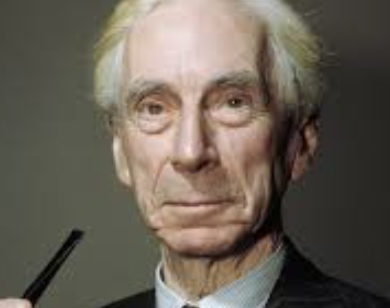
I greatly doubt whether the men who become pirate chiefs are those who are filled with retrospective terror of their fathers, or whether Napoleon, at Austerlitz, really felt that he was getting even with Madame Mère. I know nothing of the mother of Attila, but I rather suspect that she spoilt the little darling, who subsequently found the world irritating because it sometimes resisted his whims.
Concern should drive us into action and not into a depression.
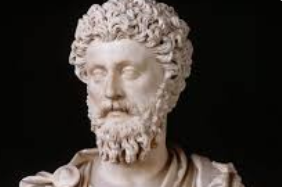
Observe always that everything is the result of a change, and get used to thinking that there is nothing Nature loves so well as to change existing forms and to make new ones like them.
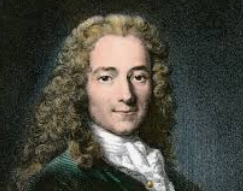
A single part of physics occupies the lives of many men, and often leaves them dying in uncertainty.
Hypnotized by their rear-view mirrors, philosophers and scientists alike tried to focus the figure of man in the old ground of nineteenth-century industrial mechanism and congestion. They failed to bridge from the old figure to the new. It is man who has become both figure and ground via the electrotechnical extension of his awareness. With the extension of his nervous system as a total information environment, man bridges art and nature.
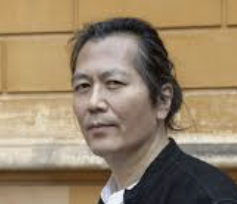
Power turns pure being into a having.
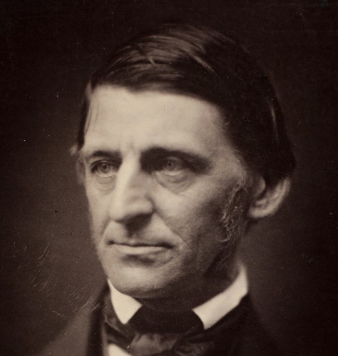
Every man is a new method.
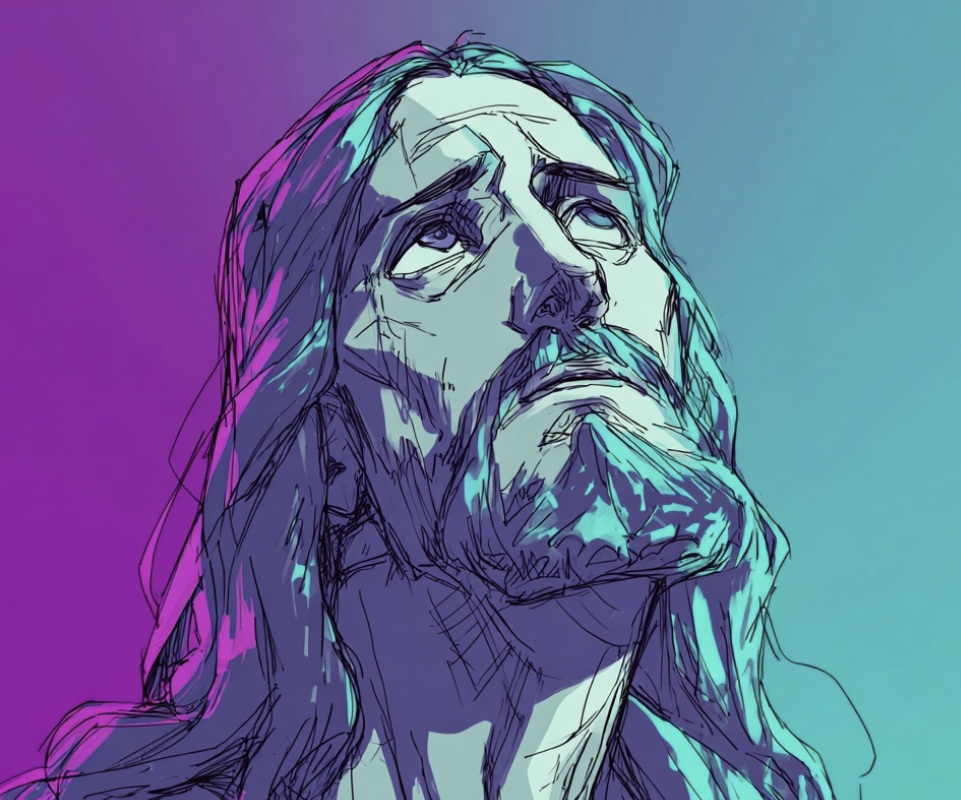
I have cast fire upon the world, and see, I am guarding it until it blazes.

In... "The Education of Children"... Plutarch gives an anecdote of Theocritus, a sophist, as an example of athuroglossos... he is... "a giant in impudence"... strong not because of his reason, or his rhetorical ability... or his ability to pronounce the truth, but only because he is arrogant. ...His fourth trait is... "putting his confidence in bluster." He is confident in thorubos... the noise made by a strong voice, by a scream, a clamor, or uproar. ...The final characteristic ...his confidence in ..."ignorant outspokenness..." ... it lacks mathesis ...-learning or wisdom.
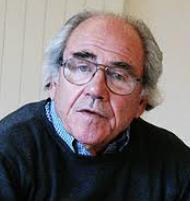
Picturing others and everything which brings you closer to them is futile from the instant that 'communication' can make their presence immediate.
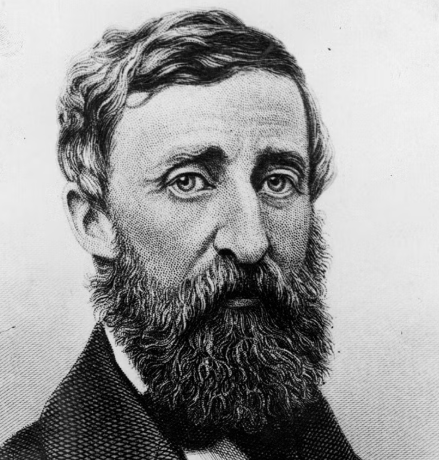
Let me suggest a theme for you: to state to yourself precisely and completely what that walk over the mountains amounted to for you, - returning to this essay again and again, until you are satisfied that all that was important in your experience is in it. Give this good reason to yourself for having gone over the mountains, for mankind is ever going over a mountain. Don't suppose that you can tell it precisely the first dozen times you try, but at 'em again, especially when, after a sufficient pause, you suspect that you are touching the heart or summit of the matter, reiterate your blows there, and account for the mountain to yourself. Not that the story need be long, but it will take a long while to make it short.
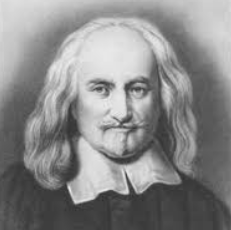
Another doctrine repugnant to Civill Society, is that whatsoever a man does against his Conscience, is Sinne; and it dependeth on the presumption of making himself judge of Good and Evill. For a man's Conscience and his Judgement are the same thing, and as the Judgement, so also the Conscience may be erroneous.
I thank thee, O Father, Lord of heaven and earth, because thou hast hid these things from the wise and prudent, and hast revealed them unto babes. Even so, Father: for so it seemed good in thy sight. All things are delivered unto me of my Father: and no man knoweth the Son, but the Father; neither knoweth any man the Father, save the Son, and he to whomsoever the Son will reveal him. Come unto me, all ye that labour and are heavy laden, and I will give you rest. Take my yoke upon you, and learn of me; for I am meek and lowly in heart: and ye shall find rest unto your souls. For my yoke is easy, and my burden is light.
The case of mere titles is so absurd that it would deserve to be treated only with ridicule were t not for the serious mischief they impose on mankind. The feudal system was a ferocious monster, devouring, where it came, all that the friend of humanity regards with attachment and love. The system of titles appears under a different form. The monster is at length destroyed, and they who followed in his train, and fattened upon the carcasses of those he slew, have stuffed his skin, and, b exhibiting it, hope still to terrify mankind into patient and pusillanimity.

Every central government worships uniformity: uniformity relieves it from inquiry into an infinity of details.
This idea of weapons of mass extermination is utterly horrible and is something which no one with one spark of humanity can tolerate. I will not pretend to obey a government which is organising a mass massacre of mankind.
Quite a heavy weight, a name too quickly famous.

Putin told the Financial Times that liberalism has become an "obsolete" doctrine. While it may be under attack from many quarters today, it is in fact more necessary than ever. It is more necessary because it is fundamentally a means of governing over diversity, and the world is more diverse than it ever has been. Democracy disconnected from liberalism will not protect diversity, because majorities will use their power to repress minorities.
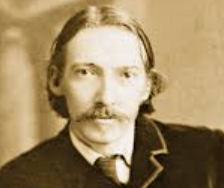
An appeal to his alarm is never a good plan to rid oneself of a spirited young man.
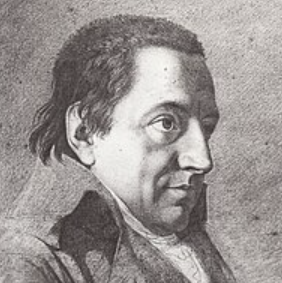
The correct relationship between the higher and lower classes, the appropriate mutual interaction between the two is, as such, the true underlying support on which the improvement of the human species rests. The higher classes constitute the mind of the single large whole of humanity; the lower classes constitute its limbs; the former are the thinking and designing part, the latter the executive part.
It is the act of an ill-instructed man to blame others for his own bad condition; it is the act of one who has begun to be instructed, to lay the blame on himself; and of one whose instruction is completed, neither to blame another, nor himself.
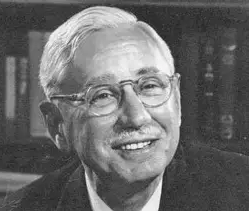
India will teach us the tolerance and gentleness of mature mind, understanding spirit and a unifying, pacifying love for all human beings.
Poems are magic ceremonies of language.
CivilSimian.com created by AxiomaticPanic, CivilSimian, Kalokagathia