I studied this for a few minutes. It's pretty hard to grasp the full message. In the end, I don't totally agree with the framing. Paste it into your robot. Claude did a good job with it....


In any country where talent and virtue produce no advancement, money will be the national god. Its inhabitants will either have to possess money or make others believe that they do. Wealth will be the highest virtue, poverty the greatest vice. Those who have money will display it in every imaginable way. If their ostentation does not exceed their fortune, all will be well. But if their ostentation does exceed their fortune they will ruin themselves. In such a country, the greatest fortunes will vanish in the twinkling of an eye. Those who don't have money will ruin themselves with vain efforts to conceal their poverty. That is one kind of affluence: the outward sign of wealth for a small number, the mask of poverty for the majority, and a source of corruption for all.
I recall an endless desert of infinite and flaming matter. I am burning! I pass through immeasurable, unorganized time, completely done, despairing, crying in the wilderness. And slowly the flame subsides, the womb of matter grows cool, the stone comes alive, breaks open, and a small green leaf uncurls into the air, trembling. It clutches the soil, steadies itself, raises its head and hands, grasps the air, the water, the light, and sucks at the Universe.
Who consciously throws himself into the water or onto the knife?
There is one mistake we got to avoid, and that is the mistake of supposing that if you simulate it, you duplicate it. This is a deep mistake embedded in our popular culture - that simulation is equivalent to duplication, but of course it isn't. A perfect simulation of the brain - say, on a computer - would no longer thereby be conscious than a perfect simulation of a rainstorm on a weather-predicting computer will leave us all wet.
'Intuitive' is opposed to 'discursive' reason. In intuition, we obtain our conclusions by dwelling upon 'one' aspect of the fundamental Idea; in discursive reasoning, we combine several aspects of the Idea
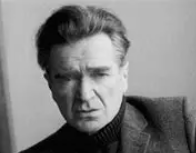
Irons and the unbreathable air of this world strip us of everything, except the freedom to kill ourselves; and this freedom grants us a strength and pride to triumph over the loads which overwhelm us.
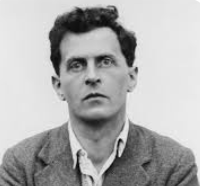
The difficulty in philosophy is to say no more than we know.
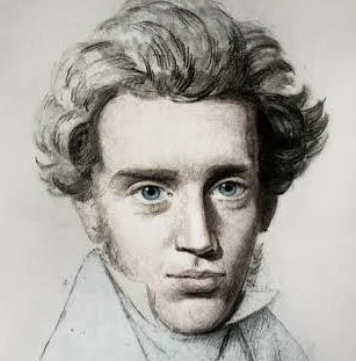
It occurs to me that artists go forward by going backward, something which I have nothing against intrinsically when it is a reproduced retreat - as is the case with the better artists. But it does not seem right that they stop with the historical themes already given and, so to speak, think that only these are suitable for poetic treatment, because these particular themes, which intrinsically are no more poetic than others, are now again animated and inspirited by a great poetic nature. In this case the artists advance by marching on the spot. - Why are modern heroes and the like not just as poetic? Is it because there is so much emphasis on clothing the content in order that the formal aspect can be all the more finished?
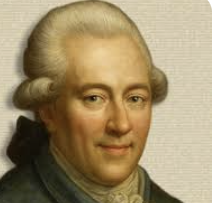
It is hardly to be believed how spiritual reflections when mixed with a little physics can hold people's attention and give them a livelier idea of God than do the often ill-applied examples of his wrath.
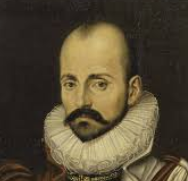
Death, they say, acquits us of all obligations.
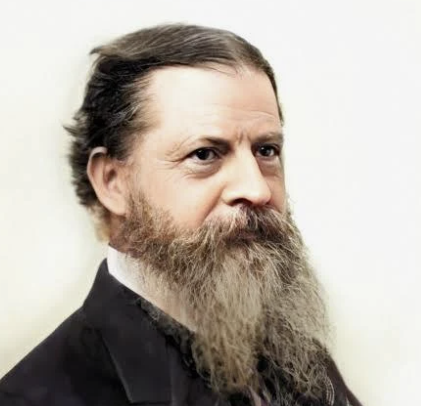
Philosophy, as I understand the word, is a positive theoretical science, and a science in an early stage of development. As such it has no more to do with belief than any other science. Indeed, I am bound to confess that it is at present in so unsettled a condition, that if the ordinary theorems of molecular physics and of archaeology are but the ghosts of beliefs, then to my mind, the doctrines of the philosophers are little better than the ghosts of ghosts. I know this is an extremely heretical opinion.
There is not a truth existing which I fear or would wish unknown to the whole world.
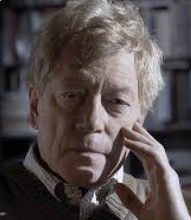
We do not merely study the past: we inherit it, and inheritance brings with it not only the rights of ownership, but the duties of trusteeship. Things fought for and died for should not be idly squandered. For they are the property of others, who are not yet born.
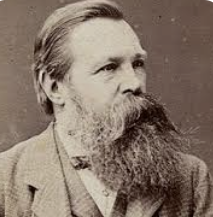
Communism is the doctrine of the conditions of the liberation of the proletariat.
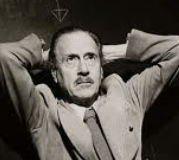
The ways of thinking implanted by electronic culture are very different from those fostered by print culture. Since the Renaissance most methods and procedures have strongly tended towards stress on the visual organization of knowledge.
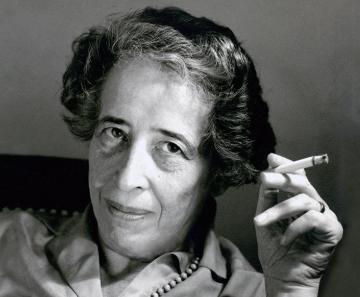
Totalitarianism in power invariably replaces all first-rate talents, regardless of their sympathies, with those crackpots and fools whose lack of intelligence and creativity is still the best guarantee of their loyalty.
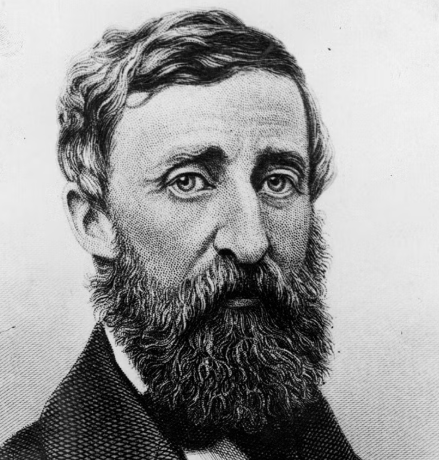
We are not that we are, nor do we treat or esteem each other for such, but for that we are capable of being.
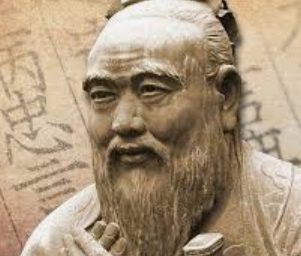
Perfect is the virtue which is according to the Mean! Rare have they long been among the people, who could practice it!
For what is it that everyone is seeking? To live securely, to be happy, to do everything as they wish to do, not to be hindered, not to be subject to compulsion.
We don't need fossils - the case for evolution is watertight without them; so it is paradoxical to use gaps in the fossil record as though they were evidence against evolution.
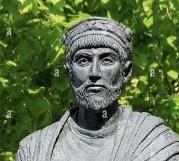
Let us not admit discourses by Epicureans or Pyrrhonists - though indeed the gods have already in their wisdom destroyed their works, so that most of their books are no longer available. Nevertheless, there is no reason why I should not, by way of example, mention these works too, to show what sort of discourses priests must especially avoid; and if such discourses, then much more must they avoid such thoughts.
But suppose we were to teach creationism. What would be the content of the teaching? Merely that a creator formed the universe and all species of life ready-made? Nothing more? No details?
Men have superior strength of body; but were it not for mistaken notions of beauty, women would acquire sufficient to enable them to earn their own subsistence, the true definitions of independence; and to bear those bodily inconveniences and exertions that are requisite to strengthen the mind. Let us then, by being allowed to take the same exercise as boys, not only during infancy, but youth, arrive at perfection of body, that we may know how far the nation superiority of man extends . For what reason or virtue can be expected from a creature when the seed-time of life is neglected? None; did not the winds of heaven casually scatter many useful seeds in fallow ground.
In this third period (as it may be termed) of my mental progress, which now went hand in hand with hers, my opinions gained equally in breadth and depth, I understood more things, and those which I had understood before, I now understood more thoroughly. I had now completely turned back from what there had been of excess in my reaction against Benthamism. I had, at the height of that reaction, certainly become much more indulgent to the common opinions of society and the world, and more willing to be content with seconding the superficial improvement which had begun to take place in those common opinions, than became one whose convictions on so many points, differed fundamentally from them. I was much more inclined, than I can now approve, to put in abeyance the more decidedly heretical part of my opinions, which I now look upon as almost the only ones, the assertion of which tends in any way to regenerate society.
Attractions take place between bodies, affinities between the particles of a body. The former may be compared to the alliances of states, the latter to the ties of family.
Our principles fix what our life stands for, our aims create the light our life is bathed in, and our rationality, both individual and coordinate, defines and symbolizes the distance we have come from mere animality. It is by these means that our lives come to more than what they instrumentally yield. And by meaning more, our lives yield more.
Acquire the contemplative way of seeing how all things change into one another, and constantly attend to it, and exercise thyself about this part [of philosophy]. For nothing is so much adapted to produce magnanimity. ...But as to what any man shall say or think about him, or do against him, he never even thinks of it, being himself contented with these two things: with acting justly in what he now does, and being satisfied with what is now assigned to him; and he lays aside all distracting and busy pursuits, and desires nothing else than to accomplish the straight course through the law, and by accomplishing the straight course to follow God.
All writers, not ours alone but foreigners also, who have sought to represent Absolute Beauty, were unequal to the task, for it is an infinitely difficult one. The beautiful is the ideal ; but ideals, with us as in civilized Europe, have long been wavering. There is in the world only one figure of absolute beauty: Christ. That infinitely lovely figure is, as a matter of course, an infinite marvel.

It is the sphere farthest removed from the concreteness of society which may show most clearly the extent of the conquest of thought by society.
The majority of mankind and people who lack refinement conceive it to be pleasure, and hence they approve a life of sensual enjoyment.
As for types like my own, obscurely motivated by the conviction that our existence was worthless if we didn't make a turning point of it, we were assigned to the humanities, to poetry, philosophy, painting - the nursery games of humankind, which had to be left behind when the age of science began. The humanities would be called upon to choose a wallpaper for the crypt, as the end drew near.

You could send your soul after the good you had expected, instead of turning it to the good you had got. You could refuse the real good; you could make the real fruit taste insipid by thinking of the other.
Let us not pretend to doubt in philosophy what we do not doubt in our hearts.
There is no witness so dreadful, no accuser so terrible as the conscience that dwells in the heart of every man.
Every word is an Ark of the Covenant around which we dance and shudder, divining God to be its dreadful inhabitant. You shall never be able to establish in words that you live in ecstasy. But struggle unceasingly to establish it in words. Battle with myths, with comparisons, with allegories, with rare and common words, with exclamations and rhymes, to embody it in flesh, to transfix it! God, the Great Ecstatic, works in the same way. He speaks and struggles to speak in every way He can, with seas and with fires, with colors, with wings, with horns, with claws, with constellations and butterflies, that he may establish His ecstasy. Like every other living thing, I also am in the center of the Cosmic whirlpool.
The Bank of the United States... is one of the most deadly hostility existing, against the principles and form of our Constitution... An institution like this, penetrating by its branches every part of the Union, acting by command and in phalanx, may, in a critical moment, upset the government. I deem no government safe which is under the vassalage of any self-constituted authorities, or any other authority than that of the nation, or its regular functionaries. What an obstruction could not this bank of the United States, with all its branch banks, be in time of war! It might dictate to us the peace we should accept, or withdraw its aids. Ought we then to give further growth to an institution so powerful, so hostile?
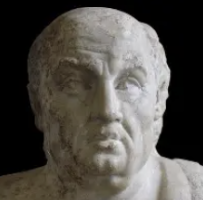
Show me that the good in life does not depend upon life's length, but upon the use we make of it; also, that it is possible, or rather usual, for a man who has lived long to have lived too little. Say to me when I lie down to sleep: "You may not wake again!" And when I have waked: "You may not go to sleep again!" Say to me when I go forth from my house: "You may not return!" And when I return: "You may never go forth again!"

This Burns appeared under every disadvantage: uninstructed, poor, born only to hard manual toil; and writing, when it came to that, in a rustic special dialect, known only to a small province of the country he lived in. Had he written, even what he did write, in the general language of England, I doubt not he had already become universally recognized as being, or capable to be, one of our greatest men.
What distinct meaning can attach to saying that an idea in the past in any way affects an idea in the future, from which it is completely detached?
What is called politics is comparatively something so superficial and inhuman, that, practically, I have never fairly recognized that it concerns me at all. The newspapers, I perceive, devote some of their columns specially to politics or government without charge; and this, one would say, is all that saves it; but, as I love literature, and, to some extent, the truth also, I never read those columns at any rate. I do not wish to blunt my sense of right so much.
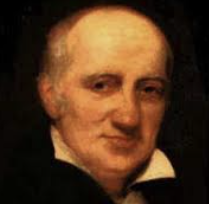
Privilege is a regulation rendering a few men, and those only, by the accident of their birth, eligible to certain situations. It kills all liberal ambition in the rest of mankind, by opposing to it an apparently insurmountable bar. It diminishes it in the favored class itself, by showing them the principal qualification as indefeasibly theirs. Privilege entitles a favored few to engross to themselves gratifications which the system of the universe left at large to all her sons; it puts into the hands of those few the means of oppression against the rest of their species; it fill them witth vain-glory, and affords them every incitement to insolence and a lofty disregard to the feeling and interests of others.
The abolition of the market means not only that the consumers-that is all members of society-are robbed of virtually all choice of consumption and all influence over production; it also means that the information and communication are monopolized by the State, as they too need a vast material base in order to operate. The abolition of the market means, then, that both material and intellectual assets would be totally rationed. To say nothing of the inefficiency of production convincingly demonstrated in the history of communism, this economy requires an omnipotent police state. Briefly: the abolition of the market means a gulag society.
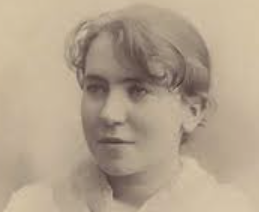
I do not mean to deny the biologic, physiologic, or psychologic factors in creating crime; but there is hardly an advanced criminologist who will not concede that the social and economic influences are the most relentless, the most poisonous germs of crime.
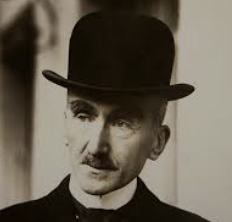
Religion is to mysticism what popularization is to science. What the mystic finds waiting for him, then, is a humanity which has been prepared to listen to his message by other mystics invisible and present in the religion which is actually taught. Indeed his mysticism itself is imbued with this religion, for such was its starting point. His theology will generally conform to that of the theologians. His intelligence and his imagination will use the teachings of the theologians to express in words what he experiences, and in material images what he sees spiritually. And this he can do easily, since theology has tapped that very current whose source is the mystical. Thus his mysticism is served by religion, against the day when religion becomes enriched by his mysticism. This explains the primary mission which he feels to be entrusted to him, that of an intensifier of religious faith.
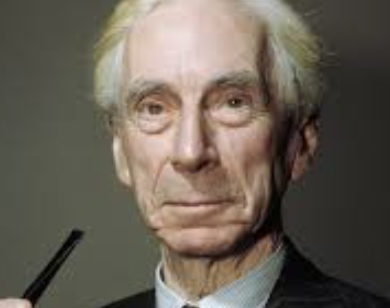
We have to learn to think in a new way. We have to learn to ask ourselves, not what steps can be taken to give military victory to whatever group we prefer, for there no longer are such steps; the question we have to ask ourselves is: what steps can be taken to prevent a military contest of which the issue must be disastrous to all parties?
The three great elements of modern civilization, gunpowder, printing, and the Protestant religion.
'When two equal weights are supported on the middle point between them, the pressure on the fulcrum is equal to the sum of the weights.'
CivilSimian.com created by AxiomaticPanic, CivilSimian, Kalokagathia