
....and she's not talking about "truth" telling people who say rude things and then try to pass it off as being "honest"...


Books are good enough in their own way, but they are a mighty bloodless substitute for life.
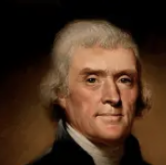
I allow nothing for losses by death, but, on the contrary, shall presently take credit four per cent. per annum, for their increase over and above keeping up their own numbers.

The standard of permanent Christianity must be kept clear in our minds and it is against that standard that we must test all contemporary thought. In fact, we must at all costs not move with the times.

The fault with Hegel lies much deeper than in his glorification of the Prussian monarchy. He is guilty not so much of being servile as of betraying his highest philosophical ideas. His political doctrine surrenders society to nature, freedom to necessity, reason to caprice. And in so doing, it mirrors the destiny of the social order that falls, while in pursuit of its freedom, into a state of nature far below reason.

Hayek watched the interwar collapse with horror, as Keynes did, and shared many of Keynes's liberal values. What he failed to understand is that these values cannot be renewed by applying any formula or doctrine, or by trying to construct an ideal liberal regime in which freedom is insulated from the contingencies of politics.
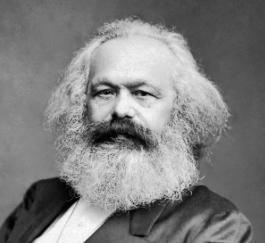
The law of gravity thus asserts itself when a house falls about our ears.
Woe to that nation whose literature is disturbed by the intervention of power. Because that is not just a violation against "freedom of print", it is the closing down of the heart of the nation, a slashing to pieces of its memory. The nation ceases to be mindful of itself, it is deprived of its spiritual unity, and despite a supposedly common language, compatriots suddenly cease to understand one another Woe to that nation whose literature is cut short by the intrusion of force. This is not merely interference with freedom of the press but the sealing up of a nation's heart, the excision of its memory.
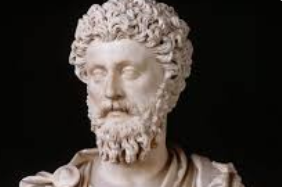
Death hangs over thee: whilst yet thou livest, whilst thou mayest, be good.
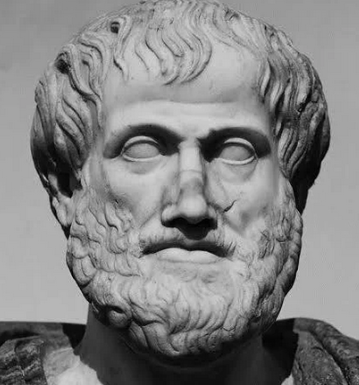
Every art, and every system, and in like manner every action and purpose aims, it is thought, at some good; for which reason a common and by no means a bad description of the good is, that at which all things aim.
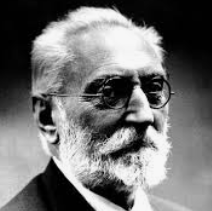
Suffering is a spiritual thing. It is the most immediate revelation of consciousness, and it may be that our body was given us simply in order that suffering might be enabled to manifest itself. A man who had never known suffering, either in greater or less degree, would scarcely possess consciousness of himself. The child first cries at birth when the air, entering into his lungs and limiting him, seems to say to him: You have to breathe me in order to live!
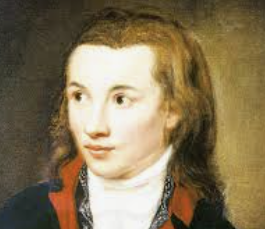
Morality must be the heart of our existence, if it is to be what it wants to be for us. ... The highest form of philosophy is ethics. Thus all philosophy begins with "I am." The highest statement of cognition must be an expression of that fact which is the means and ground for all cognition, namely, the goal of the I.
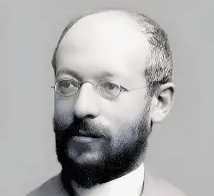
The brutality of a man purely motivated by monetary considerations ... often does not appear to him at all as a moral delinquency, since he is aware only of a rigorously logical behavior, which draws the objective consequences of the situation.
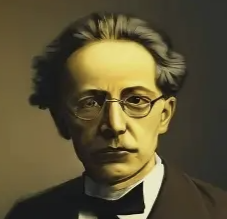
If religion has put forward the proposition that we are all of us sinners, I set another against it: we are all of us perfect! Because, in each moment, we are all we can be, and never need to be more.
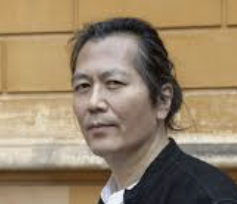
If life is deprived of any meaningful closure, it will be ended in non-time.
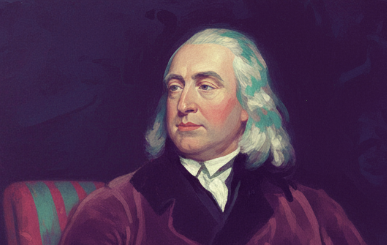
I am at heart more of a United-States-man than an Englishman.
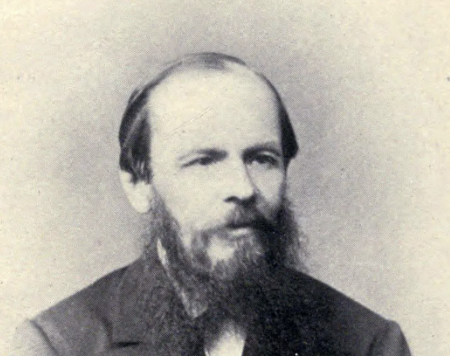
There is no sin, and there can be no sin on all the earth, which the Lord will not forgive to the truly repentant! Man cannot commit a sin so great as to exhaust the infinite love of God. Can there be a sin which could exceed the love of God?
Tell me to what you pay attention and I will tell you who you are.
The cause of anger is the belief that we are injured; this belief, therefore, should not be lightly entertained. We ought not to fly into a rage even when the injury appears to be open and distinct: for some false things bear the semblance of truth. We should always allow some time to elapse, for time discloses the truth.
Humanity is such a lump of mud, each one of us is such a lump of mud. What is our duty? To struggle so that a small flower may blossom from the dunghill of our flesh and mind. Out of things and flesh, out of hunger, out of fear, out of virtue and sin, struggle continually to create God.
It was in the reign of Charles II that they obtained the noble distinction of being exempted from giving their testimony on oath in a court of justice, and being believed on their bare affirmation. On this occasion the chancellor, who was a man of wit, spoke to them as follows: "Friends, Jupiter one day ordered that all the beasts of burden should repair to be shod. The asses represented that their laws would not allow them to submit to that operation. 'Very well,' said Jupiter; 'then you shall not be shod; but the first false step you make, you may depend upon being severely drubbed.'"
It has always been denied by the republican party in this country, that the Constitution had given the power of incorporation to Congress. On the establishment of the Bank of the United States, this was the great ground on which that establishment was combated; and the party prevailing supported it only on the argument of its being an incident to the power given them for raising money.
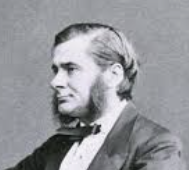
The consciousness of brutes would appear to be related to the mechanism of their body simply as a collateral product of its working, and to be as completely without any power of modifying that working as the steam-whistle which accompanies the work of a locomotive engine is without influence upon its machinery. Their volition, if they have any, is an emotion indicative of physical changes, not a cause of such changes.
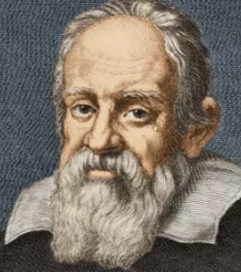
If you could see the earth illuminated when you were in a place as dark as night, it would look to you more splendid than the moon.
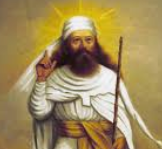
In forming a store of good works thou shouldst be diligent, so that it may come to thy assistance among the spirits.
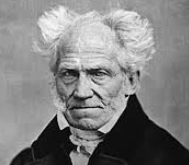
The auspices for philosophy are bad if, when proceeding ostensibly on the investigation of truth, we start saying farewell to all uprightness, honesty and sincerity, and are intent only on passing ourselves off for what we are not. We then assume, like those three sophists [Fichte, Schelling and Hegel], first a false pathos, then an affected and lofty earnestness, then an air of infinite superiority, in order to impose where we despair of ever being able to convince.

Power is the near neighbour of necessity.
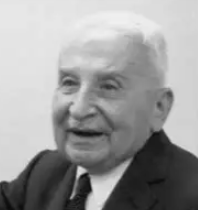
...racial hatred is not a natural phenomenon innate in man. It is the product of ideologies. But even if such a thing as a natural and inborn hatred between various races existed, it would not render social cooperation futile and would not invalidate Ricardo's theory of association. Social cooperation has nothing to do with personal love or with a general commandment to love one another. People do not cooperate under the division of labor because they love or should love one another. They cooperate because this best serves their own interests. Neither love nor charity nor any other sympathetic sentiments but rightly understood selfishness is what originally impelled man to adjust himself to the requirements of society, to respect the rights and freedoms of his fellow men and to substitute peaceful collaboration for enmity and conflict.
The earth belongs to the living, not to the dead.
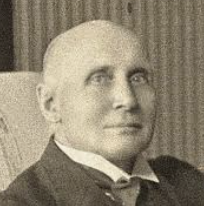
The mentality of mankind and the language of mankind created each other. If we like to assume the rise of language as a given fact, then it is not going too far to say that the souls of men are the gift from language to mankind. The account of the sixth day should be written: He gave them speech, and they became souls.
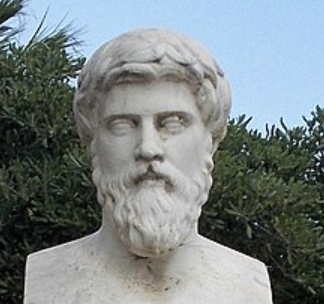
About Pontus there are some creatures of such an extempore being that the whole term of their life is confined within the space of a day; for they are brought forth in the morning, are in the prime of their existence at noon, grow old at night, and then die.
Happiness is the proof that time can accommodate eternity.

Who Rebels? Who rises in arms? Rarely the slave, but almost always the oppressor turned slave.
Government spending cannot create additional jobs. If the government provides the funds required by taxing the citizens or by borrowing from the public, it abolishes on the one hand as many jobs as it creates on the other. If government spending is financed by borrowing from the commercial banks, it means credit expansion and inflation. If in the course of such an inflation the rise in commodity prices exceeds the rise in nominal wage rates, unemployment will drop. But what makes unemployment shrink is precisely the fact that real wage rates are falling.
That mysterious independent variable of political calculation, Public Opinion.
All eyes are opened, or opening, to the rights of man. The general spread of the light of science has already laid open to every view the palpable truth, that the mass of mankind has not been born with saddles on their backs, nor a favored few booted and spurred, ready to ride them legitimately, by the grace of God. These are grounds of hope for others. For ourselves, let the annual return of this day forever refresh our recollections of these rights, and an undiminished devotion to them.
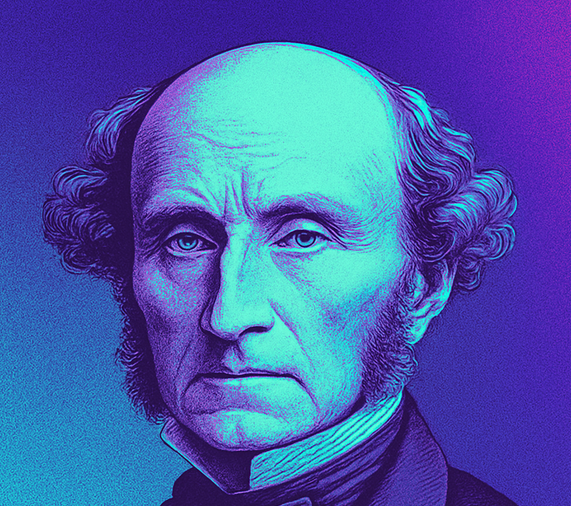
I frequently asked myself, if I could, or if I was bound to go on living, when life must be passed in this manner. I generally answered to myself, that I did not think I could possibly bear it beyond a year.
We know nothing of tomorrow; our business is to be good and happy today.
In doing good, we are generally cold, and languid, and sluggish; and of all things afraid of being too much in the right. But the works of malice and injustice are quite in another style. They are finished with a bold, masterly hand; touched as they are with the spirit of those vehement passions that call forth all our energies, whenever we oppress and persecute.
If the press was to be free, nothing would be so important as precisely its liberation from every coercion that could be put on it in the name of a law. And, that it might come to that, I my own self should have to have absolved myself from obedience to the law.
An intuitionist conception of justice is, one might say, but half a conception.
Man is the creature of circumstances.
All men are almost led to believe not of proof, but by attraction. This way is base, ignoble, and irrelevant; every one therefore disavows it. Each one professes to believe and even to love nothing but what he knows to be worthy of belief and love.

An art that heals and protects its subject is a geography of scars.
The Orient that appears in Orientalism, then, is a system of representations framed by a whole set of forces that brought the Orient into Western learning, Western consciousness, and later, Western empire. ... The Orient is the stage on which the whole East is confined. On this stage will appear the figures whose role it is to represent the larger whole from which they emanate. The Orient then seems to be, not an unlimited extension beyond the familiar European world, but rather a closed field, a theatrical stage affixed to Europe.
CivilSimian.com created by AxiomaticPanic, CivilSimian, Kalokagathia