


5 months 2 weeks ago
The State legislatures should be immediately urged to relinquish the right of establishing banks of discount. Most of them will comply, on patriotic principles, under the convictions of the moment; and the non-complying may be crowded into concurrence by legitimate devices.
▼
Source
source
Letter to Thomas Cooper, 1814. ME 14:190


9 months 1 week ago
If it is in our power to prevent something bad from happening, without thereby sacrificing anything of comparable moral importance, we ought, morally, to do it.
9 months 3 weeks ago
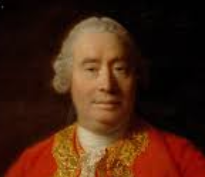
Tis evident, that sympathy, or the communication of passions, takes place among animals, no less than among men. Fear, anger, courage and other affections are frequently communicated from one animal to another [...] And 'tis remarkable, that tho' almost all animals use in play the same member, and nearly the same action as in fighting; a lion, a tyger, a cat their paws; an ox his homs; a dog his teeth; a horse his heels: Yet they most carefully avoid harming their companion, even tho' they have nothing to fear from his resentment; which is an evident proof of the sense brutes have of each other's pain and pleasure.
▼
Source
source
Part 2, Section 12
7 months 2 weeks ago
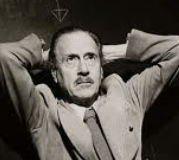
After childhood, the senses specialize via the channels of dominant technologies and social weaponries.
▼
Source
source
Letter to The Listener October 1971, Letters of Marshall McLuhan (1987), p. 443
6 months 2 days ago
Press on, therefore, as you have begun; perhaps you will be led to perfection, or to a point which you alone understand is still short of perfection.

9 months 2 weeks ago
So monstrous is the making and keeping them slaves at all, abstracted from the barbarous usage they suffer, and the many evils attending the practice; as selling husbands away from wives, children from parents, and from each other, in violation of sacred and natural ties; and opening the way for adulteries, incests, and many shocking consequences, for all of which the guilty Masters must answer to the final Judge.
8 months 1 week ago
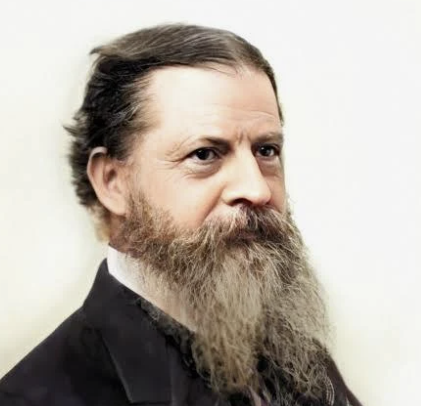
As the mathematics are now understood, each branch - or, if you please, each problem, - is but the study of the relations of a collection of connected objects, without parts, without any distinctive characters, except their names or designating letters. These objects are commonly called points; but to remove all notion of space relations, it may be better to name them monads. The relations between these points are mere complications of two different kinds of elementary relations, which may be termed immediate connection and immediate non-connection. All the monads except as serve as intermediaries for the connections have distinctive designations.
▼
Source
source
p. 268
8 months 2 weeks ago
A trade begun with savage war, prosecuted with unheard of cruelty, continued during the mid passage with the most loathsome imprisonment, and ending in perpetual exile and unremitting slavery, was a trade so horrid in all its circumstances, that it was impossible a single argument could be adduced in its favour. On the score of prudence nothing could be said in defence of it, nor could it be justified by necessity, and no case of inhumanity could be justified, but upon necessity; but no such necessity could be made out strong enough to bear out such a traffick. It was the duty of that House, therefore, to put an end to it. If it were said, that the interest of individuals required that it should continue, that argument ought not to be listened to.
▼
Source
source
Speech in the House of Commons against the slave trade (12 May 1789), quoted in The Parliamentary History of England, From the Earliest Period to the Year 1803, Vol. XXVIII (1816), columns 68-69
9 months 3 weeks ago
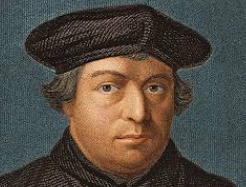
In particular, at this point also urge governing authorities and parents to rule well and to send their children to school. Point out how they are obliged to do so and what a damnable sin they commit if they do not, for thereby, as the worst enemies of God and humanity, they overthrow and lay waste both the kingdom of God and the kingdom of the world. Explain very clearly what kind of horrible damage they do when they do not help to train children as pastors, preachers, civil servants, etc., and tell them that God will punish them dreadfully for this. For in our day and age it is necessary to preach about these things. The extent to which parents and governing authorities are now sinning in these matters defies description. The devil, too, intends to do something horrible in all this.
▼
Source
source
Foreword to the small catechismus, as quoted in the Preface, The Book of Concord: The Confessions of the Evangelical Lutheran Church (2000) by Robert Kolb and Timothy J. Wengert, p. 19
6 months 1 week ago
Let us pardon him his hope of a vain apocalypse, and of a second coming in great triumph upon the clouds of heaven. Perhaps these were the errors of others rather than his own; and if it be true that he himself shared the general illusion, what matters it, since his dream rendered him strong against death, and sustained him in a struggle to which he might otherwise have been unequal?
▼
Source
source
Ch. 17.
9 months 2 weeks ago
The title wise is, for the most part, falsely applied. How can one be a wise man, if he does not know any better how to live than other men? - if he is only more cunning and intellectually subtle?
▼
Source
source
p. 487
10 months 2 weeks ago
When you are reading God's Word, it is not the obscure passages that bind you but what you understand, and with that you comply at once. If you understood only one single passage in all of Holy Scripture, well, then you must do that first of all, but you do not first have to sit down and ponder the obscure passages.
10 months ago
As soon as the soul has been made to perceive that a thing can conduct it to that which it loves supremely, it must inevitably embrace it with joy.


6 months 1 week ago
What has philosophy got to do with measuring anything? It's the mathematicians you have to trust, and they measure the skies like we measure a field.
▼
Source
source
Matteo in Concerning the New Star

8 months 1 week ago
Ye have heard that it hath been said, Thou shalt love thy neighbour, and hate thine enemy. But I say unto you, Love your enemies, bless them that curse you, do good to them that hate you, and pray for them which despitefully use you, and persecute you; That ye may be the children of your Father which is in heaven: for he maketh his sun to rise on the evil and on the good, and sendeth rain on the just and on the unjust.
▼
Source
source
Matthew 5:43-45 (KJV)

8 months ago
Emptiness is not a denial of the proper but an affirmation of it.
6 months 2 days ago
Dumb creatures have not human feelings, but have certain impulses which resemble them: for if it were not so, if they could feel love and hate, they would likewise be capable of friendship and enmity, of disagreement and agreement. Some traces of these qualities exist even in them, though properly all of them, whether good or bad, belong to the human breast alone.
5 months 1 week ago
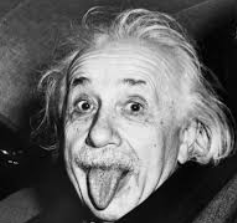
I am happy because I want nothing from anyone. I do not care about money. Decorations, titles or distinctions mean nothing to me. I do not crave praise. The only thing that gives me pleasure, apart from my work, my violin, and my sailboat, is the appreciation of my fellow workers.
7 months 3 days ago
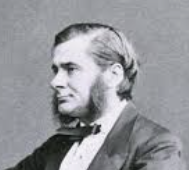
Even purely intellectual progress brings about its revenges. Problems settled in a rough and ready way by rude men, absorbed in action, demand renewed attention and show themselves to be still unread riddles when men have time to think. The beneficent demon, doubt, whose name is Legion and who dwells amongst the tombs of old faiths, enters into mankind and thenceforth refuses to be cast out. Sacred customs, venerable dooms of ancestral wisdom, hallowed by tradition and professing to hold good for all time, are put to the question. Cultured reflection asks for their credentials; judges them by its own standards; finally, gathers those of which it approves into ethical systems, in which the reasoning is rarely much more than a decent pretext for the adoption of foregone conclusions.
7 months 2 weeks ago
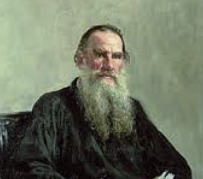
No one has yet added up all the heavy, stress-filled workdays as well as the hundreds, perhaps thousands, of lives that are wasted to produce the world's amusements. It is for this reason that "amusements" are not so amusing.
▼
Source
source
p. 81
5 months 2 weeks ago
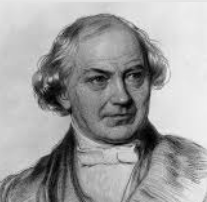
When alterations in technical terms become necessary, it is desirable that the new term should contain in its form some memorial of the old one.
9 months 2 weeks ago
One cannot become a saint when one works sixteen hours a day.
▼
Source
source
Act 5, sc. 2

8 months 1 week ago
What anxiety when one is not sure of one's doubts or wonders: are these actually doubts?
10 months 2 weeks ago
One will rarely err if extreme actions be ascribed to vanity, ordinary actions to habit, and mean actions to fear.
5 months 4 weeks ago
The only way out of today's misery is for people to become worthy of each other's trust.
6 months 1 week ago
It is certain that nature inclines us toward the amorous orgy, just as much as toward the gastronomic orgy, and that while both are blameworthy in the excess, they would become praiseworthy in an order in which they could be equilibrated.
▼
Source
source
Charles Fourier: The Visionary and His World, J. Beecher (1986), p. 310
9 months 3 weeks ago
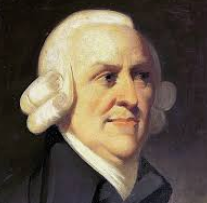
IV. Every tax ought to be contrived as both to take out and to keep out of the pockets of the people as little as possible, over and above what it brings into the public treasury of the state.
▼
Source
source
Chapter II, Part II, p. 893.
9 months 2 weeks ago
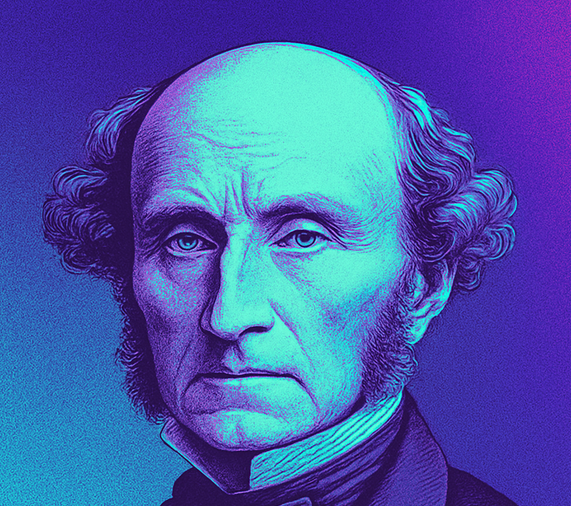
Granted that any practice causes more pain to animals than it gives pleasure to man; is that practice moral or immoral? And if, exactly in proportion as human beings raise their heads out of the slough of selfishness, they do not with one voice answer 'immoral,' let the morality of the principle of utility be for ever condemned.
▼
Source
source
Dr. Whewell on Moral Philosophy (1852), in Dissertations and Discussions: Political, Philosophical, and Historical, vol. 2, London: John W. Parker and son, 1859, p. 485
7 months 2 weeks ago
I don't explain-I explore.
9 months 2 weeks ago
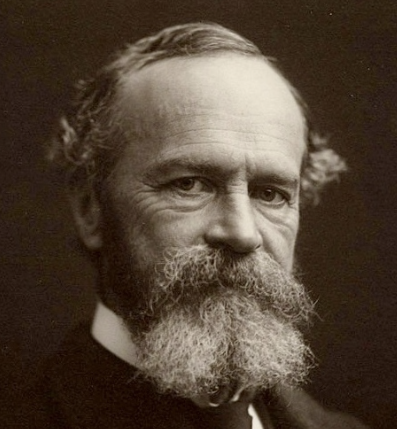
Properly speaking, a man has as many social selves as there are individuals who recognise him.
▼
Source
source
Ch.10


9 months 2 weeks ago
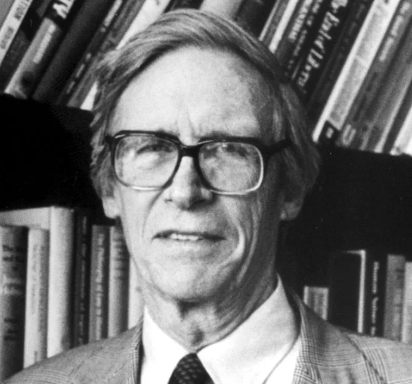
Our concern is solely with the basic structure of society and its major institutions and therefore with the standard cases of social justice.
▼
Source
source
Chapter II, Section 10, pg. 58
7 months 2 weeks ago
Environment is process, not container.
▼
Source
source
(p. 30)
9 months 3 weeks ago
Jews hate the name of Christ and have a secret and innate rancor against the people among whom they live.
▼
Source
source
See Silent Truth by Mark Edwards

10 months 2 weeks ago
Accepting the absurdity of everything around us is one step, a necessary experience: it should not become a dead end. It arouses a revolt that can become fruitful.
5 months 2 weeks ago
The worm stood straight on God's blood-splattered threshold thenand beat his drum, beat it again, and raised his throat:'You've matched all well on earth, wine, women, bread, and song,but why, you Murderer, must you slay our children? Why?'God foamed with rage and raised his sword to pierce that throat,but his old copper sword, my lads, stuck at the bone.Then from his belt the worm drew his black-hilted sword,rushed up and slew that old decrepit god in heaven!And now, my gallant lads - I don't know when or how -that worm's god-slaying sword has fallen into my hands;I swear that from its topmost iron tip the blood still drips!
▼
Source
source
Odysseus' song, Book III, line 424
7 months 2 weeks ago
Does the interiorization of media such as letters alter the ratio among our senses and change mental processes?
▼
Source
source
(p. 28)
8 months 2 weeks ago
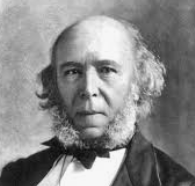
That by any series of changes a protozoon should ever become a mammal, seems to those who are not familiar with zoology, and who have not seen how clear becomes the relationship between the simplest and the most complex forms when intermediate forms are examined, a very grotesque notion. Habitually, looking at things rather in their statical aspect than in their dynamical aspect, they never realize the fact that, by small increments of modification, any amount of modification may in time be generated.
8 months 2 days ago
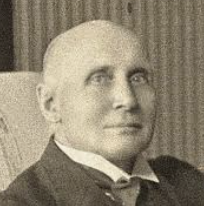
There is a quality of life which lies always beyond the mere fact of life; and when we include the quality in the fact, there is still omitted the quality of the quality.
▼
Source
source
Religion in the Making (February 1926), Lecture II: "Religion and Dogma".
5 months 3 weeks ago
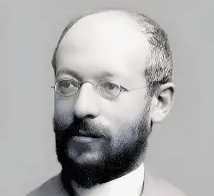
Money expresses all qualitative differences of things in terms of "how much?" Money, with all its colorlessness and indifference, becomes the common denominator of all values; irreparably it hollows out the core of things, their individuality, their specific value, and their incomparability. All things float with equal specific gravity in the constantly moving stream of money. All things lie on the same level and differ from one another only in the size of the area which they cover.

9 months 3 weeks ago
If a workman can conveniently spare those three halfpence, he buys a pot of porter. If he cannot, he contents himself with a pint, and, as a penny saved is a penny got, he thus gains a farthing by his temperance.
▼
Source
source
Chapter II, Part II, Article IV, p. 951.
7 months 2 weeks ago
The attitude of the ruling classes to the laborers is that of a man who has felled his adversary to the earth and holds him down, not so much because he wants to hold him down, as because he knows that if he let him go, even for a second, he would himself be stabbed, for his adversary is infuriated and has a knife in his hand. And therefore, whether their conscience is tender or the reverse, our rich men cannot enjoy the wealth they have filched from the poor as the ancients did who believed in their right to it. Their whole life and all their enjoyments are embittered either by the stings of conscience or by terror.
▼
Source
source
Chapter V, Contradiction Between our Life and our Christian Conscience
CivilSimian.com created by AxiomaticPanic, CivilSimian, Kalokagathia