


9 months 2 weeks ago
These preachers of beauty, which light the world with their admonishing smile.
▼
Source
source
p. 248 (Stars)

9 months 2 weeks ago
God cannot give us a happiness and peace apart from Himself, because it is not there. There is no such thing.
▼
Source
source
Book II, Chapter 3, "The Shocking Alternative"
9 months 2 weeks ago
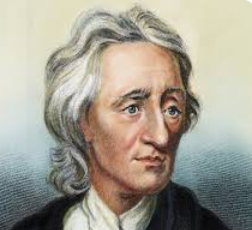
You shall find, that there cannot be a greater spur to the attaining what you would have the eldest learn, and know himself, than to set him upon teaching it his younger brothers and sisters.
▼
Source
source
Sec. 119
5 months 2 weeks ago
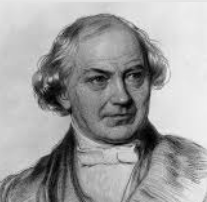
Secondary Qualities are not 'extended' but 'intensive'; their effects are not augmented by addition of parts, but by increased operation of the medium. Hence they are not measured directly, but by 'scales'; not by 'units', but by 'degrees'.
7 months 1 week ago
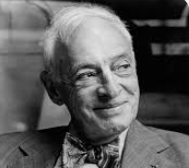
We are all such accidents. We do not make up history and culture. We simply appear, not by our own choice. We make what we can of our condition with the means available. We must accept the mixture as we find it - the impurity of it, the tragedy of it, the hope of it.
▼
Source
source
Great Jewish Short Stories, introduction to the Dell paperback edition
9 months 2 weeks ago
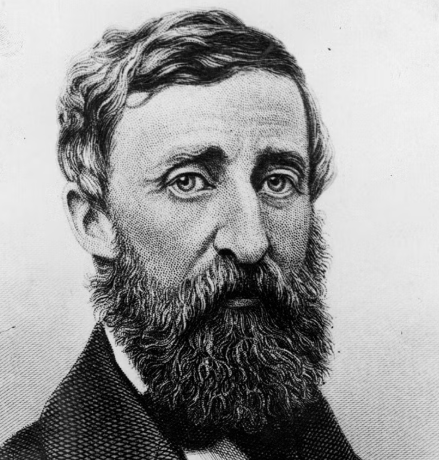
When our life ceases to be inward and private, conversation degenerates into mere gossip. We rarely meet a man who can tell us any news which he has not read in a newspaper, or been told by his neighbor; and, for the most part, the only difference between us and our fellow is, that he has seen the newspaper, or been out to tea, and we have not. In proportion as our inward life fails, we go more constantly and desperately to the post-office.
▼
Source
source
p. 491
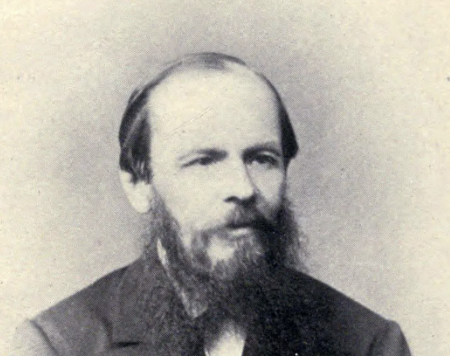
8 months 2 weeks ago
When... in the course of all these thousands of years has man ever acted in accordance with his own interests?
▼
Source
source
Part 1, Chapter 7
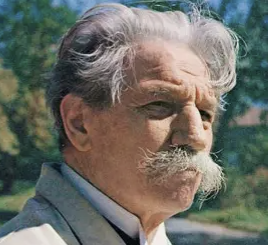
5 months 4 weeks ago
Indian thought has greatly attracted me since in my youth I first became acquainted with it through reading the works of Arthur Schopenhauer. From the very beginning I was convinced that all thought is really concerned with the great problem of how man can attain to spiritual union with infinite Being. My attention was drawn to Indian thought because it is busied with this problem and because by its nature it is mysticism. What I liked about it also was that Indian ethics are concerned with the behaviour of man to all living beings and not merely with his attitude to his fellow-man and to human society.
▼
Source
source
Preface, p. vi

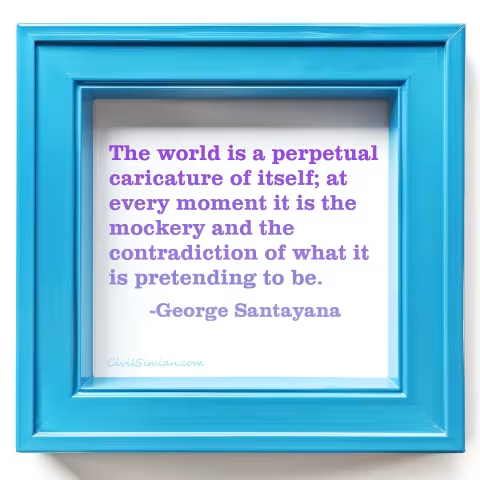
7 months 1 week ago
Scientific and technological progress themselves are value-neutral. They are just very good at doing what they do. If you want to do selfish, greedy, intolerant and violent things, scientific technology will provide you with by far the most efficient way of doing so. But if you want to do good, to solve the world's problems, to progress in the best value-laden sense, once again, there is no better means to those ends than the scientific way.
8 months 2 weeks ago
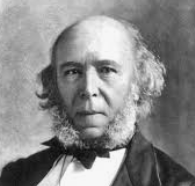
Music must take rank as the highest of the fine arts - as the one which, more than any other, ministers to human welfare.
▼
Source
source
On the Origin and Function of Music
9 months 1 week ago
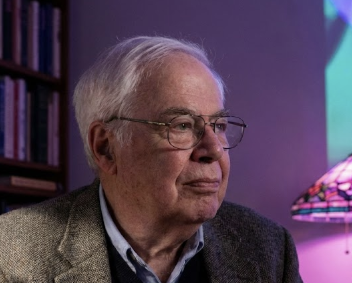
Kripke tries to sober us up by denying that meaning determines reference. Rather, we name things by confronting them and baptising them, not by creating them out of a list of qualities. Names are not, pace Russell, shorthand for such lists. They are not abbreviations for descriptions, but (in Kripke's coinage) 'rigid designators' - that is, they would name the same things in any possible world, including worlds in which their bearers did not have the properties we, in this world, use to identify them.
▼
Source
source
Kripke versus Kant. Lrb.com, september 1980.
5 months 3 weeks ago
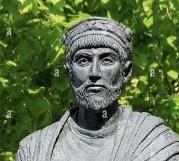
It is my opinion that the present subject interests all: "Whatever breathes, and moves upon the earth," all that are endowed with existence, with a rational soul, and with a mind: but that above all others it interests myself, inasmuch as I am a votary of the Sun.
7 months 2 weeks ago
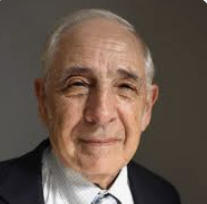
The ascription of an unconscious intentional phenomenon to a system implies that the phenomenon is in principle accessible to consciousness. A statement of the author's "connection principle."
▼
Source
source
"Consciousness, Explanatory Inversion, and Cognitive Science," The Behavioral and Brain Sciences 13, 4 (December 1990): 585-696.
5 months 2 weeks ago
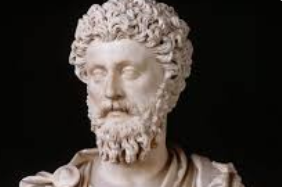
The universal intelligence puts itself in motion for every separate effect... or it puts itself in motion once, and everything else comes by way of a sequence in a manner; or individual elements are the origin of all things. In a word, if there is a god, all is well; and if chance rules, do not thou be governed by it.
▼
Source
source
IX, 28
8 months 1 week ago
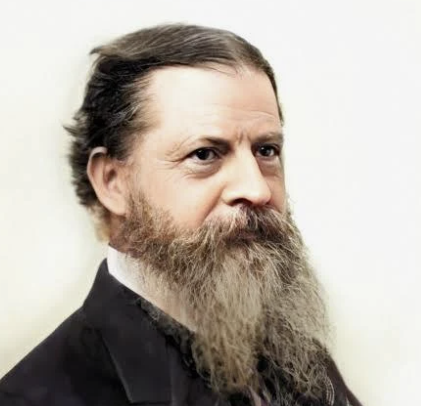
Fourth, this supreme law, which is celestial and living harmony, does not so much as demand that the special ideas shall surrender their peculiar arbitrariness and caprice entirely; for that would be self-destructive. It only requires that they influence and be influenced by one another.

5 months 2 weeks ago
A little patience, and we shall see the reign of witches pass over, their spells dissolve, and the people, recovering their true sight, restore their government to its true principles. It is true that in the meantime we are suffering deeply in spirit, and incurring the horrors of a war and long oppressions of enormous public debt. If the game runs sometimes against us at home we must have patience till luck turns, and then we shall have an opportunity of winning back the principles we have lost, for this is a game where principles are at stake.
▼
Source
source
From a letter to John Taylor (June 1798), after the passage of the Alien and Sedition Acts
5 months 2 weeks ago
There is in the true man of science a desire stronger than the wish to have his beliefs upheld; namely, the desire to have them true.
▼
Source
source
[Lectures and essays (1879), vol. 2, p. 311]

5 months 1 week ago
The leadership has failed. Even so, the leadership can and must be recreated from the masses and out of the masses. The masses are the decisive element, they are the rock on which the final victory of the revolution will be built. The masses were on the heights; they have developed this 'defeat' into one of the historical defeats which are the pride and strength of international socialism. And that is why the future victory will bloom from this 'defeat'. 'Order reigns in Berlin!' You stupid henchmen! Your 'order' is built on sand. Tomorrow the revolution will already 'raise itself with a rattle' and announce with fanfare, to your terror: I was, I am, I will be!
▼
Source
source
"Order reigns in Berlin", Last written words. Collected Works 4
9 months 2 weeks ago
Whoso walketh in solitude, And inhabiteth the wood, Choosing light, wave, rock, and bird, Before the money-loving herd, Into that forester shall pass From these companions power and grace.
▼
Source
source
Wood-notes, no. II, st. 4

10 months 6 days ago
The world is divided into men who have wit and no religion and men who have religion and no wit.
9 months 2 weeks ago
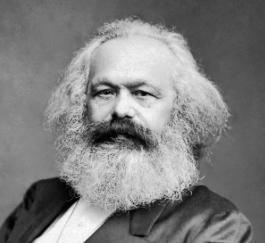
The first premise of all human history is, of course, the existence of living human individuals. Thus the first fact to be established is the physical organisation of these individuals and their consequent relation to the rest of nature.
▼
Source
source
Volume I; Part 1; "Feuerbach. Opposition of the Materialist and Idealist Outlook"; Section A, "Idealism and Materialism".
7 months 3 weeks ago
Reason now gazes above the realm of the dark but warm feelings as the Alpine peaks do above the clouds. They behold the sun more clearly and distinctly, but they are cold and unfruitful.
▼
Source
source
L 50

8 months 1 week ago
Thou hast said: nevertheless I say unto you, Hereafter shall ye see the Son of man sitting on the right hand of power, and coming in the clouds of heaven.
▼
Source
source
26:64 (KJV) Said to Caiaphas, the high priest.
10 months 2 weeks ago
The essential is to cease being free and to obey, in repentance, a greater rogue than oneself. When we are all guilty, that will be democracy.
7 months 4 weeks ago
The sadistic person is as dependent on the submissive person as the latter is on the former; neither can live without the other. The difference is only that the sadistic person commands, exploits, hurts, humiliates, and that the masochistic person is commanded, exploited, hurt, humiliated. This is a considerable difference in a realistic sense; in a deeper emotional sense, the difference is not so great as that which they both have in common: fusion without integrity.
▼
Source
source
Ch. 2

6 months 1 week ago
The liberal world order that emerged, that... has these pragmatic and... moral dimensions has been severely challenged in the last few years, and the sources of this challenge are numerous. One is the rise of overtly authoritarian states like China and Russia. They have consolidated their rule. They seem to be stable internally, and they are increasingly seeking to project their power and influence, their model... across international borders.
▼
Source
source
19:23
8 months 1 week ago
That Marxism should triumph in Russia, where there is no industry, would be the greatest contradiction that Marxism could undergo. But there is no such contradiction, for there is no such triumph. Russia is Marxist more or less as the Germans of the Holy Roman Empire were Romans.
▼
Source
source
Chapter XIV: Who Rules The World?
9 months 3 weeks ago
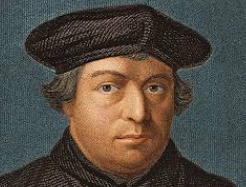
...God commanded in the law [Deut. 22:22-24] that adulterers be stoned . . . The temporal sword and government should therefore still put adulterers to death . . . Where the government is negligent and lax, however, and fails to inflict the death penalty, the adulterer may betake himself to a far country and there remarry if he is unable to remain continent. But it would be better to put him to death, lest a bad example be set . . .
5 months 2 weeks ago
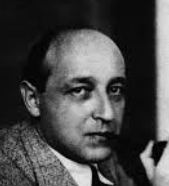
The particular conception of ideology operates primarily with a psychology of interests, while the total conception uses a more formal functional analysis, without any reference to motivations, confining itself to an objective description of the structural differences in minds operating in different social settings. The former assumes that this or that interest is the cause of a given lie or deception. The latter presupposes simply that there is a correspondence between a given social situation and a given perspective, point of view, or apperception mass. In this case, while an analysis of constellations of interests may often be necessary it is not to establish causal connections but to characterize the total situation. Thus interest psychology tends to be displaced by an analysis of the correspondence between the situation to be known and the forms of knowledge.
1 year 1 month ago
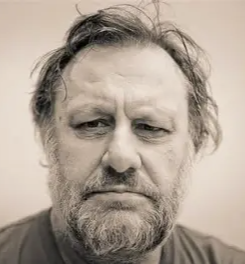
First, [the bourgeoisie] must recognize his own impotence, his incapacity to believe in a sense of history, even if his reason leans towards the truth, the passions and prejudices produced by his class position, prevent him from accepting it. So he should not exert himself with proving the truth of the historical mission of the working class; rather, he should learn to subdue his petty bourgeois passions and prejudices. He should take lessons from those who were once as important as he is now but are ready to risk all for the revolutionary Cause.

6 months 1 week ago
Who is there that can recognize real intellect, and do reverence to it; and discriminate it well from sham intellect, which is so much more abundant, and deserves the reverse of reverence? He that himself has it!-One really human Intellect, invested with command, and charged to reform Downing Street for us, would continually attract real intellect to those regions, and with a divine magnetism search it out from the modest corners where it lies hid. And every new accession of intellect to Downing Street would bring to it benefit only, and would increase such divine attraction in it, the parent of all benefit there and elsewhere!
9 months 5 days ago
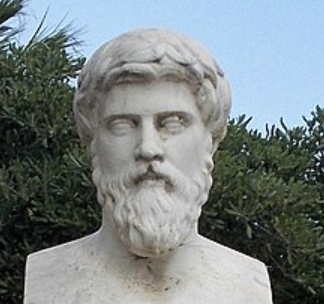
Lysander, when Dionysius sent him two gowns, and bade him choose which he would carry to his daughter, said, "She can choose best," and so took both away with him.
▼
Source
source
Of Lysander
9 months 2 weeks ago
Do not be too timid and squeamish about your actions. All life is an experiment. The more experiments you make the better.
▼
Source
source
November 11, 1842
5 months 1 week ago
One is immediately struck with the obstinacy and rigid consistency with which Lenin and his comrades stuck to this slogan, a slogan which is in sharp contradiction to their otherwise outspoken centralism in politics as well as to the attitude they have assumed towards other democratic principles. Wile they showed a quite cool contempt for the Constituent Assembly, universal suffrage, freedom of press and assemblage, in short for the whole apparatus of basic democratic liberties of the people which, taken all together, constituted the "right of self-determination" inside Russia, they treated the right of self-determination of peoples as a jewel of democratic policy for the sake of which all practical considerations of real criticism had to be stilled.
▼
Source
source
Chapter Three, "Nationalities Question"

8 months ago
Someone has said that it requires less mental effort to condemn than to think. The widespread mental indolence, so prevalent in society, proves this to be only too true. Rather than to go to the bottom of any given idea, to examine into its origin and meaning, most people will either condemn it altogether, or rely on some superficial or prejudicial definition of non-essentials.
8 months ago
Those who have a spark of self-respect left, prefer open defiance, prefer crime to the emaciated, degraded position of poverty.
10 months 2 weeks ago
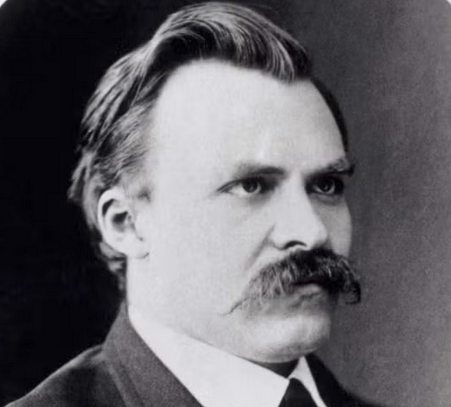
With all great deceivers there is a noteworthy occurrence to which they owe their power. In the actual act of deception... they are overcome by belief in themselves. It is this which then speaks so miraculously and compellingly to those who surround them.
7 months 2 weeks ago
The activity of art is... as important as the activity of language itself, and as universal.
5 months 2 weeks ago
We are firmly convinced, and we act on that conviction, that with nations, as with individuals, our interests, soundly calculated, will ever be found inseparable from our moral duties; and history bears witness to the fact that a just nation is taken on its word, when recourse is had to armaments and wars to bridle others.
6 months 1 week ago
The United States has been in a long term decline, with its political institutions decaying. ...The single source of that decline is ...the pervasive polarization ...within American society that has made the United States unable to meet some of the basic governance challenges that it has faced. The most recent example... has been the COVID pandemic... Wearing a mask, instead of becoming a health measure that people take to protect themselves and their loved ones, becomes as political statement... You don't wear a mask if you're a Trump supporter, and you do... if you're a Democrat. This is... not the way that... coherent nations... meet systemic challenges like a global pandemic.
▼
Source
source
21:57

5 months 2 weeks ago
In the constitution of that rational animal I see no virtue which is opposed to justice, but I see a virtue which is opposed to love of pleasure, and that is temperance.
▼
Source
source
VIII, 39
7 months 3 weeks ago
Even if we consider not words by themselves but rules deciding what words may appropriately be produced in certain contexts - even if we consider, in computer jargon, programs for using words - unless those programs themselves refer to something extra-linguistic there is still no determinate reference that those words possess. This will be a crucial step in the process of reaching the conclusion that the Brain-in-a-Vat Worlders cannot refer to anything external at all (and hence cannot say that they are Brain-in-a-Vat Worlders).
▼
Source
source
Chap. 1 : Brains in a vat
9 months 2 weeks ago
For the world to become philosophic amounts to philosophy's becoming world-order reality; and it means that philosophy, at the same time that it is realized, disappears.
9 months 2 weeks ago
His imperial muse tosses the creation like a bauble from hand to hand to embody any capricious thought that is uppermost in her mind. The remotest spaces of nature are visited, and the farthest sundered things are brought together by a subtle spiritual connection.
▼
Source
source
p. 237
9 months 2 weeks ago
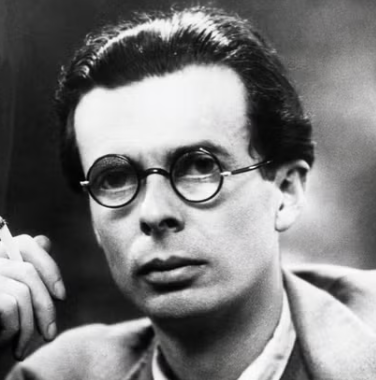
Be gentle with them, Timothy. They want to be free, but they don't know how. Teach them. Reassure them.
▼
Source
source
Reported to be Huxley's last words to Timothy Leary, which Huxley whispered from his deathbed. Quoted in Leary, Timothy (1990) . "Life on a Grounded Space Colony".
5 months 1 week ago
Every legal constitution is the product of a revolution. In the history of classes, revolution is the act of political creation, while legislation is the political expression of the life of a society that has already come into being. Work for reform does not contain its own force independent from revolution. During every historic period, work for reforms is carried on only in the direction given to it by the impetus of the last revolution and continues as long as the impulsion from the last revolution continues to make itself felt. Or, to put it more concretely, in each historic period work for reforms is carried on only in the framework of the social form created by the last revolution. Here is the kernel of the problem.
▼
Source
source
Ch. 8

9 months 1 week ago
Fortune is lavish with her favors, but not to be depended on. Nature on the other hand is self-sufficing, and therefore with her feebler but trustworthy [resources] she wins the greater [meed] of hope.
CivilSimian.com created by AxiomaticPanic, CivilSimian, Kalokagathia