

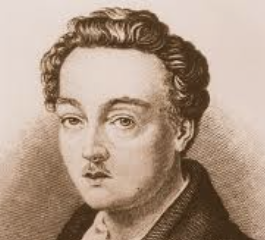
8 months 2 weeks ago
Raise your eyes and count the small gang of your oppressors who are only strong through the blood they suck from you and through your arms which you lend them unwillingly.
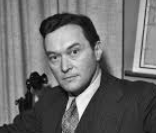
6 months 2 weeks ago
The facts we see depend on where we are placed, and the habits of our eyes.
▼
Source
source
Ch. VI: "Stereotypes", p. 80
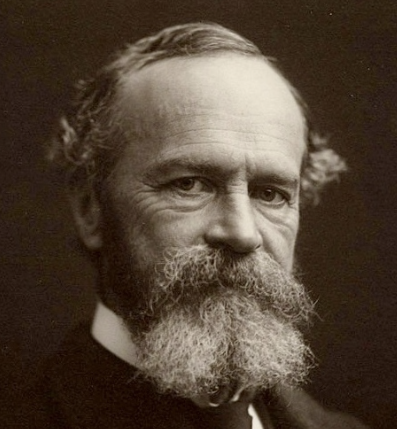
9 months 2 weeks ago
An unlearned carpenter of my acquaintance once said in my hearing: "There is very little difference between one man and another; but what little there is, is very important." This distinction seems to me to go to the root of the matter.
▼
Source
source
"The Importance of Individuals"
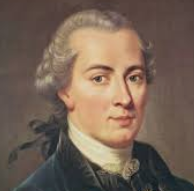
9 months 2 weeks ago
Human freedom is realised in the adoption of humanity as an end in itself, for the one thing that no-one can be compelled to do by another is to adopt a particular end.
▼
Source
source
Part Two : Metaphysical Principles of Virtue

9 months 2 weeks ago
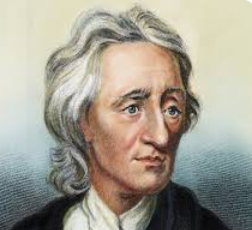
Wherever Law ends, Tyranny begins.
▼
Source
source
Second Treatise of Government, Sec. 202

9 months 1 week ago
In... "The Education of Children"... Plutarch gives an anecdote of Theocritus, a sophist, as an example of athuroglossos... he is... "a giant in impudence"... strong not because of his reason, or his rhetorical ability... or his ability to pronounce the truth, but only because he is arrogant. ...His fourth trait is... "putting his confidence in bluster." He is confident in thorubos... the noise made by a strong voice, by a scream, a clamor, or uproar. ...The final characteristic ...his confidence in ..."ignorant outspokenness..." ... it lacks mathesis ...-learning or wisdom.
▼
Source
source
Ref: Plutarch, "The Education of Children", Moralia (1927) Vol. 1, Tr. Frank Cole Babbit, p. 4, The Loeb Classical Library, Harvard University Press.
7 months 1 week ago
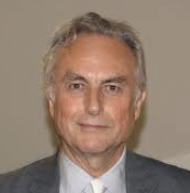
It would be deeply depressing if the only way children could get moral values was from religion. Either from scripture, and God knows we don't want them to get it from scripture, I mean, just look at scripture. Or, from being afraid of God, being intimidated by God. Anybody who is good for only those two reasons is not really being good at all. Why not teach children things like the Golden Rule, do as you would be done by, how would you like it if other children did that to you, so why do you do it to them... I think it's depressing that anybody should suggest that you actually need God in order to be moral. I would hope that our morals come from a better source than that, and therefore they are genuinely moral rather than based on outmoded scripture, or based on fear.
▼
Source
source
BBC,

7 months 3 weeks ago
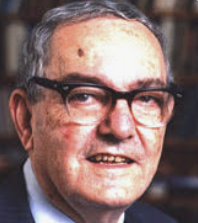
We are organization watchers in our role as citizens. Increasing attention has been fixed in recent years upon the functioning of society's organizations: its large corporations and its governments. Hence this could also be described as a book for Everyman-for it proposes a way of thinking about organizational issues that concern us all.
▼
Source
source
Simon (1975, p. ix); As cited in Stefano Franchi(2006) "Herbert simon, anti-philosopher." Computing and Philosophy. p. 34.

6 months 1 week ago
The highest ensign that men ever met and embraced under, the Cross itself, had no meaning save an accidental extrinsic one.
▼
Source
source
Bk. III, ch. 3.
5 months 1 week ago
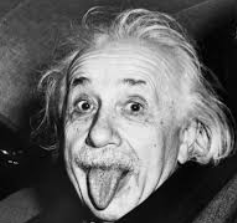
We are inclined to overemphasize the material influences in history. The Russians especially make this mistake. Intellectual values and ethnic influences, tradition and emotional factors are equally important. If this were not the case, Europe would today be a federated state, not a madhouse of nationalism.
8 months 1 week ago
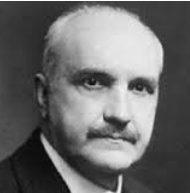
They [the wise spirits of antiquity in the first circle of Dante's Inferno] are condemned, Dante tells us, to no other penalty than to live in desire without hope, a fate appropriate to noble souls with a clear vision of life.
▼
Source
source
Obiter Scripta
8 months 1 week ago
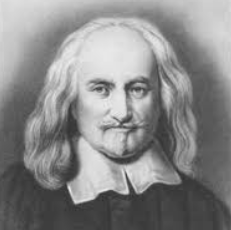
A Covenant not to defend my selfe from force, by force, is always voyd.
▼
Source
source
The First Part, Chapter 14, p. 69
8 months 3 weeks ago
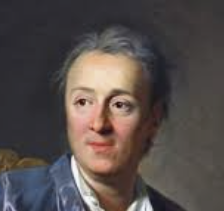
Jacques said that his master said that everything good or evil we encounter here below was written on high.
▼
Source
source
Prologue
6 months 1 week ago
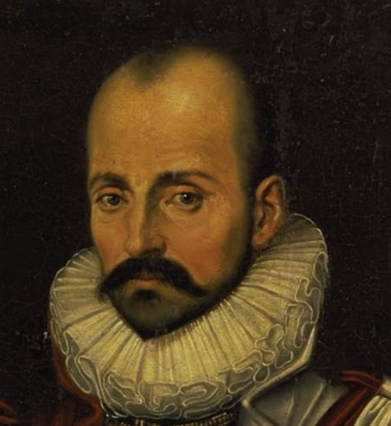
Tyrants would distribute largess, a bushel of wheat, a gallon of wine, and a sesterce: and then everybody would shamelessly cry, "Long live the King!" The fools did not realize that they were merely recovering a portion of their own property, and that their ruler could not have given them what they were receiving without having first taken it from them.
▼
Source
source
Part 2

8 months 1 week ago
I do not forgive myself for being born. It is as if, creeping into this world, I had profaned a mystery, betrayed some momentous pledge, committed a fault of nameless gravity. Yet in a less assured mood, birth seems a calamity I would be miserable not having known.
8 months 1 week ago
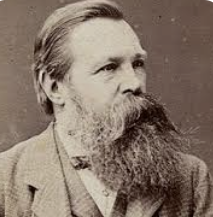
There have always been poor and working classes; and the working class have mostly been poor. But there have not always been workers and poor people living under conditions as they are today.
7 months 3 weeks ago
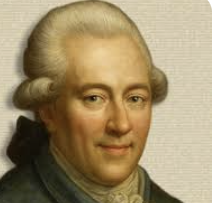
Actual aristocracy cannot be abolished by any law: all the law can do is decree how it is to be imparted and who is to acquire it.
▼
Source
source
L 44
10 months 2 weeks ago
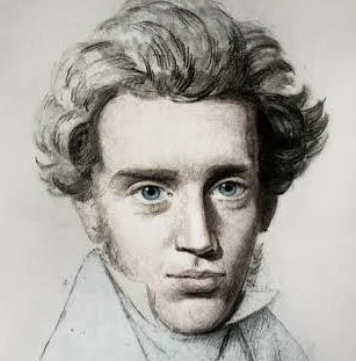
It is as useless for a person to want first of all to decide the externals and after that the fundamentals as it is for a cosmic body, thinking to form itself, first of all to decide the nature of its surface, to what bodies it should turn its light, which its dark side, without first letting the harmony of centrifugal and centripetal forces realize its existence and letting the rest come of itself. One must learn to know oneself before knowing anything else (gnothi seauton). Not until a person has inwardly understood himself and then sees the course he is to take does his life gain peace and meaning.
7 months 3 days ago
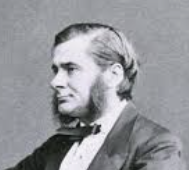
In an ideal University, as I conceive it, a man should be able to obtain instruction in all forms of knowledge, and discipline in the use of all the methods by which knowledge is obtained. In such a University, the force of living example should fire the student with a noble ambition to emulate the learning of learned men, and to follow in the footsteps of the explorers of new fields of knowledge. And the very air he breathes should be charged with that enthusiasm for truth, that fanaticism of veracity, which is a greater possession than much learning; a nobler gift than the power of increasing knowledge; by so much greater and nobler than these, as the moral nature of man is greater than the intellectual; for veracity is the heart of morality.
▼
Source
source
Universities, Actual and Ideal
9 months 3 weeks ago
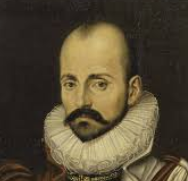
Courtesy is a science of the highest importance. It is, like grace and beauty in the body, which charm at first sight, and lead on to further intimacy and friendship, opening a door that we may derive instruction from the example of others, and at the same time enabling us to benefit them by our example, if there be anything in our character worthy of imitation.
6 months 1 week ago
Everywhere in life, the true question is not what we gain, but what we do.
▼
Source
source
Essays. Goethe's Helena.
9 months 2 weeks ago
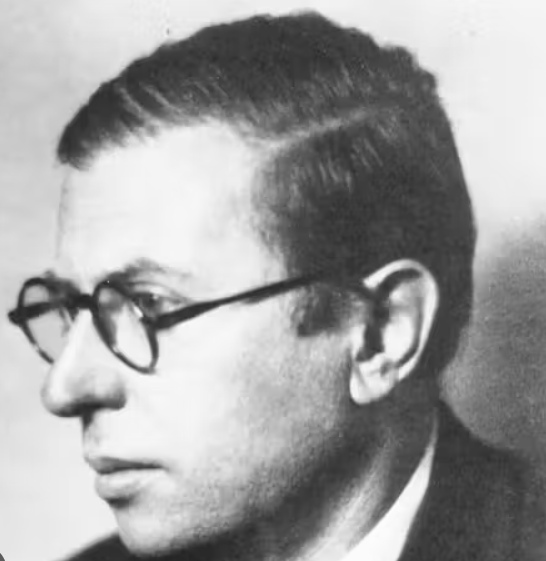
Generosity is nothing else than a craze to possess. All which I abandon, all which I give, I enjoy in a higher manner through the fact that I give it away.... To give is to enjoy possessively the object which one gives.
▼
Source
source
Part 2
9 months 2 weeks ago
God is the solitude of men. There was only me: I alone decided to commit Evil; alone, I invented Good. I am the one who cheated, I am the one who performed miracles, I am the one accusing myself today, I alone can absolve myself; me, the man.
▼
Source
source
Act 10, sc. 4
8 months 3 weeks ago
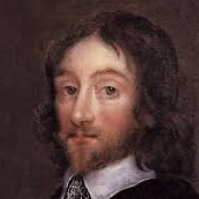
In the deep discovery of the Subterranean world, a shallow part would satisfy some enquirers.
▼
Source
source
Chapter I
9 months 2 weeks ago
It goes without saying that the normal durability of fixed capital is calculated on the supposition that all the conditions under which it can perform its functions normally during that time are fulfilled, just as we assume, in placing a mans life at 30 years on the average,that he will wash himself.
▼
Source
source
Volume II, Ch. VIII, p. 176-177.
8 months 3 weeks ago
There is no moral precept that does not have something inconvenient about it.
▼
Source
source
As quoted in Dictionary of Foreign Quotations (1980) by Mary Collison, Robert L. Collison, p. 235

9 months 2 weeks ago
Every philosophy is complete in itself and, like a genuine work of art, contains the totality. Just as the works of Apelles and Sophocles, if Raphael and Shakespeare had known them, should not have appeared to them as mere preliminary exercises for their own work, but rather as a kindred force of the spirit, so, too reason cannot find in its own earlier forms mere useful preliminary exercises for itself.
▼
Source
source
Difference of the Fichtean and Schellingean System of Philosophy, cited in W. Kaufmann, Hegel (1966), p. 49
5 months 1 week ago
I claim credit for nothing. Everything is determined, the beginning as well as the end, by forces over which we have no control. It is determined for the insect as well as for the star. Human beings, vegetables or cosmic dust, we all dance to a mysterious tune, intoned in the distance by an invisible player.
7 months 1 week ago
All who have meant good work with their whole hearts, have done good work, although they may die before they have the time to sign it. Every heart that has beat strong and cheerfully has left a hopeful impulse behind it in the world, and bettered the tradition of mankind. And even if death catch people, like an open pitfall, and in mid-career, laying out vast projects, and planning monstrous foundations, flushed with hope, and their mouths full of boastful language, they should be at once tripped up and silenced: is there not something brave and spirited in such a termination? and does not life go down with a better grace, foaming in full body over a precipice, than miserably straggling to an end in sandy deltas?
▼
Source
source
316
6 months 3 days ago
Liberty of the people is not my liberty!
▼
Source
source
Cambridge 1995, p. 190

9 months 2 weeks ago
Try to exclude the possibility of suffering which the order of nature and the existence of free-wills involve, and you find that you have excluded life itself.
6 months 3 days ago
If the church had deadly sins, the state has capital crimes; if the one had heretics, the other has traitors; the one ecclesiastical penalties, the other criminal penalties; the one inquisitorial processes, the other fiscal; in short, there sins, here crimes, there inquisition and here - inquisition. Will the sanctity of the state not fall like the church's? The awe of its laws, the reverence for its highness, the humility of its 'subjects', will this remain? Will the 'saint's' face not be stripped of its adornment?
▼
Source
source
Cambridge 1995, p. 211, 212
9 months 2 weeks ago
And we feel that the hero has lived all the details of this night like annunciations, promises, or even that he lived only those that were promises, blind and deaf to all that did not herald adventure. We forget that the future was not yet there; the man was walking in the night without forethought, a night which offered him a choice of dull rich prizes, and he did not make his choice.
▼
Source
source
Diary entry of Saturday noon (10 February?)

5 months 2 weeks ago
All my life I struggled to stretch my mind to the breaking point, until it began to creak, in order to create a great thought which might be able to give a new meaning to life, a new meaning to death, and to console mankind.
▼
Source
source
"Odyssey of Faith" in TIME magazine
8 months 1 week ago
If this truth has once and for all been discarded and men have decided for integral adjustment, if reason has been purged of all morality regardless of cost, and has triumphed over all else, no one may remain outside and look on. The existence of one solitary "unreasonable" man elucidates the shame of the entire nation. His existence testifies to the relativity of the system of radical self-preservation that has been posited as absolute.
▼
Source
source
p. 45.

9 months 2 weeks ago
This is the value of the Communities; not what they have done, but the revolution which they indicate as on the way.
7 months 2 weeks ago
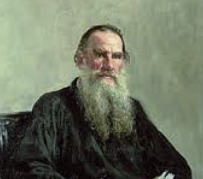
When the woman showed her love for the children that were not her own, and wept over them, I saw in her the living God, and understood What men live by.
▼
Source
source
Ch. XI
6 months 3 days ago
If a concept lacks an essence, nothing will ever be found that completely fits that concept. If you are lacking in the concept of human being, it will immediately expose that you are something individual, something that cannot be expressed by the term human being, thus, in every instance, an individual human being.
▼
Source
source
Landstreicher, p. 16
6 months 1 week ago
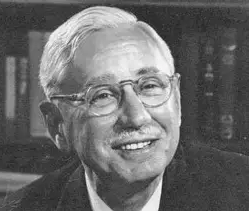
Love one another. My final lesson of history is the same as that of Jesus. You may think that's a lot of lollipop but just try it. Love is the most practical thing in the world. If you take an attitude of love toward everybody you meet, you'll eventually get along. When asked, at the age of 92, if he could summarize the lessons of history into a single sentence.
▼
Source
source
As quoted in "Durants on History from the Ages, with Love," by Pam Proctor, Parade (6 August 1978) p. 12.
8 months 1 week ago
As the years pass, the number of those we can communicate with diminishes. When there is no longer anyone to talk to, at last we will be as we were before stooping to a name.
9 months 2 weeks ago
Not my idea of God, but God.
5 months 3 weeks ago
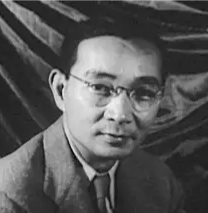
Besides the noble art of getting things done, there is the noble art of leaving things undone. The wisdom of life consists in the elimination of non-essentials.
▼
Source
source
As quoted in Pearls of Wisdom: A Harvest of Quotations From All Ages (1987) by Jerome Agel and Walter D. Glanze, p. 46.

8 months 1 week ago
A whole dimension of human activity and passivity has been de-eroticized. The environment from which the individual could obtain pleasure-which he could cathect as gratifying almost as an extended zone of the body-has been rigidly reduced. Consequently, the "universe" of libidinous cathexis is likewise reduced. The effect is a localization and contraction of libido, the reduction of erotic to sexual experience and satisfaction.
▼
Source
source
p. 73
8 months 2 weeks ago
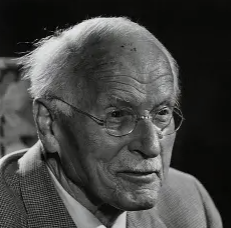
The unconscious is not just evil by nature, it is also the source of the highest good: not only dark but also light, not only bestial, semihuman, and demonic but superhuman, spiritual, and, in the classical sense of the word, "divine."
▼
Source
source
The Practice of Psychotherapy, p. 364
CivilSimian.com created by AxiomaticPanic, CivilSimian, Kalokagathia