Well, the states have to maintain justice...


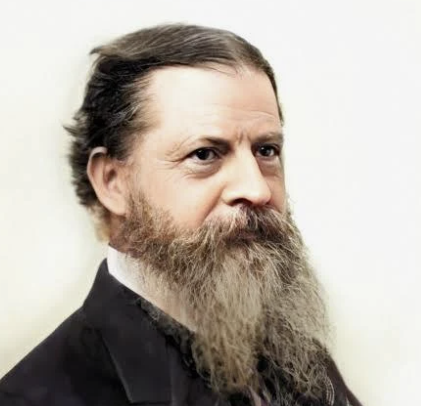
As the mathematics are now understood, each branch - or, if you please, each problem, - is but the study of the relations of a collection of connected objects, without parts, without any distinctive characters, except their names or designating letters. These objects are commonly called points; but to remove all notion of space relations, it may be better to name them monads. The relations between these points are mere complications of two different kinds of elementary relations, which may be termed immediate connection and immediate non-connection. All the monads except as serve as intermediaries for the connections have distinctive designations.
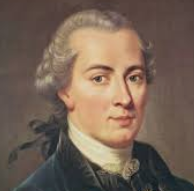
The spurious axioms of the third kind from conditions proper to the subject whence they are transferred rashly to the object are plentiful, not, as in those of the Second Class, because the only way to the intellectual concept lies through the sensuous data, but because only by aid of the latter can the concept be applied to that which is given by experience, that is, can we know whether something is contained under a certain intellectual concept or not. To this class belongs the threadbare one of the schools: whatever exists contingently does at some time not exist. This spurious principle springs from the poverty of the intellect, having insight frequently into the nominal, rarely into the real, marks of contingency or necessity.
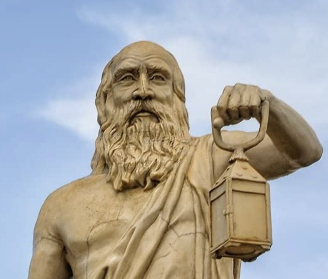
When people laughed at him because he walked backward beneath the portico, he said to them: "Aren't you ashamed, you who walk backward along the whole path of existence, and blame me for walking backward along the path of the promenade?"
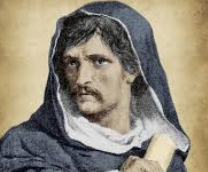
Pray, O pray to God, dear friends, if you are not already asses - that he will cause you to become asses... There is none who praiseth not the golden age when men were asses: they knew not how to work the land. One knew not how to dominate another, one understood no more than another; caves and caverns were their refuge; they were not so well covered nor so jealous nor were they confections of lust and of greed. Everything was held in common.
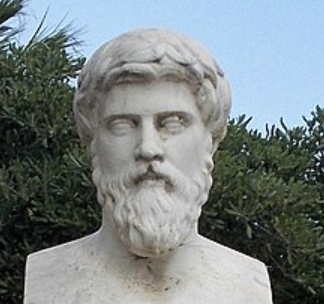
When one told Plistarchus that a notorious railer spoke well of him, "I 'll lay my life," said he, "somebody hath told him I am dead, for he can speak well of no man living."
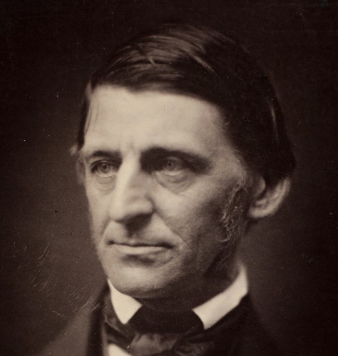
There is always a best way of doing everything, if it be to boil an egg. Manners are the happy ways of doing things; each once a stroke of genius or of love, - now repeated and hardened into usage. They form at last a rich varnish, with which the routine of life is washed, and its details adorned.
The alphabet, when pushed to a high degree of abstract visual intensity, became typography. The printed word with its specialist intensity burst the bonds of medieval corporate guilds and monasteries, created extreme individualist patterns of enterprise and monopoly.
It's funny the respectable names you can give to superstition.
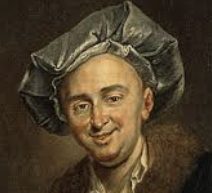
Among animals, some learn to speak and sing; they remember tunes, and strike the notes as exactly as a musician. Others, for instance the ape, show more intelligence... would it be absolutely impossible to teach the ape a language? I do not think so.
No doubt markets transmit information in the way that Hayek claimed. But what reason is there to believe that - unlike any other social institution - they have a built-in capacity to correct their mistakes? History hardly supports the supposition. Moods of irrational exuberance and panic can, and often do, swamp the price-discovery functions of markets.
The strides of humanity are slow, they can only be counted in centuries.
We often attribute "understanding" and other cognitive predicates by metaphor and analogy to cars, adding machines, and other artifacts, but nothing is proved by such attributions.
Thus poetry, regarded as a vehicle of thought, is especially impressive partly because it obeys all the laws of effective speech, and partly because in so doing it imitates the natural utterances of excitement.
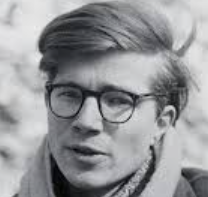
In his Experiment in Autobiography (1934), H.G. Wells pointed out that ever since the beginning of life, most creatures have been 'up against it'. Their lives are a drama of struggle against the forces of nature. Yet nowadays you can say to a man: Yes, you earn a living, you support a family, you love and hate, but -- what do you do? His real interest may be in something else -- art, science, literature, philosophy. The bird is a creature of the air, the fish is a creature of the water, and man is a creature of the mind.
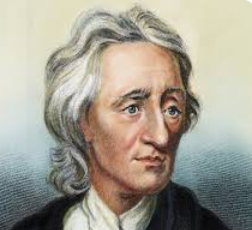
This is that which I think great readers are apt to be mistaken in; those who have read of everything, are thought to understand everything too; but it is not always so. Reading furnishes the mind only with materials of knowledge; it is thinking that makes what we read ours. We are of the ruminating kind, and it is not enough to cram ourselves with a great load of collections ; unless we chew them over again, they will not give us strength and nourishment.
Burke said with a depth that it is impossible to admire enough that art is man's nature: yes, undoubtedly, man with all his affections, all his knowledge, all his arts, is truly the man of nature, and the weaver's web is as natural as the spider's.
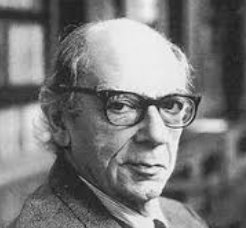
Everyone knows what made Berkeley notorious. He said that there were no material objects. He said the external world was in some sense immaterial, that nothing existed save ideas - ideas and their authors. His contemporaries thought him very ingenious and a little mad.
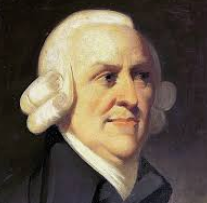
People of the same trade seldom meet together, even for merriment and diversion, but the conversation ends in a conspiracy against the public, or in some contrivance to raise prices. It is impossible indeed to prevent such meetings, by any law which either could be executed, or would be consistent with liberty or justice. But though the law cannot hinder people of the same trade from sometimes assembling together, it ought to do nothing to facilitate such assemblies; much less to render them necessary.
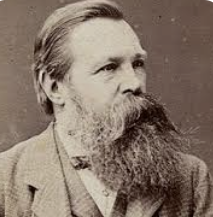
Having destroyed the social power of the nobility and the guildmasters, the bourgeois also destroyed their political power. Having raised itself to the actual position of first class in society, it proclaims itself to be also the dominant political class. This it does through the introduction of the representative system which rests on bourgeois equality before the law and the recognition of free competition, and in European countries takes the form of constitutional monarchy. In these constitutional monarchies, only those who possess a certain capital are voters - that is to say, only members of the bourgeoisie. These bourgeois voters choose the deputies, and these bourgeois deputies, by using their right to refuse to vote taxes, choose a bourgeois government.
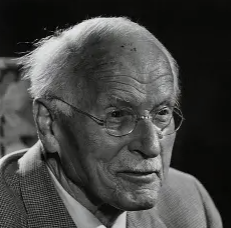
Primitive superstition lies just below the surface of even the most tough-minded individuals, and it is precisely those who most fight against it who are the first to succumb to its suggestive effects.
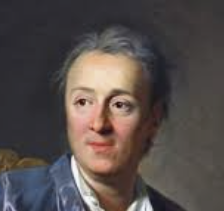
We are all instruments endowed with feeling and memory. Our senses are so many strings that are struck by surrounding objects and that also frequently strike themselves.
The healthy man does not torture others-generally it is the tortured who turn into torturers.
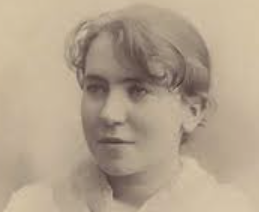
Anarchism, more than any other social theory, values human life above things.
Do not all theists insist that there can be no morality, no justice, honesty or fidelity without the belief in a Divine Power? Based upon fear and hope, such morality has always been a vile product, imbued partly with self-righteousness, partly with hypocrisy. As to truth, justice, and fidelity, who have been their brave exponents and daring proclaimers? Nearly always the godless ones: the Atheists; they lived, fought, and died for them. They knew that justice, truth, and fidelity are not conditioned in heaven, but that they are related to and interwoven with the tremendous changes going on in the social and material life of the human race; not fixed and eternal, but fluctuating, even as life itself.
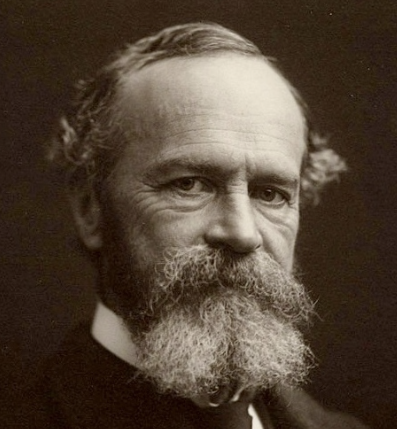
But such a straight identification of religion with any and every form of happiness leaves the essential peculiarity of religious happiness out. The more commonplace happinesses which we get are 'reliefs,' occasioned by our momentary escapes from evils either experienced or threatened. But in its most characteristic embodiments, religious happiness is no mere feeling of escape. It cares no longer to escape. It consents to the evil outwardly as a form of sacrifice - inwardly it knows it to be permanently overcome. ... In the Louvre there is a picture, by Guido Reni, of St. Michael with his foot on Satan's neck. The richness of the picture is in large part due to the fiend's figure being there. The richness of its allegorical meaning also is due to his being there - that is, the world is all the richer for having a devil in it, so long as we keep our foot upon his neck.
As for types like my own, obscurely motivated by the conviction that our existence was worthless if we didn't make a turning point of it, we were assigned to the humanities, to poetry, philosophy, painting - the nursery games of humankind, which had to be left behind when the age of science began. The humanities would be called upon to choose a wallpaper for the crypt, as the end drew near.
The mixture of children and men is precisely one of the most beautiful features of aristocratic government. All roles are distributed wisely in the world: that of the young is to do good, and that of old age is to prevent evil. The impetuosity of young men, who demand only action and creation, is very useful to the State; but they are too likely to innovate and destroy, and they would do much evil without the elderly, who are there to stop them. The latter in their turn oppose even useful reforms; they are too inflexible, they do not know how to accommodate themselves to circumstances, and sometimes a twenty-year old senator can very well be placed beside another of eighty.
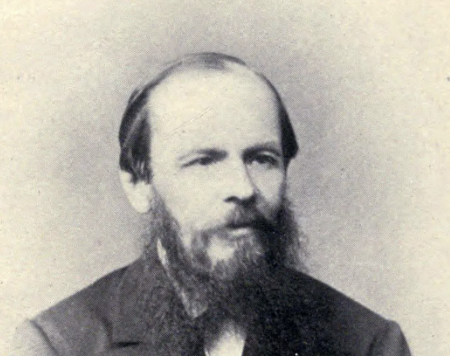
I could never stand more than three months of dreaming at a time without feeling an irresistible desire to plunge into society. To plunge into society meant to visit my superior, Anton Antonich Syetochkin. He was the only permanent acquaintance I have had in my life, and I even wonder at the fact myself now. But I even went to see him only when that phase came over me, and when my dreams had reached such a point of bliss that it became essential to embrace my fellows and all mankind immediately. And for that purpose I needed at least one human being at hand who actually existed. I had to call on Anton Antonich, however, on Tuesday - his at-home day; so I always had to adjust my passionate desire to embrace humanity so that it might fall on a Tuesday.
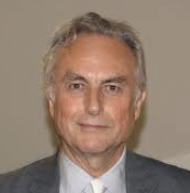
It's obvious that in an intelligent educated audience such as this university, I stress this university. Who saw fit to give them accreditation?
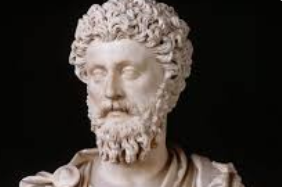
Nature which governs the whole will soon change all things which thou seest, and out of there substance will make other things, and again other things from the substance of them, in order that the world may ever be new.
There can be no difference anywhere that doesn't make a difference elsewhere - no difference in abstract truth that doesn't express itself in a difference in concrete fact and in conduct consequent upon that fact, imposed on somebody, somehow, somewhere and somewhen.

The seeing eye! It is this that discloses the inner harmony of things; what Nature meant, what musical idea Nature has wrapped up in these often rough embodiments. Something she did mean. To the seeing eye that something were discernible. Are they base, miserable things? You can laugh over them, you can weep over them; you can in some way or other genially relate yourself to them; - you can, at lowest, hold your peace about them, turn away your own and others' face from them, till the hour come for practically exterminating and extinguishing them!
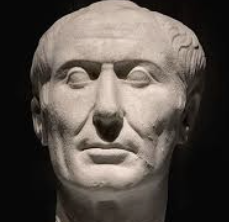
The fear of death is more to be dreaded than death itself.
The unbeliever walks for a quadrillion miles, yet one moments of reality makes up for it.
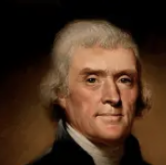
Our opinion here is that that place has been so deeply concerned in smuggling, that if it wants it is because it has illegally sent away what it ought to have retained for its own consumption.
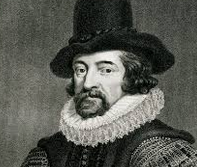
The world's a bubble, and the life of man Less than a span.
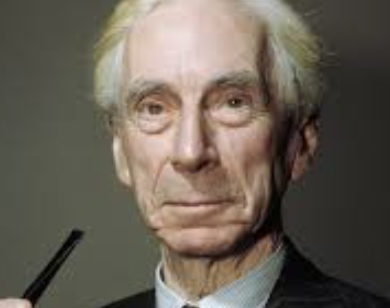
First of all: what is work? Work is of two kinds: first, altering the position of matter at or near the earth's surface relatively to other such matter; second, telling other people to do so. The first kind is unpleasant and ill paid; the second is pleasant and highly paid.
Look round this universe. What an immense profusion of beings, animated and organised, sensible and active! You admire this prodigious variety and fecundity. But inspect a little more narrowly these living existences, the only beings worth regarding. How hostile and destructive to each other! How insufficient all of them for their own happiness! How contemptible or odious to the spectator! The whole presents nothing but the idea of a blind Nature, impregnated by a great vivifying principle, and pouring forth from her lap, without discernment or parental care, her maimed and abortive children!
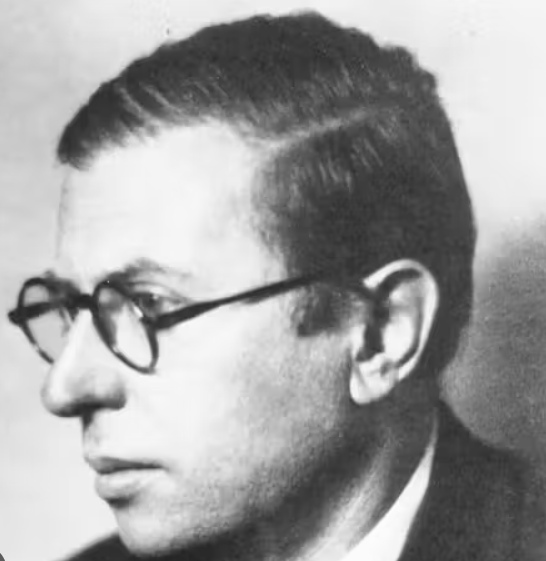
I mistrust illuminations: what we take for a discovery is very often only a familiar thought that we have not recognized.
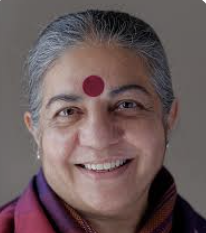
Biopiracy is biological theft; illegal collection of indigenous plants by corporations who patent them for their own use.
Whence we see spiders, flies, or ants entombed and preserved forever in amber, a more than royal tomb.
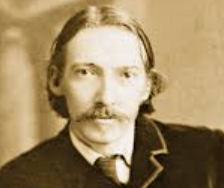
Time passes quickly with lovers.
A beautiful face is a silent commendation.
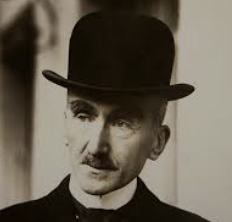
The spectacle of what religions have been in the past, of what certain religions still are to-day, is indeed humiliating for human intelligence. What a farrago of error and folly!'

He [God] lends us a little of His reasoning powers and that is how we think: He puts a little of His love into us and that is how we love one another. When you teach a child writing, you hold its hand while it forms the letters: that is, it forms the letters because you are forming them. We love and reason because God loves and reasons and holds our hand while we do it.
CivilSimian.com created by AxiomaticPanic, CivilSimian, Kalokagathia