

8 months 4 days ago
The success of most things depends upon knowing how long it will take to succeed.
8 months 3 days ago
The respect inspired by the link between man and the reality alien to this world can make itself evident to that part of man which belongs to the reality of this world. The reality of this world is necessity. The part of man which is in this world is the part which is in bondage to necessity and subject to the misery of need. The one possibility of indirect expression of respect for the human being is offered by men's needs, the needs of the soul and of the body, in this world.

5 months 4 weeks ago
So, too, in the Vedanta the whole world is seen as the lila and the maya of the Self, the first word meaning "play" and the second having the complex sense of illusion (from the Latin ludere, to play), magic, creative power, art, and measuring-as when one dances or draws a design to a certain measure. From this point of view the universe in general and playing in particular are, in a special sense, "meaningless": that is, they do not-like words and symbols-signify or point to something beyond themselves, just as a Mozart sonata conveys no moral or social message and does not try to suggest the natural sounds of wind, thunder, or birdsong.
▼
Source
source
p. 94

8 months 4 weeks ago
None but God is wise.
▼
Source
source
As quoted in The Diegesis (1829) by Robert Taylor, p. 219
9 months 2 weeks ago
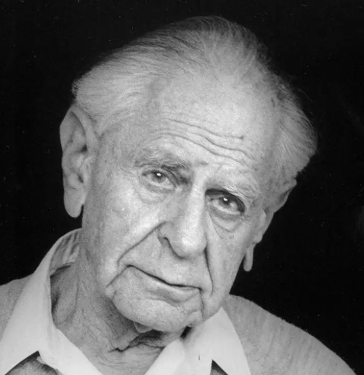
Science may be described as the art of systematic over-simplification - the art of discerning what we may with advantage omit.
▼
Source
source
The Open Universe : An Argument for Indeterminism (1992), p. 44
10 months 2 weeks ago
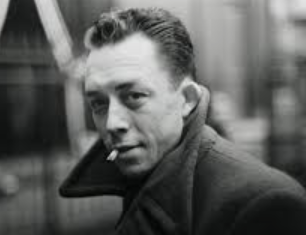
The direction of the world overwhelms me at this time. In the long run, all the continents (yellow, black and brown) will spill over onto Old Europe. They are hundreds and hundreds of millions. They are hungry and they are not afraid to die. We no longer know how to die or how to kill. We could preach, but Europe believes in nothing. So, we must wait for the year 1000 or a miracle. For my part, I find it harder and harder to live before a wall.
9 months 2 weeks ago
There is only one way to science-or to philosophy... to meet a problem, to see its beauty and fall in love with it; to get married to it, and to live with it happily, till death do ye part-unless you should meet another... more fascinating problem, or... obtain a solution. But even if you do... you may... discover, to your delight, the... a whole family of enchanting... perhaps difficult problem children for whose welfare you may work, with a purpose, to the end of your days.
9 months 2 weeks ago
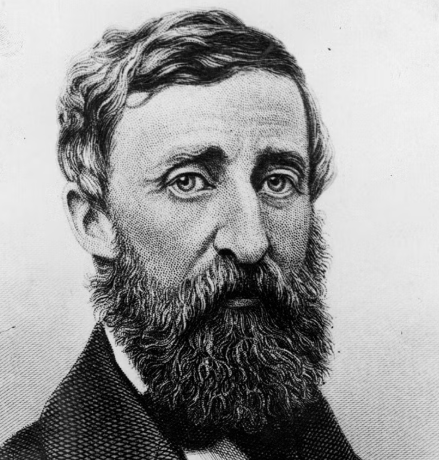
It would be worthy of the age to print together the collected Scriptures or Sacred Writings of the several nations, the Chinese, the Hindus, the Persians, the Hebrews, and others, as the Scripture of mankind. The New Testament is still, perhaps, too much on the lips and in the hearts of men to be called a Scripture in this sense. Such a juxtaposition and comparison might help to liberalize the faith of men. This is a work which Time will surely edit, reserved to crown the labors of the printing-press. This would be the Bible, or Book of Books, which let the missionaries carry to the uttermost parts of the earth.
6 months 2 days ago
By Hercules, the state would have sustained a great loss if you had not brought him forth from the oblivion to which his two splendid qualities, eloquence and independence, had consigned him: he is now read, is popular, is received into men's hands and bosoms, and fears no old age: but as for those who butchered him, before long men will cease to speak even of their crimes, the only things by which they are remembered.


9 months 2 weeks ago
What can you ever really know of other people's souls - of their temptations, their opportunities, their struggles? One soul in the whole creation you do know: and it is the only one whose fate is placed in your hands. If there is a God, you are, in a sense, alone with Him. You cannot put Him off with speculations about your next door neighbours or memories of what you have read in books.
▼
Source
source
Book IV, Chapter 10, "Nice People or New Men"

6 months 1 week ago
Man is not the creature and product of Mechanism; but, in a far truer sense, its creator and producer: it is the noble People that makes the noble Government; rather than conversely.

5 months 3 weeks ago
What is it that we humans depend on? We depend on our words... Our task is to communicate experience and ideas to others. We must strive continually to extend the scope of our description, but in such a way that our messages do not thereby lose their objective or unambiguous character ... We are suspended in language in such a way that we cannot say what is up and what is down. The word "reality" is also a word, a word which we must learn to use correctly.
▼
Source
source
Quoted in Philosophy of Science Vol. 37 (1934), p. 157, and in The Truth of Science : Physical Theories and Reality (1997) by Roger Gerhard Newton, p. 176

9 months 3 weeks ago
Like the body the soul can be healthy, youthful, and so on. It can undergo pain, thirst, and hunger. In this physical life, that is, in the visible world, we avoid whatever would defile or deform the body; how much more, then, ought we to avoid that which would tarnish the soul?
8 months 3 weeks ago
Reorganisation, irrespectively of God or king, by the worship of Humanity, systematically adopted. Man's only right is to do his duty. The Intellect should always be the servant of the Heart, and should never be its slave.
▼
Source
source
Title Page
9 months 2 weeks ago
The true test of civilization is, not the census, nor the size of the cities, nor the crops - no, but the kind of man the country turns out.
▼
Source
source
Civilization
8 months 2 weeks ago
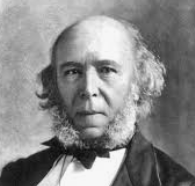
The ultimate result of shielding men from the effects of folly, is to fill the world with fools.
▼
Source
source
Vol. 3, Ch. IX, State-Tamperings with Money and Banks
7 months 2 weeks ago
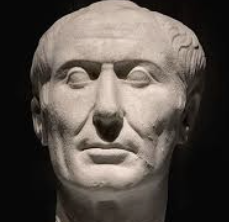
Money alone sets all the world in motion.
▼
Source
source
Maxim 656
10 months ago
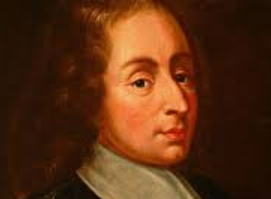
Rules necessary for axioms. Not to demand in axioms any but things perfectly evident.
9 months 2 weeks ago
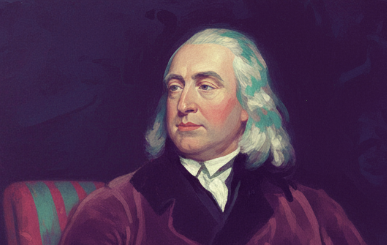
Rights are, then, the fruits of the law, and of the law alone. There are no rights without law-no rights contrary to the law-no rights anterior to the law. Before the existence of laws there may be reasons for wishing that there were laws-and doubtless such reasons cannot be wanting, and those of the strongest kind;-but a reason for wishing that we possessed a right, does not constitute a right. To confound the existence of a reason for wishing that we possessed a right, with the existence of the right itself, is to confound the existence of a want with the means of relieving it. It is the same as if one should say, everybody is subject to hunger, therefore everybody has something to eat.
▼
Source
source
Pannomial Fragments (c. 1831), quoted in The Works of Jeremy Bentham, Vol. III (1838), p. 221
7 months 2 weeks ago
For tribal man, space was the uncontrollable mystery. For technological man it is time that occupies the same role.
▼
Source
source
p. 85; "Magic that Changes Mood")
8 months 4 days ago
Christians are beginning to lose the spirit of intolerance which animated them: experience has shown the error of the expulsion of the Jews from Spain, and of the persecution of those Christians in France whose belief differed a little from that of the king. They have realized that zeal for the advancement of religion is different from a due attachment to it; and that in order to love it and fulfill its behests, it is not necessary to hate and persecute those who are opposed to it.
▼
Source
source
No. 60. (Usbek writing to Ibben)

8 months 1 week ago
I have all the defects of other people yet everything they do seems to me inconceivable.
8 months ago
If space in infinite, how about the space inside man? Blake said that eternity opens from the center of an atom. My former terror vanished. Now I saw that I was mistaken in thinking of myself as an object in a dead landscape. I had been assuming that man is limited because his brain is limited, that only so much can be packed into the portmanteau. But the spaces of the mind are a new dimension. The body is a mere wall between two infinities. Space extends to infinity outwards; the mind stretches to infinity inwards.
▼
Source
source
p. 38
9 months 5 days ago
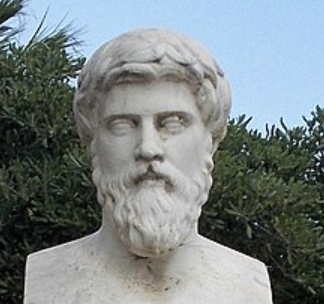
Diogenes the Cynic, when a little before his death he fell into a slumber, and his physician rousing him out of it asked him whether anything ailed him, wisely answered, "Nothing, sir; only one brother anticipates another,-Sleep before Death."
9 months 2 weeks ago
Talents differ; all is well and wisely put; If I cannot carry forests on my back, Neither can you crack a nut.
▼
Source
source
Fable
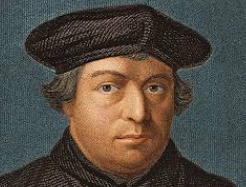
9 months 3 weeks ago
What defects women have, we must check them for in private, gently by word of mouth, for woman is a frail vessel.
▼
Source
source
Table Talk, quoted in Luther On "Woman"
8 months 2 weeks ago
If a single cell, under appropriate conditions, becomes a man in the space of a few years, there can surely be no difficulty in understanding how, under appropriate conditions, a cell may, in the course of untold millions of years, give origin to the human race.
▼
Source
source
Vol. I, Part III: The Evolution of Life, Ch. 3 : General Aspects of the Evolution
6 months 1 week ago
My father's education was altogether of the worst and most limited. I believe he was never more than three months at any school. What he learned there showed what he might have learned. A solid knowledge of arithmetic, a fine antique handwriting - these, with other limited practical etceteras, were all the things he ever heard mentioned as excellent. He had no room to strive for more.
5 months 3 weeks ago
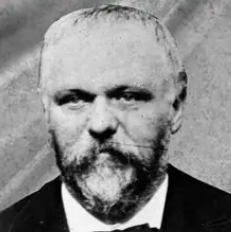
Mussolini is not an ordinary socialist. You will perhaps see him one day as a leader of a consecrated battalion, saluting the flags of Italy with his sword. He is an Italian of the fifteenth century, a condottiere. He is the only man with the strength to correct the weakness of the government.
▼
Source
source
As quoted in The Genesis of Georges Sorel, James H. Meisel, Ann Arbor, Wahr (1951), p. 220, n.21
8 months 1 week ago
As long as I live I shall not allow myself to forget that I shall die; I am waiting for death so that I can forget about it.
10 months 2 weeks ago
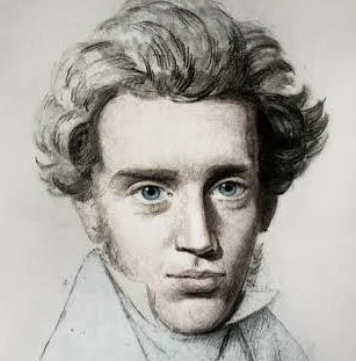
What the age needs is not a genius - it has had geniuses enough, but a martyr, who in order to teach men to obey would himself be obedient unto death. What the age needs is awakening. And therefore someday, not only my writings but my whole life, all the intriguing mystery of the machine will be studied and studied. I never forget how God helps me and it is therefore my last wish that everything may be to his honour.
9 months 1 week ago
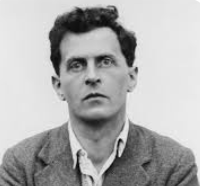
If a person tells me he has been to the worst places I have no reason to judge him; but if he tells me it was his superior wisdom that enabled him to go there, then I know he is a fraud.
▼
Source
source
Conversation of 1930
7 months 1 week ago
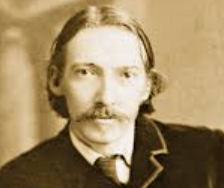
Fiction is to the grown man what play is to the child; it is there that he changes the atmosphere and tenor of his life.
▼
Source
source
A Gossip on Romance, printed in Longman's Magazine (November 1882).
8 months 2 days ago
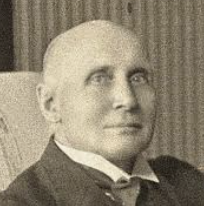
Our habitual experience is a complex of failure and success in the enterprise of interpretation. If we desire a record of uninterpreted experience, we must ask a stone to record its autobiography.
▼
Source
source
Pt. I, ch. 1, sec. 6.
10 months 2 weeks ago
Believe me, there is no such thing as great suffering, great regret, great memory...Everything is forgotten, even great love.
6 months 1 week ago
If Governments neglect to invite what noble intellect there is, then too surely all intellect, not omnipotent to resist bad influences, will tend to become beaverish ignoble intellect; and quitting high aims, which seem shut up from it, will help itself forward in the way of making money and such like; or will even sink to be sham intellect, helping itself by methods which are not only beaverish but vulpine, and so "ignoble" as not to have common honesty.
8 months 1 week ago
Since it is difficult to approve the reasons people invoke, each time we leave one of our 'fellow men', the question which comes to mind is invariably the same: how does he keep from killing himself?

8 months 1 week ago
Dialectical thought understands the critical tension between "is" and "ought" first as an ontological condition, pertaining to the structure of Being itself. However, the recognition of this state of Being - its theory - intends from the beginning a concrete practice. Seen in the light of a truth which appears in them falsified or denied, the given facts themselves appear false and negative.
▼
Source
source
p. 133

10 months 2 weeks ago
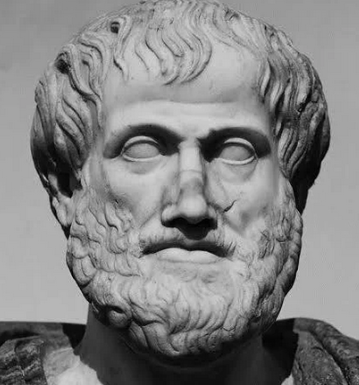
If there is some end of the things we do, which we desire for its own sake, clearly this must be the good. Will not knowledge of it, then, have a great influence on life? Shall we not, like archers who have a mark to aim at, be more likely to hit upon what we should? If so, we must try, in outline at least, to determine what it is.
9 months 3 weeks ago
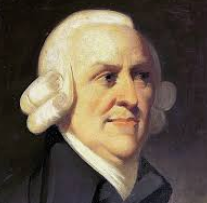
When profit diminishes, merchants are very apt to complain that trade decays; though the diminution of profit is the natural effect of its prosperity, or of a greater stock being employed in it than before.
▼
Source
source
Chapter IX

5 months 2 weeks ago
The human body is a machine which winds its own springs.
6 months 2 days ago
He who does not wish to die cannot have wished to live.
CivilSimian.com created by AxiomaticPanic, CivilSimian, Kalokagathia