Had to go over my YouTube videos to remove the videos where I conflate the epistemological foundation of the a priori / a posteriori distinction with ontological expectations. This is what self-reflection looks like....


When the evolutionary process shifts from biology to software technology the body becomes the old hardware environment. The human body is now a probe, a laboratory for experiments.
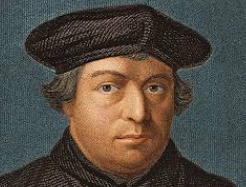
The human being, corrupted to the root, can neither desire nor perform anything but evil.
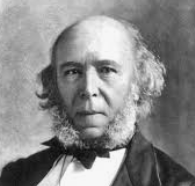
No one can be perfectly free till all are free; no one can be perfectly moral till all are moral; no one can be perfectly happy till all are happy.
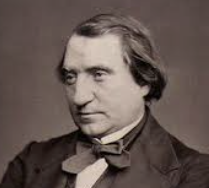
A Muslim who knows French will never be a dangerous Muslim.
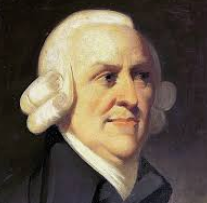
The proposal of any new law or regulation of commerce which comes from this order, ought always to be listened to with great precaution, and ought never to be adopted till after having been long and carefully examined, not only with the most scrupulous, but with the most suspicious attention. It comes from an order of men, whose interest is never exactly the same with that of the public, who have generally an interest to deceive and even to oppress the public, and who accordingly have, upon many occasions, both deceived and oppressed it.
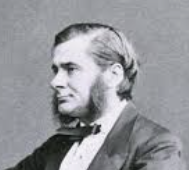
So far from the posterior lobe, the posterior cornu, and the hippocampus minor, being structures peculiar to and characteristic of man, as they have been over and over again asserted to be, even after the publication of the clearest demonstration of the reverse, it is precisely these structures which are the most marked cerebral characters common to man with the apes. They are among the most distinctly Simian peculiarities which the human organism exhibits.
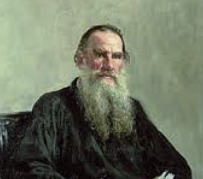
Not only does the action of Governments not deter men from crimes; on the contrary, it increases crime by always disturbing and lowering the moral standard of society. Nor can this be otherwise, since always and everywhere a Government, by its very nature, must put in the place of the highest, eternal, religious law (not written in books but in the hearts of men, and binding on every one) its own unjust, man-made laws, the object of which is neither justice nor the common good of all but various considerations of home and foreign expediency.
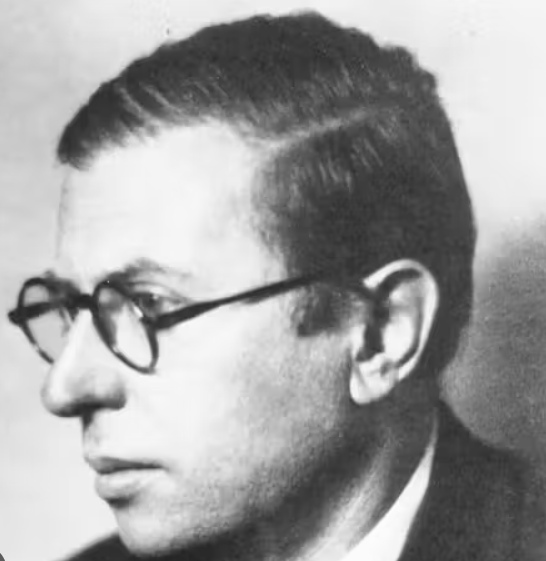
If literature isn't everything, it's not worth a single hour of someone's trouble.

Good health is the best weapon against religion. Healthy bodies and healthy minds have never been shaken by religious fears.
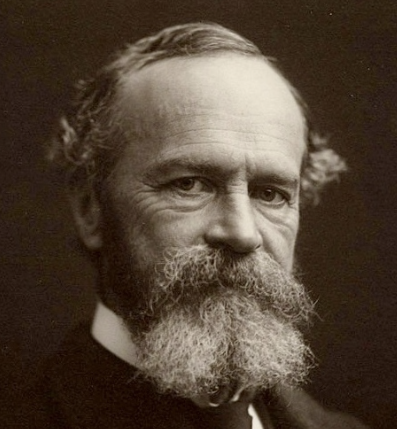
If we remembered everything, we should on most occasions be as ill off as if we remembered nothing. It would take as long for us to recall a space of time as it took the original time to elapse, and we should never get ahead with our thinking. All recollected times undergo, accordingly, what M. Ribot calls foreshortening; and this foreshortening is due to the omission of an enormous number of the facts which filled them.
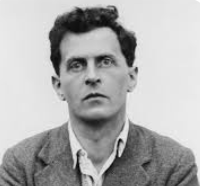
It's only by thinking even more crazily than philosophers do that you can solve their problems.
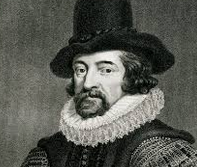
Time, which is the author of authors.
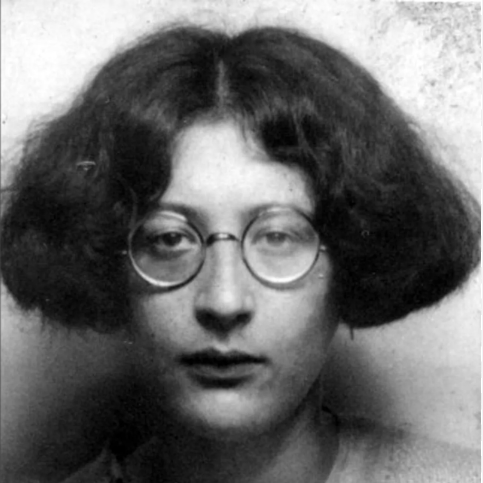
By committing a crime, a man places himself, of his own accord, outside the chain of eternal obligations which bind every human being to every other one. Punishment alone can weld him back again; fully so, if accompanied by consent on his part; otherwise only partially so. Just as the only way of showing respect for somebody suffering from hunger is to give him something to eat, so the only way of showing respect for somebody who has placed himself outside the law is to reinstate him inside the law by subjecting him to the punishment ordained by law.The need for punishment is not satisfied where, as is generally the case, the penal code is merely a method of exercising pressure through fear.
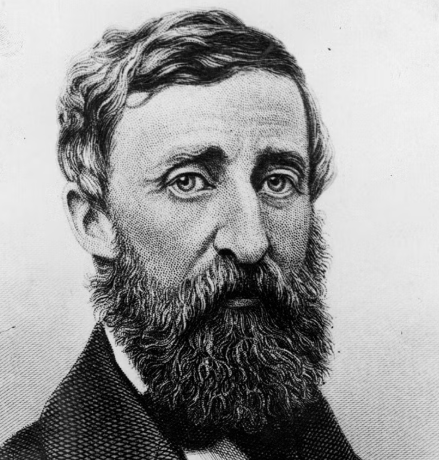
Nothing is so much to be feared as fear. Atheism may comparatively be popular with God himself.
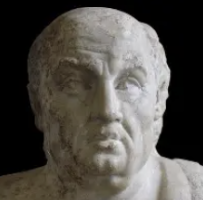
Just as we suffer from excess in all things, so we suffer from excess in literature; thus we learn our lessons, not for life, but for the lecture room.
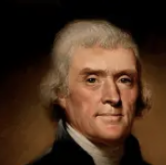
There is not a truth existing which I fear or would wish unknown to the whole world.
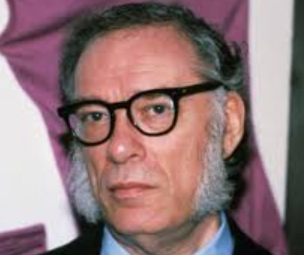
I see your vile implication. My only explanation for it is that you are criminally insane.
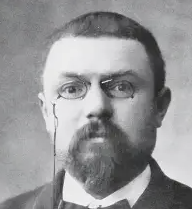
We have not a direct intuition of the equality of two intervals of time.
You must acquire the best knowledge first, and without delay; it is the height of madness to learn what you will later have to unlearn.
Constitutional freedom, as the right of every citizen to have to obey no other law than that to which he has given his consent or approval.

Militarism in both its forms - as war and as armed peace - is a legitimate child, a logical result of capitalism, which can only be overcome with the destruction of capitalism, and that hence whoever honestly desires world peace and liberation from the tremendous burden of armaments must also desire Socialism. Only in this way can real Social Democratic enlightenment and recruiting be carried on in connection with the armaments debate.
Philosophy ... must not bargain away anything of the emphatic concept of truth.
The inclination to act as the laws command, a virtue, is a synthesis in which the law ... loses its universality and the subject its particularity; both lose their opposition, while in the Kantian conception of virtue this opposition remains, and the universal becomes the master and the particular the mastered.
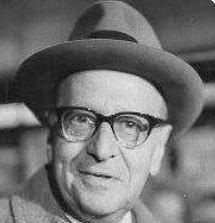
Whoever desires to live among men has to obey their laws-this is what the secular morality of Western civilization comes down to. ... Rationality in the form of such obedience swallows up everything, even the freedom to think.

What concerns me most here are the ways in which contemporary voices considered to be leftist have abandoned the philosophical ideas that are central to any left-wing standpoint: a commitment to universalism over tribalism, a firm distinction between justice and power, and a belief in the possibility of progress.
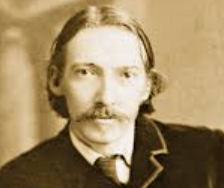
Though the coming of the day is still the most inspiriting, yet day's departure, also, and the return of night refresh, renew, and quiet us; and in the pastures of the dusk we stand, like cattle, exulting in the absence of the load.
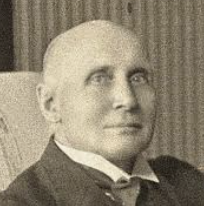
Ninety percent of our lives is governed by emotion. Our brains merely register and act upon what is telegraphed to them by our bodily experience. Intellect is to emotion as our clothes are to our bodies; we could not very well have civilized life without clothes, but we would be in a poor way if we had only clothes without bodies.
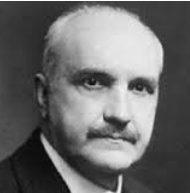
Beauty as we feel it is something indescribable: what it is or what it means can never be said.
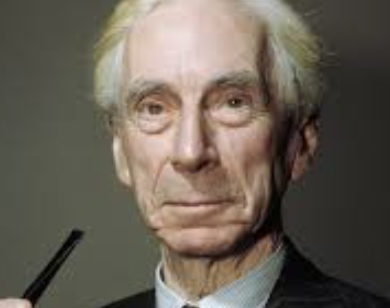
Can a society in which thought and technique are scientific persist for a long period, as, for example, ancient Egypt persisted, or does it necessarily contain within itself forces which must bring either decay or explosion? "Can a Scientific Community Be Stable?,"
There is more to a science fiction story than the science it contains.
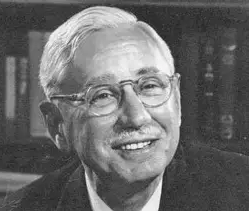
Youth is learning to read (which is all that one learns in school), and is learning where and how to find what he may later need to know (which is the best of the arts that he acquires in college). Nothing learned from a book is worth anything until it is used and verified in life; only then does it begin to affect behavior and desire. It is Life that educates, and perhaps love more than anything else in life.
Character means that the person derives his rules of conduct from himself and from the dignity of humanity. Character is the common ruling principle in man in the use of his talents and attributes. Thus it is the nature of his will, and is good or bad. A man who acts without settled principles, with no uniformity, has no character. A man may have a good heart and yet no character, because he is dependent upon impulses and does not act according to maxims. Firmness and unity of principle are essential to character.
That one hundred and fifty lawyers should do business together ought not to be expected.
A common mortal periodically selected by his fellow-citizens to watch over their own interests, can never be supposed to possess this stupendous virtue.
Keep the faculty of effort alive in you by a little gratuitous exercise every day. That is, be systematically ascetic or heroic in little unnecessary points, do every day or two something for no other reason than that you would rather not do it, so that when the hour of dire need draws nigh, it may find you not unnerved and untrained to stand the test. So with the man who has daily inured himself to habits of concentrated attention, energetic volition, and self-denial in unnecessary things. He will stand like a tower when everything rocks around him, and when his softer fellow-mortals are winnowed like chaff in the blast.
In history, we are concerned with what has been and what is; in philosophy, however, we are concerned not with what belongs exclusively to the past or to the future, but with that which is, both now and eternally - in short, with reason.
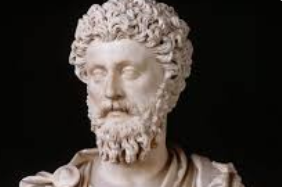
The universal intelligence puts itself in motion for every separate effect... or it puts itself in motion once, and everything else comes by way of a sequence in a manner; or individual elements are the origin of all things. In a word, if there is a god, all is well; and if chance rules, do not thou be governed by it.
Nature, which alone is good, is wholly familiar and common.
There is no moral precept that does not have something inconvenient about it.
"The physical world is real." That is supposed to be the fundamental hypothesis. What does "hypothesis" mean here? For me, a hypothesis is a statement, whose truth must be assumed for the moment, but whose meaning must be raised above all ambiguity. The above statement appears to me, however, to be, in itself, meaningless, as if one said: "The physical world is cock-a-doodle-do." It appears to me that the "real" is an intrinsically empty, meaningless category (pigeon hole), whose monstrous importance lies only in the fact that I can do certain things in it and not certain others.
Life is a disease of the spirit; a working incited by Passion. Rest is peculiar to the spirit.

An integral part of totalitarian control is the attack on critical and independent thought. The appeal to facts is substituted for the appeal to reason. No reason can sanction a regime that uses the greatest productive apparatus man has ever created in the interest of an increasing restriction on human satisfactions-no reason except the fact that the economic system can be retained in no other way. Just as the Fascist emphasis on action and change prevents the insight into necessity of rational courses of action and change, [Giovanni] Gentile's deification of thinking prevents the liberation of thought from the shackles of 'the given.'

Cheating ageing by a low-calorie diet, uploading one's mind into a super-computer, migrating into outer space ... Longing for everlasting life, humans show that they remain the death-defined animal.
CivilSimian.com created by AxiomaticPanic, CivilSimian, Kalokagathia