

5 months 2 weeks ago
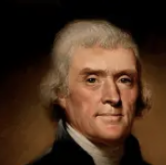
A child raised every 2. years is of more profit then the crop of the best laboring man. in this, as in all other cases, providence has made our duties and our interests coincide perfectly.... [W]ith respect therefore to our women & their children I must pray you to inculcate upon the overseers that it is not their labor, but their increase which is the first consideration with us.
▼
Source
source
In letter to plantation manager, as quoted in The Dark Side of Thomas Jefferson, by Henry Wiencek, Smithsonian Magazine,


10 months 2 weeks ago
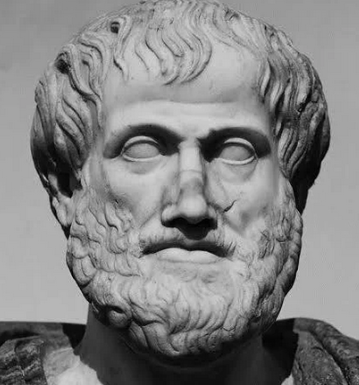
Since the science of nature is conversant with magnitudes, motion, and time, each of which must necessarily be either infinite or finite...we should speculate the infinite, and consider whether it is or not; and if it is what it is. ...All those who appear to have touched on a philosophy of this kind... consider it as a certain principle of beings. Some, indeed, as the Pythagoreans and Plato, consider it, per se, not as being an accident to any thing else, but as having an essential subsistence... the Pythagoreans... consider the infinite as subsisting in sensibles; for they do not make number to be separate; and they assert that what is beyond the heavens is infinite; but Plato says that beyond the heavens there is not any body, nor ideas, because these are no where: he affirms, however, that the infinite is both in sensibles, and in ideas. ...Plato establishes two infinities, viz. the great and the small.
6 months 3 weeks ago
If I'm a cruel satirist at least I'm not a hyprocrite: I never judge what other people do. Neither a politician nor a priest, I never censor what others do. Neither a philospher nor a psychiatrist, I never bother trying to analyze or resolve my fears and neuroses.
▼
Source
source
"Hypocrisy"
9 months 2 weeks ago
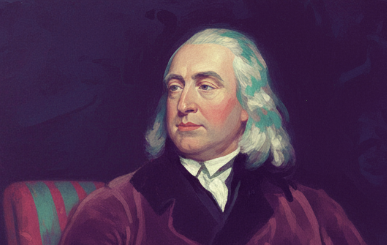
In principle and in practice, in a right track and in a wrong one, the rarest of all human qualities is consistency.
▼
Source
source
Ch. 1: Of the Principle of Utility
9 months 2 weeks ago
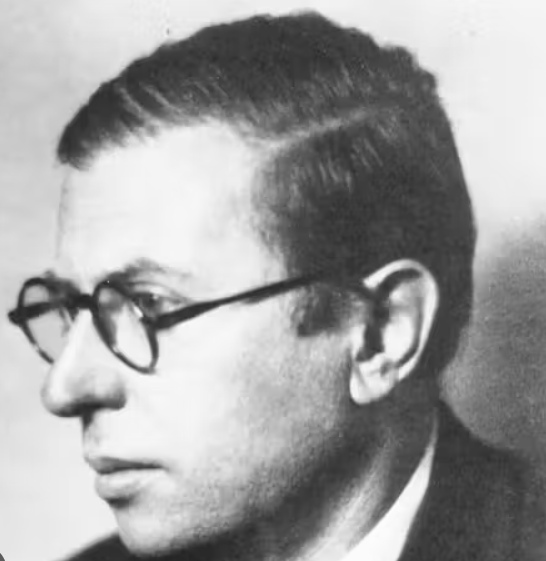
Man is condemned to be free; because once thrown into the world, he is responsible for everything he does.

10 months 2 days ago
Superstition is now in her turn cast down and trampled underfoot, whilst we by the victory are exalted high as heaven.
▼
Source
source
Book I, lines 78-79 (tr. W. H. D. Rouse)

10 months 2 weeks ago
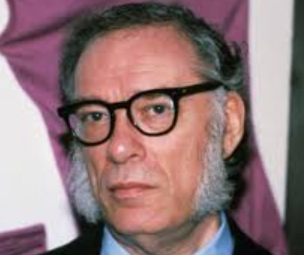
The Bible and science agree in being unable to say anything certainly about what happened before the beginning. There is this difference. The Bible will never be able to tell us. It has reached its final form, and it simply doesn't say. Science, on the other hand, is still developing, and the time may come when it can answer questions that, at present, it cannot.
7 months 4 weeks ago
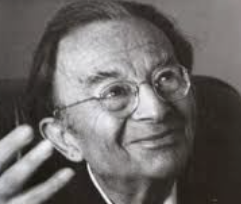
I believe that love is the main key to open the doors to the "growth" of man. Love and union with someone or something outside of oneself, union that allows one to put oneself into relationship with others, to feel one with others, without limiting the sense of integrity and independence. Love is a productive orientation for which it is essential that there be present at the same time: concern, responsibility, and respect for and knowledge of the object of the union. I believe that the experience of love is the most human and humanizing act that it is given to man to enjoy and that it, like reason, makes no sense if conceived in a partial way.

9 months 3 weeks ago
Who then to frail mortality shall trust But limns the water, or but writes in dust.
6 months 3 weeks ago
Our present-day neurochemical cocktail, we are asked to believe, is the medium through which alien realms of consciousness can be grasped and neutrally appraised from a third-person perspective. Empirical research suggests this optimism is at best naïve.
▼
Source
source
Storming Heaven: LSD and the American Dream, BLTC Research
8 months 2 weeks ago
Every civilized human being, whatever his conscious development, is still an archaic man at the deeper levels of his psyche. Just as the human body connects us with the mammals and displays numerous relics of earlier evolutionary stages going back to even the reptilian age, so the human psyche is likewise a product of evolution which, when followed up to its origins, show countless archaic traits.
▼
Source
source
p. 126
6 months 2 weeks ago
There is nothing disastrous in the temporary nature of our ideas. They are always that. But there may very easily be a train of evil in the self-deception which regards them as final. I think God will forgive us our skepticism sooner than our Inquisitions.
▼
Source
source
Ch. VII: "The Making of Creeds", p. 236
9 months 2 weeks ago
The possession and the exercise of political, and among others of electoral, rights, is one of the chief instruments both of moral and of intellectual training for the popular mind; and all governments must be regarded as extremely imperfect, until every one who is required to obey the laws, has a voice, or the prospect of a voice, in their enactment and administration.
▼
Source
source
Thoughts on Parliamentary Reform (1859), p. 22
8 months 1 week ago
Reason as an organ for perceiving the true nature of reality and determining the guiding principles of our lives has come to be regarded as obsolete.
▼
Source
source
p. 18.
6 months 1 week ago
Civilization exists by geological consent, subject to change without notice.
▼
Source
source
What is Civilization? Ladies' Home Journal, LXIII
8 months 1 week ago
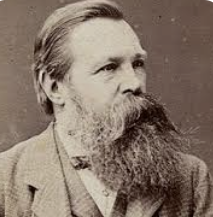
Since the management of industry by individuals necessarily implies private property, and since competition is in reality merely the manner and form in which the control of industry by private property owners expresses itself, it follows that private property cannot be separated from competition and the individual management of industry. Private property must, therefore, be abolished and in its place must come the common utilization of all instruments of production and the distribution of all products according to common agreement - in a word, what is called the communal ownership of goods.
5 months 2 weeks ago
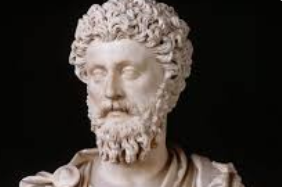
Search men's governing principles, and consider the wise, what they shun and what they cleave to.
▼
Source
source
IV, 38
9 months 2 weeks ago
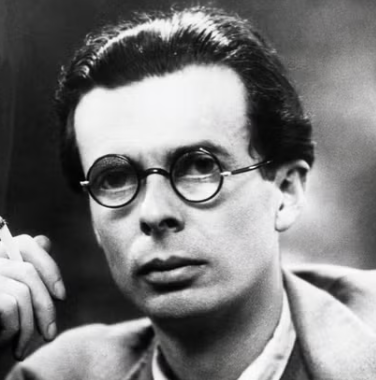
Assembled in a crowd, people lose their powers of reasoning and their capacity for moral choice.
▼
Source
source
Chapter 5 (p. 42)
9 months 2 weeks ago
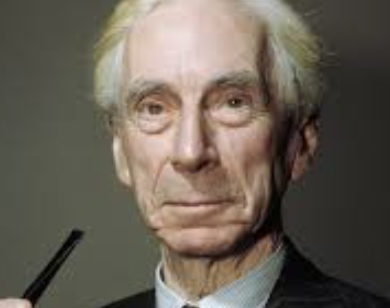
For want of the apparatus of propositional functions, many logicians have been driven to the conclusion that there are unreal objects. It is argued, e.g., by Meinong, that we can speak about "the golden mountain," "the round square," and so on; we can make true propositions of which these are the subjects; hence they must have some kind of logical being, since otherwise the propositions in which they occur would be meaningless. In such theories, it seems to me, there is a failure of that feeling for reality which ought to be preserved even in the most abstract studies. Logic, I should maintain, must no more admit a unicorn than zoology can; for logic is concerned with the real world just as truly as zoology, though with its more abstract and general features.
▼
Source
source
Ch. 16: Descriptions
8 months 1 week ago
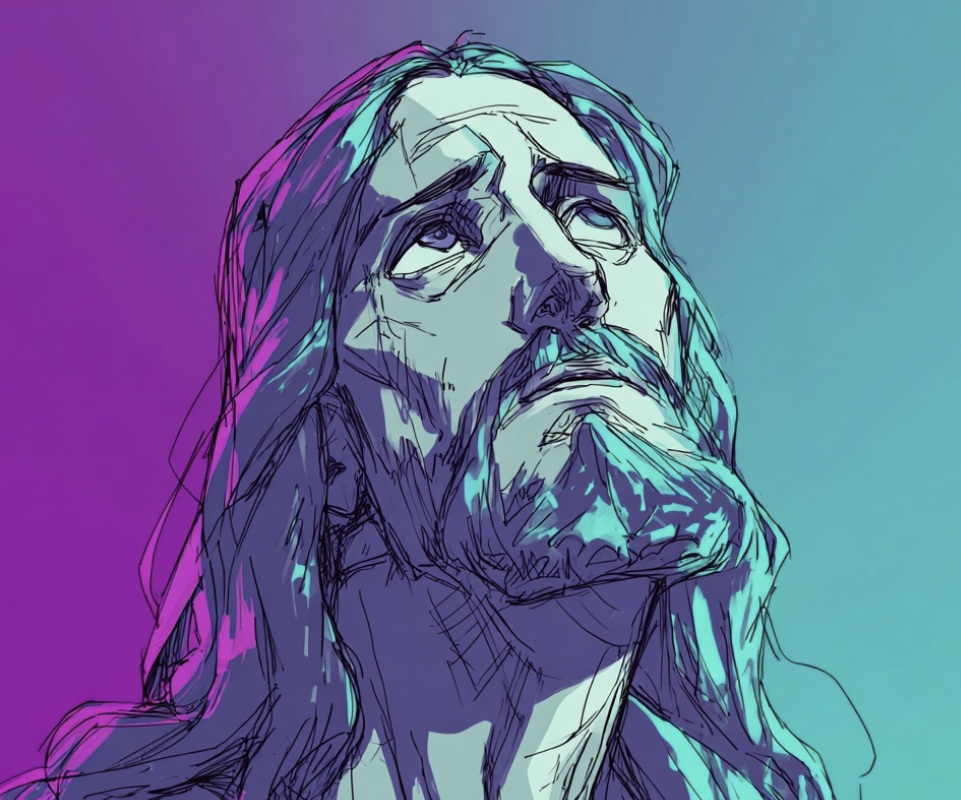
Whoever shall find the interpretation of these words shall not taste of death. (1) I have not a devil; but I honour my Father, and ye do dishonour me. And I seek not mine own glory: there is one that seeketh and judgeth. Verily, verily, I say unto you, If a man keep my saying, he shall never see death.
▼
Source
source
(John 8:49-51)
9 months 2 weeks ago
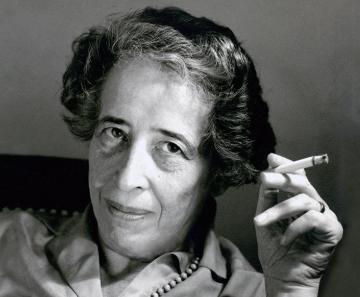
Forgiveness is the key to action and freedom.
▼
Source
source
As quoted in The Concise Columbia Dictionary of Quotations (1989) edited by Robert Andrews, p. 114

9 months 2 weeks ago
As these people are not convicted of forfeiting freedom, they have still a natural, perfect right to it; and the Governments whenever they come should, in justice set them free, and punish those who hold them in slavery.
9 months 3 weeks ago
The establishment of any new manufacture, of any new branch of commerce, or any new practice in agriculture, is always a speculation, from which the projector promises himself extraordinary profits. These profits sometimes are very great, and sometimes, more frequently, perhaps, they are quite otherwise; but in general they bear no regular proportion to those of other older trades in the neighbourhood. If the project succeeds, they are commonly at first very high. When the trade or practice becomes thoroughly established and well known, the competition reduces them to the level of other trades.
▼
Source
source
Chapter X, Part I, p. 136 (tendency of the rate of profit to fall).
10 months 5 days ago
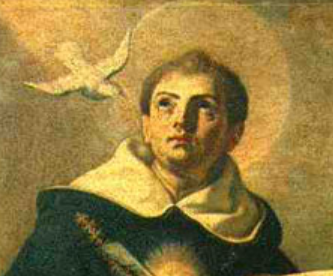
Charity, by which God and neighbor are loved, is the most perfect friendship.
▼
Source
source
Disputed Questions: On Charity, c. 1270

8 months 1 week ago
The distinction between true and false consciousness, real and immediate interest still is meaningful. But this distinction itself must be validated. Men must come to see it and to find their way from false to true consciousness, from their immediate to their real interest. They can do so only if they live in need of changing their way of life, of denying the positive, of refusing. It is precisely this need which the established society manages to repress to the degree to which it is capable of "delivering the goods" on an increasingly large scale, and using the scientific conquest of nature for the scientific conquest of man.
▼
Source
source
pp. xlv-xlvi
8 months ago
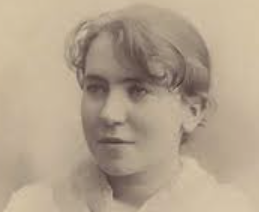
Human nature asserts itself regardless of all laws, nor is there any plausible reason why nature should adapt itself to a perverted conception of morality.

9 months 2 weeks ago
He is great who is what he is from Nature, and who never reminds us of others.
▼
Source
source
Uses of Great Men
9 months 2 weeks ago
Whoso walketh in solitude, And inhabiteth the wood, Choosing light, wave, rock, and bird, Before the money-loving herd, Into that forester shall pass From these companions power and grace.
▼
Source
source
Wood-notes, no. II, st. 4

8 months 1 week ago
Love's great (and sole) originality is to make happiness indistinct from misery.
8 months 1 week ago
What is not heartrending is superfluous, at least in music.
9 months 2 weeks ago
Can a society in which thought and technique are scientific persist for a long period, as, for example, ancient Egypt persisted, or does it necessarily contain within itself forces which must bring either decay or explosion? "Can a Scientific Community Be Stable?,"
▼
Source
source
Lecture, Royal Society of Medicine, London, 11/29/1949
8 months 4 days ago
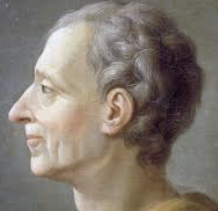
And yet there is nothing so badly imagined: nature seems to have provided, that the follies of men should be transient, but they by writing books render them permanent. A fool ought to content himself with having wearied those who lived with him: but he is for tormenting future generations; he is desirous that his folly should triumph over oblivion, which he ought to have enjoyed as well as his grave; he is desirous that posterity should be informed that he lived, and that it should be known for ever that he was a fool. Commonly paraphrased as "An author is a fool who, not content with having bored those who have lived with him, insists on boring future generations".
▼
Source
source
No. 66. (Rica writing to * * *)
5 months 2 weeks ago
Poetry can be written only because it has been written.
▼
Source
source
"The Responsibility of the Poet"
8 months 2 weeks ago
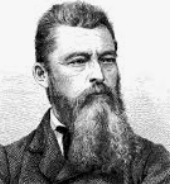
God, I have said, is the fulfiller, or the reality, of the human desires for happiness, perfection, and immortality. From this it may be inferred that to deprive man of God is to tear the heart out of his breast. But I contest the premises from which religion and theology deduce the necessity and existence of God, or of immortality, which is the same thing. I maintain that desires which are fulfilled only in the imagination, or from which the existence of an imaginary being is deduced, are imaginary desires, and not the real desires of the human heart; I maintain that the limitations which the religious imagination annuls in the idea of God or immortality, are necessary determinations of the human essence, which cannot be dissociated from it, and therefore no limitations at all, except precisely in man's imagination.
▼
Source
source
Lecture XXX, Atheism alone a Positive View
8 months 1 week ago
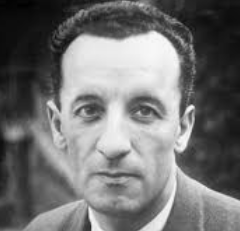
Philosophy is in history, and is never independent of historical discourse. But for the tacit symbolism of life it substitutes, in principle, a conscious symbolism; for a latent meaning, one that is manifest. It is never content to accept its historical situation. It changes this situation by revealing it to itself.
▼
Source
source
p. 57
5 months 2 weeks ago
It may indeed be true that in order to act we need a certain amount of self-confidence and intellectual self-assurance. It may also be true that the very form of expression, in which we clothe our thoughts, tends to impose upon them an absolute tone.
5 months 2 weeks ago
Of my grandfather Verus I have learned to be gentle and meek, and to refrain from all anger and passion... I have learned both shamefastness and manlike behaviour. Of my mother I have learned to be religious, and bountiful; and to forbear, not only to do, but to intend any evil; to content myself with a spare diet, and to fly all such excess as is incidental to great wealth.
▼
Source
source
I, 1
7 months 2 weeks ago
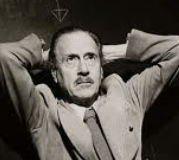
All words at every level of prose and poetry and all devices of language and speech derive their meaning from figure / ground relation.
▼
Source
source
quoted in McLuhan: A Guide for the Perplexed by W. Terrence Gordon, 2010, p. 167

7 months 1 day ago
Biopiracy is biological theft; illegal collection of indigenous plants by corporations who patent them for their own use.
▼
Source
source
On biopiracy, from the booklet "No Patents on Seeds: A Handbook For Activists"

6 months 1 week ago
In looking at this wreck of Governments in all European countries, there is one consideration that suggests itself, sadly elucidative of our modern epoch. These Governments, we may be well assured, have gone to anarchy for this one reason inclusive of every other whatsoever, That they were not wise enough; that the spiritual talent embarked in them, the virtue, heroism, intellect, or by whatever other synonyms we designate it, was not adequate,-probably had long been inadequate, and so in its dim helplessness had suffered, or perhaps invited falsity to introduce itself; had suffered injustices, and solecisms, and contradictions of the Divine Fact, to accumulate in more than tolerable measure; whereupon said Governments were overset, and declared before all creatures to be too false.
9 months 2 weeks ago
Yes, I am so free. And what a superb absence is my soul.
▼
Source
source
Orestes, Act 1
7 months 6 days ago
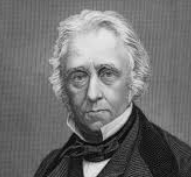
In all ages a chief cause of the intestine disorders of states has been that the natural distribution of power and the legal distribution of power have not corresponded with each other.
▼
Source
source
Speech in the House of Commons (28 February 1832), quoted in Speeches of the Right Honourable T. B. Macaulay, M.P. (1854), p. 91
8 months 1 week ago
The only minds which seduce us are the minds which have destroyed themselves trying to give their life a meaning.
CivilSimian.com created by AxiomaticPanic, CivilSimian, Kalokagathia