Life is part stone. It's not as elusive and magical as some would have you believe. It can be objectified.



After World War II, liberal rights were not something that were only deserved by white Europeans. ...There was a recognition that the black and brown peoples being held in colonial bondage could not consistently be held in that bondage, because liberalism was a universal doctrine. ...That's the other respect in which we can defend liberalism, a moral one.

The liturgy of emptiness dispels the capitalist economy of the commodity.

Psychoanalysis will be entirely discredited one of these days, no doubt about it. Which will not keep it from destroying our last vestiges of naivete. After psychoanalysis, we can never again be innocent.
Literacy affects the physiology as well as the psychic life of the African.

Courtesy is a science of the highest importance. It is, like grace and beauty in the body, which charm at first sight, and lead on to further intimacy and friendship, opening a door that we may derive instruction from the example of others, and at the same time enabling us to benefit them by our example, if there be anything in our character worthy of imitation.
Popular escapist fiction enchants adult readers without challenging them to be educated for critical consciousness.
The percept takes priority of the concept.
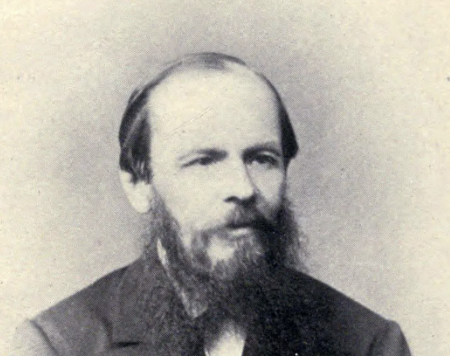
In dreams you sometimes fall from a height, or are stabbed, or beaten, but you never feel pain unless, perhaps, you really bruise yourself against the bedstead, then you feel pain and almost always wake up from it. It was the same in my dream. I did not feel any pain, but it seemed as though with my shot everything within me was shaken and everything was suddenly dimmed, and it grew horribly black around me. I seemed to be blinded, and it benumbed, and I was lying on something hard, stretched on my back; I saw nothing, and could not make the slightest movement.
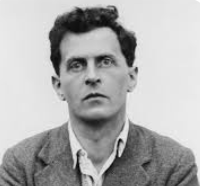
One age misunderstands another; and a petty age misunderstands all the others in its own ugly way.
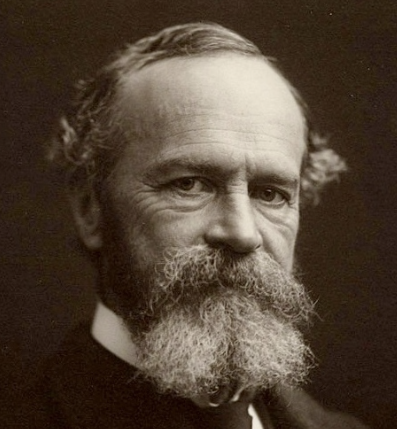
Every way of classifying a thing is but a way of handling it for some particular purpose.
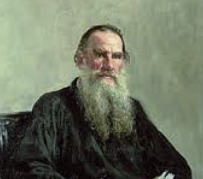
Science may fall back on its stupid excuse that science works for science, and that when it has been developed by the scientists it will become accessible to the people also; but art, if it be art, should be accessible to all, and particularly to those for whom it is produced. And the position of our art strikingly arraigns the producers of art for not wishing, not knowing how, and being unable, to serve the people.
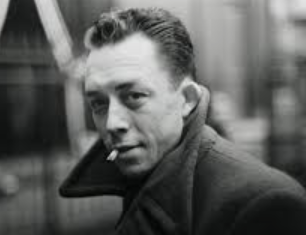
God is not needed to create guilt or to punish. Our fellow men suffice, aided by ourselves.

As money grows, care follows it and the hunger for more.
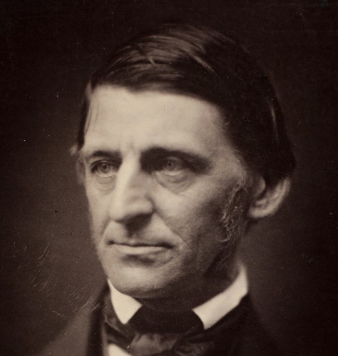
Don't waste yourself in rejection, nor bark against the bad, but chant the beauty of the good.

Our claim is that a common political project is possible. This possibility of course will have to be verified and realized in practice. ... We are capable of democracy. The challange is to organize it politically.

Attention consists of suspending our thought, leaving it detached, empty, and ready to be penetrated by the object; it means holding in our minds, within reach of this thought, but on a lower level and not in contact with it, the diverse knowledge we have acquired which we are forced to make use of.
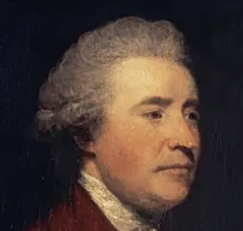
[France is] a Country where the people, along with their political servitude, have thrown off the Yoke of Laws and morals.
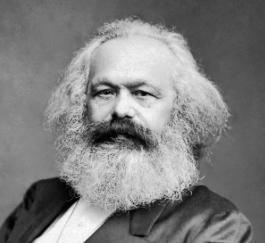
For the world to become philosophic amounts to philosophy's becoming world-order reality; and it means that philosophy, at the same time that it is realized, disappears.
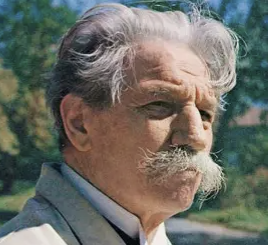
We cannot understand what happens in the universe. What is glorious in it is united with what is full of horror. What is full of meaning is united to what is senseless. The spirit of the universe is at once creative and destructive - it creates while it destroys and destroys while it creates, and therefore it remains to us a riddle. And we must inevitably resign ourselves to this.
For truth itself has not the privilege to be spoken at all times and in all sorts.

The priests of the different religious sects, who dread the advance of science as witches do the approach of day-light; and scowl on it the fatal harbinger announcing the subversion of the duperies on which they live. In this the Presbyterian clergy take the lead. the tocsin is sounded in all their pulpits, and the first alarm denounced is against the particular creed of Doctr. Cooper; and as impudently denounced as if they really knew what it is.
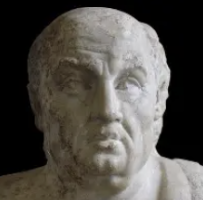
Do you ask me whom I have conquered? Neither the Persians, nor the far-off Medes, nor any warlike race that lies beyond the Dahae; not these, but greed, ambition, and the fear of death that has conquered the conquerors of the world.
Everything comes in time to him who knows how to wait.
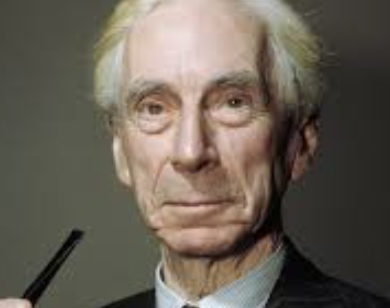
All traditional logic habitually assumes that precise symbols are being employed. It is therefore not applicable to this terrestial life but only to an imagined celestial existence... logic takes us nearer to heaven than other studies.
A reflective, contented mind is the best possession.
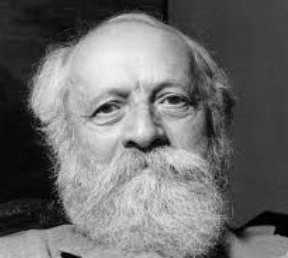
The philosophical anthropologist ... can know the wholeness of the person and through it the wholeness of man only when he does not leave his subjectivity out and does not remain an untouched observer.
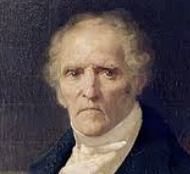
Nowhere is there more constancy and more unanimity than among the French to subordinate that sex which they pretend to honor so highly.
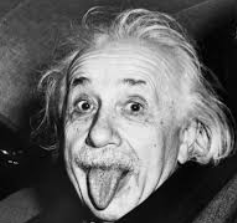
The most beautiful fate of a physical theory is to point the way to the establishment of a more inclusive theory, in which it lives on as a limiting case.
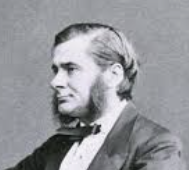
Regarded anatomically, the resemblances between the foot of Man and the foot of the Gorilla are far more striking and important than the differences. ...be the differences between the hand and foot of Man and those of the Gorilla what they may-the differences between those of the Gorilla and those of the lower Apes are much greater.

The barrenest of all mortals is the sentimentalist.
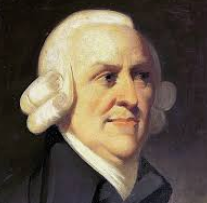
How many people ruin themselves by laying out money on trinkets of frivolous utility? What pleases these lovers of toys is not so much the utility, as the aptness of the machines which are fitted to promote it. All their pockets are stuffed with little conveniences. They contrive new pockets, unknown in the clothes of other people, in order to carry a greater number. They walk about loaded with a multitude of baubles, in weight and sometimes in value not inferior to an ordinary Jew's-box, some of which may sometimes be of some little use, but all of which might at all times be very well spared, and of which the whole utility is certainly not worth the fatigue of bearing the burden.
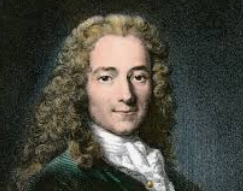
May we not return to those scoundrels of old, the illustrious founders of superstition and fanaticism, who first took the knife from the altar to make victims of those who refused to be their disciples?
For what avail the plough or sail, Or land or life, if freedom fail?
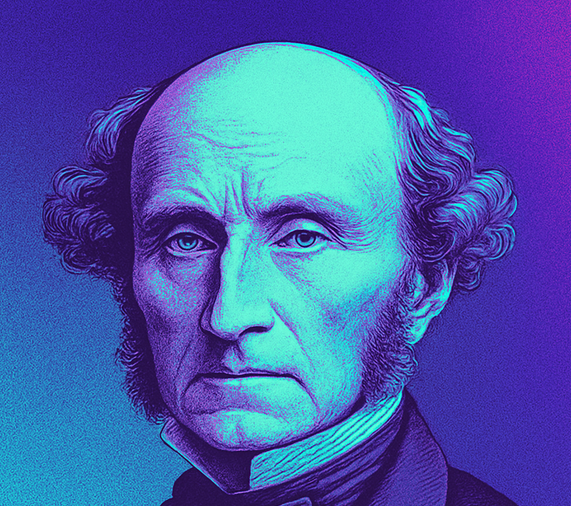
Moreover, if the character is formed, and the mind made up, on the few cardinal points of human opinion, agreement of conviction and feeling on these, has been felt in all times to be an essential requisite of anything worthy the name of friendship, in a really earnest mind. All these circumstances united, made the number very small of those whose society, and still more whose intimacy, I now voluntarily sought.
The circulation of capital realizes value, while living labour creates value.

It was the normal working of the antisuccess mechanism. In our overcrowded modern world a hit record, a best-selling book, a successful film, can reach more people in a week than Shakespeare or Beethoven reached in a whole lifetime. And so fame has become the most romantic, the most desirable of all commodities, the dream for which a modern Faust might sell his soul to the Devil. Once attained, fame is never as easy to hold on to as some people believe. The people who achieve fame by some accident of fashion are usually forgotten within a week; the ones who remain on top have to work to stay there. But few people understand this. The result is that anyone who achieves sudden notoriety arouses envy and hostility. The greater the success, the greater the reaction.
Public life is a situation of power and energy; he trespasses against his duty who sleeps upon his watch, as well as he that goes over to the enemy.
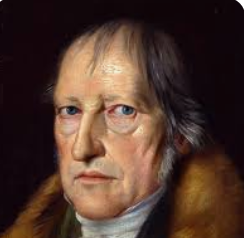
On the stage on which we are observing it, - Universal History - Spirit displays itself in its most concrete reality.
The entire history of social improvement has been a series of transitions, by which one custom or institution after another, from being a supposed primary necessity of social existence, has passed into the rank of an universally stigmatized injustice and tyranny. So it has been with the distinctions of slaves and freemen, nobles and serfs, patricians and plebeians; and so it will be, and in part already is, with the aristocracies of colour, race, and sex.
The individual produces an object and, by consuming it, returns to himself, but returns as a productive and self reproducing individual. Consumption thus appears as a moment of production.

The political, ethical, social, philosophical problem of our day is not to try to liberate the individual from the state and from the state's institutions but to liberate us both from the state and from the type of individualization which is linked to the state. We have to promote new forms of subjectivity through the refusal of this kind of individuality which has been imposed on us for several centuries.
The law of the table is beauty, a respect to the common soul of the guests. Everything is unreasonable which is private to two or three, or any portion of the company. Tact never violates for a moment this law; never intrudes the orders of the house, the vices of the absent, or a tariff of expenses, or professional privacies; as we say, we never "talk shop" before company. Lovers abstain from caresses, and haters from insults, while they sit in one parlor with common friends.
CivilSimian.com created by AxiomaticPanic, CivilSimian, Kalokagathia