

6 months 1 week ago
All laws are... deduced from experiment; but to enunciate them, a special language is needful... ordinary language is too poor...This... is one reason why the physicist can not do without mathematics; it furnishes him the only language he can speak. And a well-made language is no indifferent thing;...the analyst, who pursues a purely esthetic aim, helps create, just by that, a language more fit to satisfy the physicist....law springs from experiment, but not immediately. Experiment is individual, the law deduced from it is general; experiment is only approximate, the law is precise...In a word, to get the law from experiment, it is necessary to generalize... But how generalize? ...in this choice what shall guide us?It can only be analogy. ...What has taught us to know the true profound analogies, those the eyes do not see but reason divines?It is the mathematical spirit, which disdains matter to cling only to pure form.
7 months 2 weeks ago
New technological environments are commonly cast in the molds of the preceding technology out of the sheer unawareness of their designers.
▼
Source
source
(p. 47)

6 months 1 week ago
We are firm believers in the maxim that for all right judgment of any man or thing it is useful, nay, essential, to see his good qualities before pronouncing on his bad.
▼
Source
source
Goethe.
8 months 2 weeks ago
It is vain to expect virtue from women till they are in some degree independent of men; nay, it is vain to expect that strength of natural affection which would make them good wives and mothers. Whilst they are absolutely dependent on their husbands they will be cunning, mean, and selfish.
▼
Source
source
Ch. 9

9 months 2 weeks ago
Where we find a difficulty we may always expect that a discovery awaits us. Where there is cover we hope for game.
▼
Source
source
Reflections on the Psalms (1958), ch. III: Cursings
9 months 2 weeks ago
It is obvious that "obscenity" is not a term capable of exact legal definition; in the practice of the Courts, it means "anything that shocks the magistrate."
▼
Source
source
Ch. 10: Recrudescence of Puritanism
10 months 1 week ago
When we have intelligence resulting from sincerity, this condition is to be ascribed to nature; when we have sincerity resulting from intelligence, this condition is to be ascribed to instruction. But given the sincerity, and there shall be the intelligence; given the intelligence, and there shall be the sincerity.
8 months 4 days ago
But our Don Quixote, the inward, the immortal Don Quixote, conscious of his own comicness, does not believe that his doctrines will triumph in this world, because they are not of it. And it is better that they should not triumph. And if the world wished to make Don Quixote king, he would retire alone to the mountain, fleeing from the king-making crowds, as Christ retired alone to the mountain when, after the miracle of the loaves and fishes, they sought to proclaim him king. He left the title of king for the inscription written over the cross.
8 months 4 days ago
Not by way of reason, but only by way of love and suffering, do we come to the living God, the human God. Reason rather separates us from Him. We cannot first know Him in order that afterward we may love Him; we must begin by loving Him, longing for Him, hungering after Him, before knowing Him. The knowledge of God proceeds from the love of God, and this love has little or nothing of the rational in it. For God is indefinable. To seek to define Him is to seek to confine Him within the limits of our mind - that is to say, to kill Him. In so far as we attempt to define Him, there rises up before us - Nothingness.

9 months 2 weeks ago
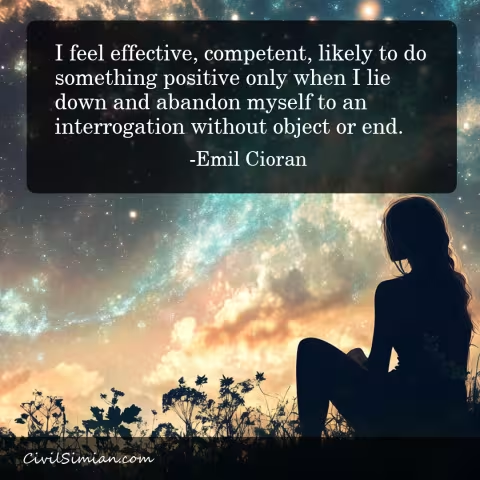
We can pool information about experiences, but never the experiences themselves. From family to nation, every human group is a society of island universes.
▼
Source
source
Page 159
7 months 2 weeks ago
By electricity we have not been driven out of our senses so much as our senses have been driven out of us.
▼
Source
source
(p. 375)
7 months 1 week ago
Take our politicians: they're a bunch of yo-yos. The presidency is now a cross between a popularity contest and a high school debate, with an encyclopedia of cliches.
▼
Source
source
As quoted in The Portable Curmudgeon (1987) by Jon Winokur, p. 219
9 months 2 weeks ago
It is the character of the British people, or at least of the higher and middle classes who pass muster for the British people, that to induce them to approve of any change, it is necessary that they should look upon it as a middle course: they think every proposal extreme and violent unless they hear of some other proposal going still farther, upon which their antipathy to extreme views may discharge itself. So it proved in the present instance; my proposal was condemned, but any scheme for Irish Land reform, short of mine, came to be thought moderate by comparison.
▼
Source
source
(pp. 294-295)
5 months 2 weeks ago
The state as the decisive political entity possesses an enormous power: the possibility of waging war and thereby publicly disposing of the lives of men. The jus belli contains such a disposition. It implies a double possibility: the right to demand from its own members the readiness to die and unhesitatingly to kill enemies.
5 months 2 weeks ago
With silent strides Odysseus then shot back the bolt,passed lightly through the courtyard and sped down the street.Some saw him take the graveyard's zigzag mountain path,some saw him leap on rocks that edged the savage shore,some visionaries saw him in the dead of nightswimming and talking secretly with the sea-demons,but only a small boy saw him in a lonely dreamsit crouched and weeping by the dark sea's foaming edge.
▼
Source
source
Book II, line 457

8 months 1 week ago
Existence would be a quite impracticable enterprise if we stopped granting importance to what has none.
5 months 4 weeks ago
I was in a state of witless shock, as though flames had suddenly enwrapped and paralyzed me so that for a moment I had no mind, no memory.
8 months 1 week ago
What I know at sixty, I knew as well at twenty. Forty years of a long, a superfluous, labor of verification.
8 months 2 weeks ago
Let us apply these principles to adultery. The state can no more prohibit it or punish it by law than any other illegitimate satisfaction of the sexual impulse.
▼
Source
source
P. 431
10 months 2 weeks ago
By such reflections and by the continuance in them of a divine nature, the qualities which we have described grew and increased among them; but when the divine portion began to fade away, and became diluted too often and too much with the mortal admixture, and the human nature got the upper hand, they then, being unable to bear their fortune, behaved unseemly, and to him who had an eye to see grew visibly debased, for they were losing the fairest of their precious gifts; but to those who had no eye to see the true happiness, they appeared glorious and blessed at the very time when they were full of avarice and unrighteous power.

9 months 1 week ago
Discipline 'makes' individuals; it is the specific technique of a power that regards individuals both as objects and as instruments of its exercise. It is not a triumphant power...it is a modest, suspicious power, which functions as a calculated, but permanent economy.
8 months 1 week ago
Be of good courage, and if you are discouraged, still take courage over against the various forms of nature. He who has ears to hear, let him hear.
▼
Source
source
Chapter 4.
10 months 2 weeks ago
Every revolutionary ends as an oppressor or a heretic.

9 months 2 weeks ago
Yet a man may love a paradox, without losing either his wit or his honesty.
▼
Source
source
"Walter Savage Landor", from The Dial, xii, 1841
8 months 3 days ago
It must be recognized that man in his limited and relative earthly life is capable of bringing about the beautiful and the valuable only when he believes in another life, unlimited, absolute, eternal. That is a law of his being. A contact with this mortal life exclusive of any other ends in the wearing-away of effective energy and a self-satisfaction that makes one useless and superficial. Only the spiritual man, striking his roots deep in infinite and eternal life, can be a true creator. But Humanism denied the spiritual man, handed over the eternal to the temporal, and took its stand by the natural man within the limited confines of the earth.
▼
Source
source
p. 34
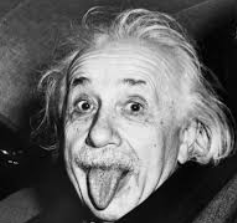
5 months 1 week ago
I never failed in mathematics. Before I was fifteen I had mastered differential and integral calculus.
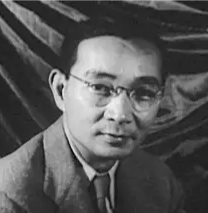
5 months 3 weeks ago
Instead of holding on to the Biblical view that we are made in the image of God, we come to realize that we are made in the image of the monkey.
▼
Source
source
p. 36
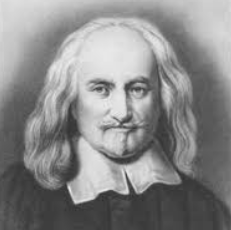
8 months 1 week ago
Now I am about to take my last voyage, a great leap in the dark.
▼
Source
source
Last words
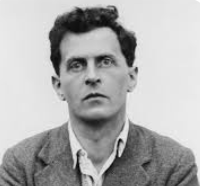
9 months 1 week ago
If someone is merely ahead of his time, it will catch up to him one day.
▼
Source
source
p. 8e
7 months 2 weeks ago
Omnipresence has become an ordinary human dimension.
8 months 2 weeks ago
Government in reality, as has abundantly appeared, is a question of force, and not of consent. It is desirable that a government should be made as agreeable as possible to the ideas and inclinations of its subjects and that they should be consulted, as extensively as may be, respecting its construction and regulations. But, at last, the best constituted government that can be formed particularly for a large community, will contain many provisions that, far from having obtained the consent of all its members, encounter even in their outset a strenuous, thought ineffectual opposition.
▼
Source
source
Book III, "Of Obedience"
9 months 1 week ago
The distance between oneself and other persons and other species can fall anywhere on a continuum. Even for other persons the understanding of what it is like to be them is only partial, and when one moves to species very different from oneself, a lesser degree of partial understanding may still be available. The imagination is remarkably flexible. My point, however, is not that we cannot know what it is like to be a bat. I am not raising that epistemological problem. My point is rather that even to form a conception of what it is like to be a bat and a fortiori to know what it is like to be a bat, one must take up the bat's point of view.
▼
Source
source
p. 172, note 8.

8 months 3 weeks ago
Every central government worships uniformity: uniformity relieves it from inquiry into an infinity of details.
▼
Source
source
Book Four, Chapter III.
8 months 1 week ago
Suppose a surface to be part red and part blue; so that every point on it is either red or blue, and of course, no part can be both red and blue. What then, is the color of the surface in the immediate neighborhood of the point. ...it follows that the boundary is half red and half blue. In like manner, we find it necessary to hold that consciousness essentially occupies time... Thus, the present is half past and half time to come. ...Take another case: the velocity of a particle at any instant of time is its mean velocity during an infinitesimal instant in which that time is consumed. Just so, my immediate feeling is my feeling through an infinitesimal duration containing the present instant.
7 months 6 days ago
The object of oratory alone is not truth, but persuasion.
▼
Source
source
'On the Athenian Orators', Knight's Quarterly Magazine (August 1824), quoted in The Miscellaneous Writings of Lord Macaulay, Vol. I (1860), p. 135

8 months 3 weeks ago
In America the majority raises formidable barriers around the liberty of opinion; within these barriers an author may write what he pleases, but woe to him if he goes beyond them.
▼
Source
source
Chapter XV, in a section titled Tryanny of the Majority.
6 months 3 days ago
He who is infatuated with Man leaves persons out of account so far as that infatuation extends, and floats in an ideal, sacred interest. Man, you see, is not a person, but an ideal, a spook.
▼
Source
source
Dover 2005, p. 79
7 months 2 weeks ago
The meaning of experience is typically one generation behind the experience. The content of new situations, both private and corporate, is typically the preceding situation.
▼
Source
source
quoted in "The Prospects of Recording" by Glenn Gould, The Glenn Gould reader, 1984, p. 345
9 months 2 weeks ago
But genius looks forward: the eyes of men are set in his forehead, not in his hindhead: man hopes: genius creates.
▼
Source
source
par. 18
10 months 2 weeks ago
But as more arts were invented, and some were directed to the necessities of life, others to recreation, the inventors of the latter were naturally always regarded as wiser than the inventors of the former, because their branches of knowledge did not aim at utility. ... This is why the mathematical arts were founded in Egypt; for there the priestly caste was allowed to be at leisure.
10 months 2 weeks ago
A robot may not injure a human being, or, through inaction, allow a human being to come to harm.
7 months 2 weeks ago
Today we experience, in reverse, what pre-literate man faced with the advent of writing.
▼
Source
source
p. 273
10 months 2 weeks ago
It is not necessary to ask whether soul and body are one, just as it is not necessary to ask whether the wax and its shape are one, nor generally whether the matter of each thing and that of which it is the matter are one. For even if one and being are spoken of in several ways, what is properly so spoken of is the actuality.
5 months 2 weeks ago
It is irreverent to the Gods to give you this demonstration, but for your sakes it shall be done.
▼
Source
source
As quoted in The Lives of the Sophists by Eunapius

7 months 3 weeks ago
We are organization watchers in our role as citizens. Increasing attention has been fixed in recent years upon the functioning of society's organizations: its large corporations and its governments. Hence this could also be described as a book for Everyman-for it proposes a way of thinking about organizational issues that concern us all.
▼
Source
source
Simon (1975, p. ix); As cited in Stefano Franchi(2006) "Herbert simon, anti-philosopher." Computing and Philosophy. p. 34.
CivilSimian.com created by AxiomaticPanic, CivilSimian, Kalokagathia