
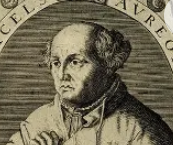
Paracelsus
Member for
6 months 1 weekParacelsus — Iatrochemistry, the Doctrine of Signatures, and the Body as Microcosm of the Cosmos (1493–1541)
Philippus Aureolus Theophrastus Bombastus von Hohenheim — who styled himself Paracelsus, meaning "equal to or surpassing Celsus," the Roman encyclopedist of medicine — was a German-Swiss physician, alchemist, natural philosopher, lay theologian, and astrologer of the Renaissance, born in Einsiedeln, Switzerland, on or around 11 November 1493, the only son of a physician father who trained him in medicine, botany, mineralogy, and natural philosophy from childhood. They moved to Villach in southern Austria, where his father taught at the Bergschule — a mining school funded by the Fugger banking dynasty — giving the young Paracelsus a formation in metallurgy, chemistry, and the transformative processes of the earth that would shape his entire approach to medicine. He attended university briefly — he was not a fan — studied under four bishops, wandered Europe for years claiming encounters with Tatars in Moscow, sages in Arabia, and alchemists across every country, and settled in Strasbourg in the mid-1520s. In 1527 he was appointed city physician and professor of medicine in Basel — and celebrated by publicly burning the works of Galen and Avicenna in the Basel marketplace. He was dismissed from Basel in disgrace the following year after a legal dispute with a canon whose cure he had been promised a large fee for and who refused to pay. He spent the rest of his life wandering — Colmar, Nuremberg, St. Gallen, Augsburg, Innsbruck, Salzburg — writing prolifically, practicing, arguing, and never settling. He died in Salzburg on 24 September 1541 at the age of forty-seven. The cause of death remains debated: illness, a fall, or foul play.
He called himself "highly educated," "most widely known," "incomparable," "master of arts," "prince of chemists," and "monarch of medicine." He was never distinguished by excessive modesty. He was also, by any measure, the most consequential medical thinker of the sixteenth century — the founder of iatrochemistry, the father of toxicology, the first systematic botanist (he gave zinc its name), and the most disruptive voice in European medicine between Galen and Harvey.
His central concern: that the body was a microcosm of the cosmos — that health and disease arose from the dynamic interaction of body, soul, and universe — and that medicine, properly understood, required not the passive recycling of ancient authorities but direct observation of nature, combined with an understanding of the hidden correspondences between the human organism and the living world around it.
Against Galen — The Bonfire of the Authorities
European medicine in 1527 was built on a framework that had been essentially unchanged since the second century: the Galenic system of humors — blood, phlegm, yellow bile, black bile — whose balance or imbalance determined health and disease. Treatment consisted of restoring humoral balance through bloodletting, purging, diet, and herbal preparations. The system was learned from ancient texts — Galen, Avicenna's Canon of Medicine — and the authority of those texts was itself the evidence for their truth. Clinical observation was subordinate to textual authority. A physician who saw something that contradicted Galen was more likely to question his own observation than the text.
Paracelsus's bonfire was a philosophical statement as much as a provocation. He burned Galen and Avicenna not from ignorance but from the conviction that what they represented — medical knowledge derived from ancient authority rather than direct experience — was the obstacle that had to be removed before medicine could advance. He lectured in German rather than Latin — the language of authority and exclusion — deliberately opening his teaching to practitioners who had not been formed in the university system. He was not anti-intellectual but anti-authoritarian: the measure of medical knowledge was not who had said it but whether it worked.
"The universities do not teach all things; so a doctor must seek out old wives, gypsies, sorcerers, wandering tribes, old robbers, and such outlaws and take lessons from them. A doctor must be a traveler — knowledge is experience."
— Paracelsus
Iatrochemistry — The Body as Chemical System
Paracelsus's most lasting medical contribution was iatrochemistry — the application of chemical principles to the understanding and treatment of disease. Where Galen's medicine was organized around humors and their balance, Paracelsus's medicine was organized around chemical processes: the body was a kind of alchemical laboratory in which digestion, respiration, and metabolic function were chemical operations. Disease arose when these chemical processes went wrong, and the appropriate treatment was chemical — specific mineral and metallic preparations targeted at the diseased process, rather than general humoral rebalancing.
He replaced the four Galenic humors with three "philosophical elements": sulfur (the principle of combustibility), mercury (the principle of volatility and fluidity), and salt (the principle of fixity and constancy). Every substance, including every bodily tissue, was a combination of these three. Disease was a disruption in their proper proportion or interaction. Treatment required supplying or restoring the deficient principle — using mercury compounds for syphilis (a treatment whose toxicity was considerable but whose effectiveness was real), using sulfur compounds for skin diseases, using mineral preparations targeted to specific organs. This was the conceptual foundation of pharmacology.
"All things are poison, and nothing is without poison; the dosage alone makes it so a thing is not a poison."
— Paracelsus — the founding maxim of toxicology
The Doctrine of Signatures — Nature as Readable Text
Paracelsus's most philosophically distinctive medical doctrine was the "doctrine of signatures" — the teaching that every plant and mineral carried visible signs indicating its medicinal properties and its correspondences with the organs and diseases it was suited to treat. A plant with liver-shaped leaves treated liver disease. A mineral whose color resembled blood treated blood conditions. A plant that grew in wet, boggy places treated conditions associated with excess moisture. Nature was not a mute collection of objects to be experimentally analyzed — it was a living text, signed by God, whose meanings were readable by those with the training to see them.
This was inseparable from his cosmological framework. The human body was a microcosm — a small world — that corresponded to and participated in the macrocosm of the universe. The planets corresponded to organs: the Sun to the heart, the Moon to the brain, Saturn to the spleen, Mercury to the lungs. Diseases were influenced by celestial events. The physician who understood these correspondences had access to a system of therapeutic knowledge that mechanical experiment alone could not provide. The doctrine was not mere superstition but a coherent philosophical framework for understanding the relationship between the part (the body) and the whole (the cosmos).
"The human being is a microcosm — a compendium of the universe. The physician who does not understand the stars is not a complete physician. Nature marks each growth according to its curative benefit."
— Paracelsus
Theology and Magic — Medicine as Spiritual Practice
Paracelsus was not a secularist who happened to use chemical remedies. His medicine was embedded in a theological vision in which the natural and supernatural were not separate domains. God had created a living cosmos in which every part corresponded to every other. The physician's art was not merely technical competence but a spiritual discipline — an ability to read God's signs in nature, to work with the hidden forces (virtues) embedded in natural substances, and to understand that disease affected the soul as well as the body. He was a lay theologian who produced extensive theological writings, engaged with Protestant Reformation theology, and criticized both Catholic and Lutheran establishments for failing to embody the Christianity they professed.
His engagement with magic — Hermeticism, astrology, Neoplatonic occultism — was not an embarrassment to be explained away but an integral part of his framework. "Magic" in the Renaissance sense was the study and use of nature's hidden forces: the sympathies and antipathies between substances, the influence of celestial bodies on terrestrial events, the power of the imagination on the body. These were philosophical propositions about how nature worked, not simply superstitions. The distinction between what we now call magic and what we now call science had not yet been drawn in the terms we take for granted.
"Paracelsus dealt simultaneously with theology, medicine, humanity, chemistry, and magic — and saw each of these as united to and vitally enriched by the others. His life and writings stubbornly resist strict categorization and demystification."
— Bruce Moran, Paracelsus: An Alchemical Life
The Luther of Medicine — Reform and Wandering
His contemporaries called him the "Luther of Medicine" — a comparison that captured both the disruptive radicalism and the Protestant-era context of his challenge to established authority. Like Luther, he rejected the authority of the received tradition in favor of direct access to the primary sources — for Luther, scripture; for Paracelsus, nature itself. Like Luther, he was pugnacious, prolific, and impossible to ignore. Unlike Luther, he never established a stable institutional base. He wandered for most of his adult life — from city to city, country to country — writing prolifically in whatever lodgings he could find, always moving on after quarrels with local physicians, magistrates, or patrons. The wandering was partly temperamental and partly structural: his ideas were too disruptive for the medical establishments he encountered, and his personality was too combative for the compromises they required.
"He burned Galen and Avicenna publicly. He lectured in German rather than Latin. He quarreled with most of his colleagues at Basel and was dismissed in disgrace. He resumed his wandering from place to place, teaching chemical therapy wherever he went — the Luther of Medicine who never found his Wittenberg."
Legacy — Father of Toxicology, Grandfather of Pharmacology
Paracelsus's specific theoretical framework — the three principles, the doctrine of signatures, the macrocosm-microcosm correspondence — was eventually superseded by the mechanical philosophy and the chemistry of the seventeenth and eighteenth centuries. What survived was more important than the framework: the insistence that disease had specific causes requiring specific treatments, that mineral and chemical preparations were legitimate medicines, that dosage was the critical variable between poison and cure, that clinical observation was primary over textual authority, and that medicine needed to be reformed rather than merely conserved. Van Helmont, Sylvius, and the seventeenth-century iatrochemists built directly on his foundation. Modern pharmacology, toxicology, and the concept of the targeted drug trace their conceptual genealogy through him.
On CivSim he belongs alongside Bruno, Ficino, Pico della Mirandola, and Francis Bacon — the Renaissance thinkers who stood at the crossroads of the occult philosophical tradition and the emerging scientific one, helping to constitute both. His challenge to Universal Humanism is the holism challenge: a philosophy of human flourishing that treats the human being as a purely social and rational animal — as a bearer of rights and interests to be protected — leaves out the dimension that Paracelsus placed at the center: the embeddedness of the human body in a natural cosmos whose forces and correspondences it participates in and cannot be understood apart from. "The universe is not out there and the person in here — they are one living system." Whether that claim is literally true or not, the reductive alternative — treating the human body as a machine isolated from its ecological context — has its own costs, which five centuries of post-Paracelsian medicine is still reckoning with.
"All things are poison, and nothing is without poison; the dosage alone makes it so a thing is not a poison."
— Paracelsus — the sentence that founded toxicology
CivilSimian.com created by AxiomaticPanic, CivilSimian, Kalokagathia