

9 months 3 weeks ago
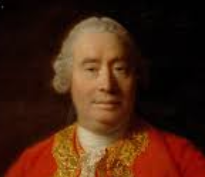
Beauty is no quality in things themselves: It exists merely in the mind which contemplates them; and each mind perceives a different beauty. One person may even perceive deformity, where another is sensible of beauty; and every individual ought to acquiesce in his own sentiment, without pretending to regulate those of others.
▼
Source
source
Part I, Essay 23: Of The Standard of Taste
6 months 2 days ago
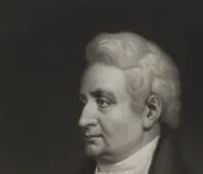
Have the courage to be ignorant of a great number of things, in order to avoid the calamity of being ignorant of everything.
▼
Source
source
Lecture IX : On the Conduct of the Understanding

8 months 1 week ago
Verily I say unto you, All sins shall be forgiven unto the sons of men, and blasphemies wherewith soever they shall blaspheme: But he that shall blaspheme against the Holy Ghost hath never forgiveness, but is in danger of eternal damnation.
▼
Source
source
Mark 3:28-29 (KJV)
8 months 1 week ago
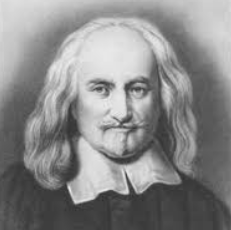
And though this may seem to subtile a deduction of the Lawes of Nature, to be taken notice of by all men;whereof the most part are too busie in getting food, and the rest too negligent to understand; yet to leave all men unexcusable, they have been contracted into one easie sum, intelligble, even to the meanest capacity; and that is, Do not that to another, which thou wouldest not have done to thyselfe; which sheweth him, that he has no more to do in learning the Lawes of Nature, but, when weighing the actions of other men with his own, they seem too heavy, to put them into the other part of the balance, and his own into their place, that his own passions, and selfe love, may adde nothing to the weight; and then there is none of these Laws of Nature that will not appear unto him very reasonable.
▼
Source
source
The First Part, Chapter 15, p. 79
9 months 2 weeks ago
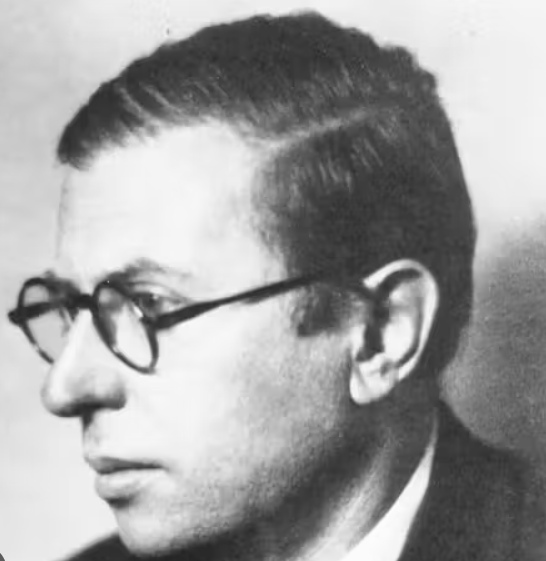
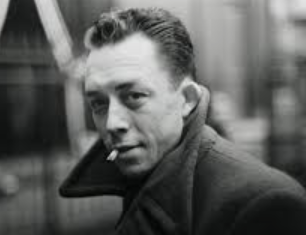
This is the contradiction of racism, colonialism, and all forms of tyranny: in order to treat a man like a dog, one must first recognize him as a man.
10 months 2 weeks ago
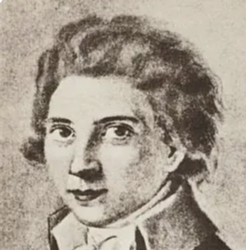
Metaphysical rebellion is a claim, motivated by the concept of a complete unity, against the suffering of life and death and a protest against the human condition both for its incompleteness, thanks to death, and its wastefulness, thanks to evil.
8 months 2 weeks ago
To live classically and to realize antiquity practically within oneself is the summit and goal of philology.
▼
Source
source
Philosophical Fragments, P. Firchow, trans. (1991) § 147
8 months 1 week ago
The kingdom of heaven is like to a grain of mustard seed, which a man took, and sowed in his field: Which indeed is the least of all seeds: but when it is grown, it is the greatest among herbs, and becometh a tree, so that the birds of the air come and lodge in the branches thereof.
▼
Source
source
13:31-32 (KJV)
8 months 1 week ago
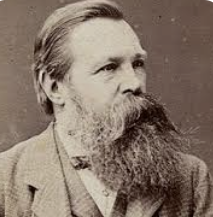
The slave frees himself when, of all the relations of private property, he abolishes only the relation of slavery and thereby becomes a proletarian; the proletarian can free himself only by abolishing private property in general.
9 months 2 weeks ago
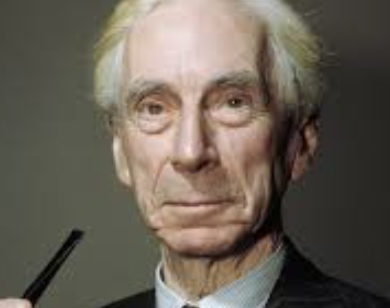
It seems to me now that mathematics is capable of an artistic excellence as great as that of any music, perhaps greater; not because the pleasure it gives (although very pure) is comparable, either in intensity or in the number of people who feel it, to that of music, but because it gives in absolute perfection that combination, characteristic of great art, of godlike freedom, with the sense of inevitable destiny; because, in fact, it constructs an ideal world where everything is perfect and yet true.
▼
Source
source
Letter to Gilbert Murray, April 3, 1902

9 months 2 weeks ago
In every stock-jobbing swindle everyone knows that some time or other the crash must come, but every one hopes that it may fall on the head of his neighbour, after he himself has caught the shower of gold and placed it in safety.
▼
Source
source
Vol. I, Ch. 10, Section 5, pg. 296.
9 months 2 weeks ago
Do not most of us resemble that old general of ninety who, having come upon some young officers debauching some girls, said to them angrily: "Gentlemen, is that the example I give you?" "Character"
▼
Source
source
1764

10 months 3 days ago
The fellow who eggs you on to avenge yourself will rob you of what you were going to say, as we forgive our debtors. When you have forfeited that, all your sins will be held against you; absolutely nothing is forgiven.
▼
Source
source
2.382673611
5 months 1 week ago
It is, therefore, quite natural that the churches have always fought against science and have persecuted its supporters. But, on the other hand, I assert that the cosmic religious experience is the strongest and noblest driving force behind scientific research. No one who does not appreciate the terrific exertions, and, above all, the devotion without which pioneer creations in scientific thought cannot come into being, can judge the strength of the feeling out of which alone such work, turned away as it is from immediate practical life, can grow. What a deep faith in the rationality of the structure of the world and what a longing to understand even a small glimpse of the reason revealed in the world there must have been in Kepler and Newton to enable them to unravel the mechanism of the heavens in long years of lonely work! Any one who only knows scientific research in its practical applications may easily come to a wrong interpretation of the state of mind of the men who, surrounded by skeptical contemporaries, have shown the way to kindred spirits scattered over all countries in all centuries. Only those who have dedicated their lives to similar ends can have a living conception of the inspiration which gave these men the power to remain loyal to their purpose in spite of countless failures. It is the cosmic religious sense which grants this power. A contemporary has rightly said that the only deeply religious people of our largely materialistic age are the earnest men of research.

9 months 2 weeks ago
When the man governed by self-interest, the god of this world, does not renounce it but merely refines it by the use of reason and extends it beyond the constricting boundary of the present, he is represented (Luke XVI, 3-9) as one who, in his very person [as servant], defrauds his master [self- interest] and wins from him sacrifices in behalf of "duty."
▼
Source
source
Book IV, Part 1, Section 2, "The Christian religion as a natural religion"

10 months 2 days ago
Some of their faults people readily admit, but others not so readily.
▼
Source
source
Book II, ch. 21, 1
7 months 3 days ago
Sound knowledge respecting the habits and mode of life of the man-like Apes has been even more difficult of attainment than correct information regarding their structure.
▼
Source
source
Ch.1, p. 36

8 months 1 week ago
I am displeased with everything. If they made me God, I would immediately resign.
7 months 3 days ago
The antagonism between science and religion, about which we hear so much, appears to me to be purely factitious - fabricated, on the one hand, by short-sighted religious people who confound a certain branch of science, theology, with religion; and, on the other, by equally short-sighted scientific people who forget that science takes for its province only that which is susceptible of clear intellectual comprehension; and that, outside the boundaries of that province, they must be content with imagination, with hope, and with ignorance.
▼
Source
source
"The interpreters of Genesis and the interpreters of Nature"
6 months 2 weeks ago
In places where men are used to differences they inevitably become tolerant.
▼
Source
source
Ch. IV: "The Line of Least Resistance", p. 52

5 months 1 week ago
Violated, dishonored, wading in blood, dripping filth - there stands bourgeois society. This is it [in reality]. Not all spic and span and moral, with pretense to culture, philosophy, ethics, order, peace, and the rule of law - but the ravening beast, the witches' sabbath of anarchy, a plague to culture and humanity. Thus it reveals itself in its true, its naked form.
▼
Source
source
Ch. 1
10 months ago
Several particular maxims... are as powerful, although false, in carrying away belief, as those the most true.
10 months ago
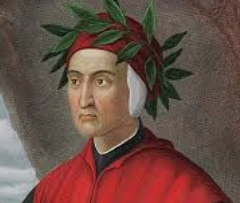
Morality is the beauty of Philosophy.
▼
Source
source
Trattato Terzo, Ch. 15.
7 months 3 weeks ago
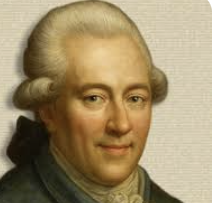
I am convinced we do not only love ourselves in others but hate ourselves in others too.
▼
Source
source
F 54

5 months 2 weeks ago
The religion-builders have so distorted and deformed the doctrines of Jesus, so muffled them in mysticisms, fancies and falsehoods, have caricatured them into forms so monstrous and inconceivable, as to shock reasonable thinkers, to revolt them against the whole, and drive them rashly to pronounce its founder an impostor.
▼
Source
source
Letter to w:Timothy Pickering, Esq., 27 February 1821
5 months 2 weeks ago
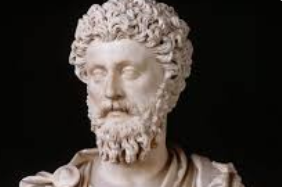
He that dies in extreme old age will be reduced to the same state with him that is cut down untimely.
▼
Source
source
IX, 33
5 months 2 weeks ago
"Fire is the first and final mask of my God. We dance and weep between two enormous pyres." Our thoughts and our bodies flash and glitter with reflected light. Between the two pyres I stand serenely, my brain unshaken amid the vertigo, and I say: "Time is most short and space most narrow between these two pyres, the rhythm of this life is most sluggish, and I have no time, nor a place to dance in. I cannot wait." Then all at once the rhythm of the earth becomes a vertigo, time disappears, the moment whirls, becomes eternity, and every point in space - insect or star or idea - turns into dance.
10 months 2 weeks ago
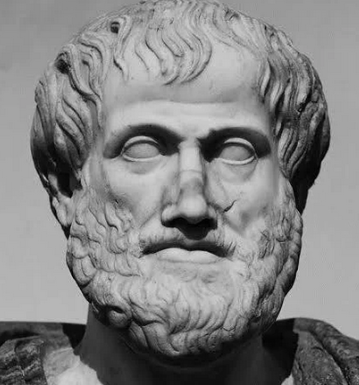
It is impossible for motion to subsist without place, and void, and time.
7 months 2 weeks ago
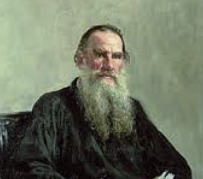
At the approach of danger there are always two voices that speak with equal force in the heart of man: one very reasonably tells the man to consider the nature of the danger and the means of avoiding it; the other even more reasonable says that it is too painful and harassing to think of the danger, since it is not a man's power to provide for everything and escape from the general march of events; and that it is therefore better to turn aside from the painful subject till it has come, and to think of what is pleasant. In solitude a man generally yields to the first voice; in society to the second.
▼
Source
source
Bk. X, ch. 17
10 months 1 week ago
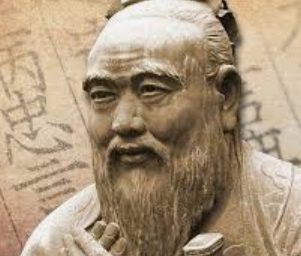
The superior man honors his virtuous nature, and maintains constant inquiry and study, seeking to carry it out to its breadth and greatness, so as to omit none of the more exquisite and minute points which it embraces, and to raise it to its greatest height and brilliancy, so as to pursue the course of the Mean. He cherishes his old knowledge, and is continually acquiring new. He exerts an honest, generous earnestness, in the esteem and practice of all propriety. Thus, when occupying a high situation he is not proud, and in a low situation he is not insubordinate. When the kingdom is well governed, he is sure by his words to rise; and when it is ill governed, he is sure by his silence to command forbearance to himself.

9 months 2 weeks ago
Nothing can be preserved that is not good.
▼
Source
source
Books

10 months 5 days ago
It would be better if they [rulers] compelled the Jews to work for their living, as they do in parts of Italy, than that, living without occupation, they can grow rich only by usury .
▼
Source
source
art. 2
8 months 1 week ago
Sadness makes you God's prisoner.
8 months 2 weeks ago
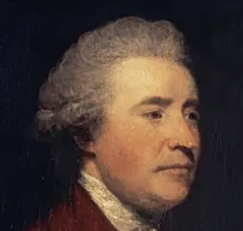
To the Deity must be left the task of infinite perfection, while to us poor, weak, incapable mortals, there was no rule of conduct so safe as experience.
▼
Source
source
Speech in the House of Commons (6 May 1791), quoted in The Parliamentary History of England, From the Earliest Period to the Year 1803, Vol. XXIX (1817), column 388

9 months 3 weeks ago
God's justice and His power are inseparable; 'tis in vain we invoke His power in an unjust cause. We are to have our souls pure and clean, at that moment at least wherein we pray to Him, and purified from all vicious passions; otherwise we ourselves present Him the rods wherewith to chastise us; instead of repairing anything we have done amiss, we double the wickedness and the offence when we offer to Him, to whom we are to sue for pardon, an affection full of irreverence and hatred. Which makes me not very apt to applaud those whom I observe to be so frequent on their knees, if the actions nearest to the prayer do not give me some evidence of amendment and reformation
▼
Source
source
Ch. 56. Of Prayers, tr. Cotton, rev. W. Carew Hazlitt, 1877

6 months 1 week ago
All that Mankind has done, thought, gained or been: it is lying as in magic preservation in the pages of Books.

9 months 2 weeks ago
The spurious axioms of the third kind from conditions proper to the subject whence they are transferred rashly to the object are plentiful, not, as in those of the Second Class, because the only way to the intellectual concept lies through the sensuous data, but because only by aid of the latter can the concept be applied to that which is given by experience, that is, can we know whether something is contained under a certain intellectual concept or not. To this class belongs the threadbare one of the schools: whatever exists contingently does at some time not exist. This spurious principle springs from the poverty of the intellect, having insight frequently into the nominal, rarely into the real, marks of contingency or necessity.
9 months 2 weeks ago
The real nature of the present revealed itself: it was what exists, all that was not present did not exist.
9 months 2 weeks ago
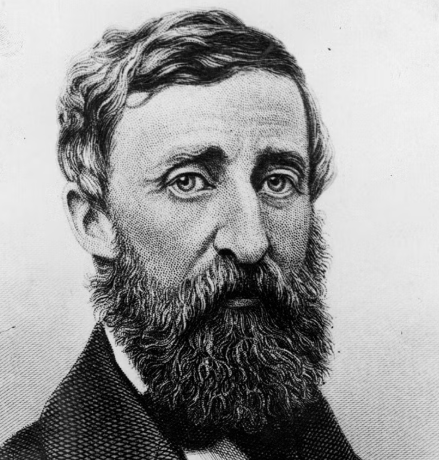
My desire for knowledge is intermittent; but my desire to bathe my head in atmospheres unknown to my feet is perennial and constant. The highest that we can attain to is not Knowledge, but Sympathy with Intelligence. I do not know that this higher knowledge amounts to anything more definite than a novel and grand surprise on a sudden revelation of the insufficiency of all that we called Knowledge before - a discovery that there are more things in heaven and earth than are dreamed of in our philosophy.
10 months 2 weeks ago
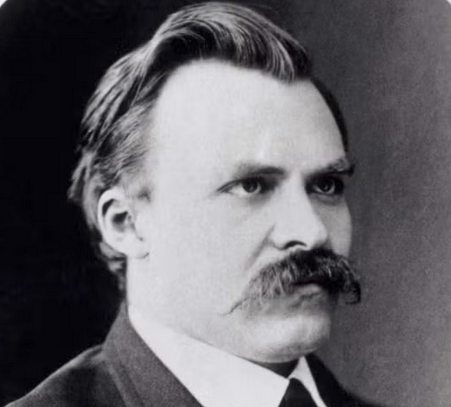
We believe that we know something about the things themselves when we speak of trees, colors, snow, and flowers; and yet we possess nothing but metaphors for things, metaphors which correspond in no way to the original entities.
8 months 1 week ago
Desire, to know why, and how, CURIOSITY; such as is in no living creature but Man; so that Man is distinguished, not only by his Reason; but also by this singular Passion from other Animals; in whom the appetite of food, and other pleasures of Sense, by predominance, take away the care of knowing causes; which is a Lust of the mind, that by a perseverance of delight in the continual and indefatigable generation of Knowledge, exceedeth the short vehemence of any carnal Pleasure.
▼
Source
source
The First Part, Chapter 6, p. 26
8 months 3 weeks ago
We indeed, who are beings of finite powers, are forced to make use of instruments. And the use of an instrument sheweth the agent to be limited by rules of another's prescription, and that he cannot obtain his end but in such a way, and by such conditions. Whence it seems a clear consequence, that the supreme unlimited agent useth no tool or instrument at all. The will of an Omnipotent Spirit is no sooner exerted than executed, without the application of means; which, if they are employed by inferior agents, it is not upon account of any real efficacy that is in them, or necessary aptitude to produce any effect, but merely in compliance with the laws of nature, or those conditions prescribed to them by the First Cause, who is Himself above all limitation or prescription whatsoever.
▼
Source
source
Philonous to Hylas. The Second Dialogue
9 months 2 weeks ago
If a victory is told in detail, one can no longer distinguish it from a defeat.
▼
Source
source
Act 1

8 months 3 days ago
It is only by entering the transcendental, the supernatural, the authentically spiritual order that man rises above the social. Until then, whatever he may do, the social is transcendent in relation to him.
▼
Source
source
p. 123
9 months 2 weeks ago
So much of our time is spent in preparation, so much in routine and so much in retrospect, that the amount of each person's genius is confined to a very few hours.
▼
Source
source
Quoted in Simon Brown (ed.) The New England Farmer, vol. 9 (January 1857) p. 18
8 months 3 weeks ago
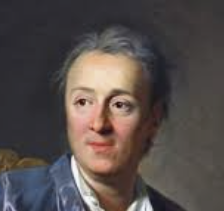
Do you see this egg? With this you can topple every theological theory, every church or temple in the world. What is it, this egg, before the seed is introduced into it? An insentient mass. And after the seed has been introduced to into it? What is it then? An insentient mass. For what is the seed itself other than a crude and inanimate fluid? How is this mass to make a transition to a different structure, to sentience, to life? Through heat. And what will produce that heat in it? Motion. "Conversation Between D'Alembert and Diderot", as quoted in Selected Writings (1966) edited by Lester G. Crocker, and The Enlightenment and the Intellectual Foundations of Modern Culture (2004) by Louis K Dupré, p. 30 Variant translation: See this egg. It is with this that all the schools of theology and all the temples of the earth are to be overturned.
▼
Source
source
As quoted in Diderot, Reason and Resonance (1982) by Élisabeth de Fontenay, p. 217
CivilSimian.com created by AxiomaticPanic, CivilSimian, Kalokagathia