


1 month 2 weeks ago
The range of socially permissible and desirable satisfaction is greatly enlarged, but through this satisfaction, the Pleasure Principle is reduced-deprived of the claims which are irreconcilable with the established society. Pleasure, thus adjusted, generates submission.
▼
Source
source
p. 75
3 months 4 days ago
Great abuses in the world are begotten, or, to speak more boldly, all the abuses of the world are begotten, by our being taught to be afraid of professing our ignorance, and that we are bound to accept all things we are not able to refute: we speak of all things by precepts and decisions. The style at Rome was that even that which a witness deposed to having seen with his own eyes, and what a judge determined with his most certain knowledge, was couched in this form of speaking: "it seems to me." They make me hate things that are likely, when they would impose them upon me as infallible.
▼
Source
source
Ch. 12, tr. Cotton, rev. W. Carew Hazlitt, 1877
1 month 3 weeks ago
If there is anyone who owes everything to Bach, it is certainly God.
2 months 3 weeks ago
The executive of the modern State is but a committee for managing the common affairs of the whole bourgeoisie.
▼
Source
source
As quoted in the Communist Manifesto (1848) p. 7

2 months 4 weeks ago
Men did not make the earth... It is the value of the improvements only, and not the earth itself, that is individual property... Every proprietor owes to the community a ground rent for the land which he holds.
▼
Source
source
Agrarian Justice
1 month 2 weeks ago
The discovery that mass changes with velocity, a discovery made when minute bodies came under consideration, finally forced surrender of the notion that mass is a fixed and inalienable possession of ultimate elements or individuals, so that time is now considered to be their fourth dimension.
1 month 3 weeks ago
"War," says Machiavel, "ought to be the only study of a prince;" and by a prince he means every sort of state, however constituted. "He ought," says this great political doctor, "to consider peace only as a breathing-time, which gives him leisure to contrive, and furnishes ability to execute military plans." A meditation on the conduct of political societies made old Hobbes imagine that war was the state of nature.
1 month 1 week ago
The issue over there being classes seems more a question of convenient conceptual scheme; the issue over there being centaurs, or brick houses on Elm Street, seems more a question of fact. But I have been urging that this difference is only one of degree, and that it turns upon our vaguely pragmatic inclination to adjust one strand of the fabric of science rather than another in accommodating some particular recalcitrant experience. Conservatism figures in such choices, and so does the quest for simplicity.
▼
Source
source
"Two Dogmas of Empiricism"
3 months 3 weeks ago
Misfortune shows those who are not really friends.
3 months 3 weeks ago
If the world were clear, art would not exist.

2 months 2 weeks ago
To resist him that is set in authority is evil. .
▼
Source
source
Maxim no. 31
1 month 3 weeks ago
To have failed in everything, always, out of a love of discouragement.
1 month 3 weeks ago
The source of our actions resides in an unconscious propensity to regard ourselves as the center, the cause, and the conclusion of time. Our reflexes and our pride transform into a planet the parcel of flesh and consciousness we are. If we had the right sense of our position in the world, if to compare were inseparable from to live, the revelation of our infinitesimal presence would crush us. But to live is to blind ourselves to our own dimensions. . . .
3 weeks 3 days ago
The name of a man is a numbing blow from which he never recovers.
1 month 1 week ago
The eros-driven soul produces beautiful things, and, above all, beautiful actions, which have a universal value.
1 month 1 week ago
The more reified the world becomes, the thicker the veil cast upon nature, the more the thinking weaving that veil in its turn claims ideologically to be nature, primordial experience.
▼
Source
source
p. 7
3 months 4 days ago
Let us keep to Christ, and cling to Him, and hang on Him, so that no power can remove us.
▼
Source
source
p. 433
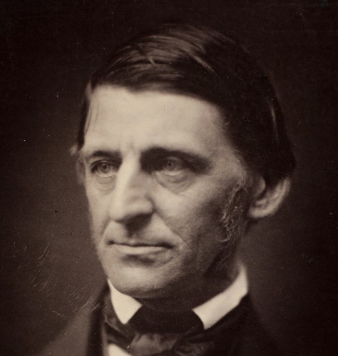
2 months 3 weeks ago
I trust a good deal to common fame, as we all must. If a man has good corn, or wood, or boards, or pigs, to sell, or can make better chairs or knives, crucibles or church organs, than anybody else, you will find a broad hard-beaten road to his house, though it be in the woods.
▼
Source
source
February 1855
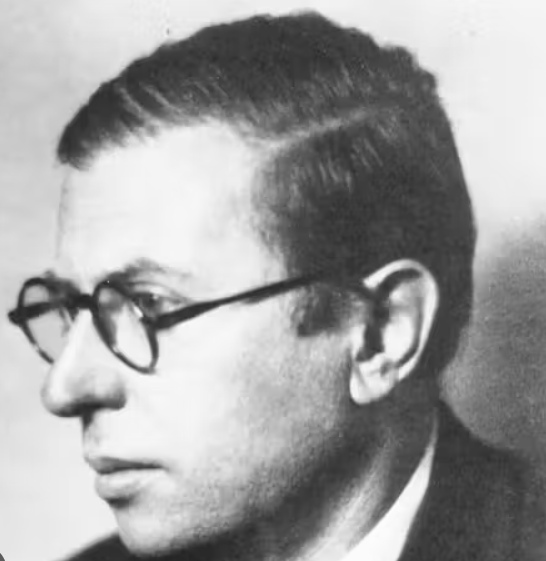
2 months 3 weeks ago
What do we mean by saying that existence precedes essence? We mean that man first of all exists, encounters himself, surges up in the world-and defines himself afterwards. If man as the existentialist see him is not definable, it is because to begin with he is nothing. He will not be anything until later, and then he will be what he makes of himself. Thus, there is no human nature, because there is no God to have a conception of it. Man simply is. Not that he is simply what he conceives himself to be, but he is what he wills, and as he conceives himself after already existing - as he wills to be after that leap towards existence. Man is nothing else but that which he makes of himself. That is the first principle of existentialism.
▼
Source
source
p. 28
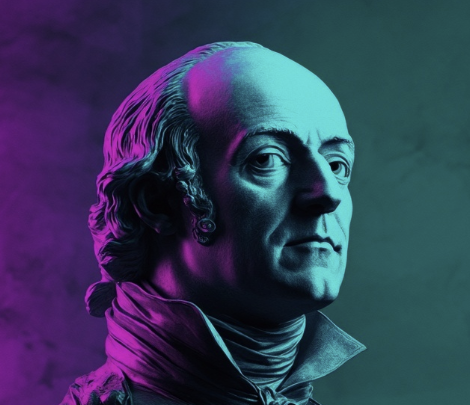
3 months ago
In this consists the difference between the character of a miser and that of a person of exact economy and assiduity. The one is anxious about small matters for their own sake; the other attends to them only in consequence of the scheme of life which he has laid down to himself.
▼
Source
source
Chap. VI.
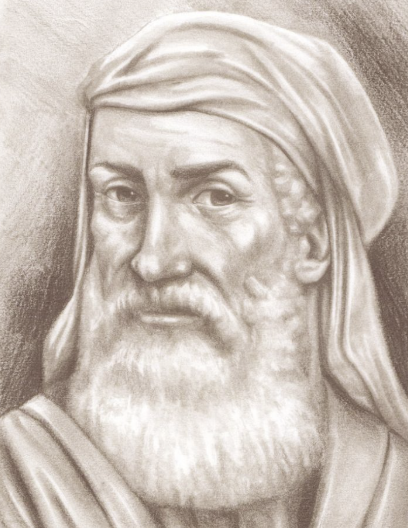
2 months 2 weeks ago
Fools -- for their thoughts are not well-considered who suppose that not-being exists or that anything dies and is wholly annihilated.
▼
Source
source
fr. 11
2 months 3 weeks ago
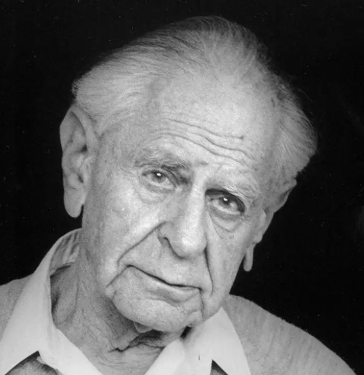
The open society is one in which men have learned to be to some extent critical of taboos, and to base decisions on the authority of their own intelligence.
▼
Source
source
Vol. 1, Endnotes to the Chapters : Notes to the Introduction.

2 months 3 weeks ago
Thus, Beauty is neither an appearance nor a being, but a relationship: the transformation of being into appearance
▼
Source
source
p. 408

2 months 3 weeks ago
It seems to me that, in every culture, I come across a chapter headed Wisdom. And then I know exactly what is going to follow: Vanity of vanities, all is vanity.
▼
Source
source
Conversation of 1934
1 month 1 week ago
The freedom of the 'everyday mind' consists rather in not kneeling down in awe. Its mental attitude is better expressed as sitting unmoveable like an object.
3 months 3 weeks ago
God is not needed to create guilt or to punish. Our fellow men suffice, aided by ourselves.
3 months 1 week ago
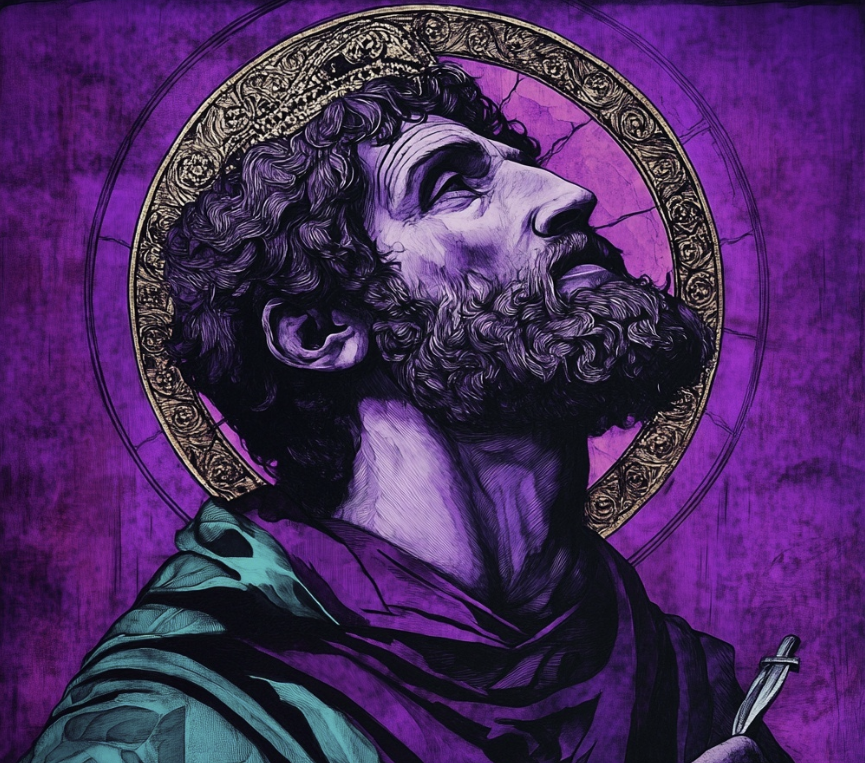
The Apostle says: I make up in my flesh what is lacking to the sufferings of Christ (Col. 1:24). I make up, he tells us, not what is lacking to my sufferings, but what is lacking to the sufferings of Christ; not in Christ flesh, but in mine. not in Christ's flesh, but in mine. Christ is still suffering, not in His own flesh which He took with Him into heaven, but in my flesh, which is still suffering on earth.
▼
Source
source
p.423
1 week 5 days ago
The extent of the region of the uncertain, the number of the problems the investigation of which ends in a verdict of not proven, will vary according to the knowledge and the intellectual habits of the individual agnostic. I do not very much care to speak of anything as unknowable. What I am sure about is that there are many topics about which I know nothing, and which, so far as I can see, are out of reach of my faculties. But whether these things are knowable by any one else is exactly one of those matters which is beyond my knowledge, though I may have a tolerably strong opinion as to the probabilities of the case.
1 month 2 weeks ago
If the subjectivist view hold true, thinking cannot be of any help in determining the desirability of any goal in itself. The acceptability of ideals, the criteria for our actions and beliefs, the leading principles of ethics and politics, all our ultimate decisions are made to depend upon factors other than reason. They are supposed to be matters of choice and predilection, and it has become meaningless to speak of truth in making practical, moral or esthetic decisions.
▼
Source
source
pp. 7-8.
3 weeks 3 days ago
Youth instinctively understand the present environment - the electric drama. It lives mythically and in depth.
1 month 1 week ago
The bourgeoisie is defined as the social class which does not want to be named.
▼
Source
source
p. 138
1 month 1 week ago
There is something between the gross specialised values of the mere practical man, and the thin specialised values of the mere scholar. Both types have missed something; and if you add together the two sets of values, you do not obtain the missing elements.
▼
Source
source
Ch. 13: "Requisites for Social Progress", p. 279
2 months 4 weeks ago
The more we devote ourselves to observing animals and their behaviour, the more we love them, on seeing how gready they care for their young; in such a context, we cannot even contemplate cruelty to a wolf. Leibnitz put the grub he had been observing back on the tree with its leaf, lest he should be guilty of doing any harm to it. It upsets a man to destroy such a creature for no reason, and this tenderness is subsequently transferred to man.
▼
Source
source
Part II, pp. 212-213
2 weeks 1 day ago
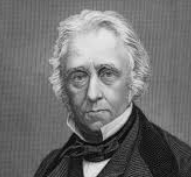
We hold that the most wonderful and splendid proof of genius is a great poem produced in a civilized age.
▼
Source
source
p. 5
2 months 3 weeks ago
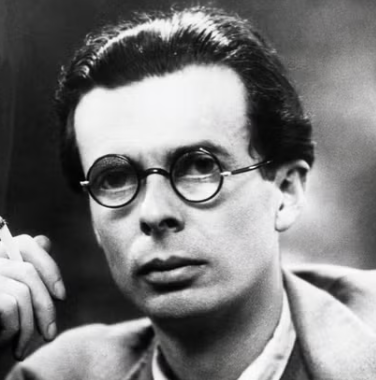
Those who believe that they are exclusively in the right are generally those who achieve something.
▼
Source
source
"Note on Dogma"
2 months 3 weeks ago
Don't for heaven's sake, be afraid of talking nonsense! But you must pay attention to your nonsense.
▼
Source
source
p. 56e
3 months ago
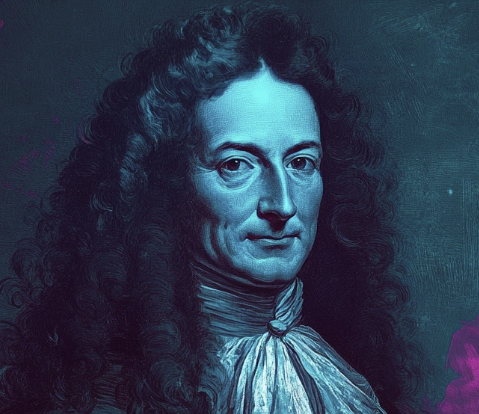
I am convinced that the unwritten knowledge scattered among men of different callings surpasses in quantity and in importance anything we find in books, and that the greater part of our wealth has yet to be recorded.
▼
Source
source
1688-1690
7 months 2 days ago
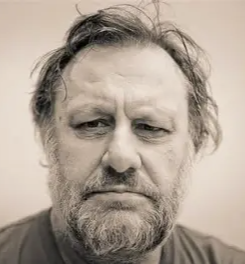
What is really disturbing about The Name of the Rose, however, is the underlying belief in the liberating, anti-totalitarain force of laughter, of ironic distance. Our thesis here is almost the exact opposite of the underlying premise of Eco's novel: in contemporary socities, democratic or totalitarian, that cynical distance, laughter, irony, are so to speak, part of the game. The ruling ideology is not meant to be taken seriously or literally. Perhaps the greatest danger for totalitarianism is people who take ideology seriously.
3 months 2 weeks ago
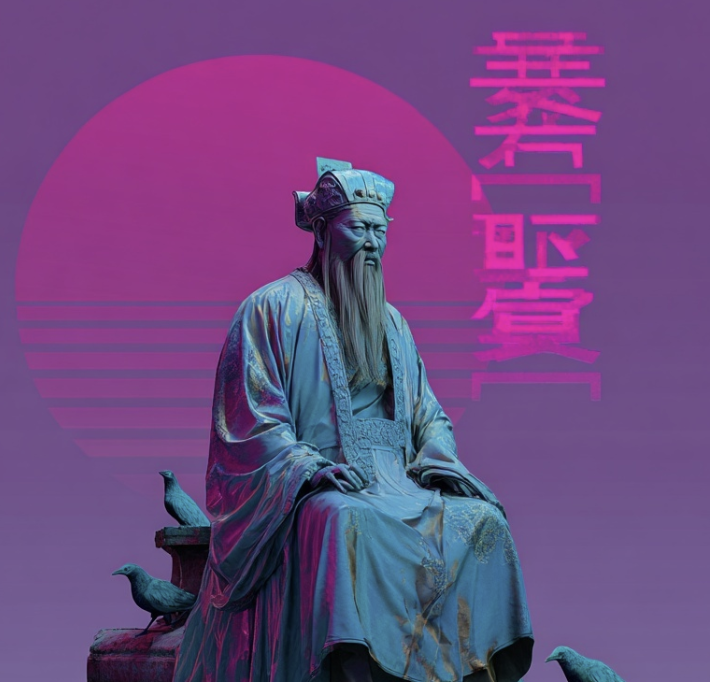
Follow the seasons of Ha,Ride in the state carriage of Yau,Wear the ceremonial cap of Chan,Let the music be the Shiu with its pantomimes.
3 weeks 3 days ago
There are no connections in resonant space. There are only interfaces and metamorphoses.
▼
Source
source
(p. 75)
2 months 3 weeks ago
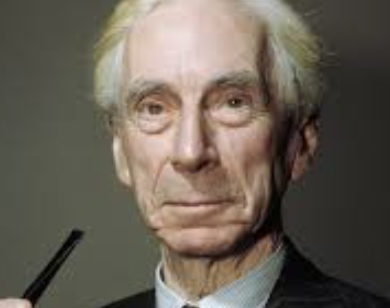
The rules of logic are to mathematics what those of structure are to architecture.

2 months 3 days ago
The man who makes his religion a means to the gaining of this world, will lose both worlds alike; whereas the man who gives up this world for the sake of religion, will get both worlds alike.
▼
Source
source
The Faith and Practice of Al-Ghazali, Allen & Unwin (1963), p. 152.
2 months 3 weeks ago
None but a coward dares to boast that he has never known fear.
▼
Source
source
Attributed to Russell in M. Kumar Dictionary of Quotations, p. 76, but actually said by Marshal Lannes, according to The London Literary Gazette and Journal of Belles Lettres, Arts, Sciences (1824), p. 664
3 months ago
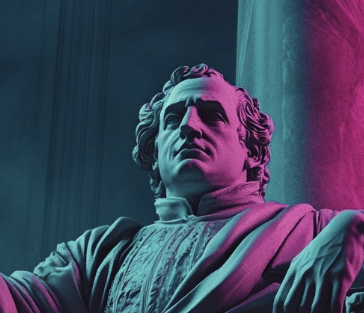
A propensity to hope and joy is real riches: One to fear and sorrow, real poverty.
▼
Source
source
Part I, Essay 18: The Sceptic
2 months 3 weeks ago
The individual produces an object and, by consuming it, returns to himself, but returns as a productive and self reproducing individual. Consumption thus appears as a moment of production.
▼
Source
source
Introduction, p. 14.
3 months ago
Love in animals, has not for its only object animals of the same species, but extends itself farther, and comprehends almost every sensible and thinking being. A dog naturally loves a man above his own species, and very commonly meets with a return of affection.
▼
Source
source
Part 2, Section 12
1 month 3 weeks ago
Through a wise and salutary neglect [of the colonies], a generous nature has been suffered to take her own way to perfection; when I reflect upon these effects, when I see how profitable they have been to us, I feel all the pride of power sink and all presumption in the wisdom of human contrivances melt and die away within me. My vigour relents. I pardon something to the spirit of liberty.

3 months 5 days ago
Lastly, there are Idols which have immigrated into men's minds from the various dogmas of philosophies, and also from wrong laws of demonstration. These I call Idols of the Theater, because in my judgment all the received systems are but so many stage plays, representing worlds of their own creation after an unreal and scenic fashion.
▼
Source
source
Aphorism 44
2 months 3 weeks ago
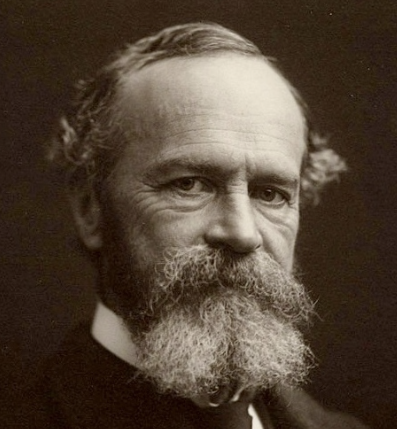
The difference between the first- and second-best things in art absolutely seems to escape verbal definition - it is a matter of a hair, a shade, an inward quiver of some kind - yet what miles away in the point of preciousness!
▼
Source
source
To Henry Rutgers Marshall, 7 February 1899
CivilSimian.com created by AxiomaticPanic, CivilSimian, Kalokagathia