This could be a reply to the previous post: Be gentle to all and stern with yourself. -Teresa of Avila


Frazer is much more savage than most of his savages, for they are not as far removed from the understanding of spiritual matter as a twentieth-century Englishman. His explanations of primitive practices are much cruder than the meaning of these practices themselves.
The blues is relevant today because when we look down through the corridors of time, the black American interpretation of tragicomic hope in the face of dehumanizing hate and oppression will be seen as the only kind of hope that has any kind of maturity in a world of overwhelming barbarity and bestiality. That barbarity is found not just in the form of terrorism but in the form of the emptiness of our lives - in terms of the wasted human potential that we see around the world. In this sense, the blues is a great democratic contribution of black people to world history.
Self-pity is not as sterile as we suppose. Once we feel its mere onset, we assume a thinker's attitude, and come to think of it, we come to think!
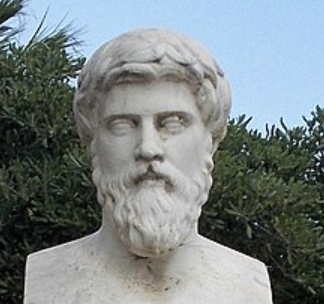
Cato the elder wondered how that city was preserved wherein a fish was sold for more than an ox.
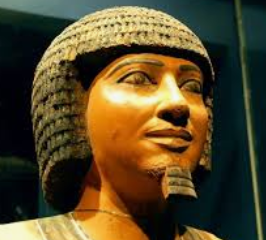
The pleasure is only for a little moment, and it [passes] like a dream, and a man at the end thereof finds death through knowing it.
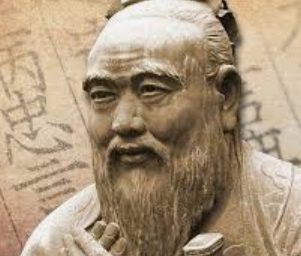
Better a diamond with a flaw than a pebble without.
My faculty for disappointment surpasses understanding. It is what lets me comprehend Buddha, but also what keeps me from following him.
By asserting the objectivity of the physical world, naturalism identifies the existence and the conditions of existence of the physical world with existence and the conditions of existence in general. It forgets that the world of the physicist necessarily refers back, through its intrinsic meaning, through the subjective world which one tries to exclude from reality as being pure appearance, conditioned by the empirical nature of man, which is incapable of reaching directly to a world of things in themselves. But while the world of the physicist claims to go beyond naive experience, his world really exists only in relation to naive experience.
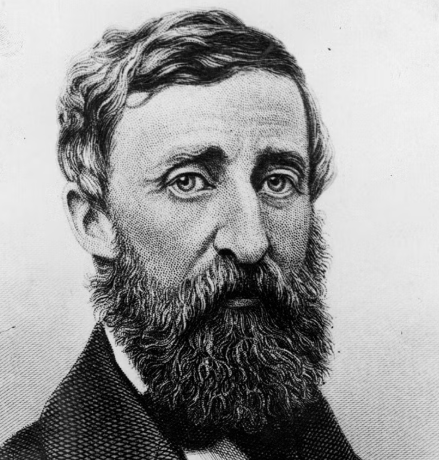
It is strange that men will talk of miracles, revelations, inspiration, and the like, as things past, while love remains.
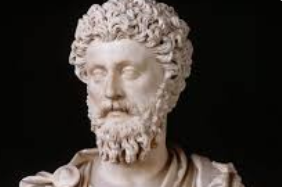
Prize that which is best in the universe; and this is that which useth everything and ordereth everything.
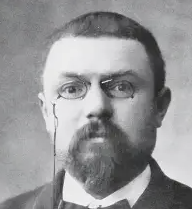
As we can not give a general definition of energy, the principle of the conservation of energy signifies simply that there is something which remains constant.
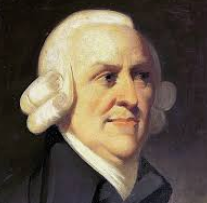
The Hudson's Bay Company, before their misfortunes in the late war, had been much more fortunate than the Royal African Company.
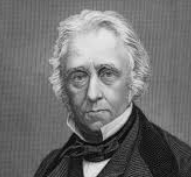
What a singular destiny has been that of this remarkable man! To be regarded in his own age as a classic, and in ours as a companion! To receive from his contemporaries that full homage which men of genius have in general received only from posterity! To be more intimately known to posterity than other men are known to their contemporaries!
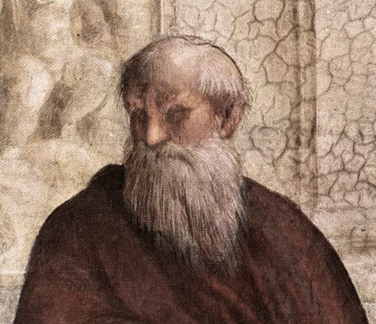
We may treat of the Soul as in the body whether it be set above it or actually within it since the association of the two constitutes the one thing called the living organism, the Animate. Now from this relation, from the Soul using the body as an instrument, it does not follow that the Soul must share the body's experiences: a man does not himself feel all the experiences of the tools with which he is working.

I see the situation of man in the world of planetary technicity not as an inexitricable and inescapable destiny, but I see the task of thought precisely in this, that within its own limits it helps man as such achieve a satisfactory relationship to the essence of technicity. National Socialism did indeed go in this direction. Those people, however, were far too poorly equipped for thought to arrive at a really explicit relationship to what is happening today and has been underway for the past 300 years.
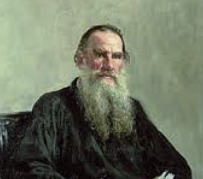
Art is a human activity having for its purpose the transmission to others of the highest and best feelings to which men have risen.
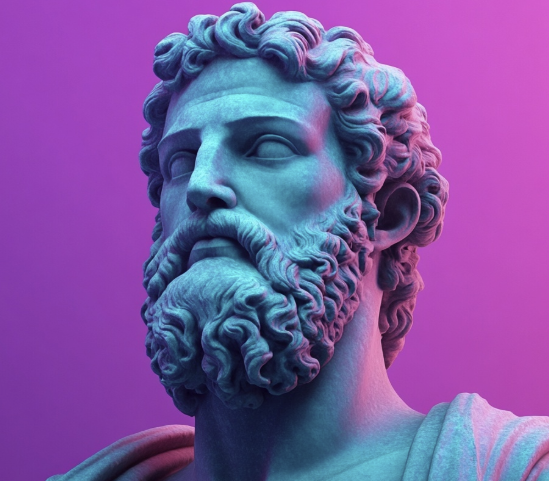
If the room is smoky, if only moderately, I will stay; if there is too much smoke I will go. Remember this, keep a firm hold on it, the door is always open.
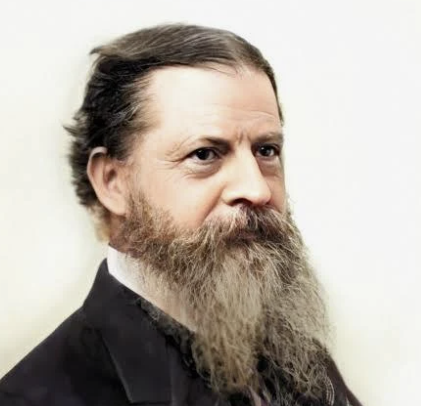
Understand me well. My appeal is to observation - observation that each of you must make for himself.
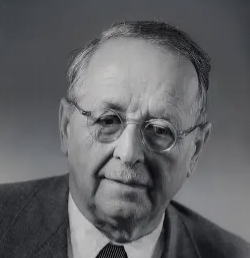
Above all, the ominous clouds of those phenomena that we are with varying success seeking to explain by means of the quantum of action, are throwing their shadows over the sphere of physical knowledge, threatening no one knows what new revolution.
The superior man has three things in which he delights, and to be ruler over the kingdom is not one of them. That his father and mother are both alive, and that the condition of his brothers affords no cause for anxiety;-this is one delight. That, when looking up, he has no occasion for shame before Heaven, and, below, he has no occasion to blush before men;-this is a second delight. That he can get from the whole kingdom the most talented individuals, and teach and nourish them;-this is the third delight.
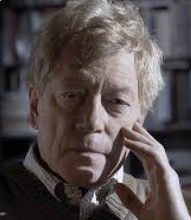
Kant's position is extremely subtle - so subtle, indeed, that no commentator seems to agree with any other as to what it is.
Our entire linear and accumulative culture collapses if we cannot stockpile the past in plain view. "
I believe that every human being with a physically normal brain can learn a great deal and can be surprisingly intellectual. I believe that what we badly need is social approval of learning and social rewards for learning.We can all be members of the intellectual elite and then, and only then, will a phrase like "America's right to know" and, indeed, any true concept of democracy, have any meaning.
The laws of Rome had wisely divided public power among a large number of magistracies, which supported, checked and tempered each other. Since they all had only limited power, every citizen was qualified for them, and the people - seeing many persons pass before them one after the other - did not grow accustomed to any in particular. But in these times the system of the republic changed. Through the people the most powerful men gave themselves extraordinary commissions - which destroyed the authority of the people and magistrates, and placed all great matters in the hands of one man, or a few.
Movement in direct experience is alteration in the qualities of objects, and space as experienced is an aspect of this qualitative change. Up and down, back and front, to and fro, this side and that- or right and left- here and there, feel differently. The reason they do is that they are not static points in something itself static, but objects in movement, qualitative changes of value. For "back" is short for backwards and front for forwards. So with velocity. Mathematically there are no such things as fast and slow. They mark simply greater and less on a number scale. As experienced they are qualitatively as unlike as noise and silence, heat and cold, black and white. To be forced to wait a long time for an important event to happen is a length very different from that measured by the movements of the hands of a clock. It is something qualitative.
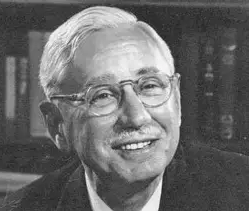
Middle age begins with marriage; for then work and responsibility replace carefree play, passion surrenders to the limitations of social order, and poetry yields to prose.
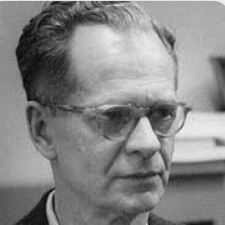
Ethical control may survive in small groups, but the control of the population as a whole must be delegated to specialists-to police, priests, owners, teachers, therapists, and so on, with their specialized reinforcers and their codified contingencies.

Reason is immortal, all else mortal.
Does the light of a lamp shine and keep its glow until its fuel is spent? Why shouldn't your truth, justice, and self-control shine until you are extinguished?
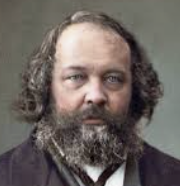
A person is strong only when he stands upon his own truth, when he speaks and acts from his deepest convictions. Then, whatever the situation he may be in, he always knows what he must say and do. He may fall, but he cannot bring shame upon himself or his cause. If we seek the liberation of the people by means of a lie, we will surely grow confused, go astray, and lose sight of our objective, and if we have any influence at all on the people we will lead them astray as well - in other words, we will be acting in the spirit of reaction and to its benefit.
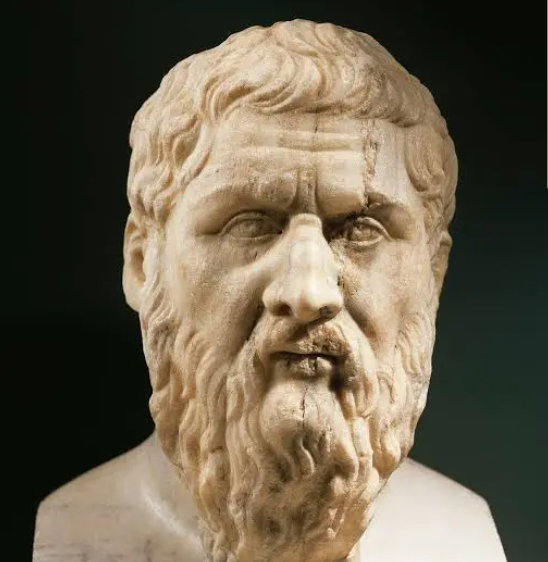
The attempt to separate everything from everything else is not only not in good taste but also shows that a man is utterly uncultivated and unphilosophical. The complete separation of each thing from all is the utterly final obliteration of all discourse. For our power of discourse is derived from the interweaving of the classes or ideas with one another.
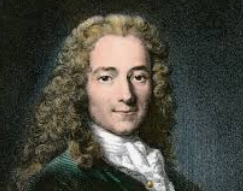
He advanced toward me without moving his hat, or making the least inclination of his body; but there appeared more real politeness in the open, humane air of his countenance, than in drawing one leg behind the other, and carrying that in the hand which is made to be worn on the head. "Friend," said he, "I perceive thou art a stranger, if I can do thee any service thou hast only to let me know it." "Sir," I replied, bowing my body, and sliding one leg toward him, as is the custom with us, "I flatter myself that my curiosity, which you will allow to be just, will not give you any offence, and that you will do me the honor to inform me of the particulars of your religion." "The people of thy country," answered the Quaker, "are too full of their bows and their compliments; but I never yet met with one of them who had so much curiosity as thyself. Come in and let us dine first together."
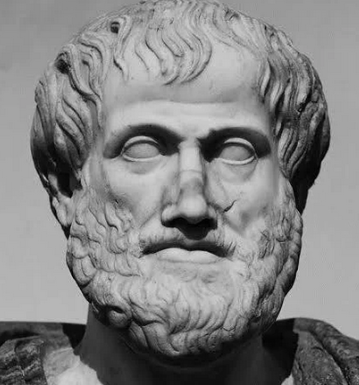
It is impossible that each of the elements should be infinite. For that is body which has interval on all sides; and that is infinite which has extension without bound.
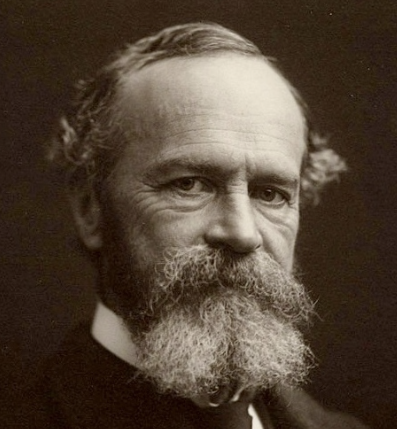
The hell to be endured hereafter, of which theology tells, is no worse than the hell we make for ourselves in this world by habitually fashioning our characters in the wrong way.
Of all kind of authors there are none I despise more than compilers, who search every where for shreds of other men's works, which they join to their own, like so many pieces of green turf in a garden: they are not at all superior to compositors in a printing house, who range the types, which, collected together, make a book, towards which they contribute nothing but the labours of the hand. I would have original writers respected, and it seems to me a kind of profanation to take those pieces from the sanctuary in which they reside, and to expose them to a contempt they do not deserve. When a man hath nothing new to say, why does not he hold his tongue? What business have we with this double employment?"

Every intrusion of the spirit that says, "I'm as good as you" into our personal and spiritual life is to be resisted just as jealously as every intrusion of bureaucracy or privilege into our politics. Hierarchy within can alone preserve egalitarianism without. Romantic attacks on democracy will come again. We shall never be safe unless we already understand in our hearts all that the anti-democrats can say, and have provided for it better than they. Human nature will not permanently endure flat equality if it is extended from its proper political field into the more real, more concrete fields within. Let us wear equality; but let us undress every night.
Everything harmonizes with me, which is harmonious to thee, O Universe. Nothing for me is too early or too late, which is in due time for thee. There is one light of the sun, though it is interrupted by walls, mountains and infinite other things. There is one common substance, though it is distributed among countless bodies which have their several qualities. There is one soul, though it is distributed among several natures and individual limitations. There is one intelligent soul, though it seems to be divided.
Words that everyone once used are now obsolete, and so are the men whose names were once on everyone's lips: Camillus, Caeso, Volesus, Dentatus, and to a lesser degree Scipio and Cato, and yes, even Augustus, Hadrian, and Antoninus are less spoken of now than they were in their own days. For all things fade away, become the stuff of legend, and are soon buried in oblivion. Mind you, this is true only for those who blazed once like bright stars in the firmament, but for the rest, as soon as a few clods of earth cover their corpses, they are 'out of sight, out of mind.' In the end, what would you gain from everlasting remembrance? Absolutely nothing. So what is left worth living for? This alone: justice in thought, goodness in action, speech that cannot deceive, and a disposition glad of whatever comes, welcoming it as necessary, as familiar, as flowing from the same source and fountain as yourself.
We had nothing to say to one another, and while I was manufacturing my phrases I felt that earth was falling through space and that I was falling with it at a speed that made me dizzy.
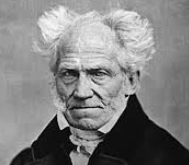
Childish and altogether ludicrous is what you yourself are and all philosophers; and if a grown-up man like me spends fifteen minutes with fools of this kind, it is merely a way of passing the time. I've now got more important things to do. Goodbye!
When people are friends, they have no need of justice, but when they are just, they need friendship in addition.
The war against war is going to be no holiday excursion or camping party. The military feelings are too deeply grounded to abdicate their place among our ideals until better substitutes are offered than the glory and shame that come to nations as well as to individuals from the ups and downs of politics and the vicissitudes of trade.
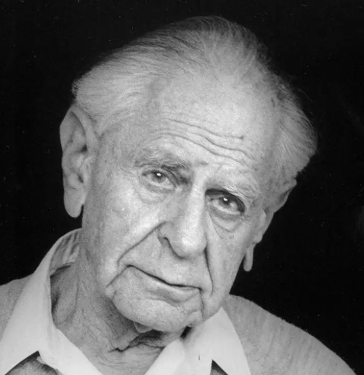
The more we learn about the world, and the deeper our learning, the more conscious, specific, and articulate will be our knowledge of what we do not know, our knowledge of our ignorance. For this, indeed, is the main source of our ignorance - the fact that our knowledge can be only finite, while our ignorance must necessarily be infinite. Variant translation: The more we learn about the world, and the deeper our learning, the more conscious, clear, and well-defined will be our knowledge of what we do not know, our knowledge of our ignorance. The main source of our ignorance lies in the fact that our knowledge can only be finite, while our ignorance must necessarily be infinite.
CivilSimian.com created by AxiomaticPanic, CivilSimian, Kalokagathia