

7 months 3 weeks ago
We will never know if an advertisement or opinion poll has had a real influence on individual or collective wills, but we will never know either what would have happened if there had been no opinion poll or advertisement.
10 months 2 weeks ago
Outside of that single fatality of death, everything, joy or happiness, is liberty.
7 months 3 weeks ago
During and after World War II, a large number of academic economists were exposed directly to business life, and had more or less extensive opportunities to observe how decisions were actually made in business organizations. Moreover, those who became active in the development of the new management science were faced with the necessity of developing decision-making procedures that could actually be applied in practical situations. Surely these trends would be conducive to moving the basic assumptions of economic rationality in the direction of greater realism.

8 months 1 week ago
What man shall there be among you, that shall have one sheep, and if it fall into a pit on the sabbath day, will he not lay hold on it, and lift it out? How much then is a man better than a sheep? Wherefore it is lawful to do well on the sabbath days.
▼
Source
source
12:11-12 (KJV) Said to the Pharisees.

8 months 2 weeks ago
France had for some time been guilty of a continued series of hostile acts against this country, both external and internal: first, she directed her pursuits to universal empire, under the name of fraternity, in order to overturn the fabric of our laws and government.
▼
Source
source
Speech in the House of Commons (12 February 1793)
10 months 2 weeks ago
There always comes a time in history when the person who dares to say that 2+2=4 is punished by death. And the issue is not what reward or what punishment will be the outcome of that reasoning. The issue is simply whether or not 2+2=4.
8 months 2 weeks ago
If you want to influence him at all, you must do more than merely talk to him ; you must fashion him, and fashion him in such a way that he simply cannot will otherwise than you wish him to will.
▼
Source
source
Addresses to the German Nation (1807), Second Address : "The General Nature of the New Education". Chicago and London, The Open Court Publishing Company, 1922, p. 21
7 months 2 weeks ago
The unformulated message of an assembly of news items from every quarter of the globe is that the world today is one city. All war is civil war. All suffering is our own.
▼
Source
source
p. 291
9 months 2 weeks ago
Too little liberty brings stagnation, and too much brings chaos.
▼
Source
source
Authority and the Individual (1949), p. 37
7 months 3 weeks ago
The end of history is, alas, also the end of the dustbins of history. There are no longer any dustbins for disposing of old ideologies, old regimes, old values. Where are we going to throw Marxism, which actually invented the dustbins of history? (Yet there is some justice here since the very people who invented them have fallen in.) Conclusion: if there are no more dustbins of history, this is because History itself has become a dustbin. It has become its own dustbin, just as the planet itself is becoming its own dustbin.
▼
Source
source
The Illusion of the End (1992) (L'Illision de la Fin) Tr. Chris Turner, 1994, Stanford University Press, ISBN 0804725012, p. 26, "The Event Strike"
6 months 3 days ago
Who, then, can be more ignorant of nature than he who classes this cruel and hurtful vice as belonging to her best and most polished work?

8 months 2 weeks ago
The need to devour oneself absolves one of the need to believe.
8 months 1 week ago
In the ice of solitude man becomes most inexorably a question to himself, and just because the question pitilessly summons and draws into play his most secret life he becomes an experience to himself.
▼
Source
source
p. 150
6 months 1 week ago
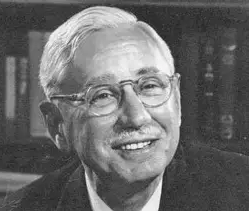
[after quoting from Lucretius] In the face of warfare and inevitable death, there is no wisdom but in ataraxia, "to look on all things with a mind at peace"." Here, clearly, the old pagan joy of life is gone, and an almost exotic spirit touches a broken lyre. History, which is nothing if not humorous, was never so facetious as when she gave to this abstemious and epic pessimist the name of Epicurean.
7 months 2 weeks ago
Cartoons drove the photo back to myth and dream screen.



5 months 2 weeks ago
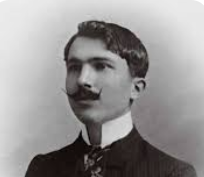
Cursed be all those on land and sea who eat their fill,cursed be all those who starve yet raise no hand in protest,cursed be all the bread, the wine, the meat which day by daydescends deep in the entrails of the exploited manand turns not into freedom's cry, the murderer's ruthless knife!
▼
Source
source
Prayer of three revolutionaries, Book X, line 391

8 months 2 weeks ago
The normal present connects the past and the future through limitation. Contiguity results, crystallization by means of solidification. There also exists, however, a spiritual present that identifies past and future through dissolution, and this mixture is the element, the atmosphere of the poet.
▼
Source
source
Fragment No. 109
10 months 3 weeks ago
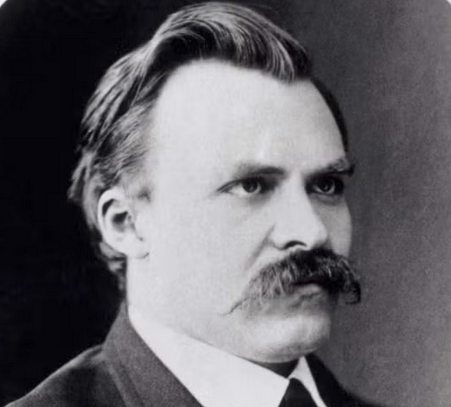
The man who does not wish to belong to the mass needs only to cease taking himself easily; let him follow his conscience, which calls to him: Be your self! All you are now doing, thinking, desiring, is not you yourself.
7 months 3 weeks ago
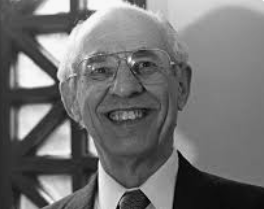
The similarity between Marxism and neoconservativism might be expressed in the following way: both perspectives say that certain injustices can't be cured under our present system of political democracy and mixed economy. The Marxist concludes that we have to overthrow the present system and the neoconservative concludes that we have to live with the injustices. But they are both wrong.
▼
Source
source
How Not to Solve Ethical Problems
7 months 3 weeks ago
Descartes may have made a lot of mistakes, but he was right about this: you cannot doubt the existence of your own consciousness. That's the first feature of consciousness, it's real and irreducible. You cannot get rid of it by showing that it's an illusion in a way that you can with other standard illusions.

8 months 1 week ago
At the classical origins of philosophic thought, the transcending concepts remained committed to the prevailing separation between intellectual and manual labor to the established society of enslavement. ... Those who bore the brunt of the untrue reality and who, therefore, seemed to be most in need of attaining its subversion were not the concern of philosophy. It abstracted from them and continued to abstract from them.
▼
Source
source
pp. 134-135
7 months 2 weeks ago
Today we experience, in reverse, what pre-literate man faced with the advent of writing.
▼
Source
source
p. 273
7 months 2 weeks ago
Despite the fact that the doctors treated him, bled him, and gave him medicines to drink, he recovered.
▼
Source
source
[sometimes quoted as "Though the doctors treated him, let his blood, and gave him medications to drink, he nevertheless recovered."] Bk. XV, ch. 12

9 months 1 week ago
Suffer no anxiety, for he who is a sufferer of anxiety becomes regardless of enjoyment of the world and the spirit, and contraction happens to his body and soul.
10 months 1 week ago
Sincerity is the end and beginning of things; without sincerity there would be nothing. On this account, the superior man regards the attainment of sincerity as the most excellent thing.
10 months 2 weeks ago
It is change, continuing change, inevitable change, that is the dominant factor in society today. No sensible decision can be made any longer without taking into account not only the world as it is, but the world as it will be ... This, in turn, means that our statesmen, our businessmen, our everyman must take on a science fictional way of thinking.
9 months 2 weeks ago
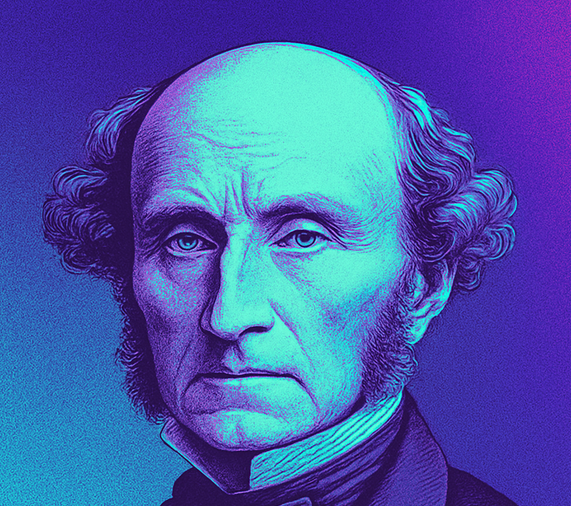
Those only are happy (I thought) who have their minds fixed on some object other than their own happiness; on the happiness of others, on the improvement of mankind, even on some art or pursuit, followed not as a means, but as itself an ideal end. Aiming thus at something else, they find happiness by the way.
▼
Source
source
(p. 142)

8 months 3 weeks ago
No protracted war can fail to endanger the freedom of a democratic country.
▼
Source
source
Book Three, Chapter XXII.
6 months 1 week ago
The task of the educator is to make the child's spirit pass again where its forefathers have gone, moving rapidly through certain stages but suppressing none of them. In this regard, the history of science must be our guide.
▼
Source
source
[Logic and intuition in the science of mathematics and in teaching], L'enseignement mathématique


7 months 2 days ago
Nature shrinks as capital grows. The growth of the market cannot solve the very crisis it creates.
▼
Source
source
Soil Not Oil: Environmental Justice in an Age of Climate Crisis
9 months 2 weeks ago
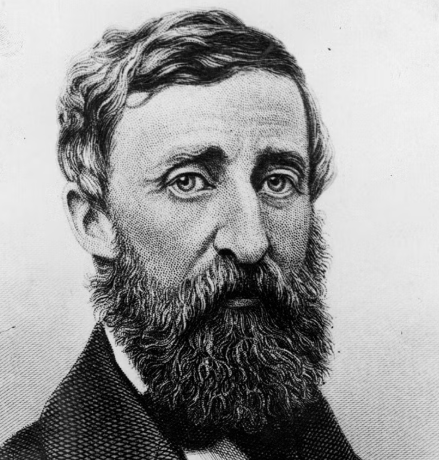
Most books belong to the house and streets only, and in the fields their leaves feel very thin.

10 months 1 week ago
The Law teaches that the universe was invented and created by God, and that it did not come into being by chance or by itself.

7 months 2 weeks ago
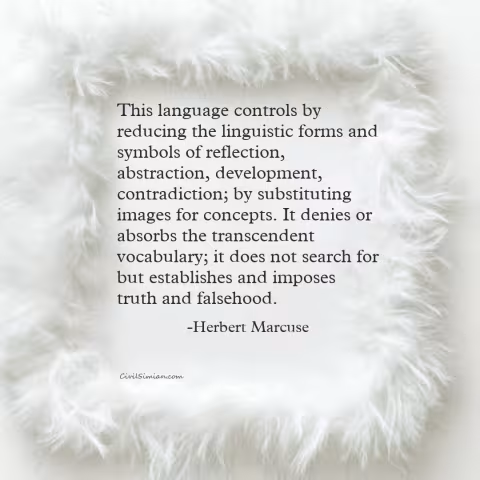
We must fight those who are committed to destruction, without replicating their destructiveness. Understanding how to fight in this way is the task and the bind of a nonviolent ethics and politics.
▼
Source
source
p. 64
8 months 5 days ago
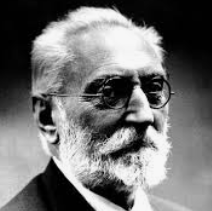
Uncertainty, doubt, perpetual wrestling with the mystery of our final destiny, mental despair, and the lack of any solid and stable foundation, may be the basis of an ethic.

9 months 2 weeks ago
Indeed, history is nothing more than a tableau of crimes and misfortunes.
▼
Source
source
L'Ingénu, ch.10 (1767) Quoted in The End, part 13 of A Series of Unfortunate Events
10 months 2 weeks ago
The rest of the story, to Grand's thinking, was very simple. The common lot of married couples. You get married, you go on loving a bit longer, you work. And you work so hard that it makes you forget to love.
9 months 2 weeks ago
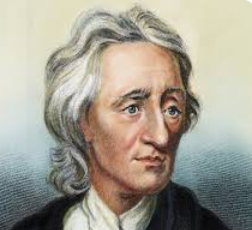
I am sure, zeal or love for truth can never permit falsehood to be used in the defence of it.
▼
Source
source
187
9 months 2 weeks ago
The commonest and cheapest sounds, as the barking of a dog, produce the same effect on fresh and healthy ears that the rarest music does. It depends on your appetite for sound. Just as a crust is sweeter to a healthy appetite than confectionery to a pampered or diseased one.
▼
Source
source
December 27, 1857
9 months 2 weeks ago
The only purpose for which power can be rightfully exercised over any member of a civilized community, against his will, is to prevent harm to others. His own good, either physical or moral, is not a sufficient warrant.
▼
Source
source
Ch. 1: Introductory
9 months 1 week ago
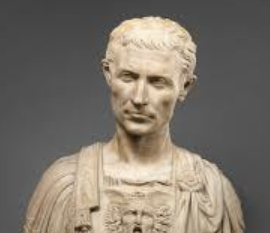
It is worth observing, how we feel ourselves affected in reading the characters of Cæsar, and Cato, as they are so finely drawn and contrasted in Salust. In one, the ignoscendo, largiundo; in the other, nil largiundo. In one, the miseris perfugium; in the other, malis perniciem. In the latter we have much to admire, much to reverence, and perhaps something to fear; we respect him, but we respect him at a distance. The former makes us familiar with him; we love him, and he leads us whither he pleases.
▼
Source
source
Edmund Burke, A Philosophical Enquiry into the Origin of Our Ideas of the Sublime and Beautiful (2nd ed. 1759), pp. 206-207
8 months 2 weeks ago
That fear which gives birth to thoughts, and the fear of thoughts...
9 months 2 weeks ago
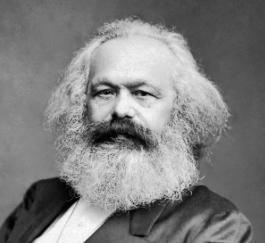
On the other hand one must not entertain any fantastic illusions on the productive power of the credit system, so far as it supplies or sets in motion money-capital.
▼
Source
source
Vol. II, Ch. XVII, p. 351.
8 months 1 week ago
When we are told, in the same tone, that these people will be rewarded in "heaven" for their distress, and that "heaven" is the exact reverse of the earthly order ("the first shall be last"), we distinctly feel how the ressentiment-laden man transfers to God the vengeance he himself cannot wreak on the great. In this way, he can satisfy his revenge at least in imagination, with the aid of an other-worldly mechanism of rewards and punishments.
▼
Source
source
L. Coser, trans. (1961), p. 97
8 months 1 week ago
Verily I say unto you, I have not found so great faith, no, not in Israel. And I say unto you, That many shall come from the east and west, and shall sit down with Abraham, and Isaac, and Jacob, in the kingdom of heaven. But the children of the kingdom shall be cast out into outer darkness: there shall be weeping and gnashing of teeth.
▼
Source
source
8:10-12 (KJV) Said about the officer.
8 months 1 week ago
The philosophical anthropologist ... can know the wholeness of the person and through it the wholeness of man only when he does not leave his subjectivity out and does not remain an untouched observer.
▼
Source
source
p. 148
CivilSimian.com created by AxiomaticPanic, CivilSimian, Kalokagathia