


8 months 3 weeks ago
In the United States, except for slaves, servants and the destitute fed by townships, everyone has the vote and this is an indirect contributor to law-making. Anyone wishing to attack the law is thus reduced to adopting one of two obvious courses: they must either change the nation's opinion or trample its wishes under foot.
▼
Source
source
Chapter XIV.
6 months 1 week ago
While the positivists were proclaiming the end "once and for all" of unverifiable metaphysical systems and speculative philosophy in general, new doctrines in flagrant contradiction to those ideals have sprung up one after the other. Positivists see no more in this development than evidence of human stupidity, not any reflection on themselves.
▼
Source
source
Chapter Eight, Logical Empiricism, p. 198
8 months 1 week ago
We know that the real lesson to be taught is that the human person is precious and unique; but we seem unable to set it forth except in terms of ideology and abstraction.
▼
Source
source
Ch. 10, p. 148
5 months 2 weeks ago
Children till 10. years old to serve as nurses. from 10. to 16. the boys make nails, the girls spin. at 16. go into the ground or learn trades.
▼
Source
source
Jefferson's Farm Book as quoted in The Dark Side of Thomas Jefferson, by Henry Wiencek, Smithsonian Magazine,

5 months 4 weeks ago
I am now even more persuaded of the urgent need to study why Socrates was accused. The dislike of philosophy is perennial, and the seeds of the condemnation of Socrates are present at all times, not in the bosoms of pleasure-seekers, who don't give a damn, but in those of high-minded and idealistic persons who do not want to submit their aspirations to examination.
▼
Source
source
Western Civ, p. 19.
9 months 3 weeks ago
I do not, therefore, need any penetrating acuteness to see what I have to do in order that my volition be morally good. Inexperienced in the course of the world, incapable of being prepared for whatever might come to pass in it, I ask myself only: can you also will that your maxim become a universal law?
5 months 2 weeks ago
In 'voluntary' motions, Sensations produce Actions, and the connexion is made by means of Ideas: in 'reflected' motions, the connexion neither seems to be nor is made by means of Ideas: in 'instinctive' motions, the connexion is such as requires Ideas, but we cannot believe the Ideas to exist.
9 months 2 weeks ago
To those who inquire as to the purpose of mathematics, the usual answer will be that it facilitates the making of machines, the travelling from place to place, and the victory over foreign nations, whether in war or commerce. ... The reasoning faculty itself is generally conceived, by those who urge its cultivation, as merely a means for the avoidance of pitfalls and a help in the discovery of rules for the guidance of practical life.
8 months 2 days ago
When I first read The Wretched of the Earth I heard a new history spoken-the voice of the decolonised subject raised in resistance. That voice . . . articulated a yearning for freedom that was so intense and a quality of emotional hunger that was so fierce that it was overwhelming. Dying into the text, I abandoned and forgot myself. The lust for freedom in those pages awakened and resurrected me.
▼
Source
source
Gender and Decolonization in the Congo (2010) ISBN 978-0-230-11040-3
6 months 1 week ago
It is true that even across the Himalayan barrier India has sent to the west, such gifts as grammar and logic, philosophy and fables, hypnotism and chess, and above all numerals and the decimal system.
5 months 4 weeks ago
The distinction between private and public undermines the unity of spiritual strength, draining the public of the transcendent energies while trivializing them because the merely private life provides no proper stage for their action.
▼
Source
source
"Commerce and Culture," p. 280.
10 months 2 weeks ago
No man of sense can put himself and his soul under the control of names... You must consider courageously and thoroughly and not accept anything carelessly.


6 months 1 week ago
For being a man worth any thousand men, the response your Knox, your Cromwell gets, is an argument for two centuries whether he was a man at all. God's greatest gift to this Earth is sneeringly flung away.
7 months 2 weeks ago
For him who loves labor, there is always something to do.
▼
Source
source
Maxim 219
7 months 4 days ago
There is no alleviation for the sufferings of mankind except veracity of thought and of action, and the resolute facing of the world as it is, when the garment of make-believe, by which pious hands have hidden its uglier features, is stripped off.
▼
Source
source
Autobiography
8 months 1 week ago
The rise of new science in the seventeenth century laid hold upon general culture in the next century. The enlightenment... testified to the widespread belief that at last light had dawned, that dissipation of ignorance, superstition, and bigotry was at hand, and the triumph of reason was assured -- for reason was counterpart in man of the laws of nature which science was disclosing. The reign of law in the natural world was to be followed by the reign of law in human affairs.
5 months 2 weeks ago
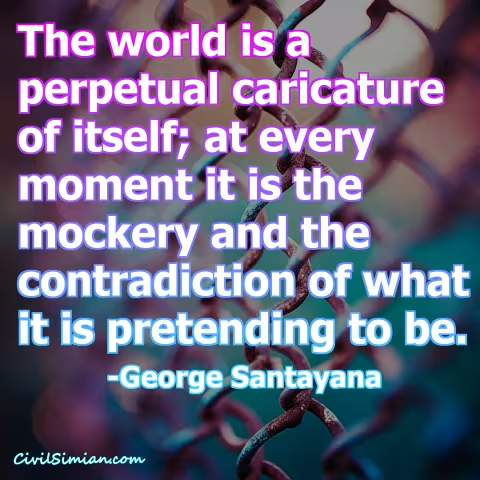
In the North they are cool, sober, laborious, persevering, independent, jealous of their own liberties, and just to those of others, interested, chicaning, superstitious and hypocritical in their religion. In the South they are fiery, voluptuary, indolent, unsteady, independent, zealous for their own liberties, but trampling on those of others, generous, candid, without attachment or pretensions to any religion but that of the heart.
▼
Source
source
Letter to François-Jean de Chastellux (September 2, 1785). archives.gov Also quoted in Thomas Jefferson, Writings, ed. Merrill D. Peterson (1984), p. 827

8 months 1 week ago
The apparatus defeats its own purpose if its purpose is to create a humane existence on the basis of a humanized nature.
▼
Source
source
pp. 145-146
7 months 3 weeks ago
Today's terrorism is not the product of a traditional history of anarchism, nihilism, or fanaticism. It is instead the contemporary partner of globalization.
▼
Source
source
The Spirit of Terrorism (2003) "The Violence of the Global"
10 months 6 days ago
I prefer a short life with width to a narrow one with length.
9 months 2 weeks ago
There are, indeed, things that cannot be put into words. They make themselves manifest. They are what is mystical.
▼
Source
source
(6.522) Original German: Es gibt allerdings Unaussprechliches. Dies zeigt sich, es ist das Mystische.
5 months 2 weeks ago
We cannot think with precision unless in our own minds we use words with precision.
▼
Source
source
General Introduction

8 months 2 weeks ago
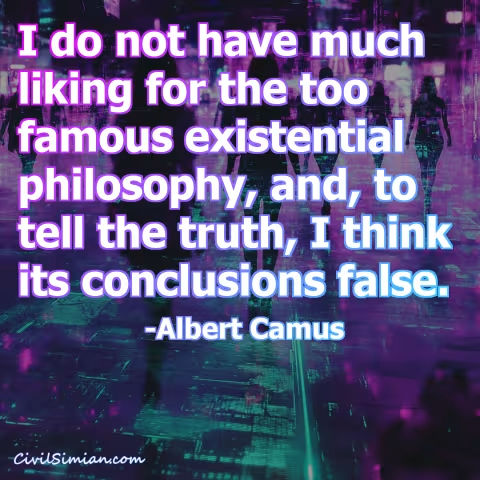
Say what we will, death is the best thing nature has found to please everyone. With each of us, everything vanishes, everything stops forever. What an advantage, what an abuse! Without the least effort on our part, we own the universe, we drag it into our own disappearance. No doubt about it, dying is immoral...

9 months 2 weeks ago
Every poet and musician and artist, but for Grace, is drawn away from love of the thing he tells to love of the telling till, down in Deep Hell, they cannot be interested in God at all but only in what they say about Him.
▼
Source
source
Ch. 9
5 months 2 weeks ago
Our people... will give you all the necessaries of war they produce, if, instead of the bankrupt trash they now are obliged to receive for want of any other, you will give them a paper promise funded on a specific pledge, and of a size for common circulation.
▼
Source
source
Letter to James Monroe, 1815. ME 14:228
10 months 2 weeks ago
The tyrant has arisen, and the king and oligarchy and aristocracy and democracy, because men are not contented with that one perfect ruler, and do not believe that there could ever be any one worthy of such power or willing and able by ruling with virtue and knowledge to dispense justice and equity rightly to all, but that he will harm and kill and injure any one of us whom he chooses on any occasion, since they admit that if such a man as we describe should really arise, he would be welcomed and would continue to dwell among them, directing to their weal as sole ruler a perfectly right form of government. But, as the case now stands, since, as we claim, no king is produced in our states who is, like the ruler of the bees in their hives, by birth pre-eminently fitted from the beginning in body and mind, we are obliged, as it seems, to follow in the track of the perfect and true form of government by coming together and making written laws.
6 months 1 week ago
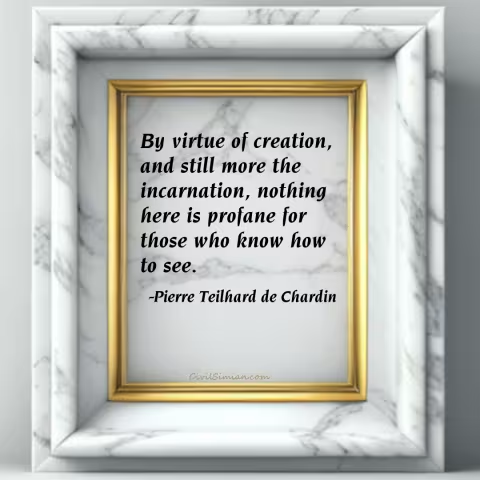
Civil government does by its nature include much that is mechanical, and must be treated accordingly. We term it indeed, in ordinary language, the Machine of Society, and talk of it as the grand working wheel from which all private machines must derive, or to which they must adapt, their movements.
5 months 2 weeks ago
May it be to the world, what I believe it will be, (to some parts sooner, to others later, but finally to all), the signal of arousing men to burst the chains under which monkish ignorance and superstition had persuaded them to bind themselves, and to assume the blessings and security of self-government.
▼
Source
source
Letter to Roger C. Weightman, on the decision for Independence made in 1776, often quoted as if in reference solely to the document the Declaration of Independence

5 months 2 weeks ago
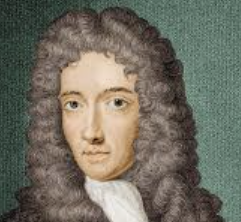
But though much may be said to Excuse the Chymists when they write Darkly, and Ænigmatically, about the Preparation of their Elixir, and Some few other grand Arcana, the divulging of which they may upon Grounds Plausible enough esteem unfit; yet when they pretend to teach the General Principles of Natural Philosophers, this Equivocall Way of Writing is not to be endur'd. For in such Speculative Enquiries, where the naked Knowledge of the Truth is the thing Principally aim'd at, what does he teach me worth thanks that does not, if he can, make his Notion intelligible to me, but by Mystical Termes, and Ambiguous Phrases darkens what he should clear up; and makes me add the Trouble of guessing at the sence of what he Equivocally expresses, to that of examining the Truth of what he seems to deliver.
8 months 5 days ago
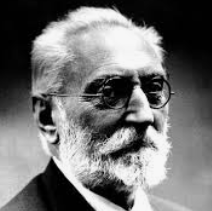
The philosophy of Bergson, which is a spiritualist restoration, essentially mystical, medieval, Quixotesque, has been called a demi-mondaine philosophy. Leave out the demi; call it mondaine, mundane. Mundane - yes, a philosophy for the world and not for philosophers, just as chemistry ought to be not for chemists alone. The world desires illusion (mundus vult decipi) - either the illusion antecedent to reason, which is poetry, or the illusion subsequent to reason, which is religion. And Machiavelli has said that whosoever wishes to delude will always find someone willing to be deluded. Blessed are they who are easily befooled!
9 months 2 weeks ago
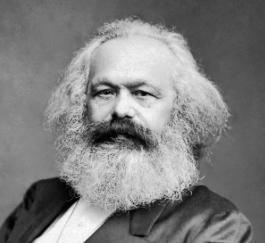
Lincoln is not the product of a popular revolution. This plebeian, who worked his way up from stone-breaker to Senator in Illinois, without intellectual brilliance, without a particularly outstanding character, without exceptional importance-an average person of good will, was placed at the top by the interplay of the forces of universal suffrage unaware of the great issues at stake. The new world has never achieved a greater triumph than by this demonstration that, given its political and social organisation, ordinary people of good will can accomplish feats which only heroes could accomplish in the old world!
5 months 3 weeks ago
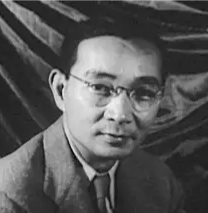
If the early Chinese people had any chivalry, it was manifested not toward women and children, but toward old people. That feeling of chivalry found clear expression in Mencius in some such saying as, "The people with gray hair should not be seen carrying burdens on the street," which was expressed as the final goal of good government.
▼
Source
source
p. 193
8 months 2 weeks ago
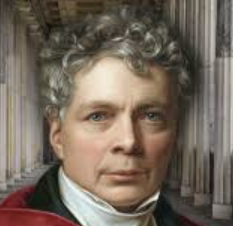
The end of the philosophical dialogue lies in itself; it can never serve a purpose outside of itself. Just as a sculptor does not cease to be a work of art even if it lies at the bottom of the sea, so indeed every work of philosophy endures, even if uncomprehended in its own time. One would be grateful if it were merely a matter of incomprehension. Instead, the work is usually refitted and appropriated by various entities-some playing the part of the opponent; others, that of the proponent.
▼
Source
source
P.3-4
7 months 1 week ago
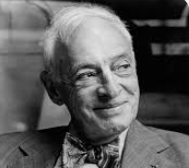
All human accomplishment has the same origin, identically. Imagination is a force of nature. Is this not enough to make a person full of ecstasy? Imagination, imagination, imagination. It converts to actual. It sustains, it alters, it redeems!
▼
Source
source
Henderson the Rain King (1959) [Viking/Penguin, 1984, ISBN 0-140-07269-1], ch. XVIII, p. 271
8 months 2 weeks ago
There is no means of proving it is preferable to be than not to be.
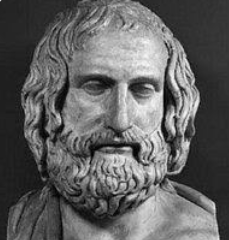
9 months 2 days ago
There are two sides to every question.
▼
Source
source
As quoted in Lives of Eminent Philosophers, by Diogenes Laërtius, Book IX, Sec. 51
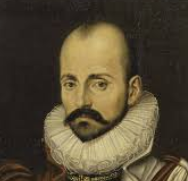
9 months 3 weeks ago
Is it not a noble farce, wherein kings, republics, and emperors have for so many ages played their parts, and to which the whole vast universe serves for a theatre?
▼
Source
source
Book II, Ch. 36. Of the most Excellent Men
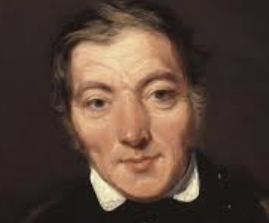
7 months 1 week ago
To preserve permanent good health, the state of mind must be taken into consideration.
▼
Source
source
3rd Part
9 months 2 weeks ago
Ordinary language is totally unsuited for expressing what physics really asserts, since the words of everyday life are not sufficiently abstract. Only mathematics and mathematical logic can say as little as the physicist means to say.
▼
Source
source
The Scientific Outlook, 1931

9 months 1 week ago
There is no power relation without the correlative constitution of a field of knowledge, nor any knowledge that does not presuppose and constitute at the same time power relations.
6 months 4 days ago
People is the name of the body, State of the spirit, of that ruling person that has hitherto suppressed me.
▼
Source
source
Dover 2005, p. 242
7 months 1 week ago
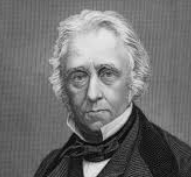
If...we look at the essential characteristics of the Whig and the Tory, we may consider each of them as the representative of a great principle, essential to the welfare of nations. One is, in an especial manner, the guardian of liberty, and the other, of order. One is the moving power, and the other the steadying power of the state. One is the sail, without which society would make no progress, the other the ballast, without which there would be small safety in a tempest.
▼
Source
source
The Earl of Chatham', The Edinburgh Review (October 1844), quoted in T. B. Macaulay, Critical and Historical Essays Contributed to The Edinburgh Review: A New Edition (1852), p. 725
6 months 3 days ago
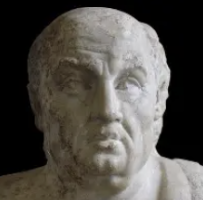
No man ought to glory except in that which is his own.
CivilSimian.com created by AxiomaticPanic, CivilSimian, Kalokagathia