


8 months 2 weeks ago
Death is too exact; it has all the reasons on its side. Mysterious for our instincts, it takes shape, to our reflection, limpid, without glamor, and without the false lures of the unknown. By dint of accumulating non-mysteries and monopolizing non-meanings, life inspires more dread than death: it is life which is the Great Unknown.
5 months 4 weeks ago
Truth has no special time of its own. Its hour is now - always, and indeed then most truly when it seems most unsuitable to actual circumstances. Care for distress at home and care for distress elsewhere do but help each other if, working together, they wake men in sufficient numbers from their thoughtlessness, and call into life a new spirit of humanity.
▼
Source
source
Ch. XI : Conclusion
8 months 2 weeks ago
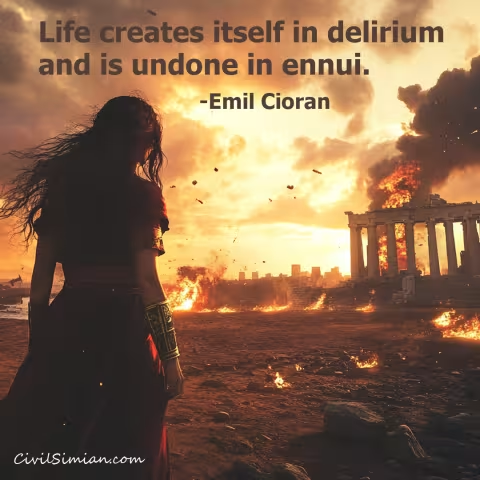
Life creates itself in delirium and is undone in ennui.
7 months 3 weeks ago
You need to know enough of the natural sciences so that you are not a stranger in the world.
7 months 2 weeks ago
Generally speaking, espionage offers each spy an opportunity to go crazy in a way he finds irresistible.
5 months 2 weeks ago
And you can also commit injustice by doing nothing.
▼
Source
source
(Hays translation) IX, 5


9 months 2 weeks ago
Many of the actions by which men have become rich are far more harmful to the community than the obscure crimes of poor men, yet they go unpunished because they do not interfere with the existing order.
▼
Source
source
Ch. V: Government and Law
9 months 2 weeks ago
How much good it would do if one could exterminate the human race.
▼
Source
source
A characteristic saying of Russell, reported by Aldous Huxley in a letter to Lady Ottoline Morrell dated 8 October 1917, as quoted in Bibliography of Bertrand Russell, Routledge, 2013
8 months 2 weeks ago
It is so by nature that the plant will develop with regularity, that the animal will move purposefully, and that human beings will think. Why should I take exception to recognizing also the last as the expression of an original force of nature, as I do the first and the second?
▼
Source
source
P. Preuss, trans. (1987), p. 11
10 months 2 weeks ago
Men seem to pursue honour in order that they may believe themselves to be good. Accordingly, they seek to be honoured by the wise, and by those who know them well, and on the score of virtue; it is clear, therefore, that in their opinion at any rate, virtue is superior to honour. Perhaps, then, one ought to say that virtue rather than honour is the end of the political life; yet even virtue is plainly too imperfect: for it seems that a man might have all the virtues and yet be asleep, or fail to achieve anything all his life; moreover, such a person may suffer the greatest evils and misfortunes. And no one, in this case, would call a man, who passed his life in this manner, happy, except for argument's sake.
8 months 1 day ago
Every daring attempt to make a great change in existing conditions, every lofty vision of new possibilities for the human race, has been labelled Utopian.
▼
Source
source
"Socialism: Caught in the Political Trap", a lecture (c. 1912), published in Red Emma Speaks, Part 1 (1972) edited by Alix Kates Shulman
6 months 1 week ago
Marxism has been the greatest fantasy of our century. It was a dream offering the prospect of a society of perfect unity, in which all human aspirations would be fulfilled and all values reconciled.
▼
Source
source
Epilogue, p. 1206
10 months 2 weeks ago
Those who assert that the mathematical sciences say nothing of the beautiful or the good are in error. For these sciences say and prove a great deal about them; if they do not expressly mention them, but prove attributes which are their results or definitions, it is not true that they tell us nothing about them. The chief forms of beauty are order and symmetry and definiteness, which the mathematical sciences demonstrate in a special degree.
9 months 3 weeks ago
Among the celestial bodies that are revolving over our heads, though the motions are not the same, and though the force is not equal, yet they move, and ever have moved, without clashing, and in perfect harmony.
9 months 3 weeks ago
Habit... makes the endurance of evil easy (which, under the name of patience, is falsely honored as a virtue), because sensations of the same type, when continued without alteration for a long time, draw our attention away from the senses so that we are scarcely conscious of them at all. On the other hand, habit also makes the consciousness and the remembrance of good that has been received more difficult, which then gradually leads to ingratitude (a real vice). [...] Acquired habit deprives good actions of their moral value because it undermines mental freedom and, moreover, it leads to thoughtless repetitions of the same acts (monotony), and thus becomes ridiculous.
▼
Source
source
Kant, Immanuel (1996), pages 34-35
5 months 2 weeks ago
As I watched the seagulls, I thought: "That's the road to take; find the absolute rhythm and follow it with absolute trust."
▼
Source
source
Ch. 21
8 months 1 week ago
The subconscious is ceaselessly murmuring, and it is by listening to these murmurs that one hears the truth.
▼
Source
source
Ch. 2, sect. 2
8 months 2 days ago
Racism has always been a divisive force separating black men and white men, and sexism has been a force that unites the two groups.
9 months 2 weeks ago
The word of man is the most durable of all material.
▼
Source
source
Vol. 2, Ch. 25, sect. 298

6 months 1 week ago
Who would govern that can get along without governing? He that is fittest for it, is of all men the unwillingest unless constrained.
9 months 3 weeks ago
Is it not a noble farce, wherein kings, republics, and emperors have for so many ages played their parts, and to which the whole vast universe serves for a theatre?
▼
Source
source
Book II, Ch. 36. Of the most Excellent Men
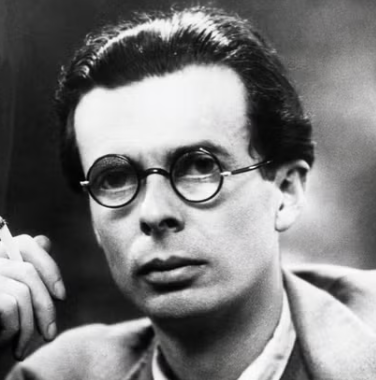
9 months 2 weeks ago
All gods are homemade, and it is we who pull their strings, and so, give them the power to pull ours Vijaya in Island.
▼
Source
source
1962
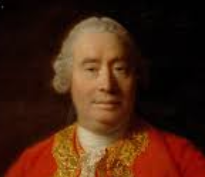
9 months 3 weeks ago
Heaven and Hell suppose two distinct species of men, the good and the bad; but the greatest part of mankind float betwixt vice and virtue. -- Were one to go round the world with an intention of giving a good supper to the righteous, and a sound drubbing to the wicked, he would frequently be embarrassed in his choice, and would find that the merits and the demerits of most men and women scarcely amount to the value of either.
▼
Source
source
Essay on the Immortality of the Soul
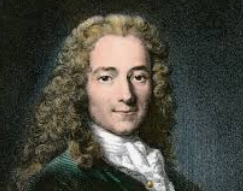
9 months 2 weeks ago
What a pity and what a poverty of spirit, to assert that beasts are machines deprived of knowledge and sentiment, which affect all their operations in the same manner, which learn nothing, never improve, &c. Some barbarians seize this dog, who so prodigiously excels man in friendship, they nail him to a table, and dissect him living, to show the mezarian veins. You discover in him all the same organs of sentiment which are in yourself. Answer me, machinist, has nature arranged all the springs of sentiment in this animal that he should not feel? Has he nerves to be incapable of suffering? Do not suppose this impertinent contradiction in nature. The animal has received those of sentiment, memory, and a certain number of ideas. Who has bestowed these gifts, who has given these faculties? He who has made the herb of the field to grow, and who makes the earth gravitate towards the sun.
▼
Source
source
"Beasts", in A Philosophical Dictionary, Volume 2, J. and H. L. Hunt, 1824, p. 9

8 months 4 days ago
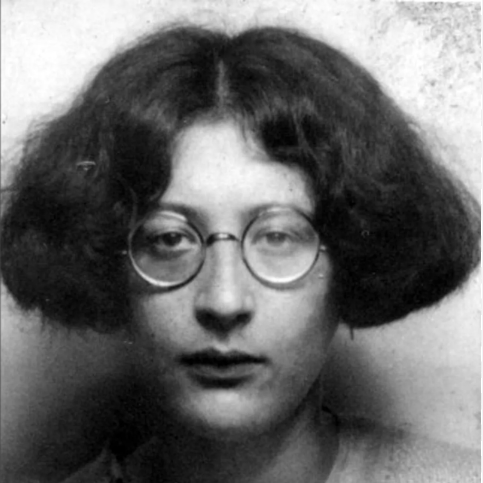
We must wish either for that which actually exists or for that which cannot in any way exist - or, still better, for both. That which is and that which cannot be are both outside the realm of becoming.
▼
Source
source
p. 154
6 months 1 week ago
It is always a genial laughter. Not at mere weakness, at misery or poverty; never. No man who can laugh, what we call laughing, will laugh at these things. It is some poor character only desiring to laugh, and have the credit of wit, that does so. Laughter means sympathy.
8 months 3 days ago
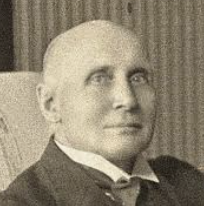
Life is an offensive, directed against the repetitious mechanism of the Universe.
▼
Source
source
p. 102.
8 months 1 week ago
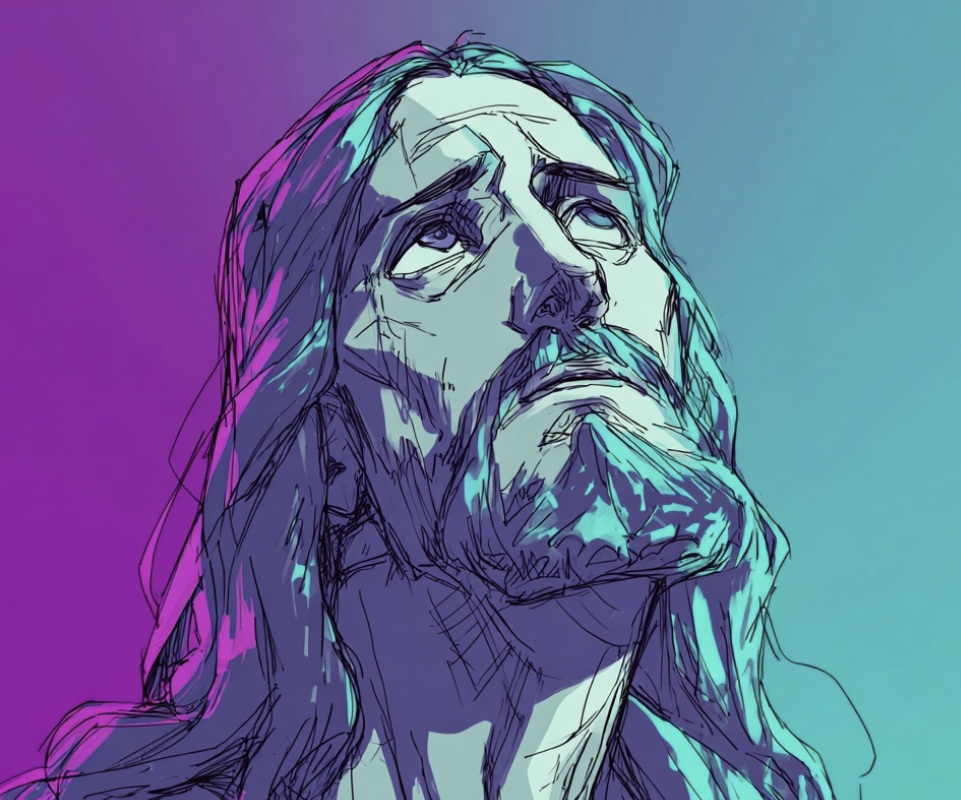
The sabbath was made for man, and not man for the sabbath.
▼
Source
source
Mark 2:27 (KJV)
9 months 3 weeks ago
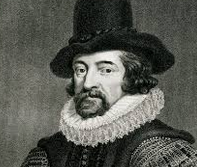
There is another ground of hope that must not be omitted. Let men but think over their infinite expenditure of understanding, time, and means on matters and pursuits of far less use and value; whereof, if but a small part were directed to sound and solid studies, there is no difficulty that might not be overcome.
▼
Source
source
Aphorism 111
8 months 1 week ago
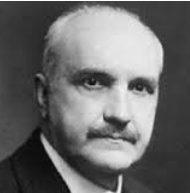
To the mind of the ancients, who knew something of such matters, liberty and prosperity seemed hardly compatible, yet modern liberalism wants them together.
▼
Source
source
"The Irony of Liberalism"


9 months 1 week ago
There is little in common between the organised parading of madness in the eighteenth century and the freedom with which madness came to the fore during the Renaissance. The earlier age had found it everywhere, an integral element of each experience, both in images and in real life dangers. During the classical period, it was also on public view, but behind bars. When it manifested itself it was at a carefully controlled distance, under the watchful eye of a reason that denied all kinship with it, and felt quite unthreatened by any hint of resemblance. Madness had become a thing to be observed, no longer the monster within, but an animal moved by strange mechanisms, more beast than man, where all humanity had long since disappeared.
▼
Source
source
Part One: 5. The Insane

5 months 1 week ago
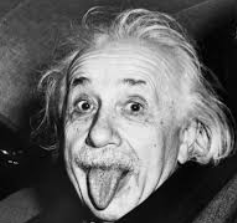
Try and penetrate with our limited means the secrets of nature and you will find that, behind all the discernible concatenations, there remains something subtle, intangible and inexplicable. Veneration for this force beyond anything that we can comprehend is my religion. To that extent I am, in point of fact, religious.
9 months 3 weeks ago
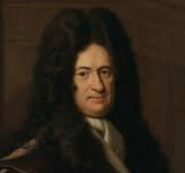
Now, as there is an infinity of possible universes in the Ideas of God, and as only one of them can exist, there must be a sufficient reason for God's choice, which determines him toward one rather than another. And this reason can be found only in the fitness, or the degrees of perfection, that these worlds contain, since each possible thing has the right to claim existence in proportion to the perfection it involves.
▼
Source
source
La monadologie (53 & 54).
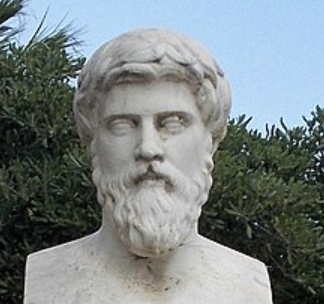
9 months 6 days ago
To one commending an orator for his skill in amplifying petty matters, Agesilaus said, "I do not think that shoemaker a good workman that makes a great shoe for a little foot."
▼
Source
source
Of Agesilaus the Great


9 months 2 weeks ago
He begins to think for himself and meets Nineteenth-century Rationalism Which can explain away religion by any number of methods.
▼
Source
source
Pilgrim's Regress 19-20
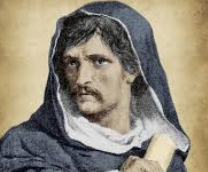
8 months 3 weeks ago
All things are in the Universe, and the universe is in all things: we in it, and it in us; in this way everything concurs in a perfect unity.
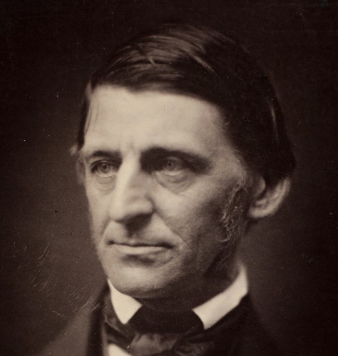
9 months 2 weeks ago
Wit makes its own welcome, and levels all distinctions. No dignity, no learning, and no force of character can make any stand against good wit.
▼
Source
source
The Comic
9 months 3 weeks ago
Arts and sciences are not cast in a mould, but are formed and perfected by degrees, by often handling and polishing, as bears leisurely lick their cubs into form.
▼
Source
source
Book II, Ch. 12. Apology for Raimond Sebond
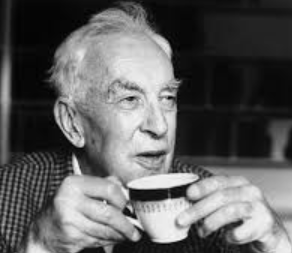
7 months 1 day ago
The supreme accomplishment is to blur the line between work and play.
▼
Source
source
In Ellen J. Langer (ed.) Mindfulness (Merloyd Lawrence Books, 1989) p. 133
9 months 2 weeks ago
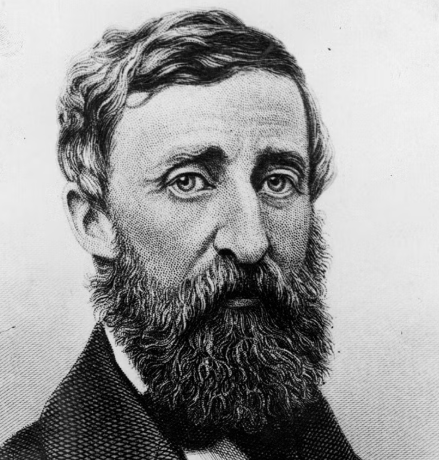
In wildness is the preservation of the world. Every tree sends its fibers forth in search of the Wild. The city imports it at any price. Men plow and sail for it. From the forest and wilderness come the tonics and barks which brace mankind.
5 months 2 weeks ago
Another may be more expert in casting [throwing] his opponent; but he is not more social, nor more modest, nor better disciplined to meet all that happens, nor more considerate with respect to the faults of his neighbors.
▼
Source
source
VII, 52
6 months 3 days ago
It is best to bear what cannot be changed.
▼
Source
source
Seneca, Moral Letters, 107. 9. As quoted in: Frank Breslin (Retired High-School Teacher) (December 21, 2017)
7 months 1 week ago
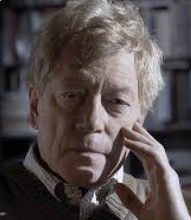
The first effect of modernism was to make high culture difficult: to surround beauty with a wall of erudition.
▼
Source
source
Avant-garde and Kitsch (p. 85)
CivilSimian.com created by AxiomaticPanic, CivilSimian, Kalokagathia