


5 months 2 weeks ago
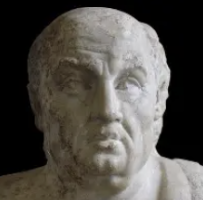
Much protest is naive; it expects quick, visible improvement and despairs and gives up when such improvement does not come. Protesters who hold out for longer have perhaps understood that success is not the proper goal. If protest depended on success, there would be little protest of any durability or significance. History simply affords too little evidence that anyone's individual protest is of any use. Protest that endures, I think, is moved by a hope far more modest than that of public success: namely, the hope of preserving qualities in one's own heart and spirit that would be destroyed by acquiescence.
▼
Source
source
A Poem of Difficult Hope
6 months 3 days ago
Thus they are deceived by the likeness of blows, and are appeased by the pretended tears of those who deprecate their wrath, and thus an unreal grief is healed by an unreal revenge.

9 months 3 weeks ago
Human reason is by nature architectonic.
▼
Source
source
B 502

9 months 2 weeks ago
I felt less alone when I didn't know you yet: I was waiting for the other. I thought only of his strength and never of my weakness. And now here you are, Orestes, it was you. I look at you and I see that we are two orphans.
▼
Source
source
Electra to her brother Orestes, Act 2

8 months 4 days ago
The miser deprives himself of his treasure because of his desire for it.
▼
Source
source
p. 260
8 months 2 weeks ago
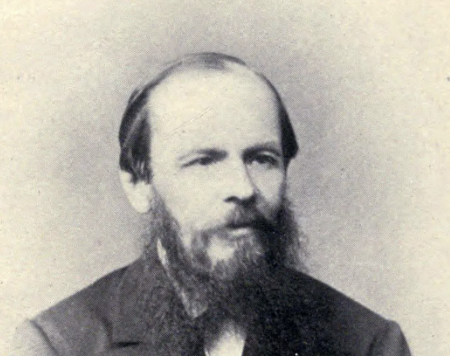
A dream! What is a dream? And is not our life a dream? I will say more. Suppose that this paradise will never come to pass (that I understand), yet I shall go on preaching it. And yet how simple it is: in one day, in one hour everything could be arranged at once! The chief thing is to love others like yourself, that's the chief thing, and that's everything; nothing else is wanted - you will find out at once how to arrange it all. And yet it's an old truth which has been told and retold a billion times - but it has not formed part of our lives! The consciousness of life is higher than life, the knowledge of the laws of happiness is higher than happiness - that is what one must contend against. And I shall. If only everyone wants it, it can be arranged at once.

7 months 2 weeks ago
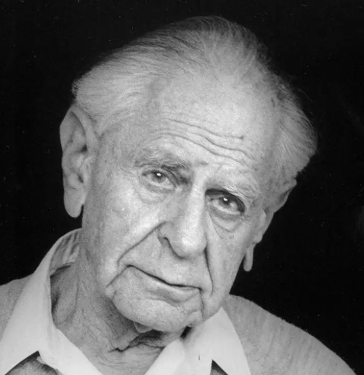
Moral philosophers say things like, 'What is actually wrong with cannibalism?' There are two ways of responding to that: one is to shrink back in horror and say, 'Cannibalism! Cannibalism! We can't talk about cannibalism!' The other is to say, 'Well, actually, what is wrong with cannibalism?' Then you work it out and you tease it out and you decide yes, actually, cannibalism is wrong, but for the following reasons. So I'd like to think that my moral values at least partly come from reasoning. Trying to suppress the gut reaction as much as possible.
▼
Source
source
Interview with Sophie Elmhirst (2015),
9 months 2 weeks ago
The history of mankind could... be described as a history of outbreaks of fashionable philosophical and religious maladies. These... have... one serious function... evoking criticism.

9 months 2 weeks ago
I can imagine no man who will look with more horror on the End than a conscientious revolutionary who has, in a sense sincerely, been justifying cruelties and injustices inflicted on millions of his contemporaries by the benefits which he hopes to confer on future generations: generations who, as one terrible moment now reveals to him, were never going to exist. Then he will see the massacres, the faked trials, the deportations, to be all ineffaceably real, an essential part, his part, in the drama that has just ended: while the future Utopia had never been anything but a fantasy.
9 months 3 weeks ago
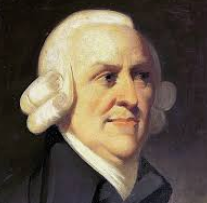
How many people ruin themselves by laying out money on trinkets of frivolous utility? What pleases these lovers of toys is not so much the utility, as the aptness of the machines which are fitted to promote it. All their pockets are stuffed with little conveniences. They contrive new pockets, unknown in the clothes of other people, in order to carry a greater number. They walk about loaded with a multitude of baubles, in weight and sometimes in value not inferior to an ordinary Jew's-box, some of which may sometimes be of some little use, but all of which might at all times be very well spared, and of which the whole utility is certainly not worth the fatigue of bearing the burden.
▼
Source
source
Chap. I.

6 months 2 weeks ago
Learning proceeds until death and only then does it stop. ... Its purpose cannot be given up for even a moment. To pursue it is to be human, to give it up to be a beast.
▼
Source
source
Readings in Classical Chinese Philosophy (2001), p. 258
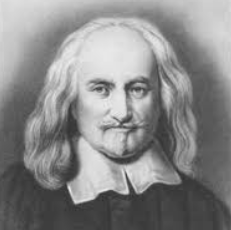
8 months 1 week ago
And hereby it comes to passe, that Intemperance, is naturally punished with Diseases; Rashness, with Mischance; Injustice; with Violence of Enemies; Pride, with Ruine; Cowardice, with Oppression; Negligent government of Princes, with Rebellion; and Rebellion with Slaughter.
▼
Source
source
The Second Part, Chapter 31, p. 194
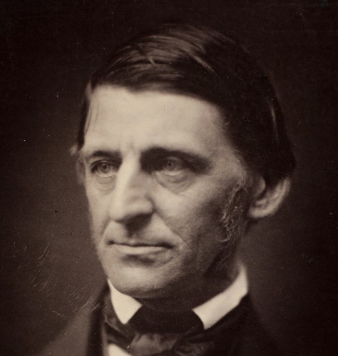
9 months 2 weeks ago
Can anybody remember when the times were not hard and money not scarce?
▼
Source
source
Works and Days
7 months 3 weeks ago
Roughly speaking, rationality is concerned with the selection of preferred behavior alternatives in terms of some system of values, whereby the consequences of behavior can be evaluated.
▼
Source
source
p. 84.
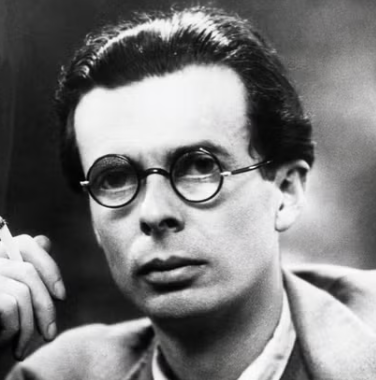
9 months 2 weeks ago
Christian philosophers have found no difficulty in justifying imperialism, war, the capitalist system, the use of torture, the censorship of the press and ecclesiastical tyrannies of every sort, from the tyranny of Rome to the tyrannies of Geneva and New England.
▼
Source
source
Ch. 14, p. 315 [2012 reprint]

8 months 1 week ago
In its relation to the reality of daily life, the high culture of the past was many things-opposition and adornment, outcry and resignation. But it was also the appearance of the realm of freedom: the refusal to behave.
▼
Source
source
p. 71



10 months 1 day ago
People almost invariably arrive at their beliefs not on the basis of proof but on the basis of what they find attractive.
▼
Source
source
De l'Art de persuader ["On the Art of Persuasion"], written 1658; published posthumously.

9 months 3 weeks ago
There will always be some people who think for themselves, even among the self-appointed guardians of the great mass who, after having thrown off the yoke of immaturity themselves, will spread about them the spirit of a reasonable estimate of their own value and of the need for every man to think for himself.
9 months 2 weeks ago
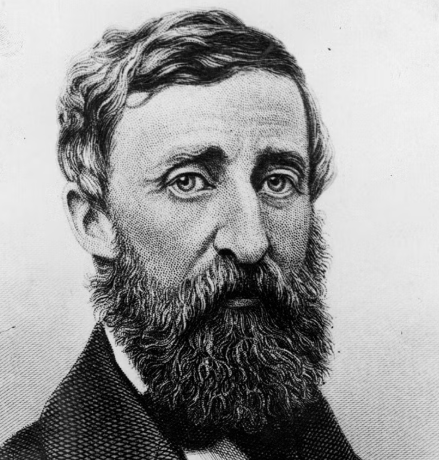
The greatest compliment that was ever paid me was when one asked me what I thought, and attended to my answer. I am surprised, as well as delighted, when this happens, it is such a rare use he would make of me, as if he were acquainted with the tool.
▼
Source
source
p. 484
6 months 2 weeks ago
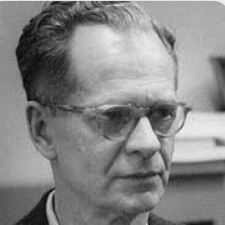
Many instructional arrangements seem "contrived", but there is nothing wrong with that. It is the teacher's function to contrive conditions under which students learn. Their relevance to a future usefulness need not be obvious. It is a difficult assignment. The conditions the teacher arranges must be powerful enough to compete with those under which the student tends to behave in distracting ways.
▼
Source
source
Free and Happy Student in The Phi Delta Kappan (September 1973); later published in Reflections on Behaviorism and Society
9 months 2 weeks ago
Commoners are weightless. But he was a royal bon vivant who, no matter what, always weighed 125 kilos. I would be very surprised if he didn't have a few pounds left.
▼
Source
source
A soldier in Argos, speaking of the dead King Agamemnon, Act 2

5 months 2 weeks ago
An arrow has one motion and the mind another. Even when pausing, even when weighing conclusions, the mind is moving forward, toward its goal. (Hays translation) VIII, 60

9 months 1 week ago
This aristocratic thesis is... the demos, the people, are the most numerous... also comprised of the most ordinary, and... even the worst, citizens. Therefore... what is best for the demos cannot be what is best for the polis... the city.
5 months 2 weeks ago
Art thou angry with him whose arm-pits stink? art thou angry with him whose mouth smells foul? What good will this anger do thee?
▼
Source
source
V, 28
9 months 2 weeks ago
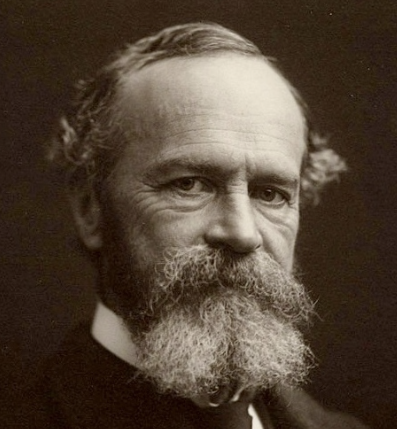
In my individual heart I fully believe my faith is as robust as yours. The trouble with your robust and full bodied faiths, however, is, that they begin to cut each others throats too soon, and for getting on in the world and establishing a modus vivendi these pestilential refinements and reasonablenesses and moderations have to creep in.
▼
Source
source
Letter to John Jay Chapman, 5 April 1897
9 months 2 weeks ago
Intellect is invisible to the man who has none.
▼
Source
source
Our Relation to Others, § 23

8 months 2 weeks ago
I like thought which preserves a whiff of flesh and blood, and I prefer a thousand times an idea rising from sexual tension or nervous depression to empty abstraction.

9 months 2 weeks ago
When at first thought we think of a creator our ideas appear to us undefined and confused; but if we reason philosophically, those ideas can be easily arranged and simplified. It is a Being, whose power is equal to his will.
▼
Source
source
A Discourse, &c. &c.


10 months 2 weeks ago
The ancients, even though they believed in destiny, believed primarily in nature, in which they participated wholeheartedly. To rebel against nature amounted to rebelling against oneself.

8 months 2 weeks ago
I do nothing, granted. But I see the hours pass - which is better than trying to fill them.
5 months 2 weeks ago
To cleave that sea in the gentle autumnal season, murmuring the name of each islet, is to my mind the joy most apt to transport the heart of man into paradise.
▼
Source
source
On the Aegean Sea, in Ch. 2

9 months ago
The King that followeth Truth, and ruleth according to Justice, shall reign quietly: but he that doth the contrary, seeketh another to reign for him.
5 months 4 weeks ago
Modern mind has become more and more calculating. The calculative exactness of practical life which the money economy has brought about corresponds to the ideal of natural science: to transform the world into an arithmetic problem, to fix every part of the world by mathematical formulas. Only money economy has filled the days of so many people with weighing, calculating, with numerical determinations, with a reduction of qualitative values to quantitative ones.
▼
Source
source
p. 414

9 months 1 week ago
To be a Christian - a follower of Jesus Christ - is to love wisdom, love justice, and love freedom.
▼
Source
source
(p172)
9 months 2 weeks ago
The Bhagavad-Gita is perhaps the most systematic scriptural statement of the Perennial Philosophy. To a world at war, a world that, because it lacks the intellectual and spiritual prerequisites to peace, can only hope to patch up some kind of precarious armed truce, it stands pointing, clearly and unmistakably, to the only road of escape from the self-imposed necessity of self-destruction.
9 months 2 weeks ago
Generosity is nothing else than a craze to possess. All which I abandon, all which I give, I enjoy in a higher manner through the fact that I give it away.... To give is to enjoy possessively the object which one gives.
▼
Source
source
Part 2
5 months 4 weeks ago
At sunset of the third day, near the village of Igendja, we moved along an island set in the middle of the wide river. On a sandback to our left, four hippopotamuses and their young plodded along in our same direction. Just then, in my great tiredness and discouragement, the phrase "Reverence for Life" struck me like a flash. As far as I knew, it was a phrase I had never heard nor ever read. I realized at once that it carried within itself the solution to the problem that had been torturing me. Now I knew that a system of values which concerns itself only with our relationship to other people is incomplete and therefore lacking in power for good. Only by means of reverence for life can we establish a spiritual and humane relationship with both people and all living creatures within our reach. Only in this fashion can we avoid harming others, and, within the limits of our capacity, go to their aid whenever they need us.

8 months 2 weeks ago
Throughout all organic nature there is at work a modifying influence of the kind... as the cause, these specific differences: an influence which, though slow in its action, does, in time, if the circumstances demand it, produce marked changes-an influence, which to all appearance, would produce in the millions of years, and under the great varieties of condition which geological records imply, any amount of change.
7 months 1 week ago
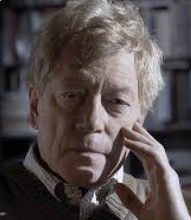
There is no doubt in my mind that, from the third-person point of view, monarchy is the most reasonable form of government. By embodying the state in a fragile human person, it captures the arbitrariness and the givenness of political allegiance, and so transforms allegiance into affection.
▼
Source
source
The Meaning of Conservatism: Third Edition (2001), p. 193
8 months 2 weeks ago
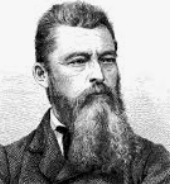
God, I have said, is the fulfiller, or the reality, of the human desires for happiness, perfection, and immortality. From this it may be inferred that to deprive man of God is to tear the heart out of his breast. But I contest the premises from which religion and theology deduce the necessity and existence of God, or of immortality, which is the same thing. I maintain that desires which are fulfilled only in the imagination, or from which the existence of an imaginary being is deduced, are imaginary desires, and not the real desires of the human heart; I maintain that the limitations which the religious imagination annuls in the idea of God or immortality, are necessary determinations of the human essence, which cannot be dissociated from it, and therefore no limitations at all, except precisely in man's imagination.
▼
Source
source
Lecture XXX, Atheism alone a Positive View
9 months 2 weeks ago
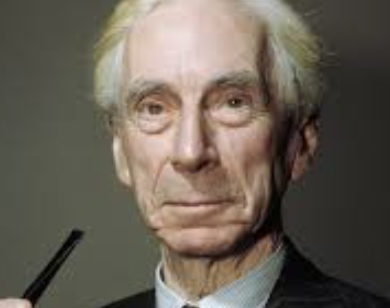
Why? Surely they can find other men. Russell's reply when asked "if it wasn't unkind of him to love and leave so many women";
▼
Source
source
as quoted in My Father - Bertrand Russell (1975) by Katharine Tait, p. 106


9 months 2 weeks ago
What is troubling us is the tendency to believe that the mind is like a little man within.
▼
Source
source
Remarks to John Wisdom, quoted in Zen and the Work of WIttgenstein by Paul Weinpaul in The Chicago Review Vol. 12, (1958), p. 70
5 months 2 weeks ago
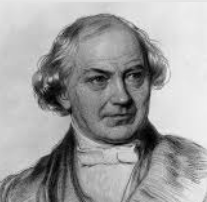
The Sensations are the 'Objective', the Ideas the 'Subjective' part of every act of perception or knowledge.
5 months 2 weeks ago
How much more damage anger and grief do than the things that cause them.
▼
Source
source
(Hays translation) XI, 18
CivilSimian.com created by AxiomaticPanic, CivilSimian, Kalokagathia