

10 months 3 weeks ago
The advantage of a bad memory is that one can enjoy the same good things for the first time several times.
10 months 1 week ago
Reviewing what you have learned and learning anew, you are fit to be a teacher.

6 months 1 week ago
Everywhere in life, the true question is not what we gain, but what we do.
▼
Source
source
Essays. Goethe's Helena.
9 months 3 weeks ago
Regarding the plan to collect my writings in volumes, I am quite cool and not at all eager about it because, roused by a Saturnian hunger, I would rather see them all devoured. For I acknowledge none of them to be really a book of mine, except perhaps the one On the Bound Will and the Catechism.
▼
Source
source
Letter to Wolfgang Capito
10 months 1 day ago
This right which you have, is not founded any more than his upon any quality or any merit in yourself which renders you worthy of it. Your soul and your body are, of themselves, indifferent to the state of boatman or that of duke; and there is no natural bond that attaches them to one condition rather than to another.
8 months 2 weeks ago
The subject must distinguish itself through opposition from the rational being, which it has assumed outside of itself. The subject has posited itself as one, which contains in itself the last ground of something that is in it, (for this is the condition of Egohood, or of Rationality generally;) but it has also posited a being outside of itself, as the last ground of this something in it. It is to have the power of distinguishing itself from this other being; and this is, under our presupposition, possible only, if the subject can distinguish in that given something how far the ground of this something lies in itself and how far it lies outside of itself.
▼
Source
source
P. 63
5 months 2 weeks ago
How difficult, how extremely difficult for the soul to sever itself from its body the world: from mountains, seas, cities, people. The soul is an octopus and these are its tentacles. ... No force anywhere on earth is as imperialistic as the human soul. It occupies and is occupied in turn, but it always considers its empire too narrow. Suffocating, it desires to conquer the world in order to breathe freely.
▼
Source
source
My Friend The Poet. Mount Athos., Ch. 19, p. 188
8 months 1 week ago
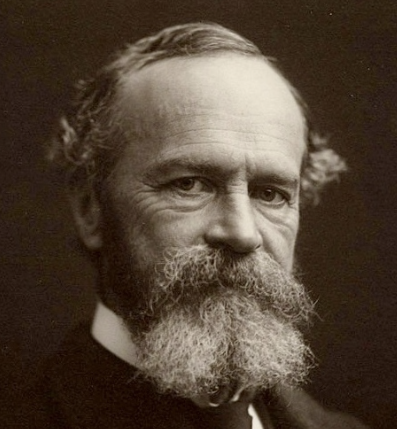
Because the peculiarity of man is that his machinery for reaction on external things has involved an imaginative transcript of these things, which is preserved and suspended in his fancy; and the interest and beauty of this inward landscape, rather than any fortunes that may await his body in the outer world, constitute his proper happiness. By their mind, its scope, quality, and temper, we estimate men, for by the mind only do we exist as men, and are more than so many storage-batteries for material energy. Let us therefore be frankly human. Let us be content to live in the mind.
▼
Source
source
p. 64

9 months 2 weeks ago
The moral flabbiness born of the exclusive worship of the bitch-goddess SUCCESS. That - with the squalid cash interpretation put on the word success - is our national disease.
▼
Source
source
To H. G. Wells, 9/11/1906

7 months 1 week ago
The measure of a man is a man. Justice, morality, ethics, fairness, goodness all based on the preservation of life. You can do other things, but you'd be Good by coincidence.
6 months 1 week ago
Sarcasm I now see to be, in general, the language of the Devil; for which reason I have, long since, as good as renounced it.
▼
Source
source
Bk. II, ch. 4.
8 months 1 week ago
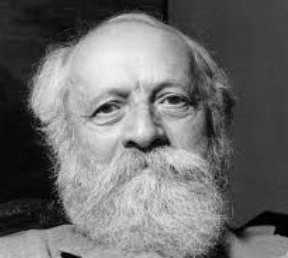
The basic word I-Thou can be spoken only with one's whole being. The concentration and fusion into a whole being can never be accomplished by me, can never be accomplished without me. I require a Thou to become; becoming I, I say Thou.
9 months 3 weeks ago
Faith looks to the word and the promise; that is, to the truth. But hope looks to that which the word has promised, to the gift.
▼
Source
source
p. 221
7 months 3 weeks ago
In cloning, the Father and the Mother have disappeared, not in the service of an aleatory liberty of the subject, but in the service of a matrix called code.
▼
Source
source
"Clone Story," p. 96

8 months 1 week ago
Unto whomsoever much is given, of him shall be much required: and to whom men have committed much, of him they will ask the more.
▼
Source
source
12:48

5 months 2 weeks ago
Ancient philosophy will always hold its own among those who are worthy to judge it, because it forms... a system that is solid and well articulated like the body, whereas all these scattered members of modern philosophy form no system.
▼
Source
source
Ch. VI Concerning the Sensitive Faculty of Matter

9 months 2 weeks ago
A young man who wishes to remain a sound Atheist cannot be too careful of his reading. There are traps everywhere... God is, if I may say it, very unscrupulous.
▼
Source
source
p. 191
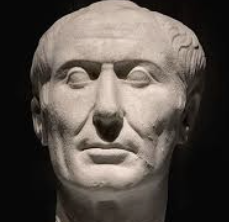
7 months 2 weeks ago
His own character is the arbiter of every one's fortune.
▼
Source
source
Maxim 283
9 months 2 weeks ago
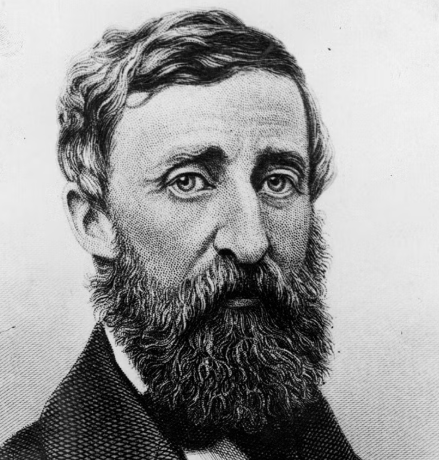
If a man walk in the woods for love of them half of each day, he is in danger of being regarded as a loafer; but if he spends his whole day as a speculator, shearing off those woods and making earth bald before her time, he is esteemed an industrious and enterprising citizen. As if a town had no interest in its forests but to cut them down!
▼
Source
source
p. 485

10 months 4 days ago
When the apostle James was talking about faith and works against those who thought their faith was enough, and didn't want to have good works, he said, You believe God is one; you do well; the demons also believe, and tremble.
▼
Source
source
(Jas 2:19) 183:13:2
6 months 1 week ago
Happy the people whose annals are blank in history books!
▼
Source
source
Life of Frederick the Great, Bk. XVI, ch. 1.
6 months 4 days ago
The tiger that assails me is in the right, and I who strike him down am also in the right. I defend against him not my right, but myself.
▼
Source
source
S. Byington, trans. (1913), p. 191
9 months 2 weeks ago
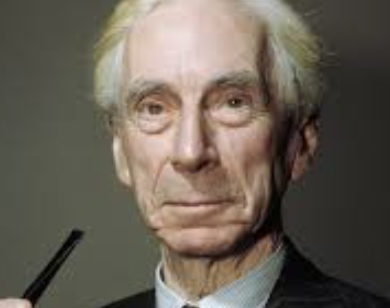
A logical theory may be tested by its capacity for dealing with puzzles, and it is a wholesome plan, in thinking about logic, to stock the mind with as many puzzles as possible, since these serve much the same purpose as is served by experiments in physical science.
▼
Source
source
"On Denoting", Mind, Vol. 14, No. 56 (October 1905), pp. 479-493; as reprinted in Logic and Knowledge: Essays, 1901-1950, 1956
7 months 4 days ago
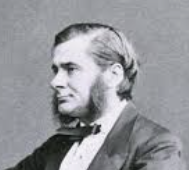
The fact is he made a prodigious blunder in commencing the attack, and now his only chance is to be silent and let people forget the exposure. I do not believe that in the whole history of science there is a case of any man of reputation getting himself into such a contemptible position.
▼
Source
source
About Richard Owen's view on human and ape brains, in a letter to J.D. Hooker

9 months 3 weeks ago
I want you to read the true system of the heart, drafted by a decent man and published under another name. I do not want you to be biased against good and useful books merely because a man unworthy of reading them has the audacity to call himself the Author.
▼
Source
source
First Dialogue; translated by Judith R. Bush, Christopher Kelly, Roger D. Masters
5 months 2 weeks ago
Every perfect traveller always creates the country where he travels.
▼
Source
source
As quoted in Reporter in Red China (1966) by Charles Taylor

10 months 2 weeks ago
At this point of his effort man stands face to face with the irrational. He feels within him his longing for happiness and for reason. The absurd is born of this confrontation between the human need and the unreasonable silence of the world. This must not be forgotten. This must be clung to because the whole consequence of a life can depend on it. The irrational, the human nostalgia, and the absurd that is born of their encounter, these are the three characters in the drama that must necessarily end with all the logic of which an existence is capable.
8 months 2 weeks ago
Third, these general ideas are not mere words, nor do they consist in this, that certain concrete facts will every time happen under certain descriptions of conditions; but they are just as much, or rather far more, living realities than the feelings themselves out of which they are concreted. And to say that mental phenomenon are governed by law does not mean merely that they are describable by a general formula; but that there is a living idea, a conscious continuum of feeling which pervades them, and to which they are docile.
7 months 3 weeks ago
Rationality requires a choice among all possible alternative behaviors. In actual behavior, only a very few of all these possible alternatives come to mind.
10 months 1 week ago
How great is the path proper to the Sage! Like overflowing water, it sends forth and nourishes all things, and rises up to the height of heaven. All-complete is its greatness! It embraces the three hundred rules of ceremony, and the three thousand rules of demeanor. It waits for the proper man, and then it is trodden. Hence it is said, "Only by perfect virtue can the perfect path, in all its courses, be made a fact."
8 months 2 weeks ago
Each of us is born with a share of purity, predestined to be corrupted by our commerce with mankind, by that sin against solitude.
9 months 2 weeks ago
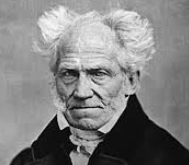
To free a man from error is to give, not to take away. Knowledge that a thing is false is a truth. Error always does harm; sooner or later it will bring mischief to the man who harbors it. Then give up deceiving people; confess ignorance of what you don't know, and leave everyone to form his own articles of faith for himself. Perhaps they won't turn out so bad, especially as they'll rub one another's corners down, and mutually rectify mistakes. The existence of many views will at any rate lay a foundation of tolerance. Those who possess knowledge and capacity may betake themselves to the study of philosophy, or even in their own persons carry the history of philosophy a step further.
▼
Source
source
"Religion: A Dialogue." Variant translation: To free a man from error does not mean to take something from him, but to give him something.
9 months 2 weeks ago
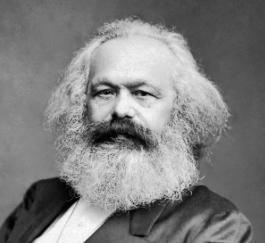
Every step of real movement is more important than a dozen programmes.
▼
Source
source
Letter to W. Bracke, 5 May 1875
9 months 2 weeks ago
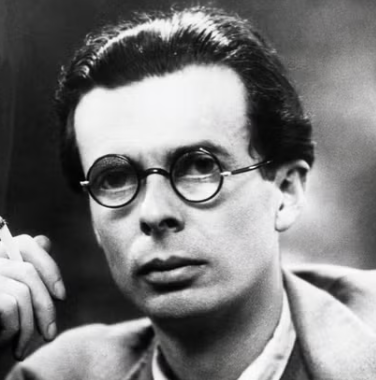
By means of ever more effective methods of mind-manipulation, the democracies will change their nature; the quaint old forms- elections, parliaments, Supreme Courts and all the rest-will remain. The underlying substance will be a new kind of non-violent totalitarianism. All the traditional names, all the hallowed slogans will remain exactly what they were in the good old days. Democracy and freedom will be the theme of every broadcast and editorial-but democracy and freedom in a strictly Pickwickian sense. Meanwhile the ruling oligarchy and its highly trained elite of soldiers, policemen, thought-manufacturers and mind-manipulators will quietly run the show as they see fit.
▼
Source
source
Chapter 3, p. 25
6 months 4 days ago
Whoso is full of sacred (religious, moral, humane) love loves only the spook, the "true man," and persecutes with dull mercilessness the individual, the real man.
▼
Source
source
S. Byington, trans. (1913), p. 383

6 months 1 week ago
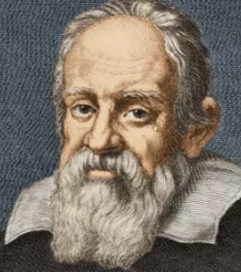
Among all the great men who have philosophized about this remarkable effect, I am more astonished at Kepler than at any other. Despite his open and acute mind, and though he has at his fingertips the motions attributed to the earth, he nevertheless lent his ear and his assent to the moon's dominion over the waters, to occult properties, and to such puerilities.
▼
Source
source
In regard to Kepler's belief of the moon affecting the tides of the Earth, p. 328
8 months 2 weeks ago
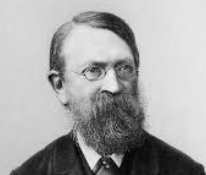
The student of mathematics often finds it hard to throw off the uncomfortable feeling that his science, in the person of his pencil, surpasses him in intelligence,-an impression which the great Euler confessed he often could not get rid of. This feeling finds a sort of justification when we reflect that the majority of the ideas we deal with were conceived by others, often centuries ago. In a great measure it is really the intelligence of other people that confronts us in science.
▼
Source
source
Mach, Ernst. p. 196: Mathematics seems possessed of intelligence
9 months 2 weeks ago
A man's face as a rule says more, and more interesting things, than his mouth, for it is a compendium of everything his mouth will ever say, in that it is the monogram of all this man's thoughts and aspirations.
▼
Source
source
Vol. 2, Ch. 29, § 377
9 months 2 weeks ago
When one admits that nothing is certain one must, I think, also admit that some things are much more nearly certain than others. It is much more nearly certain that we are assembled here tonight than it is that this or that political party is in the right. Certainly there are degrees of certainty, and one should be very careful to emphasize that fact, because otherwise one is landed in an utter skepticism, and complete skepticism would, of course, be totally barren and completely useless.
▼
Source
source
"Skepticism"
9 months 2 weeks ago
All our scientific and philosophic ideals are altars to unknown gods.
▼
Source
source
Lecture at the Harvard Divinity School (13 March 1884); published in the The Unitarian Review and Religious Magazine as The Dilemma of Determinism
8 months 3 weeks ago
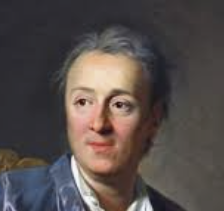
How old the world is! I walk between two eternities... What is my fleeting existence in comparison with that decaying rock, that valley digging its channel ever deeper, that forest that is tottering and those great masses above my head about to fall? I see the marble of tombs crumbling into dust; and yet I don't want to die!
▼
Source
source
Salon of 1767 (1798), Oeuvres esthétiques
9 months 2 weeks ago
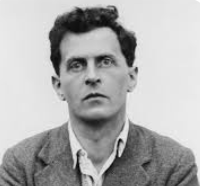
One might say: art shows us the miracles of nature. It is based on the concept of the miracles of nature.
CivilSimian.com created by AxiomaticPanic, CivilSimian, Kalokagathia