

3 months 1 week ago
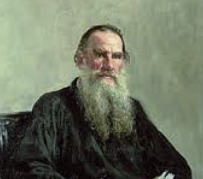
The hero of my tale, whom I love with all the power of my soul, whom I have tried to portray in all his beauty, who has been, is, and will be beautiful, is Truth.
▼
Source
source
Sevastopol in May (1855), Ch. 16
3 months 6 days ago
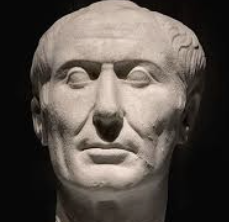
Never find your delight in another's misfortune.
▼
Source
source
Maxim 467
5 months 1 week ago
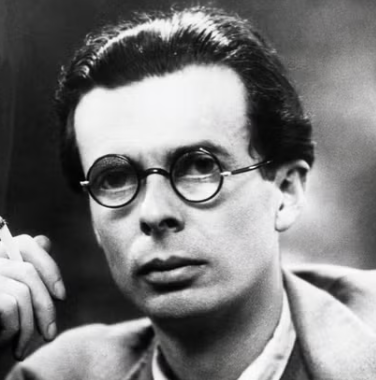
To the gross senses the chair seems solid and substantial. But the gross senses and be refined by means of instruments. Closer observations are made, as the result of which we are forced to conclude that the chair is "really" a swarm of electric charges whizzing about in empty space. ... While the substantial chair is an abstraction easily made from the memories of innumerable sensations of sight and touch, the electric charge chair is a difficult and far-fetched abstraction from certain visual sensations so excessively rare (they can only come to us in the course of elaborate experiments) that not one man in a million has ever been in the position to make it for himself. The overwhelming majority of us accept the electric-charge chair on authority, as good Catholics accept transubstantiation.
▼
Source
source
"One and Many," pp. 8-9

4 months 4 weeks ago
With a malicious man carry on no conflict, and do not molest him in any way whatever.
4 months 4 weeks ago
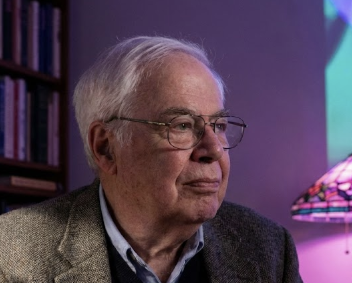
It is no more evident that democratic institutions are to be measured by the sort of person they create than that they are to be measured against divine commands. ... Even if the typical character types of liberal democracies are bland, calculating, petty, and unheroic, the prevalence of such people may be a reasonable price to pay for political freedom.

5 months 4 days ago
I don't know why we are here, but I'm pretty sure that it is not in order to enjoy ourselves.
▼
Source
source
As quoted in The Beginning of the End (2004) by Peter Hershey, p. 109 Also, as quoted in "The Relentless Rise of Science as Fun", by Jeremy Burgess, in New Scientist, Volume 143, Issues 1932-1945, originally published 1994.
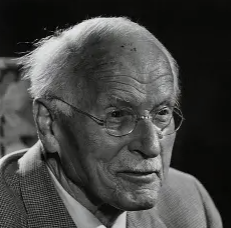
4 months 5 days ago
Since the Devil is the adversary of Christ he should occupy a position equivalent to his and be the Son of God as well. Satan would be the first Son of God and Christ the second.
▼
Source
source
Paris, 1991, p. 207. As quoted in Curzio Nitoglia

4 months 4 days ago
One is and remains a slave as long as one is not cured of hoping.
4 months 4 days ago
Why don't I kill myself? If I knew exactly what keeps me from doing so, I should have no more questions to ask myself since I should have answered them all.

6 months 1 week ago
Deep within every human being there still lives the anxiety over the possibility of being alone in the world, forgotten by God, overlooked among the millions and millions in this enormous household. One keeps this anxiety at a distance by looking at the many round about who are related to him as kin and friends, but the anxiety is still there, nevertheless, and one hardly dares think of how he would feel if all this were taken away.
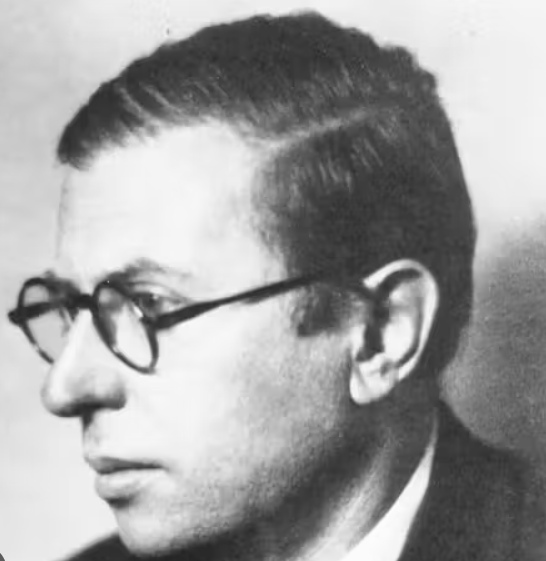
5 months 1 week ago
A man who belongs to some communist or revolutionary society wills certain concrete ends, which imply the will to freedom, and that freedom is willed in community. We will freedom for freedom's sake, and in and through the particular circumstances. And in thus willing freedom, we discover that it depends entirely upon the freedom of others and that the freedom of others depends upon our own.
▼
Source
source
pp. 51-52
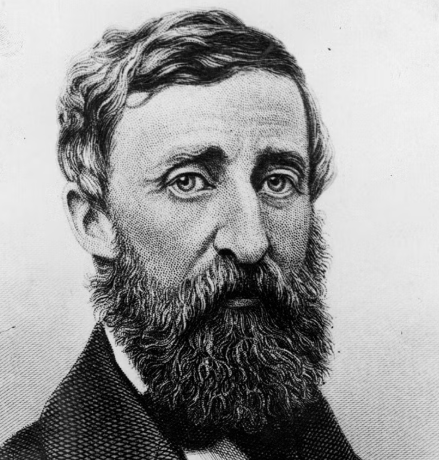
5 months 1 week ago
You ask particularly after my health. I suppose that I have not many months to live; but, of course, I know nothing about it. I may add that I am enjoying existence as much as ever, and regret nothing.
▼
Source
source
Last letter, to Myron Benton, March 31, 1862

5 months 1 week ago
Can anybody remember when the times were not hard and money not scarce?
▼
Source
source
Works and Days


6 months 6 days ago
When you write a short story ... you had better know the ending first. The end of a story is only the end to the reader. To the writer, it's the beginning. If you don't know exactly where you're going every minute you're writing, you'll never get there or anywhere.
5 months 1 week ago
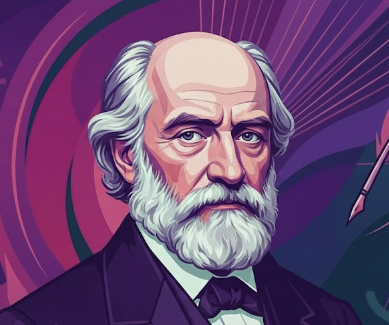
To free a man from error is to give, not to take away. Knowledge that a thing is false is a truth. Error always does harm; sooner or later it will bring mischief to the man who harbors it. Then give up deceiving people; confess ignorance of what you don't know, and leave everyone to form his own articles of faith for himself. Perhaps they won't turn out so bad, especially as they'll rub one another's corners down, and mutually rectify mistakes. The existence of many views will at any rate lay a foundation of tolerance. Those who possess knowledge and capacity may betake themselves to the study of philosophy, or even in their own persons carry the history of philosophy a step further.
▼
Source
source
"Religion: A Dialogue." Variant translation: To free a man from error does not mean to take something from him, but to give him something.
5 months 1 week ago
Is a democracy, such as we know it, the last improvement possible in government? Is it not possible to take a step further towards recognizing and organizing the rights of man? There will never be a really free and enlightened State until the State comes to recognize the individual as a higher and independent power, from which all its own power and authority are derived, and treats him accordingly. I please myself with imagining a State at least which can afford to be just to all men, and to treat the individual with respect as a neighbor; which even would not think it inconsistent with its own repose if a few were to live aloof from it, not meddling with it, nor embraced by it, who fulfilled all the duties of neighbors and fellow-men. A State which bore this kind of fruit, and suffered it to drop off as fast as it ripened, would prepare the way for a still more perfect and glorious State, which also I have imagined, but not yet anywhere seen.
▼
Source
source
Final lines

3 months 3 weeks ago
books are only what we want them to be; rather, what we read into them.
1 month 6 days ago
It is necessary that every man be surpassingly temperate. That person would most of all be a man of this sort if he were superior to money, which is what corrupts all men, and if, without caring about his life, he bestowed his pains on things that are just and pursued virtue.
▼
Source
source
p. 149

5 months 1 week ago
The effects of opposition are wonderful. There are men who rise refreshed on hearing of a threat, - men to whom a crisis which intimidates and paralyzes the majority - demanding, not the faculties of prudence and thrift, but comprehension, immovableness, the readiness of sacrifice - comes graceful and beloved as a bride!
▼
Source
source
p. 189
1 month 3 weeks ago
To roam in open walks, that the soul may increase and lift itself up in the free air and with much spirit; sometimes travel and a change of country will give vigor, and marriage and more liberal drink. Sometimes even to the point of drunkenness, not that it drowns us, but that it depresses us: for it washes away cares and moves the mind from below, and, as with certain diseases, so it heals sadness.
1 month 1 week ago
Let those flatter, who fear: it is not an American art.
▼
Source
source
Summary View of the Rights of British America

2 months 2 weeks ago
As Malaparte saw it, Naples was a pagan city with an ancient sense of time. Christianity taught those who were converted to it to think of history as the unfolding of a single plot - a moral drama of sin and redemption. In the ancient world there was no such plot - only a multitude of stories that were forever being repeated. Inhabiting that ancient world, the Neapolitans did not expect any fundamental alteration in human affairs. Not having accepted the Christian story of redemption, they had not been seduced by the myth of progress. Never having believed civilization to be permanent, they were not surprised when it foundered.
▼
Source
source
An Old Chaos: Frozen Horses and Deserts of Brick (p. 22)
4 months 5 days ago
My interests drew me in different directions. On the one hand I was powerfully attracted by science, with its truths based on facts; on the other hand I was fascinated by everything to do with comparative religion. [...] In science I missed the factor of meaning; and in religion, that of empiricism.
▼
Source
source
p. 72
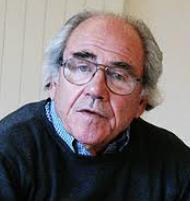
3 months 1 week ago
To challenge and to cope with this paradoxical state of things, we need a paradoxical way of thinking; since the world drifts into delirium, we must adopt a delirious point of view. We must no longer assume any principle of truth, of causality, or any discursive norm. Instead, we must grant both the poetic singularity of events and the radical uncertainty of events. It is not easy. We usually think that holding to the protocols of experimentation and verification is the most difficult thing. But in fact the most difficult thing is to renounce the truth and the possibility of verification, to remain as long as possible on the enigmatic, ambivalent, and reversible side of thought.
▼
Source
source
The Vital Illusion (2000) "The Murder of the Real". Wellek Library Lectures given May 1999 at the University of California, Irvine
3 months 3 weeks ago
Has not authority from time immemorial stamped every step of progress as treasonable?

9 months 2 weeks ago
Think about the strangeness of today's situation. Thirty, forty years ago, we were still debating about what the future will be: communist, fascist, capitalist, whatever. Today, nobody even debates these issues. We all silently accept global capitalism is here to stay. On the other hand, we are obsessed with cosmic catastrophes: the whole life on earth disintegrating, because of some virus, because of an asteroid hitting the earth, and so on. So the paradox is, that it's much easier to imagine the end of all life on earth than a much more modest radical change in capitalism.
1 month 1 week ago
I am an enemy to all banks discounting bills or notes for anything but coin.
▼
Source
source
Letter to Thomas Cooper, 1814. ME 14:61
5 months 2 weeks ago
The public weal requires that men should betray and lie and massacre.
▼
Source
source
Book III, Ch. 1. Of Profit and Honesty
6 months 1 week ago
The tyrant dies and his rule is over; the martyr dies and his rule begins.
4 months 6 days ago
The case of mere titles is so absurd that it would deserve to be treated only with ridicule were t not for the serious mischief they impose on mankind. The feudal system was a ferocious monster, devouring, where it came, all that the friend of humanity regards with attachment and love. The system of titles appears under a different form. The monster is at length destroyed, and they who followed in his train, and fattened upon the carcasses of those he slew, have stuffed his skin, and, b exhibiting it, hope still to terrify mankind into patient and pusillanimity.
▼
Source
source
Book V, Chapter 13
5 months 3 weeks ago
God judged it better to bring good out of evil than to suffer no evil to exist.
▼
Source
source
Enchiridion (c. 420 ), Ch. 27
6 months 6 days ago
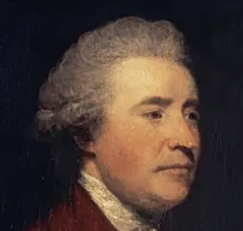
Economics is on the side of humanity now.
4 months 1 week ago
It looks to me to be narrow and pedantic to apply the ordinary ideas of criminal justice to this great public contest. I do not know the method of drawing up an indictment against a whole people.
1 month 1 week ago
You seem to consider the federal judges as the ultimate arbiters of all constitutional questions, a very dangerous doctrine, indeed, and one which would place us under the despotism of an oligarchy. Our judges are as honest as other men, and not more so. They have with others the same passions for the party, for power and the privilege of the corps. Their power is the more dangerous, as they are in office for life and not responsible, as the other functionaries are, to the elective control. The Constitution has erected no such single tribunal, knowing that to whatever hands confided, with the corruptions of time and party, its members would become despots. It has more wisely made all departments co-equal and co-sovereign within themselves.
▼
Source
source
Letter to William Charles Jarvis, 1820
2 months 3 weeks ago
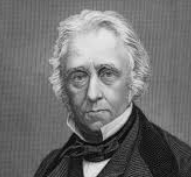
Such night in England ne'er had been, nor ne'er again shall be.
▼
Source
source
The Armada, l. 34
3 months 1 week ago
And so one can imagine that in amorous seduction the other is the locus of your secret - the other unknowingly holds that which you will never have the chance to know.
▼
Source
source
(p. 65)
3 months 4 days ago
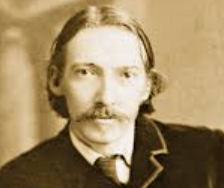
Old and young, we are all on our last cruise.
▼
Source
source
Crabbed Age and Youth.
1 month 2 weeks ago
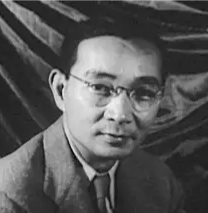
He who perceives death perceives a sense of the human comedy, and quickly becomes a poet.
▼
Source
source
pp. 39-40

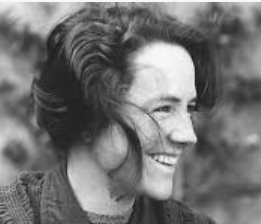
2 months 3 weeks ago
It doesn't matter that it can't last, that we don't find it more often. To know that there is such perfection, that there has been such perfection - it is worth living for. It exists. It has been - it is. One can contemplate it and feel complete peace.
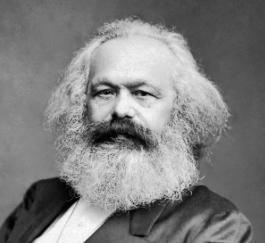
5 months 1 week ago
Did you not read our articles about the June revolution, and was not the essence of the June revolution the essence of our paper? Why then your hypocritical phrases, your attempt to find an impossible pretext? We have no compassion and we ask no compassion from you. When our turn comes, we shall not make excuses for the terror. But the royal terrorists, the terrorists by the grace of God and the law, are in practice brutal, disdainful, and mean, in theory cowardly, secretive, and deceitful, and in both respects disreputable.
▼
Source
source
The final issue of Neue Rheinische Zeitung (18 May 1849)''Marx-Engels Gesamt-Ausgabe, Vol. VI, p. 503
5 months 4 days ago
I believe it might interest a philosopher, one who can think himself, to read my notes. For even if I have hit the mark only rarely, he would recognize what targets I had been ceaselessly aiming at.

1 month 4 weeks ago
His Religion is not an easy one: with rigorous fasts, lavations, strict complex formulas, prayers five times a day, and abstinence from wine, it did not "succeed by being an easy religion." As if indeed any religion, or cause holding of religion, could succeed by that! It is a calumny on men to say that they are roused to heroic action by ease, hope of pleasure, recompense, - sugar-plums of any kind, in this world or the next! In the meanest mortal there lies something nobler.
1 month 3 weeks ago
Religion is regarded by the common people as true, by the wise as false, and by rulers as useful.
▼
Source
source
As quoted in What Great Men Think About Religion (1945) by Ira D. Cardiff, p. 342.

4 months 2 weeks ago
Disbelieve nothing wonderful concerning the gods, nor concerning divine dogmas.
▼
Source
source
Symbol 4
5 months 3 days ago
This is the moment when it becomes clear that the images of madness are nothing but dream and error, and that if the unfortunate sufferer who is blinded by them invokes them, it is the better to disappear with them into the annihilation for which they are destined.
▼
Source
source
Part Two: 2. The Transcendence of Delirium
3 months 6 days ago
The mother tongue is propaganda.
▼
Source
source
The University of Windsor review, Volumes 1-2, 1965, p. 10
5 months 1 week ago
Solvency is maintained by means of the national debt, on the principle, "If you will not lend me the money, how can I pay you?"
▼
Source
source
Ability
CivilSimian.com created by AxiomaticPanic, CivilSimian, Kalokagathia