


4 months 2 weeks ago
You will know that wretched men are the cause of their own suffering, who neither see nor hear the good that is near them, and few are the ones who know how to secure release from their troubles. Such is the fate that harms their minds; like pebbles they are tossed about from one thing to another with cares unceasing. For the dread companion Strife harms them unawares, whom one must not walk behind, but withdraw from and flee.
▼
Source
source
As quoted in Divine Harmony: The Life and Teachings of Pythagoras by John Strohmeier and Peter Westbrook

4 months 3 weeks ago
Once a word has been allowed to escape, it cannot be recalled.
▼
Source
source
Book I, epistle xviii, line 71
4 months 6 days ago
There is a sort of enthusiasm in all projectors, absolutely necessary for their affairs, which makes them proof against the most fatiguing delays, the most mortifying disappointments, the most shocking insults; and what is severer than all, the presumptuous judgments of the ignorant upon their designs.
▼
Source
source
Volume I, p. 7

5 months 3 weeks ago
For it still seemed to me that it is not we who sin, but some other nature sinned in us. And it gratified my pride to be beyond blame, and when I did anything wrong not to have to confess that I had done wrong. I loved to excuse my soul and to accuse something else inside me (I knew not what) but which was not I. But, assuredly, it was I, and it was my impiety that had divided me against myself. That sin then was all the more incurable because I did not deem myself a sinner.
▼
Source
source
A. Outler, trans. (Dover: 2002), Book 5, Chapter 10, p. 77
5 months 1 week ago
The people resemble a wild beast, which, naturally fierce and accustomed to live in the woods, has been brought up, as it were, in a prison and in servitude, and having by accident got its liberty, not being accustomed to search for its food, and not knowing where to conceal itself, easily becomes the prey of the first who seeks to incarcerate it again.
▼
Source
source
Book 1, Ch. 16
2 months 2 weeks ago
The coming of Buddhism to the West may well prove to be the most important event of the Twentieth Century.
▼
Source
source
In Lama Surya Das, Awakening the Buddha Within

1 month 3 days ago
The sciences that are expressed by numbers or by other small signs, are easily learned; and... this facility rather than its demonstrability is what has made the fortune of algebra.
1 month 5 days ago
Value has its own logic. In the constitutional state that is most clearly recognizable in the enactment of its constitution.

4 months 1 week ago
Step back in time; look closely at the child in the very arms of his mother; see the external world reflected for the first time in the yet unclear mirror of his understanding; study the first examples which strike his eyes; listen to the first words which arouse within him the slumbering power of thought; watch the first struggles which he has to undergo; only then will you comprehend the source of his prejudices, the habits, and the passions which are to rule his life. The entire man, so to speak, comes fully formed in the wrappings of his cradle.
▼
Source
source
Chapter II.

5 months 1 day ago
Courage, not cleverness; not even inspiration, is the grain of mustard that grows up to be a great tree.
▼
Source
source
p. 44e

1 month 3 weeks ago
Battles, in these ages, are transacted by mechanism; with the slightest possible development of human individuality or spontaneity: men now even die, and kill one another, in an artificial manner.
▼
Source
source
Pt. I, Bk. VII, ch. 4.

3 months 2 weeks ago
I've always believed that a writer has got to remain an outsider. If I was offered anything like the Nobel Prize for Literature, I'd find it an extremely difficult conflict because I'd be basically disinclined to accept.
▼
Source
source
Interview with Paul Newman in Abraxas Unbound #7
4 months 2 days ago
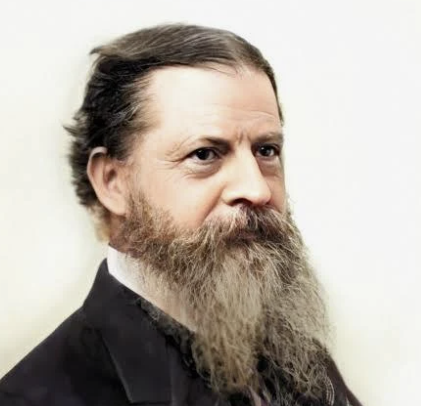
But no mental action seems necessary or invariable in its character. In whatever manner the mind has reacted under a given sensation, in that manner it is the more likely to react again; were this, however, an absolute necessity, habits would become wooden and ineradicable, and no room being left for the formulation of new habits, intellectual life would come to a speedy close. Thus, the uncertainty of the mental law is no mere defect of it, but is on the contrary of its essence. The truth is, the mind is not subject to "law," in the same rigid sense that matter is. It only experiences gentle forces which merely render it more likely to act a given way than it otherwise would be. There always remains a certain amount of arbitrary spontaneity in its action, without which it would be dead.
4 months 2 weeks ago
The King that followeth Truth, and ruleth according to Justice, shall reign quietly: but he that doth the contrary, seeketh another to reign for him.
1 month 2 weeks ago
Let every man be occupied, and occupied in the highest employment of which his nature is capable, and die with the consciousness that he has done his best.
▼
Source
source
Vol. I, ch. 6, "Of Occupation", p. 178

5 months 6 days ago
The effects of opposition are wonderful. There are men who rise refreshed on hearing of a threat, - men to whom a crisis which intimidates and paralyzes the majority - demanding, not the faculties of prudence and thrift, but comprehension, immovableness, the readiness of sacrifice - comes graceful and beloved as a bride!
▼
Source
source
p. 189
3 months 1 week ago
In conclusion, then, no satisfactory interpretation of quantum mechanics exists today. The questions posed by the confrontation between the Copenhagen interpretation and the hidden variable theorists go to the very foundations of microphysics, but the answers given by hidden variable theorists and Copenhagenists are alike unsatisfactory. Human curiosity will not rest until those questions are answered, but whether they will be answered by conceptual innovations within the framework of the present theory or only within the framework of an as yet unforeseen theory is unknown. The first step toward answering them has been attempted here. It is the modest but essential step of becoming clear on the nature and magnitude of the difficulties.
▼
Source
source
A philosopher looks at quantum mechanics



1 month 3 days ago
They also gave it the title of "opinion," because truth and falsity lie in opinion. And they called it "movement," "generation," "change," "division," "length," "multiplication," "addition," "kinship," "relativity," "the ratio in proportionality." For the relation of two numbers is of every conceivable form.
▼
Source
source
On the Dyad
1 month 3 weeks ago
All that Mankind has done, thought, gained or been: it is lying as in magic preservation in the pages of Books.

5 months 5 days ago
Even atheists rebel and express, like Hardy and Housman, their rage against God although (or because) He does not, on their view, exist...
5 months 2 weeks ago
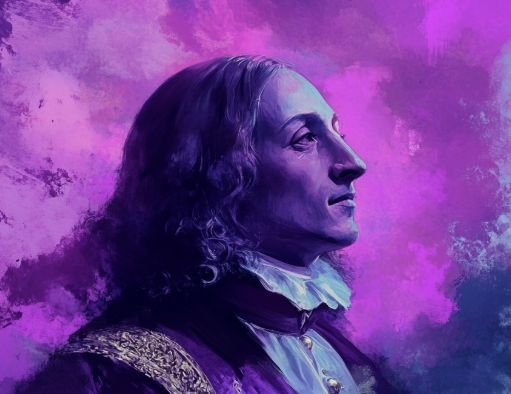
If it is pleasing to observe in nature her desire to paint God in all his works, in which we see some traces of him because they are his images, how much more just is it to consider in the productions of minds the efforts which they make to imitate the essential truth, even in shunning it, and to remark wherein they attain it and wherein they wander from it, as I have endeavored to do in this study.

2 months 2 weeks ago
Our bodies are perishable, wealth is not at all permanent and death is always nearby. Therefore we must immediately engage in acts of merit.
5 months 1 week ago
This return of Republics back to their principles also results from the simple virtue of one man, without depending on any law that excites him to any execution: none the less, they are of such influence and example that good men desire to imitate him, and the wicked are ashamed to lead a life contrary to those examples.
▼
Source
source
Book 3, Ch. 1

6 months 3 days ago
Writing is an addiction more powerful than alcohol, than nicotine, than crack. I could not conceive of not writing.

5 months 1 week ago
Morality is thus the relation of actions to the autonomy of the will, that is, to a possible giving of universal law through its maxims. An action that can coexist with the autonomy of the will is permitted; one that does not accord with it is forbidden. A will whose maxims necessarily harmonize with the laws of autonomy is a holy, absolutely good will. The dependence upon the principle of autonomy of a will that is not absolutely good (moral necessitation) is obligation. This, accordingly, cannot be attributed to a holy being. The objective of an action from obligation is called duty.
1 month 3 days ago
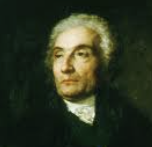
The question is frequently asked: why there is a school of theology attached to every University? The answer is easy: It is, that the Universities may subsist, and that the instruction may not become corrupt. Originally, the Universities were only schools of theology, to which other faculties were joined, as subjects around their Queen. The edifice of public instruction, placed on such a foundation, has continued even to our day. Those who have subverted it among themselves, will repent it, in vain, for a long time to come. To burn a city, there is needed only a child or a madman; but to rebuild it, architects, materials, workmen, money, and especially time, will be required.
▼
Source
source
XXXVIII, p. 111
4 months 3 days ago
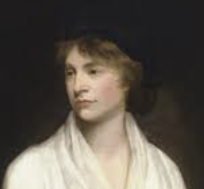
Executions, far from being useful examples to the survivors, have, I am persuaded, a quite contrary effect, by hardening the heart they ought to terrify. Besides, the fear of an ignominious death, I believe, never deterred anyone from the commission of a crime, because in committing it the mind is roused to activity about present circumstances.
▼
Source
source
Letter 19
2 months 4 weeks ago
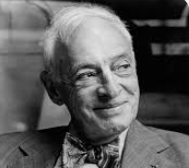
People reserve their best thinking for their professional specialties and, next in line, for serious matters confronting the alert citizen -economics, politics, the disposal of nuclear waste, etc. The day's work done, they want to be entertained.
▼
Source
source
p. 16
4 months 6 days ago
All the time that this horrid scene was acting or avenging, as well as for some time before, and ever since, the wicked instigators of this unhappy multitude, guilty, with every aggravation, of all their crimes, and screened in a cowardly darkness from their punishment, continued without interruption, pity, or remorse, to blow up the blind rage of the populace, with a continued blast of pestilential libels, which infected and poisoned the very air we breathed in.
▼
Source
source
Speech at Bristol Previous to the Election, referring to the Gordon Riots (6 September 1780), quoted in The Works of the Right Honourable Edmund Burke, Vol. II (1855), pp. 158-159

4 months 3 weeks ago
With a drunken man do not walk on the road.
4 months 6 days ago
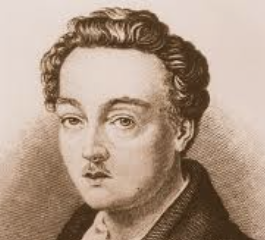
The revolutionary government is the despotism of liberty against tyranny.
▼
Source
source
Act I.


2 months 2 weeks ago
The punctuation of anniversaries is terrible, like the closing of doors, one after another between you and what you want to hold on to.
▼
Source
source
Diary entry on the first anniversary of the kidnapping and death of her son Charles Augustus Lindbergh III (1 March 1932)
5 months 1 week ago
Marriage is encouraged in China, not by the profitableness of children, but by the liberty of destroying them.
▼
Source
source
Chapter VIII, p. 87.
4 months 1 week ago
The purpose of an encyclopedia is to collect knowledge disseminated around the globe; to set forth its general system to the men with whom we live, and transmit it to those who will come after us, so that the work of preceding centuries will not become useless to the centuries to come; and so that our offspring, becoming better instructed, will at the same time become more virtuous and happy, and that we should not die without having rendered a service to the human race in the future years to come.
▼
Source
source
Encyclopédie
4 months 1 week ago
There are at the present time two great nations in the world-allude to the Russians and the Americans- All other nations seem to have nearly reached their national limits, and have only to maintain their power; these alone are proceeding-along a path to which no limit can be perceived.
▼
Source
source
Chapter XVIII.

5 months 2 weeks ago
Hope is a good breakfast, but it is a bad supper.
▼
Source
source
No. 36
3 months 2 weeks ago
The sadistic person is as dependent on the submissive person as the latter is on the former; neither can live without the other. The difference is only that the sadistic person commands, exploits, hurts, humiliates, and that the masochistic person is commanded, exploited, hurt, humiliated. This is a considerable difference in a realistic sense; in a deeper emotional sense, the difference is not so great as that which they both have in common: fusion without integrity.
▼
Source
source
Ch. 2

5 months 2 weeks ago
Not to be a proud and haughty person, you have to follow the old proverb and "know thyself." That is to say, you must regard your special talents, whatever beauty or fame you have, as gifts from God, and not as things you earned for yourself. Whatever is low and mean is not God's doing, however. Here you can only blame yourself. Remember the squalor of your birth and how naked and poor you were when you crawled into the light of day like a little animal.
▼
Source
source
p.154

5 months 1 week ago
All of the days go toward death and the last one arrives there.
▼
Source
source
Ch. 20. Of the Force of Imagination
5 months 2 weeks ago
Two principles we should always have ready that there is nothing good or evil save in the will; and that we are not to lead events, but to follow them.
▼
Source
source
Book III, ch. 10, 18.
3 months 2 days ago
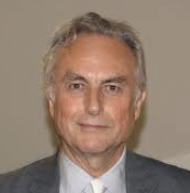
Atheists have the intellectual courage to accept reality for what it is: wonderfully and shockingly explicable. As an atheist, you have the moral courage to live to the full the only life you're ever going to get: to fully inhabit reality, rejoice in it, and do your best finally to leave it better than you found it.
▼
Source
source
The Intellectual and Moral Courage of Atheism
5 months 1 day ago
Never stay up on the barren heights of cleverness, but come down into the green valleys of silliness.
▼
Source
source
p. 76e
1 month 2 weeks ago
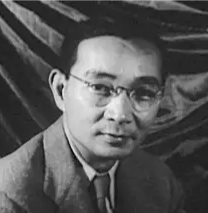
My faith in human dignity consists in the belief that man is the greatest scamp on earth. Human dignity must be associated with the idea of a scamp and not with that of an obedient, disciplined and regimented soldier.
▼
Source
source
Ch. I : The Awakening, p. 12
1 month 3 days ago
Never have nations been civilized, except by religion.
▼
Source
source
XXXIII, p. 99
1 month 5 days ago
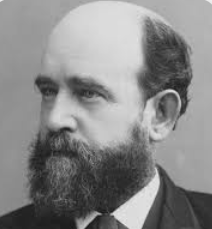
Why should charity be offered the unemployed? It is not alms they ask. They are insulted and embittered and degraded by being forced to accept as paupers what they would gladly earn as workers. What they ask is not charity, but the opportunity to use their own labor in satisfying their own wants. Why can they not have that? It is their natural right. He who made food and clothing and shelter necessary to man's life has also given to man, in the power of labor, the means of maintaining that life; and when, without fault of their own, men cannot exert that power, there is somewhere a wrong of the same kind as denial of the right of property and denial of the right of life - a wrong equivalent to robbery and murder on the grandest scale. Charity can only palliate present suffering a little at the risk of fatal disease. For charity cannot right a wrong; only justice can do that. Charity is false, futile, and poisonous when offered as a substitute for justice.
▼
Source
source
p. 179
2 months 2 weeks ago
I have come to believe that you can get along without anyone - that is, without the close contact of any one person. That is a terrible shock to me, but I think it is true. You do need companionship, but wherever you go, in whatever new environment, you will find people who, to a large degree, take the place of those you left...The intimate companionship goes, I think, when you leave a friend, but friendship stays. It is an inherent possibility of relationship that, once admitted - well, there it is.
3 months 3 weeks ago
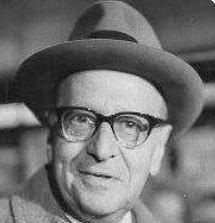
In most cases, to be reasonable means not to be obstinate, which in turn points to conformity with reality as it is. The principle of adjustment is taken for granted. When the idea of reason was conceived, it was intended to achieve more than the mere regulation of the relation between means and ends: it was regarded as the instrument for understanding the ends, for determining them.
▼
Source
source
p. 10.
3 months 2 weeks ago
The techniques of the practitioner are usually called 'synthetic'. He designs by organizing known principles and devices into larger systems.
▼
Source
source
Simon (1945, p. 353); As cited in: Philosophy of Technology and Engineering Sciences (2009) p. 425.
CivilSimian.com created by AxiomaticPanic, CivilSimian, Kalokagathia