

7 months 3 weeks ago
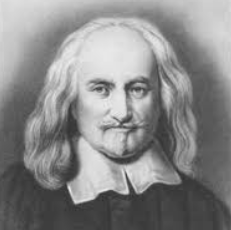
So that in the first place, I put for a general inclination of all mankind a perpetual and restless desire of Power after power, that ceaseth only in Death. And the cause of this is not always that a man hopes for a more intensive delight than he has already attained to, or that he cannot be content with a moderate power: but because he cannot assure the power and means to live well, which he hath present, without the acquisition of more.
▼
Source
source
The First Part, Chapter 11, p. 47

9 months ago
The sweetest thing in all my life has been the longing - to reach the Mountain, to find the place where all the beauty came from - my country, the place where I ought to have been born. Do you think it all meant nothing, all the longing? The longing for home? For indeed it now feels not like going, but like going back.
▼
Source
source
Psyche
7 months 2 weeks ago
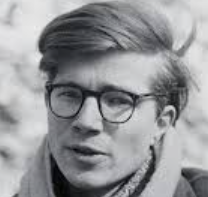
The Americans have always been more open to my ideas. In fact, I could earn a living in America just by lecturing. One of my brightest audiences, incidentally, were the prisoners in a Philadelphia gaol - brighter than my students at university.
▼
Source
source
Interview with Paul Newman in Abraxas Unbound #7

5 months 1 day ago
The inhabitants of the ceded territory shall be incorporated in the Union of the United States, and admitted as soon as possible, according to the principles of the Federal constitution, to the enjoyment of all the rights, advantages, and immunities, of citizens of the United States; and, in the mean time, they shall be maintained and protected in the free enjoyment of their liberty, property, and the religion which they profess.
▼
Source
source
Louisiana Treaty of Cession, Art. III
9 months ago
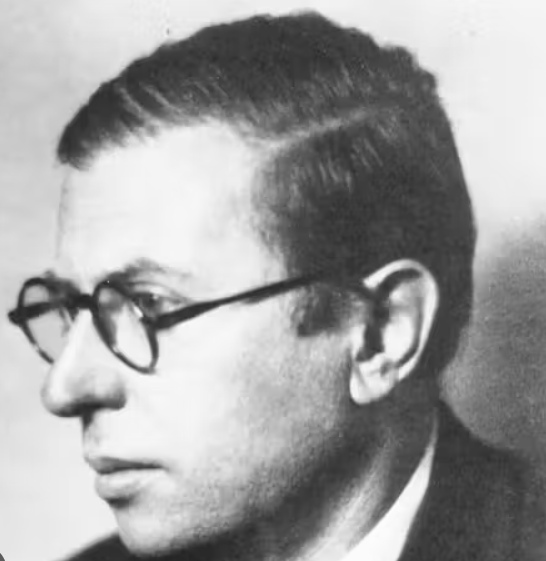
We are in hell and I will have my turn!
▼
Source
source
Inès warns Garcin and Estelle not to make love in her presence, Act 1, sc. 5
10 months 2 days ago
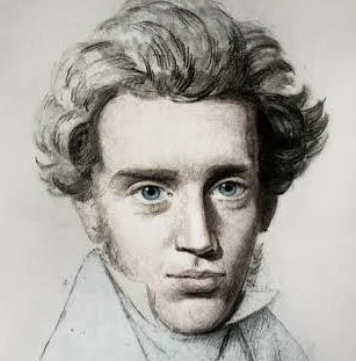
There is no one at the Communion table who retains against you even the least of your sins, no one, unless you yourself do it. So cast them away from yourself, and the recollection of them, lest in it your retain them; and cast the recollection of your having cast your sins away, lest in it you retain them.
5 months 1 week ago
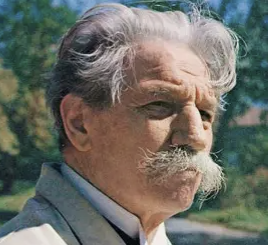
To the man who is truly ethical all life is sacred, including that which from the human point of view seems lower in the scale. He makes distinctions only as each case comes before him, and under the pressure of necessity, as, for example, when it falls to him to decide which of two lives he must sacrifice in order to preserve the other. But all through this series of decisions he is conscious of acting on subjective grounds and arbitrarily, and knows that he bears the responsibility for the life which is sacrificed.
▼
Source
source
p. 269



9 months 2 weeks ago
Men are eager to tread underfoot what they have once too much feared.
▼
Source
source
Book V, line 1140 (tr. Rouse)
7 months 4 weeks ago
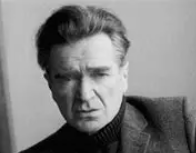
We do not rush toward death, we flee the catastrophe of birth, survivors struggling to forget it. Fear of death is merely the projection into the future of a fear which dates back to our first moment of life. We are reluctant, of course, to treat birth as a scourge: has it not been inculcated as the sovereign good - have we not been told that the worst came at the end, not at the outset of our lives? Yet evil, the real evil, is behind, not ahead of us. What escaped Jesus did not escape Buddha: "If three things did not exist in the world, O disciples, the Perfect One would not appear in the world. ..." And ahead of old age and death he places the fact of birth, source of every infirmity, every disaster.

7 months 3 weeks ago
The revolution, Stahl declared, is the 'world-historic mark of our age.' It would found 'the entire State on the will of man instead of on the commandment and ordinance of God.'
▼
Source
source
p. 364

5 months 3 weeks ago
Speech is human, silence is divine, yet also brutish and dead: therefore we must learn both arts.
▼
Source
source
Notebooks (1830).
8 months 3 weeks ago
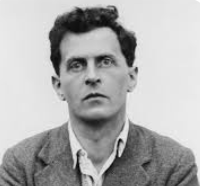
It is so characteristic, that just when the mechanics of reproduction are so vastly improved, there are fewer and fewer people who know how the music should be played.
▼
Source
source
p. 96
5 months ago
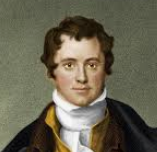
Fortunately science, like that nature to which it belongs, is neither limited by time nor by space. It belongs to the world, and is of no country and of no age. The more we know, the more we feel our ignorance; the more we feel how much remains unknown; and in philosophy, the sentiment of the Macedonian hero can never apply, - there are always new worlds to conquer.
▼
Source
source
Discourse Delivered at the Royal Society (30 November 1825)
8 months 3 weeks ago
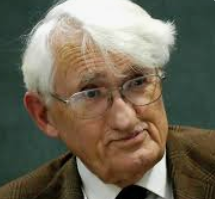
Although objectively greater demands are placed on this authority, it operates less as a public opinion giving a rational foundation to the exercise of political and social authority, the more it is generated for the purpose of an abstract vote that amounts to no more than an act of acclamation within a public sphere temporarily manufactured for show or manipulation.
▼
Source
source
p. 222

8 months 3 weeks ago
The only justifiable stopping place for the expansion of altruism is the point at which all whose welfare can be affected by our actions are included within the circle of altruism. This means that all beings with the capacity to feel pleasure or pain should be included; we can improve their welfare by increasing their pleasures and diminishing their pains.
▼
Source
source
Chapter 4, Reason, p. 120
9 months 5 days ago
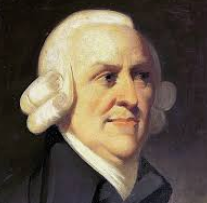
When profit diminishes, merchants are very apt to complain that trade decays; though the diminution of profit is the natural effect of its prosperity, or of a greater stock being employed in it than before.
▼
Source
source
Chapter IX


6 months 2 weeks ago
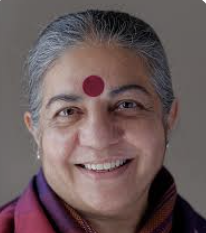
The business of grabbing and money-making, through a violent extractive economy that the 1% have built, is burdening the earth and humanity with unbearable and non-sustainable costs, and has brought us to the brink of extinction. We do not have to escape from the earth; we have to escape from the illusions that enslave our minds and make extinction look inevitable.
8 months 2 days ago
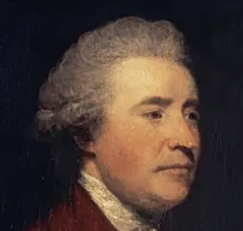
Abstract liberty, like other mere abstractions, is not to be found.
4 months 3 weeks ago
I never think of the future. It comes soon enough.
7 months 3 weeks ago
Bourgeois political economy ... never gets to see man who is its real subject. It disregards the essence of man and his history and is thus in the profoundest sense not a 'science of people' but of non-people and of an inhuman world of objects and commodities.
▼
Source
source
"The Foundations of Historical Materialism," Studies in Critical Philosophy (1972), p. 9

8 months 1 week ago
Wish not the thing, which thou mayest not obtain!
8 months 1 week ago
Sobriety is the strength of the soul, for it preserves its reason unclouded by passion.
▼
Source
source
As quoted in The History of Philosophy: From the Earliest Times to the Beginning of the Present Century (1819) by William Enfield Sobriety is the strength of the mind
10 months 4 days ago
We are, all of us, growing volcanoes that approach the hour of their eruption; but how near or distant that is, nobody knows not even God.
7 months 4 days ago
Our entire linear and accumulative culture collapses if we cannot stockpile the past in plain view. "
▼
Source
source
The Precession of Simulacra," p. 10
9 months 2 days ago
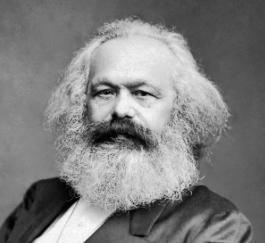
Undeterred by this examination, the French Revolution gave rise to ideas which led beyond the ideas of the entire old world order. The revolutionary movement which began in 1789 in the Cercle Social, which in the middle of its course had as its chief representatives Leclerc and Roux, and which finally with Babeuf's conspiracy was temporarily defeated, gave rise to the communist idea which Babeuf's friend Buonarroti re-introduced in France after the Revolution of 1830. This idea, consistently developed, is the idea of the new world order.
▼
Source
source
Chapter 6, 3
9 months ago
As image and apprehension are in an organic unity, so, for a Christian, are human body and human soul.
▼
Source
source
"Priestesses in the Church?" (1948), p. 237
7 months 4 days ago
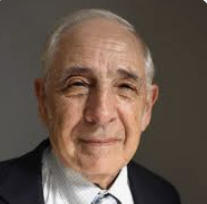
The Intentionality of the mind not only creates the possibility of meaning, but limits its forms.
▼
Source
source
P. 166.
5 months 3 weeks ago
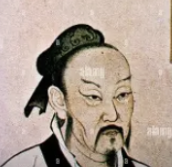
Most precious are the people; next come the spirits of land and grain; and last, the kings.
▼
Source
source
7B:14.
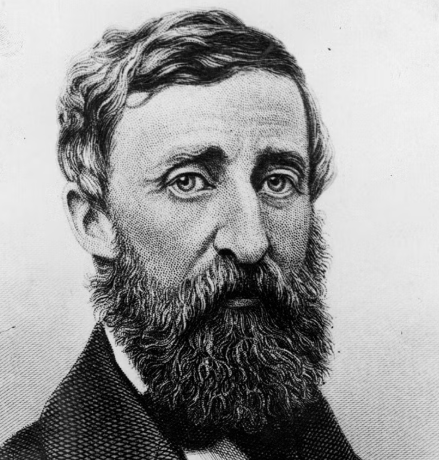
9 months 2 days ago
Most books belong to the house and streets only, and in the fields their leaves feel very thin.
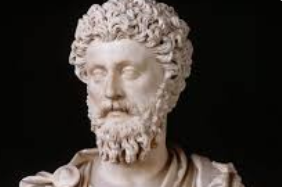
4 months 4 weeks ago
Men seek retreats for themselves, houses in the country, sea-shores, and mountains; and thou too art wont to desire such things very much. But this is altogether a mark of the most common sort of men, for it is in thy power whenever thou shalt choose to retire into thyself. For nowhere either with more quiet or more freedom from trouble does a man retire than into his own soul. Variant translation: Nowhere can man find a quieter or more untroubled retreat than in his own soul.
▼
Source
source
IV, 3.
7 months 1 day ago
For man to be able to live he must either not see the infinite, or have such an explanation of the meaning of life as will connect the finite with the infinite.
▼
Source
source
Ch. 9

5 months 3 weeks ago
For both the pragmatic... and... moral reasons... liberalism became the dominant doctrine of the 20th century, and should... continue to be defended....
▼
Source
source
12:32
4 months 3 weeks ago
As an eminent pioneer in the realm of high frequency currents... I congratulate you on the great successes of your life's work.
▼
Source
source
[http://www.teslasociety.com/einsteinletter.jpg Einstein's letter] to Nikola Tesla for Tesla's 75th birthday (1931)
9 months 2 days ago
By quarrelling amongst themselves, instead of confederating, Germans and Scandinavians, both of them belonging to the same great race, only prepare the way for their hereditary enemy, the Slav.
▼
Source
source
The Eastern Question: A Reprint of Letters written 1853 -1856 dealing with the events of the Crimean War, edit., Eleanor Marx Aveling, London, Swan Sonnenschein & Co. (1897) p. 90
5 months 1 week ago
True peace of mind comes from accepting the worst.
▼
Source
source
p. 158
7 months 1 week ago
The empirical research of the last fifteen years on the structure of large organizations seems to confirm the hypothesis of Herbert Simon that human cognitive limits are a basic limiting factor in determining organization structures .
▼
Source
source
Jay R. Galbraith, "Organization design: An information processing view." Organizational Effectiveness Center and School 21 (1977). p. 21
7 months 3 weeks ago
Sudden Glory, is the passion which maketh those Grimaces called LAUGHTER.
▼
Source
source
The First Part, Chapter 6, p. 27 (italics and spelling as per text)
6 months 2 weeks ago
One cannot collect all the beautiful shells on the beach. One can collect only a few, and they are more beautiful if they are few.
▼
Source
source
p. 114
9 months 3 weeks ago
Against the diseases of the mind, philosophy provides sufficient antidotes. The instruments which it employs for this purpose are the virtues; the root of which, whence all the rest proceed, is prudence. This virtue comprehends the whole art of living discreetly, justly, and honorably, and is, in fact, the same thing with wisdom. It instructs men to free their understandings from the clouds of prejudice; to exercise temperance and fortitude in the government of themselves: and to practice justice towards others. Although pleasure, or happiness, which is the end of living, be superior to virtue, which is only the means, it is every one's interest to practice all the virtues; for in a happy life, pleasure can never be separated from virtue.
8 months 1 week ago
Tell not abroad what thou intendest to do; for if thou speed not, thou shalt be mocked!
9 months 2 weeks ago
Let not that which in the case of another is contrary to nature become an evil for you; for you are born not to be humiliated along with others, nor to share in their misfortunes, but to share in their good fortune. If, however, someone is unfortunate, remember that his misfortune concerns himself. For God made all mankind to be happy, to be serene.
▼
Source
source
Book III, ch. 24, 1
7 months 2 weeks ago
Eros and depression are opposites.
9 months 1 day ago
The "through-and-through" universe seems to suffocate me with its infallible impeccable all-pervasiveness. Its necessity, with no possibilities; its relations, with no subjects, make me feel as if I had entered into a contract with no reserved rights ... It seems too buttoned-up and white-chokered and clean-shaven a thing to speak for the vast slow-breathing unconscious Kosmos with its dread abysses and its unknown tides.
▼
Source
source
Essays in Radical Empiricism (1912), Ch. 12 : Absolutism and Empiricism
9 months ago
Without the aid of trained emotions the intellect is powerless against the animal organism. I had sooner play cards against a man who was quite skeptical about ethics, but bred to believe that 'a gentleman does not cheat,' than against an irreproachable moral philosopher who had been brought up among sharpers. In battle it is not syllogisms that will keep the reluctant nerves and muscles to their post in the third hour of the bombardment.
7 months 3 weeks ago
Reverie is not a mind vacuum. It is rather the gift of an hour which knows the plenitude of the soul.
▼
Source
source
Ch. 2, sect. 3
CivilSimian.com created by AxiomaticPanic, CivilSimian, Kalokagathia