

5 months 3 weeks ago
The best people renounce all for one goal, the eternal fame of mortals; but most people stuff themselves like cattle. For what sense or understanding have they? They follow minstrels and take the multitude for a teacher, not knowing that many are bad and few good. For the best men choose one thing above all immortal glory among mortals; but the masses stuff themselves like cattle.
3 months 4 weeks ago
Repent: for the kingdom of heaven is at hand.
▼
Source
source
4:17 (KJV)
1 month 2 weeks ago
A mellow understanding of life and of human nature is, and always has been, the Chinese ideal of character, and from that understanding other qualities are derived, such as pacifism, contentment, calm and strength of endurance which distinguish the Chinese character.
▼
Source
source
p. 43

5 months ago
Marxism exists in nineteenth-century thought as a fish exists in water; that is, it ceases to breathe anywhere else.
▼
Source
source
As quoted by David Macey, The lives of Michel Foucault (1993) p. 177. Citing 'Les Intellectuels et le Pouvoir', Le'Arc 49, 1972, pp. 3-10.
3 months 4 days ago
By simply moving information and brushing information against information, any medium whatever creates vast wealth.
3 months 2 weeks ago
It is at work everywhere, functioning smoothly at times, at other times in fits and starts. It breathes, it heats, it eats. It shits and fucks. What a mistake to have ever said the id. Everywhere it is machines - real ones, not figurative ones: machines driving other machines, machines being driven by other machines, with all the necessary couplings and connections. from Anti-oedipus: capitalism and schizophrenia,
▼
Source
source
p. 1
5 months 1 week ago
The same good sense, that directs men in the ordinary occurrences of life, is not hearkened to in religious matters, which are supposed to be placed altogether above the cognizance of human reason.
3 months 4 weeks ago
I cannot escape the objection that there is no state of mind, however simple, that does not change every moment.
▼
Source
source
An Introduction to Metaphysics (1903), translated by T. E. Hulme. New York: G. P. Putnam's Sons, 1912, p. 44
1 month 3 days ago
The mind which is free from passions is a citadel, for man has nothing more secure to which he can fly for refuge and for the future be inexpugnable. He then who has not seen this is an ignorant man: but he who has seen it and does not fly to this refuge is unhappy.
▼
Source
source
VIII, 48
5 months 1 week ago
Two things fill the mind with ever-increasing wonder and awe, the more often and the more intensely the mind of thought is drawn to them: the starry heavens above me and the moral law within me.
▼
Source
source
Translated by Lewis White Beck Two things fill the heart with renewed and increasing awe and reverence the more often and the more steadily that they are meditated on: the starry skies above me and the moral law inside me.

4 months 2 days ago
Self-conscious rejection of the absolute is the best way to resist God; thus illusion, the substance of life, is saved.
4 months 6 days ago
Those who cavalierly reject the Theory of Evolution, as not adequately supported by facts, seem quite to forget that their own theory is supported by no facts at all. Like the majority of men who are born to a given belief, they demand the most rigorous proof of any adverse belief, but assume that their own needs none.
3 months 2 weeks ago
Good taste is either that which agrees with my taste or that which subjects itself to the rule of reason. From this we can see how useful it is to employ reason in seeking out the laws of taste.
▼
Source
source
E 69
3 months 6 days ago
Unfortunately not only were the rulers, who were considered supernatural beings, benefited by having the peoples in subjection, but as a result of the belief in, and during the rule of, these pseudodivine beings, ever larger and larger circles of people grouped and established themselves around them, and under an appearance of governing took advantage of the people. And when the old deception of a supernatural and God-appointed authority had dwindled away these men were only concerned to devise a new one which like its predecessor should make it possible to hold the people in bondage to a limited number of rulers.
▼
Source
source
III

3 months 4 weeks ago
Now precisely because Galilean science is, in the formation of its concepts, the technic of a specific Lebenswelt, it does not and cannot transcend this Lebenswelt. It remains essentially within the basic experiential framework and within the universe of ends set by this reality.
▼
Source
source
p. 164
2 months 3 weeks ago
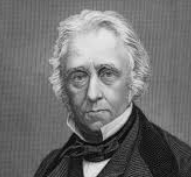
Those who compare the age in which their lot has fallen with a golden age which exists only in imagination, may talk of degeneracy and decay; but no man who is correctly informed as to the past, will be disposed to take a morose or desponding view of the present.
▼
Source
source
Vol. I, ch. 1
1 month 4 weeks ago
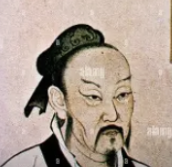
If you let people follow their feelings, they will be able to do good. This is what is meant by saying that human nature is good.
▼
Source
source
Book 6, pt. 1, v. 6
5 months 1 week ago
Because people have no thoughts to deal in, they deal cards, and try and win one another's money. Idiots!
4 months 6 days ago
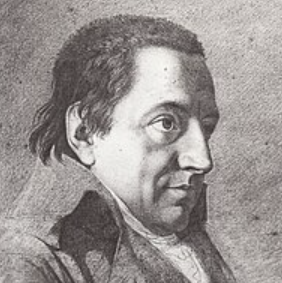
The supervision of the state extends to the lock upon the door, and there begins mine own. The lock is the boundary line between the power of the government and my own private power. It is the intention of locks to make possible self-protection. In my own house my person is sacred and inviolable even to the government. In civil cases government has no right to attack me in my house, but must wait till I am upon public ground.
▼
Source
source
P. 324
3 months 2 weeks ago
The new tinge to modern minds is a vehement and passionate interest in the relation of general principles to irreducible and stubborn facts. All the world over and at all times there have been practical men, absorbed in 'irreducible and stubborn facts'; all the world over and at all times there have been men of philosophic temperament, who have been absorbed in the weaving of general principles. It is this union of passionate interest in the detailed facts with equal devotion to abstract generalisation which forms the novelty of our present society.
▼
Source
source
Ch. 1: "The Origins of Modern Science", pp. 3-4

6 months 1 week ago
The immediacy of falling in love recognizes but one immediacy that is ebenburtig (of equal standing), and this is a religious immediacy; falling in love is too virginal to recognize any confidant other than God. But the religious is a new immediacy, has reflection in between-otherwise, paganism would actually be religious and Christianity not. That the religious is a new immediacy every person easily understands who is satisfied with following the honest path of ordinary common sense. And although I imagine I have but few readers, I confess nevertheless that I do imagine my readers to be among these, since I am far from wanting to instruct the admired ones, who make systematic discoveries a la Niels Klim, who have left their good skin in order to put on the “real appearance.
1 month 3 weeks ago
Human progress having reached a high level through respect for the liberty and dignity of men, it has become desirable to re-affirm these evident truths: That differences of race, color, and creed are natural, and that diverse groups, institutions, and ideas are stimulating factors in the development of man; That to promote harmony in diversity is a responsible task of religion and statesmanship; That since no individual can express the whole truth, it is essential to treat with understanding and good will those whose views differ from our own; That by the testimony of history intolerance is the door to violence, brutality and dictatorship; and That the realization of human interdependence and solidarity is the best guard of civilization.
5 months 2 weeks ago
A man may be humble through vainglory.
▼
Source
source
Ch. 17
4 months 2 days ago
The skepticism which fails to contribute to the ruin of our health is merely an intellectual exercise.
3 months 2 days ago
If you have a faith, it is statistically overwhelmingly likely that it is the same faith as your parents and grandparents had. No doubt soaring cathedrals, stirring music, moving stories and parables, help a bit. But by far the most important variable determining your religion is the accident of birth. The convictions that you so passionately believe would have been a completely different, and largely contradictory, set of convictions, if only you had happened to be born in a different place. Epidemiology, not evidence.
5 months 2 weeks ago
She is the sum of nature's universe.To her perfection all of beauty tends.
▼
Source
source
Chapter XIV, lines 49-50 (tr. Barbara Reynolds)
5 months 2 weeks ago
Some will object that the Law is divine and holy. Let it be divine and holy. The Law has no right to tell me that I must be justified by it.
▼
Source
source
Chapter 2
5 months 5 days ago
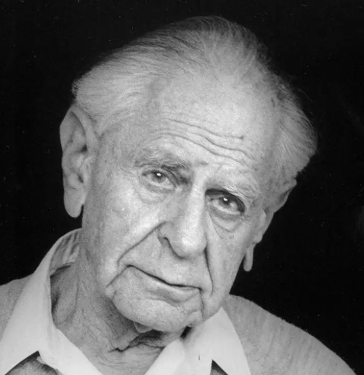
Our aim as scientists is objective truth; more truth, more interesting truth, more intelligible truth. We cannot reasonably aim at certainty. Once we realize that human knowledge is fallible, we realize also that we can never be completely certain that we have not made a mistake.

3 months 2 weeks ago
Today's fashion magazines may carry an article about the dangers of anorexia while bombarding its readers with images of emaciated young bodies representing the height of beauty and desirability.
▼
Source
source
As quoted in Feminism is for Everybody: Passionate Politics (2014), p.34

4 months 1 week ago
Darkness and light divide the course of time, and oblivion shares with memory, a great part even of our living beings; we slightly remember our felicities, and the smartest strokes of affliction leave but short smart upon us. Sense endureth no extremities, and sorrows destroy us or themselves. To weep into stones are fables.
▼
Source
source
Chapter V

1 month 3 days ago
Let us not limit the resources of nature; they are infinite, especially when reinforced by great art.
1 month 6 days ago
To take from one, because it is thought his own industry and that of his fathers has acquired too much, in order to spare to others, who, or whose fathers, have not exercised equal industry and skill, is to violate arbitrarily the first principle of association, the guarantee to everyone the free exercise of his industry and the fruits acquired by it.
3 months 3 weeks ago
The general fellowship of our human situation has been rendered even more dubious than before, inasmuch as, though the old ties of caste have been loosened, a new restriction of the individual to some prescribed status in society is manifest. Less than ever, perhaps, is it possible for a man to transcend the limitations imposed by his social origins.
5 months 2 weeks ago
Man is forming thousands of ridiculous relations between himself and God.
▼
Source
source
Ch. 12
5 months 2 weeks ago
Cosmus, Duke of Florence, was wont to say of perfidious friends, that "We read that we ought to forgive our enemies; but we do not read that we ought to forgive our friends."
▼
Source
source
No. 206


6 months 4 days ago
Moreover, there is a victory and defeat, the first and best of victories, the lowest and worst of defeat, which each man gains or sustains at the hands, not of another, but of himself; this shows that there is a war against ourselves going on within every one of us. Book I Sometimes paraphrased as "The first and best victory is to conquer self".

5 months 1 week ago
In immediate self-consciousness the simple ego is absolute object, which, however, is for us or in itself absolute mediation, and has as its essential moment substantial and solid independence. The dissolution of that simple unity is the result of the first experience; through this there is posited a pure self-consciousness, and a consciousness which is not purely for itself, but for another, i.e. as an existent consciousness, consciousness in the form and shape of thinghood. Both moments are essential, since, in the first instance, they are unlike and opposed, and their reflexion into unity has not yet come to light, they stand as two opposed forms or modes of consciousness. The one is independent whose essential nature is to be for itself, the other is dependent whose essence is life or existence for another. The former is the Master, or Lord, the latter is the Bondsman.
6 months 4 days ago
Books ... hold within them the gathered wisdom of humanity, the collected knowledge of the world's thinkers, the amusement and excitement built up by the imaginations of brilliant people. Books contain humor, beauty, wit, emotion, thought, and, indeed, all of life. Life without books is empty.
3 months 1 week ago
In default of any other proof, the thumb would convince me of the existence of a God.
▼
Source
source
Stanislas (1856)
3 months 3 weeks ago
We must wish either for that which actually exists or for that which cannot in any way exist - or, still better, for both. That which is and that which cannot be are both outside the realm of becoming.
▼
Source
source
p. 154
1 month 3 days ago
Of all the media of expression employed by man (and let us never forget that they are many) none are so unstable, none so quick to change their meaning, as words. Even sculpture, architecture, painting, in their noblest works, speak differently under different conditions; but these arts are relatively immortal compared with speech.
5 months 6 days ago
It is in the social sphere, in the realm of politics and economics, that the Will to Order becomes really dangerous.
▼
Source
source
Chapter 3 (p. 22)
1 month 3 days ago
Among animals, some learn to speak and sing; they remember tunes, and strike the notes as exactly as a musician. Others, for instance the ape, show more intelligence... would it be absolutely impossible to teach the ape a language? I do not think so.
6 months 3 days ago
A nihilist is not one who believes in nothing, but one who does not believe in what exists.
5 months 1 week ago
Now as we call every thing custom, which proceeds from a past repetition, without any new reasoning or conclusion, we may establish it as a certain truth, that all the belief, which follows upon any present impression, is deriv'd solely from that origin.
▼
Source
source
Part 3, Section 8
3 months 6 days ago
We cannot pretend that we do not see the armed policeman who marches up and down beneath our window to guarantee our security while we eat our luxurious dinner, or look at the new piece at the theater, or that we are unaware of the existence of the soldiers who will make their appearance with guns and cartridges directly our property is attacked.
▼
Source
source
Chapter XII, Conclusion-Repent Ye, for the Kingdom of Heaven is at Hand
5 months 2 weeks ago
There must then be something that is better, and that must be God. When you see a stately and stupendous edifice, though you do not know who is the owner of it, you would yet conclude it was not built for rats. And this divine structure, that we behold of the celestial palace, have we not reason to believe that it is the residence of some possessor, who is much greater than we?
▼
Source
source
Ch. 12, tr. Cotton, rev. W. Carew Hazlitt, 1877
6 months 1 week ago
What is asked of a man that he may be able to pray for his enemies? To pray for one's enemies is the hardest thing of all. That is why it exasperates us so much in our present day situation.

4 months 1 week ago
Writers, especially when they act in a body and with one direction, have great influence on the public mind.
CivilSimian.com created by AxiomaticPanic, CivilSimian, Kalokagathia