


1 month 3 days ago
All that happens is as usual and familiar as the rose in spring and the crop in summer.
▼
Source
source
IV, 44

5 months 2 weeks ago
I say that man without the grace of God nonetheless remains the general omnipotence of God who effects, and moves and impels all things in a necessary, infallible course; but the effect of man's being carried along is nothing--that is, avails nothing in God's sight, nor is reckoned to be anything but sin.
▼
Source
source
p. 265

5 months 1 week ago
The philosophy of nature must not be unduly terrestrial; for it, the earth is merely one of the smaller planets of one of the smaller stars of the Milky Way. It would be ridiculous to warp the philosophy of nature in order to bring out results that are pleasing to the tiny parasites of this insignificant planet. Vitalism as a philosophy, and evolutionism, show, in this respect, a lack of sense of proportion and logical relevance. They regard the facts of life, which are personally interesting to us, as having a cosmic significance, not a significance confined to the earth's surface. Optimism and pessimism, as cosmic philosophies, show the same naive humanism; the great world, so far as we know it from the philosophy of nature, is neither good nor bad, and is not concerned to make us happy or unhappy. All such philosophies spring from self-importance and are best corrected by a little astronomy.

3 months 2 weeks ago
I realize the malady of the oppressed and disinherited masses only too well, but I refuse to prescribe the usual ridiculous palliatives which allow the patient neither to die nor to recover. One cannot be too extreme in dealing with social ills; besides, the extreme thing is generally the true thing. My lack of faith in the majority is dictated by my faith in the potentialities of the individual. Only when the latter becomes free to choose his associates for a common purpose, can we hope for order and harmony out of this world of chaos and inequality.

3 months 1 week ago
It is indeed a matter of great difficulty to discover, and effectually to distinguish, the true motions of particular bodies from the apparent; because the parts of that immovable space, in which those motions are performed, do by no means come under the observation of our senses. Yet the thing is not altogether desperate; for we have some arguments to guide us, partly from the apparent motions, which are the differences of the true motions; partly from the forces, which are the causes and effects of the true motions.
▼
Source
source
Definitions - Scholium

3 months 4 weeks ago
We are again confronted with one of the most vexing aspects of advanced industrial civilization: the rational character of its irrationality. Its productivity and efficiency, its capacity to increase and spread comforts, ... the extent to which this civilization transforms the object world into an extension of man's mind and body makes the very notion of alienation questionable. The people recognize themselves in their commodities; they find their soul in their automobile, hi-fi set, split-level home, kitchen equipment. The very mechanism which ties the individual to his society has changed, and social control is anchored in the new needs which it has produced.
▼
Source
source
p. 9

4 months 2 days ago
Long before physics or psychology were born, pain disintegrated matter, and affliction the soul.

6 months 3 days ago
To have time was at once the most magnificent and the most dangerous of experiments. Idleness is fatal only to the mediocre.
1 month 3 days ago
Thou art a little soul bearing about a corpse, as Epictetus used to say.
▼
Source
source
IV, 41
5 months 1 week ago
I found one day in school a boy of medium size ill-treating a smaller boy. I expostulated, but he replied: "The bigs hit me, so I hit the babies; that's fair." In these words he epitomized the history of the human race.
▼
Source
source
p. 31
4 months 6 days ago
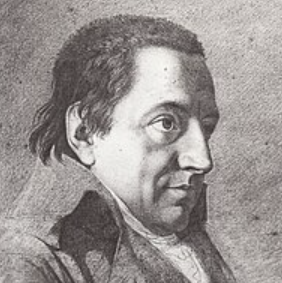
Each individual imagines that he can exist, live, think, and act for himself, and believes that he himself is the thinking principle of his thoughts; whereas in truth he is but a single ray of the ONE universal and necessary Thought.
▼
Source
source
p. 21
1 month 5 days ago
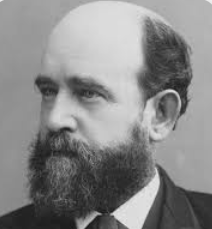
The aim of protection, in short, is to prevent the bringing into a country of things in themselves useful and valuable, in order to compel the making of such things. But what all mankind in the individual affairs of every-day life, regard as to be desired is not the making of things, but the possession of things.
▼
Source
source
Henry George, page 39,


5 months 1 week ago
To save the world requires faith and courage: faith in reason, and courage to proclaim what reason shows to be true.

3 months 3 weeks ago
The prospects of revolution seem therefore quite restricted. For can a revolution avoid war? It is, however, on this feeble chance that we must stake everything or abandon all hope. An advanced country will not encounter, in the case of revolution, the difficulties which in backward Russia served as a base for the barbarous regime of Stalin. But a war of any scope will give rise to others as formidable.
▼
Source
source
Reflections on War (1933); also in Formative Writings

4 months 1 week ago
You talk of Paine with more respect than he deserves: He is utterly incapable of comprehending his subject. He has not even a moderate portion of learning of any kind. He has learnd the instrumental part of literature, a style, and a method of disposing his ideas, without having ever made a previous preparation of Study or thinking-for the use of it. ... [Paine] possesses nothing more than what a man whose audacity makes him careless of logical consequences, and his total want of honour and morality makes indifferent as to political consequences, may very easily write. They indeed who seriously write upon a principle of levelling ought to be answerd by the Magistrate-and not by the Speculatist.
▼
Source
source
Letter to William Cusac Smith (22 July 1791), quoted in Alfred Cobban and Robert A. Smith (eds.), The Correspondence of Edmund Burke, Volume VI: July 1789-December 1791 (1967), pp. 303-304
3 weeks 5 days ago
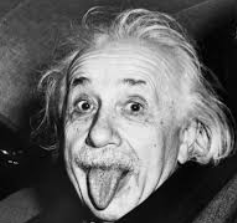
What the inventive genius of mankind has bestowed upon us in the last hundred years could have made human life care free and happy if the development of the organizing power of man had been able to keep step with his technical advances. As it is, the hardly bought achievements of the machine age in the hands of our generation are as dangerous as a razor in the hands of a three-year-old child. The possession of wonderful means of production has not brought freedom-only care and hunger.
▼
Source
source
writing for the 1932 Disarmament Conference, included in The Nation 1865-1990: Selections From the Independent Magazine of Politics and Culture (1990)
1 month 4 weeks ago
While the positivists were proclaiming the end "once and for all" of unverifiable metaphysical systems and speculative philosophy in general, new doctrines in flagrant contradiction to those ideals have sprung up one after the other. Positivists see no more in this development than evidence of human stupidity, not any reflection on themselves.
▼
Source
source
Chapter Eight, Logical Empiricism, p. 198
5 months 5 days ago
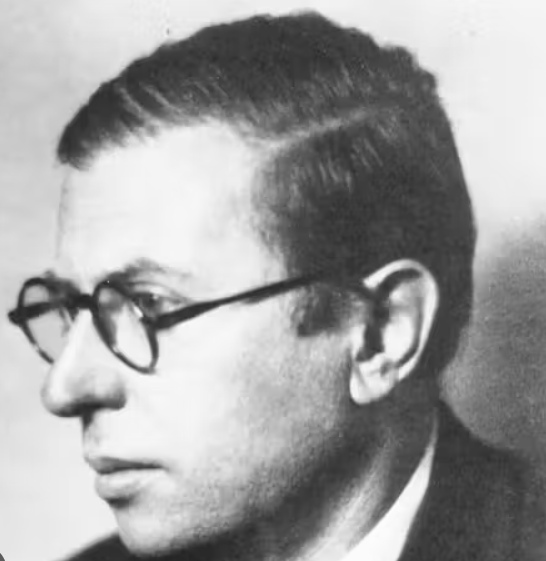
Existence precedes and rules essence.
▼
Source
source
Part 4, chapter 1
5 months 6 days ago
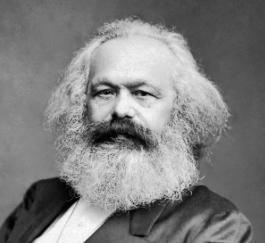
Money appears as measure (in Homer, e.g. oxen) earlier than as medium of exchange,because in barter each commodity is still its own medium of exchange. But it cannot be its own or its own standard of comparison.
▼
Source
source
Notebook I, The Chapter on Money, p. 93.
2 months ago
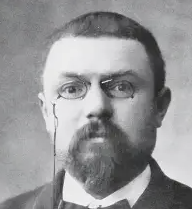
But, one will say, if raw experience can not legitimatize reasoning by recurrence, is it so of experiment aided by induction? We see successively that a theorem is true of the number 1, of the number 2, of the number 3 and so on; the law is evident, we say, and it has the same warranty as every physical law based on observations, whose number is very great but limited. But there is an essential difference. Induction applied to the physical sciences is always uncertain, because it rests on the belief in a general order of the universe, an order outside of us. Mathematical induction, that is, demonstration by recurrence, on the contrary, imposes itself necessarily, because it is only the affirmation of a property of the mind itself.
▼
Source
source
Ch. I. (1905) Tr. George Bruce Halstead
1 month 2 days ago
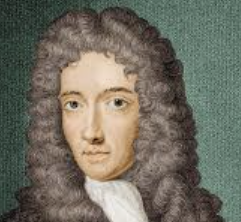
I need not tell you, what complaints the more candid and judicious of the Chymists themselves are wont to make of those boasters, that confidently pretend, that they have extracted the salt or sulphur of quicksilver, when they have disguised it by additaments, wherewith it resembles the concretes, whose names are given it; whereas by a skilful and rigid examen, it may be easily enough stripped of its disguises, and made to appear again in the pristine form of running mercury. The pretended salts and sulphurs being so far from being elementary parts extracted out of the body of mercury, that they are rather... de-compound bodies, made up of the whole metal and the menstruum, or other additaments employed to disguise it.

5 months 5 days ago
There is no spiritual sustenance in flat equality. It is a dim recognition of this fact which makes much of our political propaganda sound so thin. We are trying to be enraptured by something which is merely the negative condition of the good life. That is why the imagination of people is so easily captured by appeals to the craving for inequality, whether in a romantic form of films about loyal courtiers or in the brutal form of Nazi ideology. The tempter always works on some real weakness in our own system of values - offers food to some need which we have starved.

5 months 1 week ago
Paradise on earth is where I am.
▼
Source
source
Le Mondain, 1736
2 months 3 weeks ago
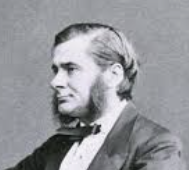
History warns us, however, that it is the customary fate of new truths to begin as heresies and to end as superstitions; and, as matters now stand, it is hardly rash to anticipate that, in another twenty years, the new generation, educated under the influences of the present day, will be in danger of accepting the main doctrines of the 'Origin of Species' with as little reflection, and it may be with as little justification, as so many of our contemporaries, twenty years ago, rejected them. Against any such a consummation let us all devoutly pray; for the scientific spirit is of more value than its products, and irrationally held truths may be more harmful than reasoned errors.
▼
Source
source
The Coming of Age of The Origin of Species (1880); Collected Essays, vol. 2
3 weeks 5 days ago
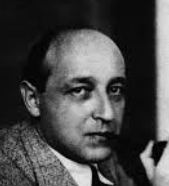
I am enough of an artist to draw freely upon my imagination. Imagination is more important than knowledge. Knowledge is limited. Imagination encircles the world.
1 month 3 days ago
In our contemporary social and intellectual plight, it is nothing less than shocking to discover that those persons who claim to have discovered an absolute are usually the same people who also pretend to be superior to the rest. To find people in our day attempting to pass off to the world and recommending to others some nostrum of the absolute which they claim to have discovered is merely a sign of the loss of and the need for intellectual and moral certainty, felt by broad sections of the population who are unable to look life in the face.

4 months 2 weeks ago
None but a Craftsman can judge of a craft.
3 months 2 weeks ago
The people are asleep; they remain indifferent. They forge their own chains and do the bidding of their masters to crucify their Christs.
▼
Source
source
(p. 304)
3 months 4 days ago
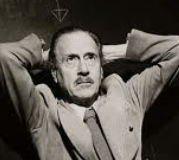
New media are new archetypes, at first disguised as degradations of older media.
▼
Source
source
Arts in society, Volume 3, 1964, p. 240

1 month 3 weeks ago
No nobler feeling than this of admiration for one higher than himself dwells in the breast of man. It is to this hour, and at all hours, the vivifying influence in man's life.

6 months 1 week ago
That which distinguishes the Christian narrow way from the common human narrow way is the voluntary. Christ was not someone who coveted earthly things but had to be satisfied with poverty, no, he chose poverty.

3 months 2 weeks ago
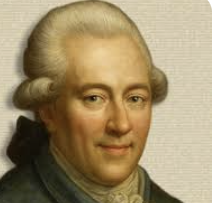
It is almost everywhere the case that soon after it is begotten the greater part of human wisdom is laid to rest in repositories.
▼
Source
source
K 37
3 months 2 weeks ago
Analytic philosophers - both in the 'constructivist' camp and in the camp that studies 'the ordinary use of words' - are disturbingly unanimous in regarding 2-valued logic as having a privileged position: privileged, not just in the sense of corresponding to the way we do speak, but in the sense of having no serious rival for logical reasons. If the foregoing analysis is correct, this is a prejudice of the same kind as the famous prejudice in favor of a privileged status for Euclidean geometry (a prejudice that survives in the tendency to cite 'space has three dimensions' as some kind of 'necessary' truth). One can go over from a 2-valued to a 3-valued logic without totally changing the meaning of 'true' and 'false'; and not just in silly ways, like the ones usually cited (e.g. equating truth with high probability, falsity with low probability, and middlehood with 'in between' probability).
▼
Source
source
"Three-valued logic"

3 months 3 weeks ago
The success of most things depends upon knowing how long it will take to succeed.
3 months 4 weeks ago
For Warre, consisteth not in Battell onely, or the act of fighting; but in a tract of time, wherein the Will to contend by Battell is sufficiently known: and therefore the notion of Time, is to be considered in the nature of Warre; as it is in the nature of Weather.
▼
Source
source
The First Part, Chapter 13, p. 62
4 months 6 days ago
Revolution is like the daughters of Pelias: it cuts humanity to pieces in order to rejuvenate it.
▼
Source
source
Act II.
1 month 3 days ago
The non-evaluative general total conception of ideology is to be found primarily in those historical investigations, where, provisionally and for the sake of the simplification of the problem, no judgments are pronounced as to the correctness of the ideas to be treated. This approach confines itself to discovering the relations between certain mental structures and the life-situations in which they exist. We must constantly ask ourselves how it comes about that a given type of social situation gives rise to a given interpretation. Thus the ideological element in human thought, viewed at this level, is always bound up with the existing life-situation of the thinker. According to this view human thought arises, and operates, not in a social vacuum but in a definite social milieu.
3 months 2 weeks ago
Positivism ... implies the double falsehood that no interpretation is needed, and that it is not needed because the story which the positivist writer tells, such as it is, is obvious. The story he or she tells is usually a bad one, and its being obvious only means that it is familiar.
▼
Source
source
p. 12
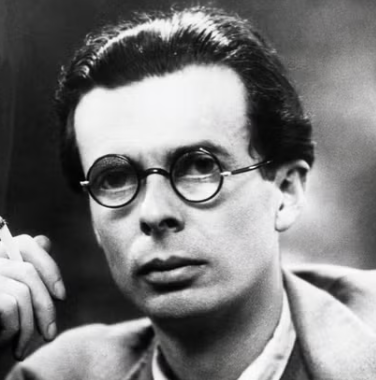
5 months 6 days ago
So long as men worship the Caesars and Napoleons, Caesars and Napoleons will duly rise and make them miserable.
▼
Source
source
Ch. 8, p. 99 [2012 reprint]
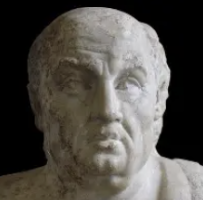
1 month 3 weeks ago
What is wisdom? Always desiring the same things, and always refusing the same things.
▼
Source
source
Line 5 Here, Seneca uses the same observation that Sallust made regarding friendship (in his historical account of the Catilinarian conspiracy, Bellum Catilinae[XX.4]) to define wisdom.
4 months 2 days ago
As long as I live I shall not allow myself to forget that I shall die; I am waiting for death so that I can forget about it.

1 month 6 days ago
Some men look at constitutions with sanctimonious reverence and deem them like the ark of the covenant, too sacred to be touched. They ascribe to the men of the preceding age a wisdom more than human and suppose what they did to be beyond amendment. I knew that age well; I belonged to it and labored with it. It deserved well of its country. It was very like the present but without the experience of the present; and forty years of experience in government is worth a century of book-reading; and this they would say themselves were they to rise from the dead.
5 months 5 days ago
One cannot become a saint when one works sixteen hours a day.
▼
Source
source
Act 5, sc. 2

6 months 4 days ago
So when the universe was quickened with soul, God was well pleased; and he bethought him to make it yet more like its type. And whereas the type is eternal and nought that is created can be eternal, he devised for it a moving image of abiding eternity, which we call time. And he made days and months and years, which are portions of time; and past and future are forms of time, though we wrongly attribute them also to eternity. For of eternal Being we ought not to say 'it was', 'it shall be', but 'it is' alone: and in like manner we are wrong in saying 'it is' of sensible things which become and perish; for these are ever fleeting and changing, having their existence in time.
1 month 3 weeks ago
Alas, our noble men of genius, Heaven's real messengers to us, they also rendered nearly futile by the wasteful time;-preappointed they everywhere, and assiduously trained by all their pedagogues and monitors, to "rise in Parliament," to compose orations, write books, or in short speak words, for the approval of reviewers; instead of doing real kingly work to be approved of by the gods!
4 months 2 days ago
One of the greatest delusions of the average man is to forget that life is death's prisoner.
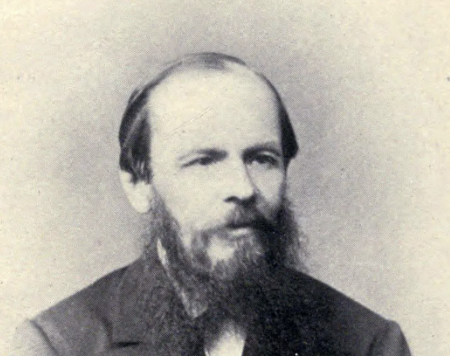
4 months 6 days ago
The more cunning a man is, the less he suspects that he will be caught in a simple thing. The more cunning a man is, the simpler the trap he must be caught in.
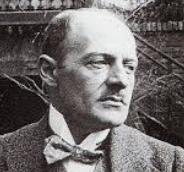
3 months 3 weeks ago
The highest and ultimate personality values are declared to be independent of contrasts like rich and poor, healthy and sick, etc. The world had become accustomed to considering the social hierarchy, based on status, wealth, vital strength, and power, as an exact image of the ultimate values of morality and personality. The only way to disclose the discovery of anew and higher sphere of being and life, of the "kingdom of God" whose order is independent of that worldly and vital hierarchy, was to stress the vanity of the old values in this higher order.
▼
Source
source
L. Coser, trans. (1961), p. 98
CivilSimian.com created by AxiomaticPanic, CivilSimian, Kalokagathia