


6 months 1 week ago
A scholar who loves comfort is not worthy of the name.
4 months 1 week ago
But everyone who hears these sayings of Mine, and does not do them, will be like a foolish man who built his house on the sand: and the rain descended, the floods came, and the winds blew and beat on that house; and it fell. And great was its fall.
▼
Source
source
Matthew 7:24-27 (NKJV) (Also Luke 6:47-49)

5 months 2 weeks ago
I have often thought that the best way to define a man's character would be to seek out the particular mental or moral attitude in which, when it came upon him, he felt himself most deeply and intensely active and alive. At such moments there is a voice inside which speaks and says: "This is the real me!"
▼
Source
source
To his wife, Alice Gibbons James, 1878
4 months 2 weeks ago
The Austrian Germans and Magyars will be set free and wreak a bloody revenge on the Slav barbarians. The general war which will then break out will smash this Slav Sonderbund and wipe out all these petty hidebound nations, down to their very names. The next world war will result in the disappearance from the face of the earth not only of reactionary classes and dynasties, but also of entire reactionary peoples. And that, too, is a step forward.
▼
Source
source
The Magyar Struggle in Neue Rheinische Zeitung (13 January 1849) Referring to the Serb uprising of 1848-49
4 months 2 weeks ago
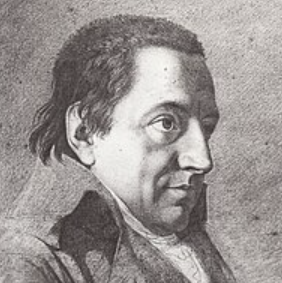
Thus then does the Doctrine of Knowledge, which in its substance is the realisation of the absolute Power of intelligising which has now been defined, end with the recognition of itself as a mere Schema in a Doctrine of Wisdom, although indeed a necessary and indispensable means to such a Doctrine: - a Schema, the sole aim of which is, with the knowledge thus acquired, - by which knowledge alone a Will, clear and intelligible to itself and reposing upon itself without wavering or perplexity, is possible, - to return wholly into Actual Life; - not into the Life of blind and irrational Instinct which we have laid bare in all its nothingness, but into the Divine Life which shall become visible to us.
2 months ago
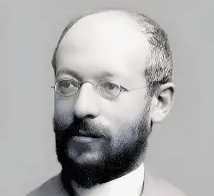
Objectivity may also be defined as freedom: the objective individual is bound by no commitments which could prejudice his perception, understanding, and evaluation of the given.
▼
Source
source
p. 403
3 months 1 week ago
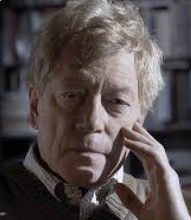
We do not merely study the past: we inherit it, and inheritance brings with it not only the rights of ownership, but the duties of trusteeship. Things fought for and died for should not be idly squandered. For they are the property of others, who are not yet born.
4 months 3 days ago
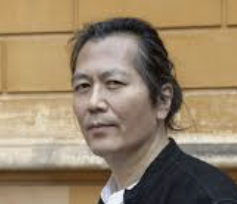
A screen bans reality.

5 months 2 weeks ago
All who are not lunatics are agreed about certain things. That it is better to be alive than dead, better to be adequately fed than starved, better to be free than a slave. Many people desire those things only for themselves and their friends; they are quite content that their enemies should suffer. These people can only be refuted by science: Humankind has become so much one family that we cannot ensure our own prosperity except by ensuring that of everyone else. If you wish to be happy yourself, you must resign yourself to seeing others also happy.
▼
Source
source
"The Science to Save Us from Science," The New York Times Magazine, 3/19/1950
3 months 1 week ago
Conservatives believe that our identities and values are formed through our relations with other people, and not through our relation with the state. The state is not an end but a means. Civil society is the end, and the state is the means to protect it. The social world emerges through free association, rooted in friendship and community life. And the customs and institutions that we cherish have grown from below, by the 'invisible hand' of co-operation. They have rarely been imposed from above by the work of politics, the role of which, for a conservative, is to reconcile our many aims, and not to dictate or control them.
▼
Source
source
"Stand up for the real meaning of freedom," The Spectator

2 months 1 week ago
Is not every true Reformer, by the nature of him, a Priest first of all? He appeals to Heaven's invisible justice against Earth's visible force; knows that it, the invisible, is strong and alone strong. He is a believer in the divine truth of things; a seer, seeing through the shows of things; a worshipper, in one way or the other, of the divine truth of things; a Priest, that is. If he be not first a Priest, he will never be good for much as a Reformer.
2 months 5 days ago
A people cannot be free otherwise than at the individual's expense; for it is not the individual that is the main point in this liberty, but the people. The freer the people, the more bound the individual; the Athenian people, precisely at its freest time, created ostracism, banished the atheists, poisoned the most honest thinker.
▼
Source
source
Cambridge 1995, p. 190

5 months 2 weeks ago
There are always two parties, the party of the Past and the party of the Future: the Establishment and the Movement. At times the resistance is reanimated, the schism runs under the world and appears in Literature, Philosophy, Church, State and social customs.
▼
Source
source
p. 529, col. 1

4 months 2 weeks ago
Ambition is a drug that makes its addicts potential madmen.

6 months 1 week ago
Man reaches the highest point of his knowledge about God when he knows that he knows him not, inasmuch as he knows that that which is God transcends whatsoever he conceives of him.
▼
Source
source
q. 7, art. 5, ad 14

1 month 2 weeks ago
A person who doesn't know what the universe is doesn't know who they are. A person who doesn't know their purpose in life doesn't know who they are or what the universe is. A person who doesn't know any of these things doesn't know why they are here. So what to make of people who seek or avoid the praise of those who have no knowledge of where or who they are?
▼
Source
source
VIII. 52:14
3 months 2 weeks ago
Electric circuitry profoundly involves men with one another. Information pours upon us, instantaneously and continuously.

5 months 4 weeks ago
The unassisted hand and the understanding left to itself possess but little power. Effects are produced by the means of instruments and helps, which the understanding requires no less than the hand; and as instruments either promote or regulate the motion of the hand, so those that are applied to the mind prompt or protect the understanding.
▼
Source
source
Aphorism 2
3 months 4 weeks ago
Delight at having understood a very abstract and obscure system leads most people to believe in the truth of what it demonstrates.
▼
Source
source
J 77

6 months 1 week ago
Hence, as Narcissus, by catching at the shadow, plunged himself in the stream and disappeared, so he who is captivated by beautiful bodies, and does not depart from their embrace, is precipitated, not with his body, but with his soul, into a darkness profound and repugnant to intellect (the higher soul), through which, remaining blind both here and in Hades, he associates with shadows.
1 month 2 weeks ago
The moral sense, or conscience, is as much a part of man as his leg or arm. It is given to all human beings in a stronger or weaker degree, as force of members is given them in a greater or less degree. It may be strengthened by exercise, as may any particular limb of the body. This sense is submitted, indeed, in some degree, to the guidance of reason; but it is a small stock which is required for this: even a less one than what we call common sense. State a moral case to a ploughman and a professor. The former will decide it as well, and often better than the latter, because he has not been led astray by artificial rules.
4 months 1 week ago
Whenever a nation is converted to Christianity, its Christianity, in practice, must be largely converted to paganism.
▼
Source
source
p. 35

4 months 2 weeks ago
Nothing made a happy slave, but a degraded man. In proportion as the mind grew callous to its degradation, and all sense of manly pride was lost, the slave felt comfort. In fact, he was no longer a man. If he were to define a man, he would say with Shakspeare,"Man is a being, holding large discourse,Looking before and after."A slave was incapable of either looking before or after.
▼
Source
source
Speech in the House of Commons (12 May 1789), quoted in The Parliamentary History of England, From the Earliest Period to the Year 1803, Vol. XXVIII (1816), column 71
5 months 4 weeks ago
Nothing is terrible except fear itself.
▼
Source
source
De Augmentis Scientiarum, Book II, "Fortitudo"

4 months 1 week ago
Dialectical logic undoes the abstractions of formal logic and of transcendental philosophy, but it also denies the concreteness of immediate experience. To the extent to which this experience comes to rest with the things as they appear and happen to be, it is a limited and even false experience. It attains its truth if it has freed itself from the deceptive objectivity which conceals the factors behind the facts - that is, if it understands its world as a historical universe, in which the established facts are the work of the historical practice of man.
▼
Source
source
p. 141

5 months 3 weeks ago
Human reason has this peculiar fate that in one species of its knowledge it is burdened by questions which, as prescribed by the very nature of reason itself, it is not able to ignore, but which, as transcending all its powers, it is also not able to answer.
▼
Source
source
Preface, A vii
6 months 1 week ago
Sincerity becomes apparent. From being apparent, it becomes manifest. From being manifest, it becomes brilliant. Brilliant, it affects others. Affecting others, they are changed by it. Changed by it, they are transformed. It is only he who is possessed of the most complete sincerity that can exist under heaven, who can transform.
4 months 2 weeks ago
Buddhism calls anger "corruption of the mind," Manicheism "root of the tree of death." I know this, but what good does it do me to know?

4 months 3 weeks ago
The last thing abandoned by a party is its phraseology, because among political parties, as elsewhere, the vulgar make the language, and the vulgar abandon more easily the ideas that have been instilled into it than the words that it has learnt. France Before The Consulate, Chapter I: "How the Republic was ready to accept a master", in Memoir, Letters, and Remains, Vol I (1862), p. 266 Variant translation: The last thing a political party gives up is its vocabulary. This is because, in party politics as in other matters, it is the crowd who dictates the language, and the crowd relinquishes the ideas it has been given more readily than the words it has learned.
▼
Source
source
As quoted in The Viking book of Aphorisms : A Personal Selection (1962) by W. H. Auden, and Louis Kronenberger, p. 306. Variant translation: The last thing that a party abandons is its language.

6 months 4 days ago
For every one feels to what purpose he can use his own powers. Before the horns of a calf appear and sprout from his forehead, he butts with them when angry, and pushes passionately.
▼
Source
source
Book V, lines 1033-1035 (tr. Bailey)

4 months 2 days ago
Obviously, Anarchism, or any other social theory, making man a conscious social unit, will act as a leaven for rebellion.
5 months 2 weeks ago
I mean, a genuinely productive society. I mean you could produce plenty of goods without much freedom, but I think the whole sort of creative life of man is ultimately impossible without a considerable measure of individual freedom, of initiative, creation, all these things which we value, and I think value properly, are impossible without a large measure of freedom.
1 month 4 weeks ago
By association with nature's enormities, a man's heart may truly grow big also. There is a way of looking upon a landscape as a moving picture and being satisfied with nothing less big as a moving picture, a way of looking upon tropic clouds over the horizon as the backdrop of a stage and being satisfied with nothing less big as a backdrop, a way of looking upon the mountain forests as a private garden and being satisfied with nothing less as a private garden, a way of listening to the roaring waves as a concert and being satisfied with nothing less as a concert, and a way of looking upon the mountain breeze as an air-cooling system and being satisfied with nothing less as an air-cooling system. So do we become big, even as the earth and firmaments are big.
▼
Source
source
Like the "Big Man" described by Yuan Tsi (A.D. 210-263), one of China's first romanticists, we "live in heaven and earth as our house." p. 282
5 months 2 weeks ago
Amy Kofman: Have you read all the books in here?Derrida: No, only four of them. But I read those very, very carefully.
▼
Source
source
Derrida (2003 documentary), referring to his personal library

5 months 3 days ago
When it comes to consideration of how to do well in running the city, which must proceed entirely through justice and soundness of mind.
▼
Source
source
As quoted in Protagoras by Plato

1 month 4 weeks ago
Were I to pray for a taste which should stand me in stead under every variety of circumstances, and be a source of happiness and cheerfulness to me during life, and a shield against its ills, however things might go amiss and the world frown upon me, it would be a taste for reading... Give a man this taste, and the means of gratifying it, and you can hardly fail of making him a happy man; unless, indeed, you put into his hands a most perverse selection of books. You place him in contact with the best society in every period of history,-with the wisest, the wittiest, the tenderest, the bravest, and the purest characters who have adorned humanity. You make him a denizen of all nations, a contemporary of all ages. The world has been created for him.
▼
Source
source
Address on the opening of the Eton Library (1833) as quoted in A History of Inventions, Discoveries and Origins (1846) by John Beckmann, Tr. William Johnston, Vol. 1, frontispiece.
4 months 2 weeks ago
Since the communists cannot enter upon the decisive struggle between themselves and the bourgeoisie until the bourgeoisie is in power, it follows that it is in the interest of the communists to help the bourgeoisie to power as soon as possible in order the sooner to be able to overthrow it.
2 months 5 days ago
Human or general needs can be satisfied through society; for satisfaction of unique needs you must do some seeking. A friend and a friendly service, or even an individual's service, society cannot procure you. And yet you will every moment be in need of such a service, and on the slightest occasions require somebody who is helpful to you. Therefore do not rely on society, but see to it that you have the wherewithal to - purchase the fulfilment of your wishes.
▼
Source
source
Cambridge 1995, p. 243
1 month 2 weeks ago
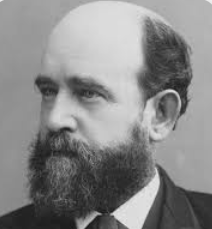
Poverty is a crime. I do not mean that it is a crime to be poor. Murder is a crime; but it is not a crime to be murdered; and a man who is in poverty, I look upon, not as a criminal in himself, so much as the victim of a crime for which others, as well perhaps as himself, are responsible.
▼
Source
source
The Crime of Poverty, 1885
4 months 2 weeks ago
Having always lived in fear of being surprised by the worst, I have tried in every circumstance to get a head start, flinging myself into misfortune long before it occurred.
2 months 3 weeks ago
If our universe is one of many, unlike others in containing observers like ourselves, there is no need to posit a designer. Most universes will be too chaotic to allow the emergence of life or mind. In that case, the fact that humans exist in this universe needs no special explanation.
▼
Source
source
Sweet Morality (p. 222)
5 months 3 weeks ago
Mystery is delightful, but unscientific, since it depends upon ignorance.
▼
Source
source
The Analysis of Mind (1921), Lecture I: Recent Criticisms of "Consciousness"

5 months 2 weeks ago
Every questioning is a seeking. Every seeking takes its direction beforehand from what is sought. Questioning is a knowing search for beings in their thatness and whatness.
▼
Source
source
Introduction: The Exposition of the Question of the Meaning of Being (Stambaugh translation)
5 months 2 weeks ago
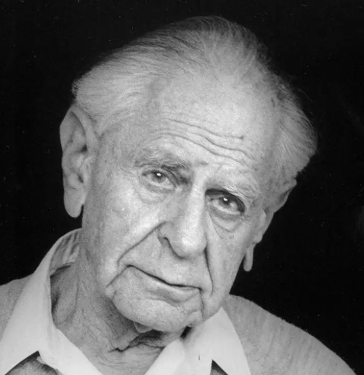
I appeal to the philosophers of all countries to unite and never again mention Heidegger or talk to another philosopher who defends Heidegger. This man was a devil. I mean, he behaved like a devil to his beloved teacher, and he has a devilish influence on Germany. ... One has to read Heidegger in the original to see what a swindler he was.
▼
Source
source
As quoted in "At 90, and Still Dynamic : Revisiting Sir Karl Popper and Attending His Birthday Party" by Eugene Yue-Ching Ho, in Intellectus 23
1 month 2 weeks ago
Live as on a mountain. ...Let men see, let them know a real man who lives according to nature. If they cannot endure him, let them kill him. For that is better than to live thus.
▼
Source
source
X, 15
1 month 2 weeks ago
Gather your strength and listen; the whole heart of man is a single outcry. Lean against your breast to hear it; someone is struggling and shouting within you. It is your duty every moment, day and night, in joy or in sorrow, amid all daily necessities, to discern this Cry with vehemence or restraint, according to your nature, with laughter or with weeping, in action or in thought, striving to find out who is imperiled and cries out. And how we may all be mobilized together to free him.
1 month 2 weeks ago
Our people... will give you all the necessaries of war they produce, if, instead of the bankrupt trash they now are obliged to receive for want of any other, you will give them a paper promise funded on a specific pledge, and of a size for common circulation.
▼
Source
source
Letter to James Monroe, 1815. ME 14:228
1 month 2 weeks ago
The problem is that rural America has been a colony, certainly throughout my lifetime. I don't think anybody's paid attention to rural America since about 1945 or '50. Certainly not since 1952, when Eisenhower's Secretary of Agriculture said to the farmers: "Get big or get out." They've just abandoned rural America to corporations and technologies.
CivilSimian.com created by AxiomaticPanic, CivilSimian, Kalokagathia