

8 months 1 week ago
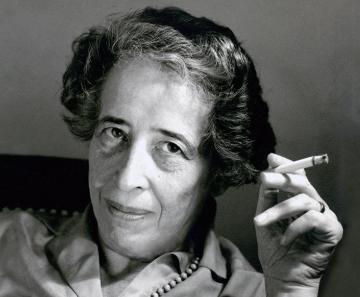
Kant stated defensively that he had "found it necessary to deny knowledge. . . to make room for faith," but he had not made room for faith; he had made room for thought, and he had not "denied knowledge" but separated knowledge from thinking.
▼
Source
source
p. 14
8 months 2 weeks ago
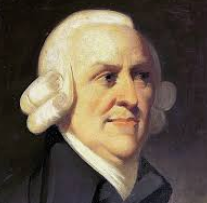
The importation of gold and silver is not the principal, much less the sole benefit which a nation derives from its foreign trade.
▼
Source
source
Chapter I, p. 479.
4 months 3 weeks ago
With competition is connected less the intention to do the thing best than the intention to make it as profitable, as productive, as possible. Hence people study to get into the civil service (study in order to get a well-paid job), study cringing and flattery, routine and 'acquaintance with business', work 'for appearance'. Hence, while it is apparently a matter of doing 'good service', in truth only a 'good business' and earning of money are looked out for. The job is done only ostensibly for the job's sake, but in fact on account of the gain that it yields. One would indeed prefer not to be censor, but one wants to be - advanced; one would like to judge, administer, etc., according to his best convictions, but one is afraid of transfer or even dismissal; one must, above all things - live.
▼
Source
source
Cambridge 1995, p. 237
8 months 3 weeks ago
The first and most necessary topic in philosophy is that of the use of moral theorems, such as, "We ought not to lie;" the second is that of demonstrations, such as, "What is the origin of our obligation not to lie;" the third gives strength and articulation to the other two, such as, "What is the origin of this is a demonstration." For what is demonstration? What is consequence? What contradiction? What truth? What falsehood? The third topic, then, is necessary on the account of the second, and the second on the account of the first. But the most necessary, and that whereon we ought to rest, is the first. But we act just on the contrary. For we spend all our time on the third topic, and employ all our diligence about that, and entirely neglect the first.
▼
Source
source
(51).
6 months 4 days ago
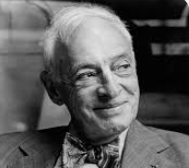
A novel is balanced between a few true impressions and the multitude of false ones that make up most of what we call life. It tells us that for every human being there is a diversity of existences, that the single existence is itself an illusion in part, that these many existences signify something, tend to something, fulfill something; it promises us meaning, harmony, and even justice.
▼
Source
source
Nobel Prize lecture
4 months 1 week ago
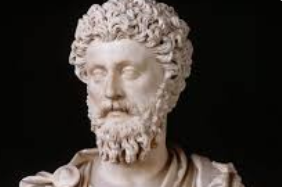
There is a limit to the time assigned you, and if you don't use it to free yourself it will be gone and never return.
▼
Source
source
(Hays translation) II, 4
8 months 1 week ago
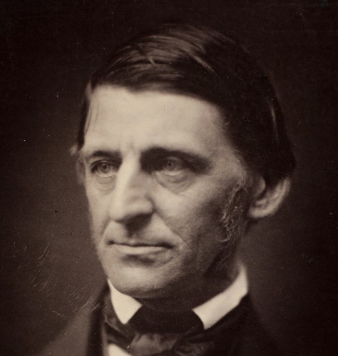
I fancy I need more than another to speak (rather than write), with such a formidable tendency to the lapidary style. I build my house of boulders.
▼
Source
source
Letter to Thomas Carlyle, 30 October 1841

8 months 1 week ago
The desire to philosophize from the standpoint of standpointlessness, as a purportedly genuine and superior objectivity, is either childish, or, as is usually the case, disingenuous.
▼
Source
source
The Essence of Truth, 1931-32
6 months 4 days ago
No realistic, sane person goes around Chicago without protection.
▼
Source
source
Humboldt's Gift (1975), p. 452
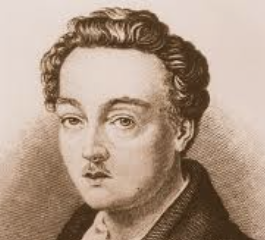
7 months 1 week ago
Raise your eyes and count the small gang of your oppressors who are only strong through the blood they suck from you and through your arms which you lend them unwillingly.
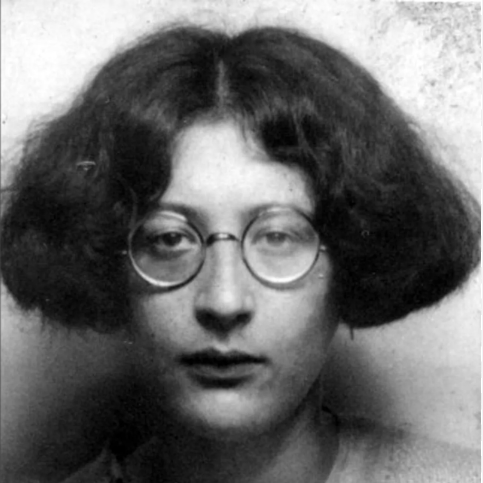
6 months 3 weeks ago
At the bottom of the heart of every human being, from earliest infancy until the tomb, there is something that goes on indomitably expecting, in the teeth of all experience of crimes committed, suffered, and witnessed, that good and not evil will be done to him. It is this above all that is sacred in every human being.The good is the only source of the sacred. There is nothing sacred except the good and what pertains to it.
▼
Source
source
p. 51
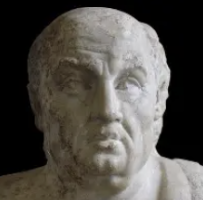
4 months 3 weeks ago
When the changes of our times gave you an opportunity, you restored to the use of man that genius of your father for which he had suffered, and made him in real truth immortal by publishing as an eternal memorial of him those books which that bravest of men had written with his own blood. You have done a great service to Roman literature: a large part of Cordus's books had been burned; a great service to posterity, who will receive a true account of events, which cost its author so dear; and a great service to himself, whose memory flourishes and ever will flourish, as long as men set any value upon the facts of Roman history, as long as anyone lives who wishes to review the deeds of our fathers, to know what a true Roman was like - one who still remained unconquered when all other necks were broken in to receive the yoke of Sejanus, one who was free in every thought, feeling, and act.
5 months 2 days ago
I suggest that scientific knowledge, though logically more articulate and far more complex, is of this sort. The books and teachers from whom it is acquired present concrete examples together with a multitude of theoretical generalizations. Both are essential carriers of knowledge, and it is therefore Pickwickian to seek a methodological criterion that supposes the scientist can specify in advance whether each imaginable instance fits or would falsify his theory.
▼
Source
source
"Logic of Discovery or Psychology of Research?", Criticism and the growth of knowledge edited by Imre Lakatos and Alan Musgrave
8 months 1 week ago
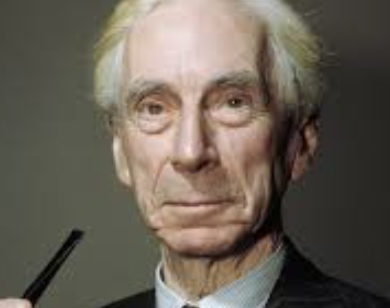
In fact, contempt for happiness is usually contempt for other people's happiness, and is an elegant disguise for hatred of the human race.
▼
Source
source
p. 198
7 months 1 week ago
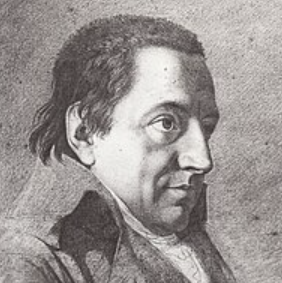
Thus then does the Doctrine of Knowledge, which in its substance is the realisation of the absolute Power of intelligising which has now been defined, end with the recognition of itself as a mere Schema in a Doctrine of Wisdom, although indeed a necessary and indispensable means to such a Doctrine: - a Schema, the sole aim of which is, with the knowledge thus acquired, - by which knowledge alone a Will, clear and intelligible to itself and reposing upon itself without wavering or perplexity, is possible, - to return wholly into Actual Life; - not into the Life of blind and irrational Instinct which we have laid bare in all its nothingness, but into the Divine Life which shall become visible to us.

7 months 1 week ago
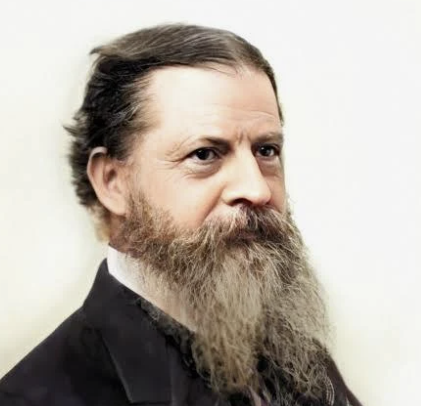
Suppose a surface to be part red and part blue; so that every point on it is either red or blue, and of course, no part can be both red and blue. What then, is the color of the surface in the immediate neighborhood of the point. ...it follows that the boundary is half red and half blue. In like manner, we find it necessary to hold that consciousness essentially occupies time... Thus, the present is half past and half time to come. ...Take another case: the velocity of a particle at any instant of time is its mean velocity during an infinitesimal instant in which that time is consumed. Just so, my immediate feeling is my feeling through an infinitesimal duration containing the present instant.
6 months 1 week ago
Although the medium is the message, the controls go beyond programming. The restraints are always directed to the "content," which is always another medium. The content of the press is literary statement, as the content of the book is speech, and the content of the movie is the novel. So the effects of radio are quite independent of its programming.
▼
Source
source
(p. 267)
7 months 1 week ago
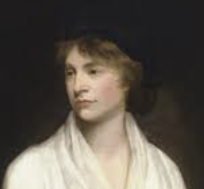
It is of great importance to observe that the character of every man is, in some degree, formed by his profession. A man of sense may only have a cast of countenance that wears off as you trace his individuality, whist the weak, common man has scarcely ever any character, but what belongs to the body; at least, all his opinions have been so steeped in the vat consecrated by authority, that the faint spirit which the grape of his own vine yields, cannot be distinguished.
▼
Source
source
Ch. 1
7 months 1 week ago
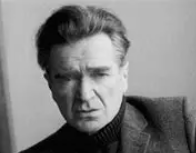
To suffer is to produce knowledge.
4 months 1 week ago
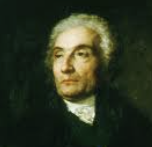
Man cannot be wicked without being evil, nor evil without being degraded, nor degraded without being punished, nor punished without being guilty. In short ... there is nothing so intrinsically plausible as the theory of original sin.
▼
Source
source
Second Dialogue, p. 38
5 months 5 days ago
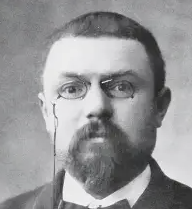
We can not... escape the conclusion that the rule of reasoning by recurrence is irreducible to the principle of contradiction. ...Neither can this rule come to us from experience... This rule, inaccessible to analytic demonstration and to experience, is the veritable type of the synthetic a priori judgment. On the other hand, we can not think of seeing in it a convention, as in some of the postulates of geometry. ...it is only the affirmation of the power of the mind which knows itself capable of conceiving the indefinite repetition of the same act when once this act is possible. The mind has a direct intuition of this power, and experience can only give occasion for using it and thereby becoming conscious of it.
▼
Source
source
Ch. I. (1905) Tr. George Bruce Halstead
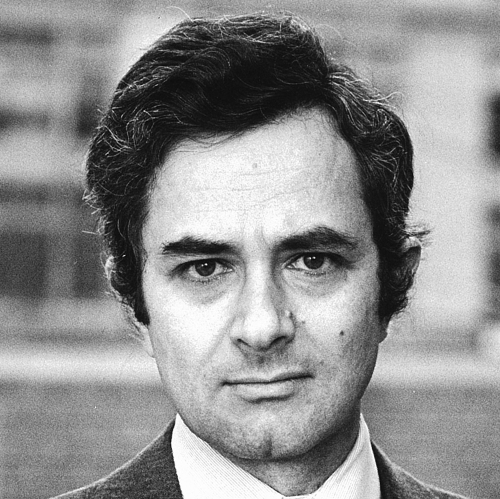
8 months 2 days ago
In speaking of the move from subjective to objective characterization, I wish to remain noncommittal about the existence of an endpoint, the completely objective intrinsic nature of the thing, which one might or might not be able to reach. It may be more accurate to think of objectivity as a direction in which the understanding can travel. And in understanding a phenomenon like lightning, it is legitimate to go as far away as one can from a strictly human viewpoint.But in the case of experience, on the other hand, the connexion with a particular point of view seems much closer. It is difficult to understand what could be meant by the objective character of an experience, apart from the particular point of view from which its subject apprehends it. After all, what would be left of what it was like to be a bat if one removed the viewpoint of the bat?
▼
Source
source
p. 173.
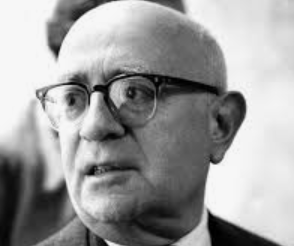
6 months 3 weeks ago
The metaphysical apologia at least betrayed the injustice of the established order through the incongruence of concept and reality. The impartiality of scientific language deprived what was powerless of the strength to make itself heard and merely provided the existing order with a neutral sign for itself. Such neutrality is more metaphysical than metaphysics.
▼
Source
source
E. Jephcott, trans., p. 17
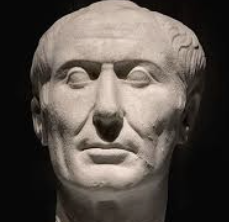
6 months 1 week ago
An agreeable companion on a journey is as good as a carriage.
▼
Source
source
Maxim 143

6 months 2 days ago
French schoolchildren can be proud to become citizens of the country that gave the world the Declaration of the Rights of Man; need they be told that it was disregarded a few years after it inspired the revolution in Haiti, whose leader, Toussaint Louverture, was consigned to death in a French prison?
6 months 3 weeks ago
It suffices to remember how many sorrows he is spared who no longer thinks too many thoughts, how much more "in accordance with reality" a person behaves when he affirms that the real is the right, how much more capacity to use the machinery falls to the person who integrates himself with it uncomplainingly.
▼
Source
source
p. 286
7 months 1 week ago
The revolutionary government is the despotism of liberty against tyranny.
▼
Source
source
Act I.
5 months 2 weeks ago
From a Darwinian point of view, human beliefs are adaptations to our part of the world. No doubt much of what we believe must be roughly accurate, or else we would not have survived. But the beliefs we have evolved might latch on to the world only enough to help us stumble our way through it, and then only for the time being. Human belief-systems could be useful illusions, appearing and disappearing as they prove to be more or less advantageous in the random walk of natural selection. Might not evolution be one of these illusions? Scientific naturalism is the theory that human beliefs are evolutionary adaptations whose survival has nothing to do with their truth. But in that case scientific naturalism is self-defeating, since on its own premises scientific theories cannot be known to be true.
▼
Source
source
Cross-correspondences (p. 69)
7 months 1 week ago
Who consciously throws himself into the water or onto the knife?
▼
Source
source
Part 2, Chapter ?
6 months 3 weeks ago
The simultaneous existence of opposite virtues in the soul - like pincers to catch hold of God.
▼
Source
source
p. 92
8 months 1 week ago
We may become the makers of our fate when we have ceased to pose as its prophets.
▼
Source
source
Introduction
4 months 1 week ago
Man is an enigma whose knot has not ceased to occupy observers. The contradictions that he contains astonish reason and impose silence on it. So what is this inconceivable being who carries within him powers that clash and who is obliged to hate himself in order to esteem himself?
9 months 1 week ago
Neither family, nor privilege, nor wealth, nor anything but Love can light that beacon which a man must steer by when he sets out to live the better life.
4 months 1 week ago
Certainly no nation ever before abandoned to the avarice and jugglings of private individuals to regulate according to their own interests, the quantum of circulating medium for the nation - to inflate, by deluges of paper, the nominal prices of property, and then to buy up that property at 1s. in the pound, having first withdrawn the floating medium which might endanger a competition in purchase. Yet this is what has been done, and will be done, unless stayed by the protecting hand of the legislature. The evil has been produced by the error of their sanction of this ruinous machinery of banks; and justice, wisdom, duty, all require that they should interpose and arrest it before the schemes of plunder and spoliation desolate the country.
▼
Source
source
Letter to William C. Rives (1819) ME 15:232
4 months 3 weeks ago
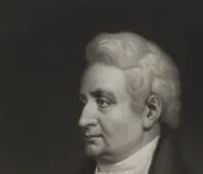
Bishop Berkeley destroyed this world in one volume octavo; and nothing remained after his time, but mind - which experienced a similar fate from the hand of Mr. Hume, in 1737.
▼
Source
source
Introduction
8 months 1 week ago
All the great speakers were bad speakers at first.
▼
Source
source
Power
6 months 3 weeks ago
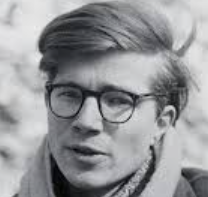
The Outsider's miseries are the prophet's teething pains. He retreats into his room, like a spider in a dark corner; he lives alone, wishes to avoid people.
▼
Source
source
Chapter Four The Attempt to Gain Control
6 months 3 weeks ago
Any madness in us gains from being expressed, because in this way one gives a human form to what separates us from humanity.
▼
Source
source
p. 76
4 months 3 weeks ago
It was a great deed to conquer Carthage, but a greater deed to conquer death.

5 months 2 days ago
In looking at this wreck of Governments in all European countries, there is one consideration that suggests itself, sadly elucidative of our modern epoch. These Governments, we may be well assured, have gone to anarchy for this one reason inclusive of every other whatsoever, That they were not wise enough; that the spiritual talent embarked in them, the virtue, heroism, intellect, or by whatever other synonyms we designate it, was not adequate,-probably had long been inadequate, and so in its dim helplessness had suffered, or perhaps invited falsity to introduce itself; had suffered injustices, and solecisms, and contradictions of the Divine Fact, to accumulate in more than tolerable measure; whereupon said Governments were overset, and declared before all creatures to be too false.
4 months 1 week ago
Government is a true religion: it has its dogmas, its mysteries, and its ministers. To annihilate it or submit it to the discussion of each individual is the same thing; it lives only through national reason, that is to say through political faith, which is a creed.
▼
Source
source
p. 87
7 months 1 week ago
The refutation of suicide: is it not inelegant to abandon a world which has so willingly put itself at the service of our melancholy?
6 months 3 weeks ago
Jung believed that alchemy is about the transmutation of the mind and the discovery of the self. Inevitably, he saw the male and female elements of the prima materia -- the king and queen of alchemy -- as the animus and anima; this seemed to indicate the (sic) alchemy is about psychological processes.
▼
Source
source
p. 103
8 months 2 weeks ago
How selfish soever man may be supposed, there are evidently some principles in his nature, which interest him in the fortune of others, and render their happiness necessary to him, though he derives nothing from it except the pleasure of seeing it.
▼
Source
source
Section I, Chap. I
8 months 2 weeks ago
Avarice and injustice are always shortsighted, and they did not foresee how much this regulation must obstruct improvement, and thereby hurt in the long-run the real interest of the landlord.
▼
Source
source
Chapter II, p. 426-427.

1 year 4 weeks ago
A common goal...
Issue:
Because of subgrouping, physical separation, different types of genetics and other cultural factors, as well as limited isolation people subjectively deviate from their universal human necessity. They become aware of it when they are exposed to difference regularly.
Solution:
With controlled information delivery, as well as a clear ideological goal like universality, we can clear away the noise of chaos to understand deterministic goals directly.
8 months 3 weeks ago
Show that you know this only, how you may never either fail to get what you desire or fall into what you avoid.
▼
Source
source
Book II, ch. 1, 37
CivilSimian.com created by AxiomaticPanic, CivilSimian, Kalokagathia