


8 months 2 weeks ago
Whatever you see in the more material part of yourself, learn to refer to God and to the invisible part of yourself. In that way, whatever offers itself to the senses will become for you an occasion for the practice of piety.
▼
Source
source
The Erasmus Reader (1990), p. 141.
4 months 3 weeks ago
Proverbs about truth are well-loved in Russian. They give steady and sometimes striking expression to the not inconsiderable harsh national experience: ONE WORD OF TRUTH SHALL OUTWEIGH THE WHOLE WORLD. And it is here, on an imaginary fantasy, a breach of the principle of the conservation of mass and energy, that I base both my own activity and my appeal to the writers of the whole world.
8 months 1 week ago
If I were to give a simple formula or recipe for distinguishing between what I consider to be admissible plans for social reform and inadmissible Utopian blueprints, I might say: Work for the elimination of concrete evils rather than for the realization of abstract goods. Do not aim at establishing happiness by political means. Rather aim at the elimination of concrete miseries.
▼
Source
source
p. 385
6 months 1 week ago
War has become the environment of our time if only because it is an accelerated form of innovation and education.
▼
Source
source
(p. 381)
8 months 2 weeks ago
The trade of insurance gives great security to the fortunes of private people, and by dividing among a great many that loss which would ruin an individual, makes it fall light and easy upon the whole society.
▼
Source
source
Chapter I, Part III, p. 821.
6 months 3 weeks ago
You', the ego, live in your left brain. When we say that man is the only creature who spends 99 per cent of his time inside his own head, we mean, in fact, inside his left cerebral hemisphere. And in the basement of the left hemisphere is the library full of filing cabinets -- the stuffy room that we mistake for reality.
▼
Source
source
p. 9
8 months 1 week ago
Wisdom is passionless. But faith by contrast is what Kierkegaard calls a passion.
▼
Source
source
p. 53e

8 months 1 week ago
"And yet, it was not, not now, she that really counted. Or if she counted (and, oh, gloriously she did) it was for another's sake. The earth and stars and sun, all that was or will be, existed for his sake. And he was coming. The most dreadful, the most beautiful, the only dread and beauty there is, was coming. The pillars on the far side of the pool flushed with his approach. I cast down my eyes."
▼
Source
source
Orual

4 months 3 weeks ago
Our feeling about every obligation depends in each case upon the spirit in which the benefit is conferred; we weigh not the bulk of the gift, but the quality of the good-will which prompted it.
▼
Source
source
Line 6
8 months 1 week ago
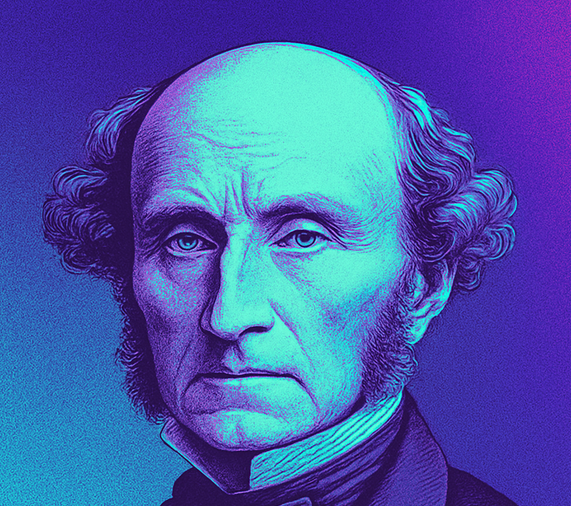
These considerations did not make us overlook the folly of premature attempts to dispense with the inducements of private interest in social affairs, while no substitute for them has been or can be provided: but we regarded all existing institutions and social arrangements as being (in a phrase I once heard from Austin) "merely provisional," and we welcomed with the greatest pleasure and interest all socialistic experiments by select individuals (such as the Co-operative Societies), which, whether they succeeded or failed, could not but operate as a most useful education of those who took part in them, by cultivating their capacity of acting upon motives pointing directly to the general good, or making them aware of the defects which render them and others incapable of doing so.
▼
Source
source
(pp. 233-234)

8 months 6 days ago
All these present struggles revolve around the question: Who are we? They are a refusal of these abstractions, of economic and ideological state violence, which ignore who we are individually, and also a refusal of a scientific or administrative inquisition which determines who one is.
▼
Source
source
p. 781
6 months 1 week ago
Until now a culture has been a mechanical fate for societies, the automatic interiorization of their own technologies.
▼
Source
source
(p. 86)
8 months 2 weeks ago
Silence is the virtue of a fool.
▼
Source
source
Book VI, xxxi
8 months 1 week ago
There is no more mistaken path to happiness than worldliness, revelry, high life.
▼
Source
source
Our Relation to Others, § 24
6 months 5 days ago
Happily for poor traduced and degraded human nature, the principle for which we now content will speedily divest it of all the ridiculous and absurd mystery with which it has been hitherto enveloped by the ignorance of preceding times: and all the ''complicated'' and ''counteracting'' motives for good conduct, which have been multiplied almost to infinity, will be reduced to ''one single principle of action'', which, by its evident operation and sufficiency, shall render this intricate system ''unnecessary'', and ultimately supersede it in all parts of the earth. That principle is THE HAPPINESS OF SELF CLEARLY UNDERSTOOD AND UNIFORMLY PRACTICED; WHICH CAN ONLY BE ATTAINED BY CONDUCT THAT MUST PROMOTE THE HAPPINESS OF THE COMMUNITY.
▼
Source
source
Essay First, The Formation of Human Character.
8 months 1 week ago
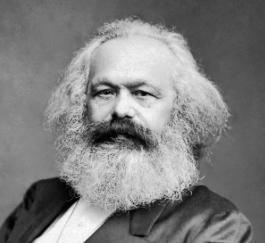
From each according to his abilities, to each according to his needs.
▼
Source
source
The Criticism of the Gotha Program (1875) Variant translation: From each according to his ability, to each according to his need.
8 months 1 day ago
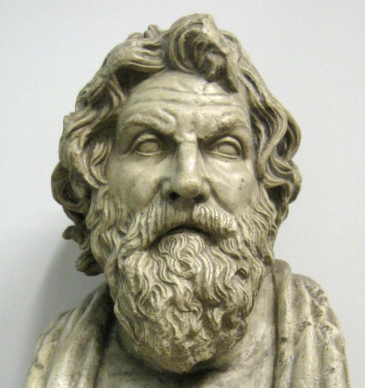
As iron is eaten away by rust, so the envious are consumed by their own passion.
▼
Source
source
§ 5
7 months 1 week ago
He who has thought most deeply loves what is most alive.
7 months 3 days ago
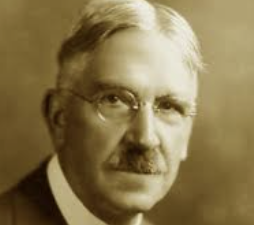
The recurrence of relations-not of elements-in different contexts, which constitutes transposition is qualitative and hence directly experienced in perception.
▼
Source
source
p. 219
4 months 2 weeks ago
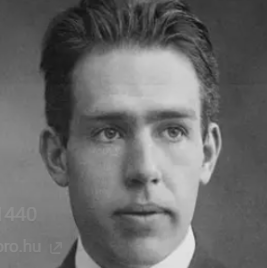
Every valuable human being must be a radical and a rebel, for what he must aim at is to make things better than they are.
▼
Source
source
As quoted in The World of the Atom (1966) by Henry Abraham Boorse and Lloyd Motz, p. 741
7 months 1 week ago
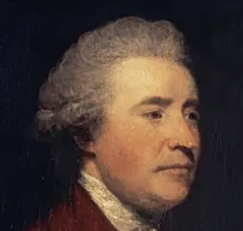
A diversity of opinion upon almost every principle of politics, had indeed drawn a strong line of separation between them and some others. However, they were desirous not to extend the misfortune by unnecessary bitterness; they wished to prevent a difference of opinion on the commonwealth from festering into rancorous and incurable hostility. Accordingly they endeavoured that all past controversies should be forgotten; and that enough for the day should be the evil thereof. There is however a limit at which forbearance ceases to be a virtue. Men may tolerate injuries, whilst they are only personal to themselves. But it is not the first of virtues to bear with moderation the indignities that are offered to our country.
▼
Source
source
Describing the Government's position at a previous time of deep division in British politics in fact over policy on America, Observations on a Late Publication on the Present State of the Nation (1769), page 2

4 months 1 week ago
The Pennsylvania legislature, who, on a proposition to make the belief in God a necessary qualification for office, rejected it by a great majority, although assuredly there was not a single atheist in their body. And you remember to have heard, that when the act for religious freedom was before the Virginia Assembly, a motion to insert the name of Jesus Christ before the phrase, "the author of our holy religion," which stood in the bill, was rejected, although that was the creed of a great majority of them.
▼
Source
source
Letter to Albert Gallatin (16 June 1817). Published in The Works of Thomas Jefferson in Twelve Volumes, Federal Edition, Paul Leicester Ford, ed., New York: G. P. Putnam's Sons, 1904, Vol. 12, p. 73
8 months 2 weeks ago
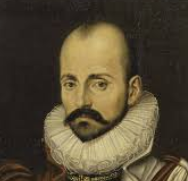
Of all human and ancient opinions concerning religion, that seems to me the most likely and most excusable, that acknowledged God as an incomprehensible power, the original and preserver of all things, all goodness, all perfection, receiving and taking in good part the honour and reverence that man paid him, under what method, name, or ceremonies soever
▼
Source
source
Ch. 12
6 months 4 days ago
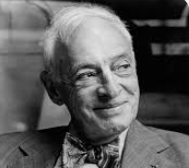
I never yet touched a fig leaf that didn't turn into a price tag.
▼
Source
source
Humboldt's Gift (1975), p. 159
8 months 1 week ago
All our scientific and philosophic ideals are altars to unknown gods.
▼
Source
source
Lecture at the Harvard Divinity School (13 March 1884); published in the The Unitarian Review and Religious Magazine as The Dilemma of Determinism

5 months 2 days ago
Again, and again, we say, the great, the creative and enduring is ever a secret to itself; only the small, the barren and transient is otherwise.
▼
Source
source
Characteristics.
6 months 3 weeks ago
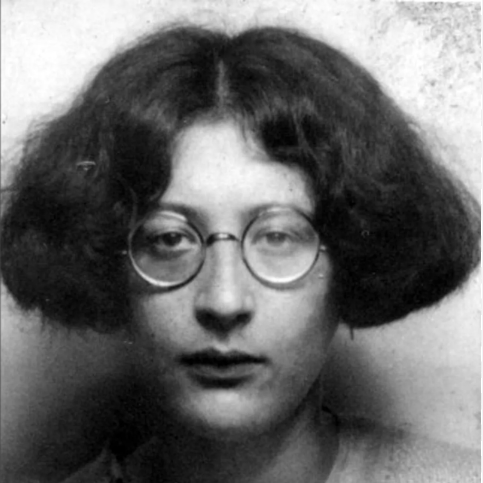
The prospects of revolution seem therefore quite restricted. For can a revolution avoid war? It is, however, on this feeble chance that we must stake everything or abandon all hope. An advanced country will not encounter, in the case of revolution, the difficulties which in backward Russia served as a base for the barbarous regime of Stalin. But a war of any scope will give rise to others as formidable.
▼
Source
source
Reflections on War (1933); also in Formative Writings
8 months 1 week ago
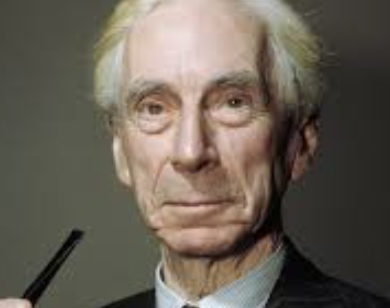
The philosophy of nature must not be unduly terrestrial; for it, the earth is merely one of the smaller planets of one of the smaller stars of the Milky Way. It would be ridiculous to warp the philosophy of nature in order to bring out results that are pleasing to the tiny parasites of this insignificant planet. Vitalism as a philosophy, and evolutionism, show, in this respect, a lack of sense of proportion and logical relevance. They regard the facts of life, which are personally interesting to us, as having a cosmic significance, not a significance confined to the earth's surface. Optimism and pessimism, as cosmic philosophies, show the same naive humanism; the great world, so far as we know it from the philosophy of nature, is neither good nor bad, and is not concerned to make us happy or unhappy. All such philosophies spring from self-importance and are best corrected by a little astronomy.
4 months 3 weeks ago
Lay hold of today's task, and you will not need to depend so much upon tomorrow's. While we are postponing, life speeds by.
8 months 2 weeks ago
The most profound joy has more of gravity than of gaiety in it.
▼
Source
source
Book II, Ch. 20
6 months 3 weeks ago
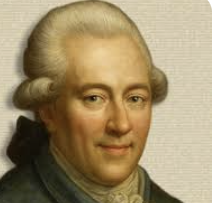
We are obliged to regard many of our original minds as crazy - at least until we have become as clever as they are.
▼
Source
source
D 97
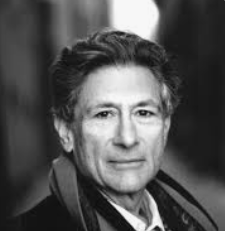
6 months 3 weeks ago
Ideas, cultures, and histories cannot seriously be understood or studied without their force, or more precisely their configurations of power, also being studied.
7 months 1 week ago
...if the Catholick religion is destroyd by the Infidels, it is a most contemptible and absurd Idea, that, this, or any Protestant Church, can survive that Event. ... in Ireland particularly, the Roman Catholic Religion should be upheld in high respect and veneration. ... I am more serious on the positive encouragement to be given to this religion...because the serious and earnest belief and practice of it by its professors forms, as things stand, the most effectual Barrier, if not the sole Barrier, against Jacobinism.
▼
Source
source
Letter to William Smith, Member of the Irish Parliament (29 January 1795), quoted in R. B. McDowell (ed.)
8 months 1 week ago
Luxury is the opposite of the naturally necessary.
▼
Source
source
Notebook V, The Chapter on Capital, p. 448.

6 months 2 weeks ago
I have studied these things - you have not.
▼
Source
source
Reported as Newton's response, whenever Edmond Halley would say anything disrespectful of religion, by Sir David Brewster in The Life of Sir Isaac Newton (1831)
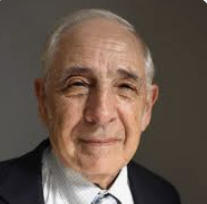
6 months 2 weeks ago
Where questions of style and exposition are concerned I try to follow a simple maxim: if you can't say it clearly you don't understand it yourself.
▼
Source
source
P. x.
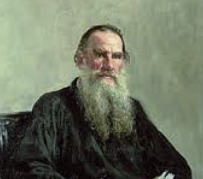
6 months 1 week ago
There can be only one permanent revolution - a moral one; the regeneration of the inner man. How is this revolution to take place? Nobody knows how it will take place in humanity, but every man feels it clearly in himself. And yet in our world everybody thinks of changing humanity, and nobody thinks of changing himself.
▼
Source
source
"Three Methods Of Reform" in Pamphlets : Translated from the Russian (1900) as translated by Aylmer Maude, p. 29

6 months 2 weeks ago
Pure justice emerges from symmetry applied human life, and human beings as ends in themselves.
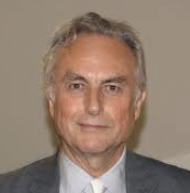
6 months 1 week ago
I have just discovered that without her father's consent this sweet, trusting, gullible six-year-old is being sent, for weekly instruction, to a Roman Catholic nun. What chance has she?
6 months 2 weeks ago
There are clear cases in which "understanding" literally applies and clear cases in which it does not apply; and these two sorts of cases are all I need for this argument.
4 months 1 week ago
To be sane in a mad time is bad for the brain, worse for the heart.
▼
Source
source
"The Mad Farmer Manifesto: The First Amendment" in The Country of Marriage
6 months 1 week ago
So the majority of the highest classes of that age, even the popes and ecclesiastics, really believed in nothing at all. They did not believe in the Church doctrine, for they saw its insolvency; but neither could they follow Francis of Assisi, Kelchitsky, and most of the sectarians in acknowledging the moral, social teaching of Christ, for that undermined their social position. And so these people remained without any religious view of life. And, having none, they could have no standard with which to estimate what was good and what was bad art, but that of personal enjoyment.
6 months 2 weeks ago
On another possible world or another planet a word might be associated with much the same stereotype and much the same criteria as our term 'water', but it might designate XYZ and not H₂O. At least this could happen in a prescientific era. And it would not follow that XYZ was water; it would only follow that XYZ could look like water, taste like water, etc. What 'water' refers to depends on the actual nature of the paradigms, not just on what is in our heads.
▼
Source
source
Language and Reality
CivilSimian.com created by AxiomaticPanic, CivilSimian, Kalokagathia